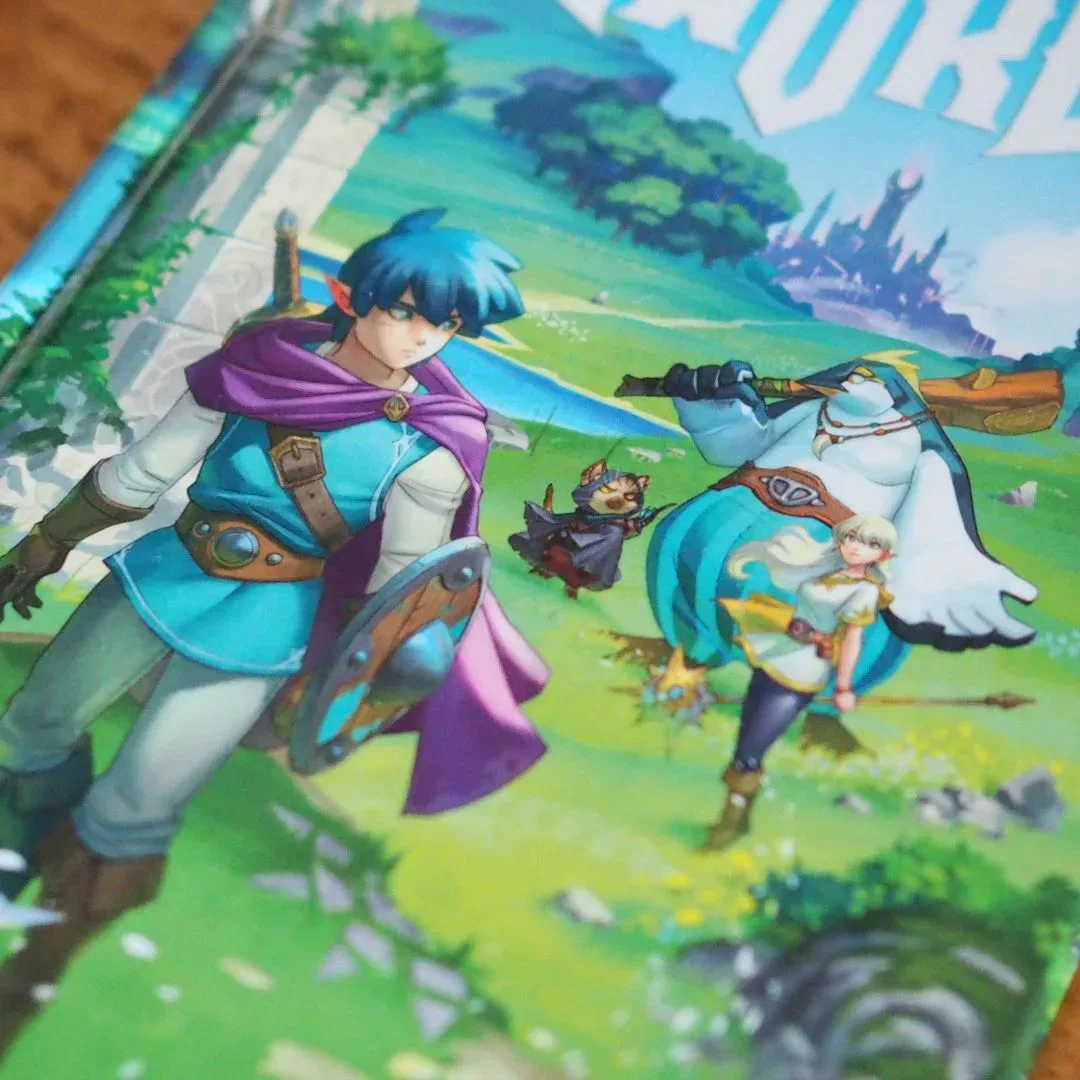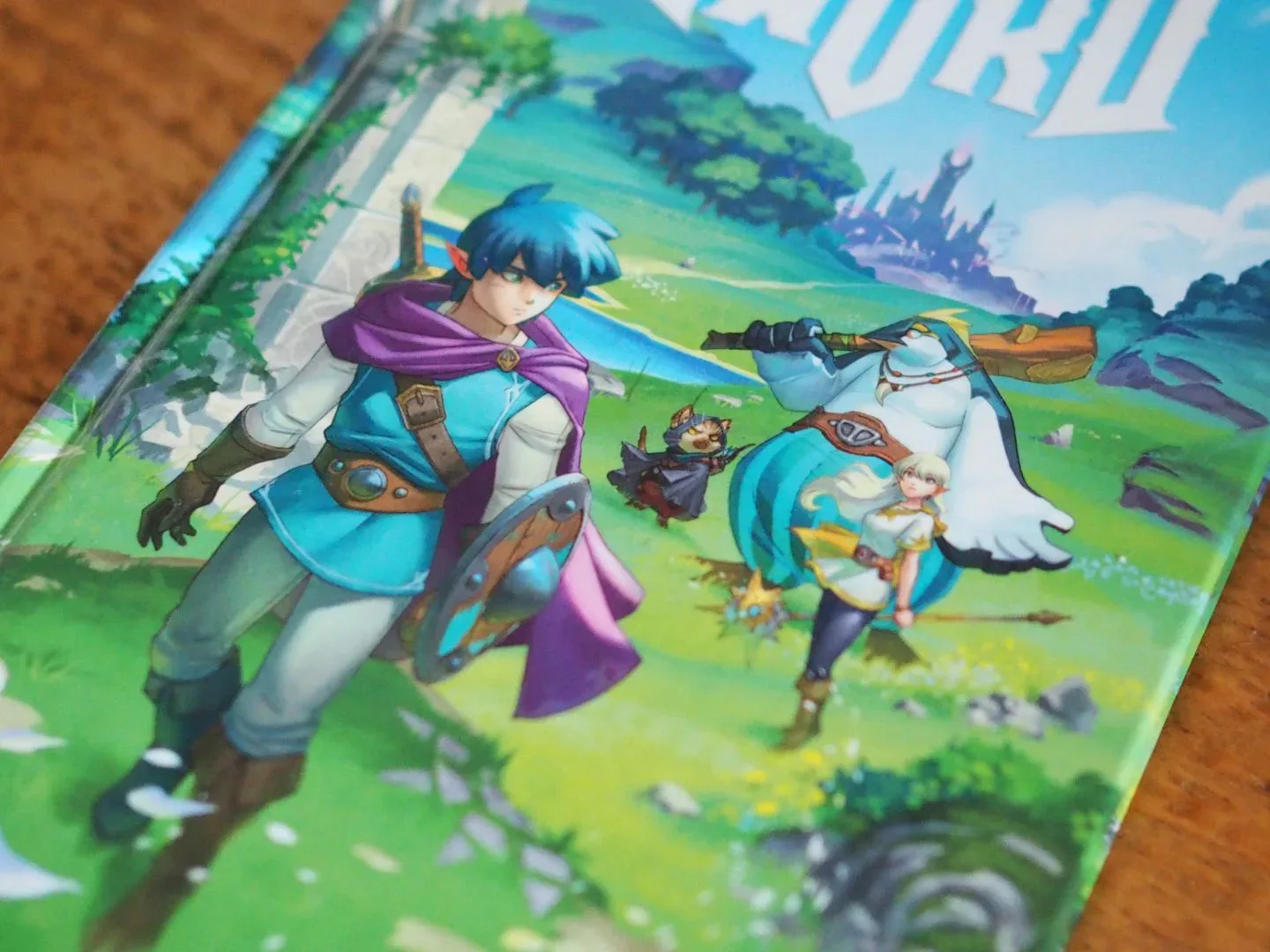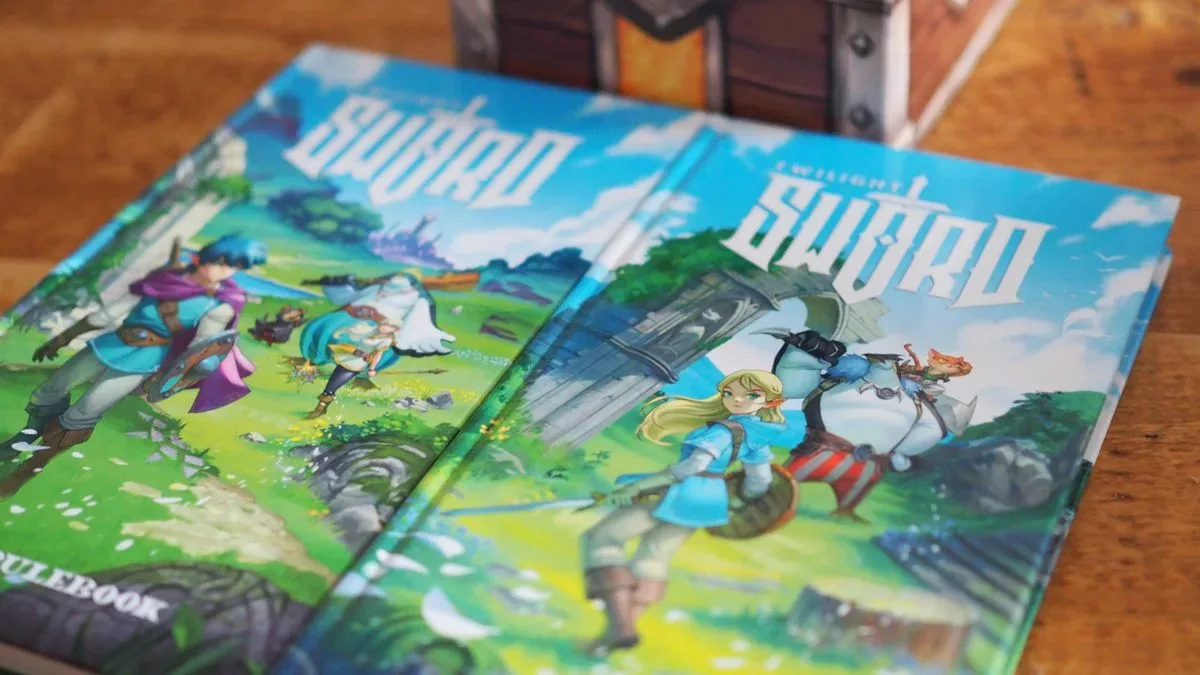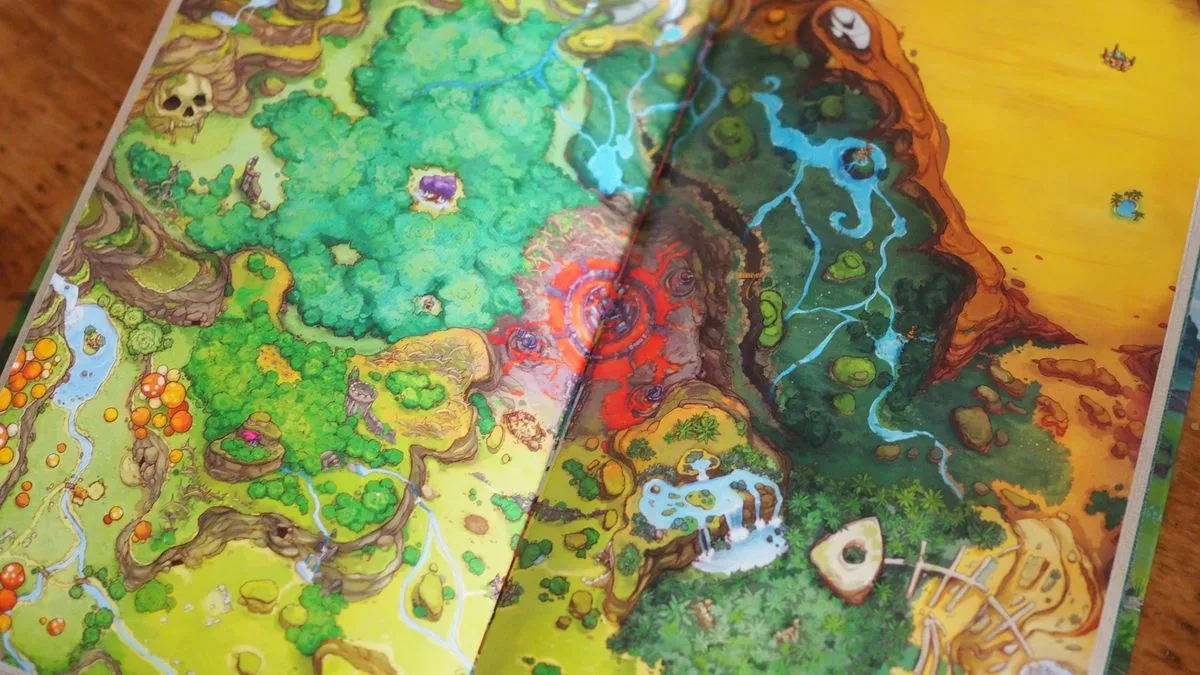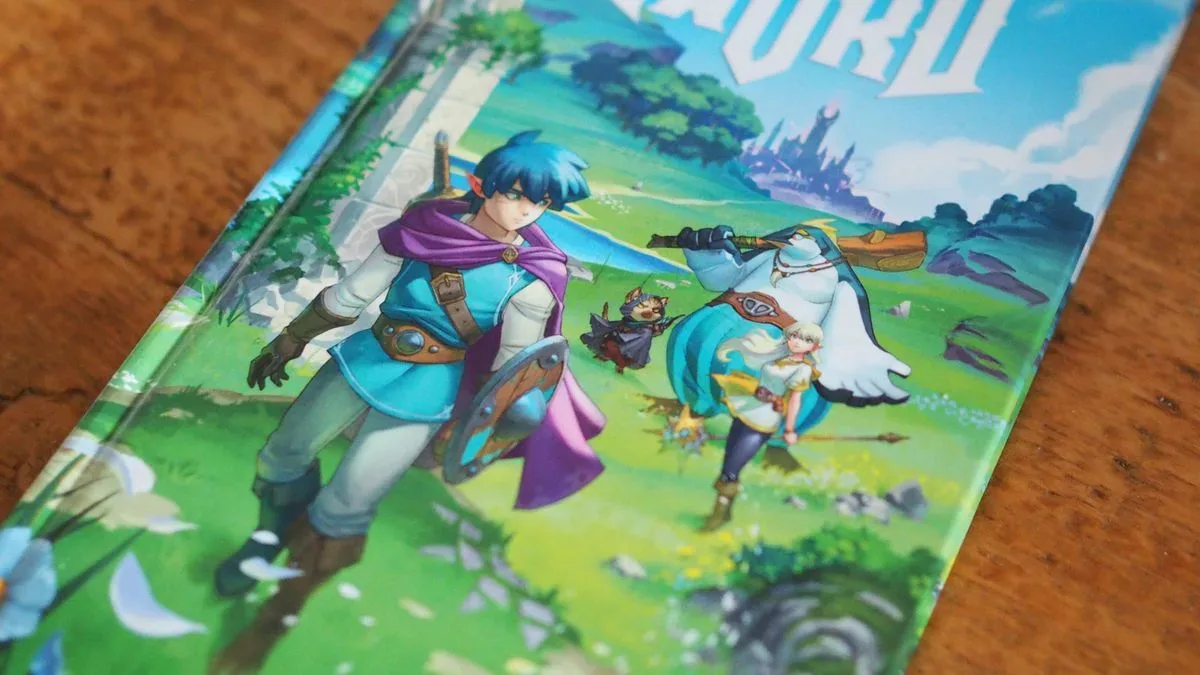
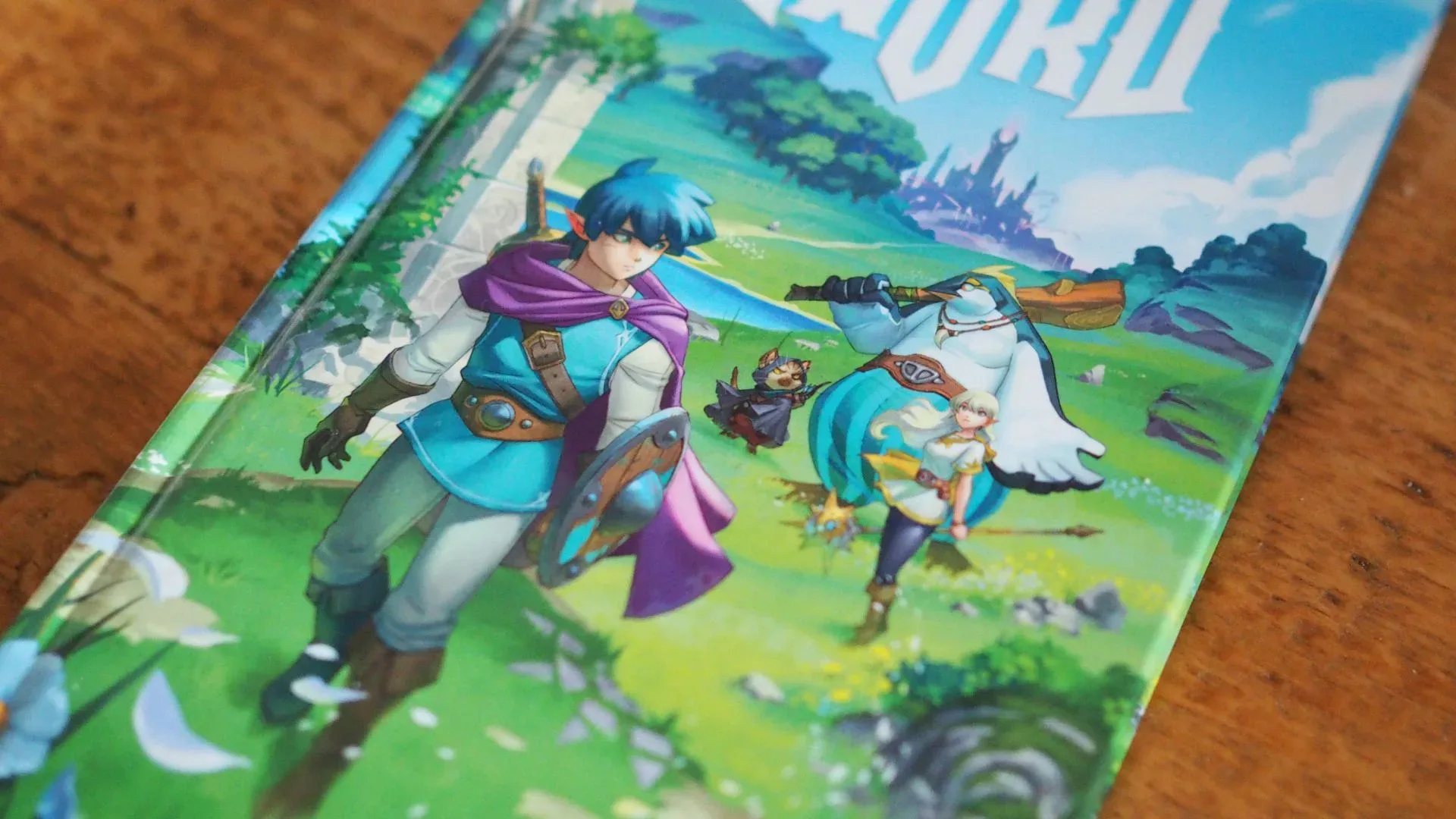
Twilight Sword, the tabletop role-playing game from Two Little Mice, has arrived with a remarkably clear creative mission: capture the feeling of a Zelda-style adventure at the table without being an official Legend of Zelda game. Its own setting, Radia, supplies the map, kingdoms, creatures and mysteries, but the broad signals are unmistakable—ruined realms, bright woodland oddities, a threatening castle at the center of the world, and an emphasis on traveling outward into danger and discovery.
That is an ambitious target for a tabletop RPG. Zelda is closely associated with a particular rhythm of exploration, dungeon-delving and problem-solving that video games can enforce through level design and programmed interactions. A tabletop game has to achieve a comparable sense of momentum through rules, a game master’s presentation and the group’s choices. Twilight Sword’s approach is to combine familiar fantasy-adventure imagery with a rules framework that is recognizably related to Dungeons & Dragons in broad outline, while being lighter and more arcade-like in several important ways.
An original world built around familiar adventure language
Radia is not Hyrule, and Twilight Sword is not presented as an officially licensed Nintendo product. That distinction matters because it gives players a setting that can still surprise them. Instead of retracing known places and stories, a group can explore a world that evokes a favorite type of quest while retaining unknown locations and outcomes.
The setting uses a wheel-and-spoke map structure: a central location connects outward toward multiple regions. In practical tabletop terms, that layout can make the campaign’s basic choice immediately legible. The group has a dangerous focal point at the center and a range of outward routes, locations and problems to investigate. The central castle is corrupted and marked by a red glow, establishing a visible source of menace while the surrounding world provides space for detours and gradual discovery.
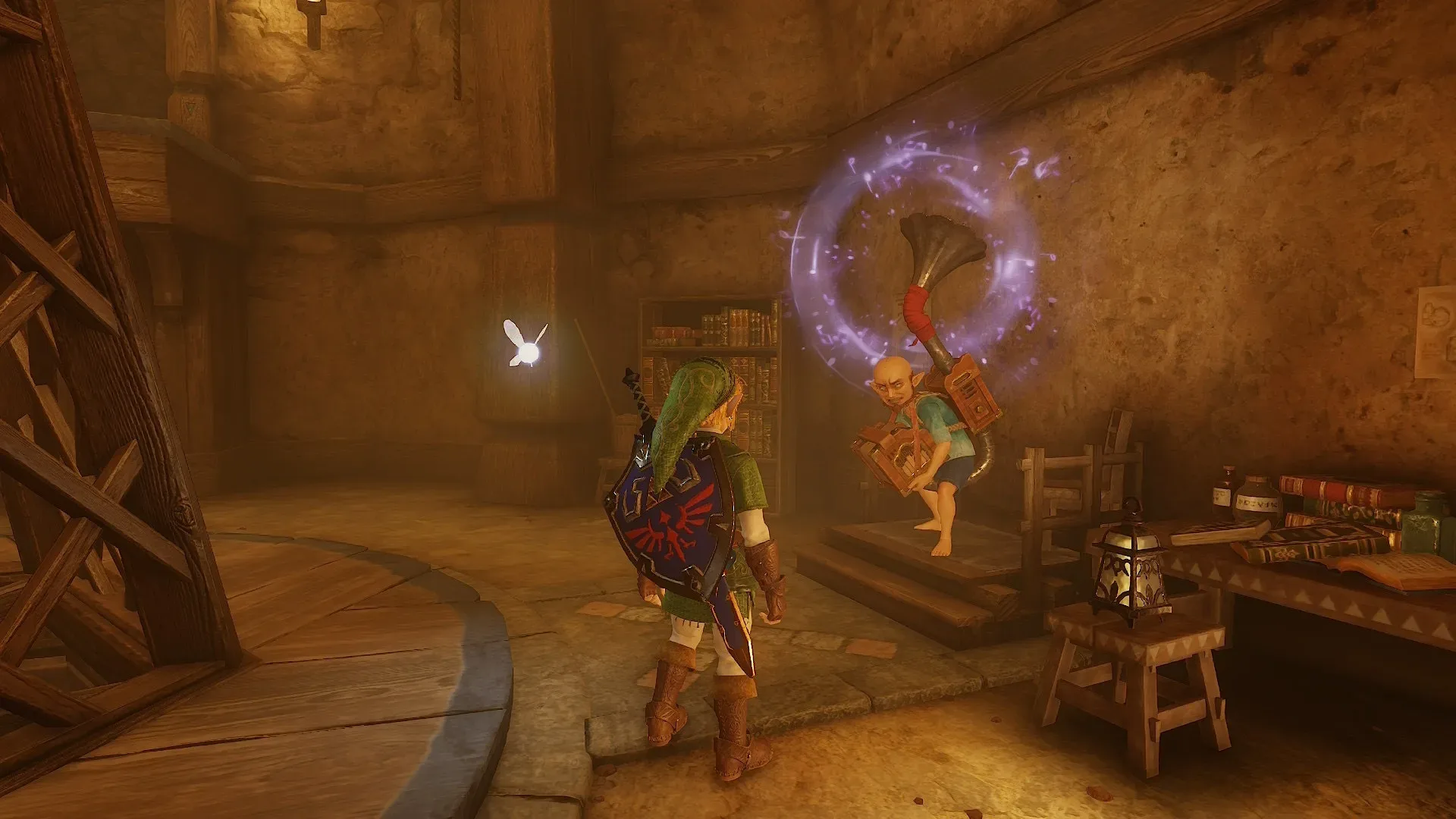
Twilight Sword also leans hard into the visual and creature vocabulary associated with long-running action-adventure fantasy games. Its cover has been compared to Breath of the Wild’s look, while its presentation and world structure call to mind elements associated with Ocarina of Time, Wind Waker and Tears of the Kingdom. Some monsters, including Moblins and Lizfalos, sit especially close to familiar Zelda-adjacent archetypes.
That degree of resemblance will be the first thing many players notice, but it is not the only idea at work. The more useful question for a prospective group is whether the game understands the adventure patterns it is drawing from. The supplied details suggest it does: fallen nobility, strange and upbeat forest inhabitants, a looming blight at the heart of the map, and journeys into whimsical territory that can quickly turn perilous. Those are tools a game master can turn into sessions, rather than merely names or illustrations on a page.
How Twilight Sword’s core roll works
At its heart, Twilight Sword uses numbered character statistics such as Strength and Charisma. The core resolution mechanic is straightforward: roll a 12-sided die, usually written as a d12, and aim to roll below the relevant score.
That is a useful point of difference from many fantasy tabletop systems. A d12 is a die with twelve faces, numbered 1 through 12. In Twilight Sword, low results are favorable, so a roll of 1 is the best possible result. A higher relevant statistic therefore means a player has more successful numbers available beneath it.
Related coverage includes Twilight Sword Turns Zelda-Style Adventure Into a Tabletop RPG Quest.
For players accustomed to D&D-style checks, that reversal is worth underlining. In many D&D situations, a player rolls a d20, adds modifiers and tries to meet or beat a target number. Twilight Sword instead makes the character’s score the threshold to get under. The underlying goal is still familiar—use the trait most relevant to the action and let chance resolve uncertainty—but the direction of the roll changes.
This can make the system easier to explain at the table: identify the applicable stat, roll a d12 and look for a low result. That does not automatically mean the game lacks tactical or narrative depth. It means its central success test is designed to be compact, which may suit groups looking to spend less time navigating a dense rules procedure and more time pursuing a colorful fantasy quest.
Ways, Feats and Stamina
Characters are differentiated through Ways, Twilight Sword’s term for its class-like options. A Way appears to fill the role that a class does in other fantasy RPGs: it gives a character a recognizable identity and grants access to particular abilities. Those abilities are called Feats.
Feats draw on Stamina, a resource that players spend to activate certain abilities. Resource management is the part of a game where players decide not only what they can do, but when it is worth paying a limited cost to do it. In this case, Stamina makes an ability more than a permanent button a character can press without consequence. A player must judge whether a particular scene warrants spending that resource or whether it is smarter to preserve it for an unknown challenge ahead.
This is one reason Twilight Sword should not be reduced to “Zelda, but with dice.” Its table play will depend on the interaction between a group’s routes through Radia, their Ways and Feats, the Stamina they choose to spend, and the challenges created by the game master. The Zelda-like inspiration establishes the tone; the tabletop resource decisions help establish the play experience.
Hearts reinforce the video-game sensibility
Health is measured in hearts, another deliberate connection to console adventure language. Using hearts instead of a more conventional hit-point total immediately changes how the game communicates risk. It is a small presentation choice, but it gives damage and survival a more direct, game-like visual identity.
Combined with the d12 roll-under mechanic and Stamina-driven Feats, hearts contribute to the claim that Twilight Sword is simpler and more arcade-flavored than many tabletop RPGs. “Arcade-like” here should not be read as a promise that the game is shallow or that every challenge is easy. It describes the clarity of its signals: a low die roll is good, hearts represent health, and Stamina fuels special moves. Those are legible concepts for players who may know adventure video games better than they know tabletop rules.
That accessibility could be particularly useful for a mixed group. Experienced tabletop players have familiar anchors in the form of abilities, character roles and resource expenditure. Meanwhile, players arriving from Zelda and other fantasy games can quickly recognize the logic behind hearts, a central evil castle and a world structured around exploration.
What Twilight Sword can offer Zelda fans—and what it cannot
The strongest case for Twilight Sword is not that it can literally replace a Zelda game. It cannot deliver Nintendo characters, official locations or a programmed action game’s authored puzzles. Nor should a prospective buyer assume that a familiar monster name makes Radia part of Zelda canon.
What it can offer is something an official game often cannot: a party-created expedition into a new world that happens to speak a very recognizable fantasy language. The group can decide which road to take, how to address a kingdom’s crisis, which strange local to trust and how far to push toward the central threat. A game master can shape mysteries around the players’ interests rather than asking everyone to follow a fixed series of quests.
That freedom is especially valuable for players who know Hyrule’s landmarks so well that part of the thrill has become anticipation. Radia preserves the emotional shorthand—bright adventure, melancholy ruins, odd spirits, dangerous monsters—while restoring uncertainty. The map may feel familiar in form, but its specific places are still for the table to uncover.
Fans looking for official Nintendo releases and accessories should keep that separation in mind as well. Legend of Zelda Switch 2 restocks are a separate matter from Twilight Sword’s original tabletop world.
A Monster Book campaign points to early interest
Twilight Sword has also launched a crowdfunding campaign for a Monster Book on Backerkit. The campaign reportedly reached €306,254 after only a few hours, substantially exceeding its €30,000 goal. That is a notable early indication of interest in expanding the game’s creature roster and encounter material, though crowdfunding totals can change over time.
A dedicated monster volume has an obvious practical purpose for a tabletop RPG. Creatures are not merely artwork or lore: they are recurring tools for encounters, obstacles and regional flavor. Additional adversaries can help a game master make distinct areas of Radia feel different from one another, whether the party is crossing a wild route, investigating ruins or pressing closer to the corrupted center of the map.
The campaign’s rapid move beyond its initial target also suggests that the game’s blend of tabletop fantasy and Zelda-adjacent adventure has found an audience beyond simple curiosity. There is clearly appetite for games that translate video-game adventure cues into a social, improvisational format.
Who should consider it
- Zelda fans who want a tabletop campaign built around exploration, weird creatures, fallen kingdoms and a looming central threat.
- Newer tabletop players who may prefer the immediately understandable logic of roll-low d12 tests, hearts and Stamina.
- Game masters who want an original fantasy setting with a strong, readable adventure identity rather than a setting tied to an established official continuity.
- D&D players interested in a lighter system that retains ability scores, character-defining roles and special abilities.
Twilight Sword’s defining trait is its lack of subtlety about the kind of fantasy it wants to celebrate. For some players, that close resemblance will be the whole appeal; for others, Radia’s original locations and open space for tabletop invention will be the more compelling reason to play. Either way, the game’s rules and setting appear to be pulling in the same direction: an approachable quest where a party can leave a safe point behind, spend carefully, follow a road into the unknown and eventually confront the darkness waiting at the center of the world.