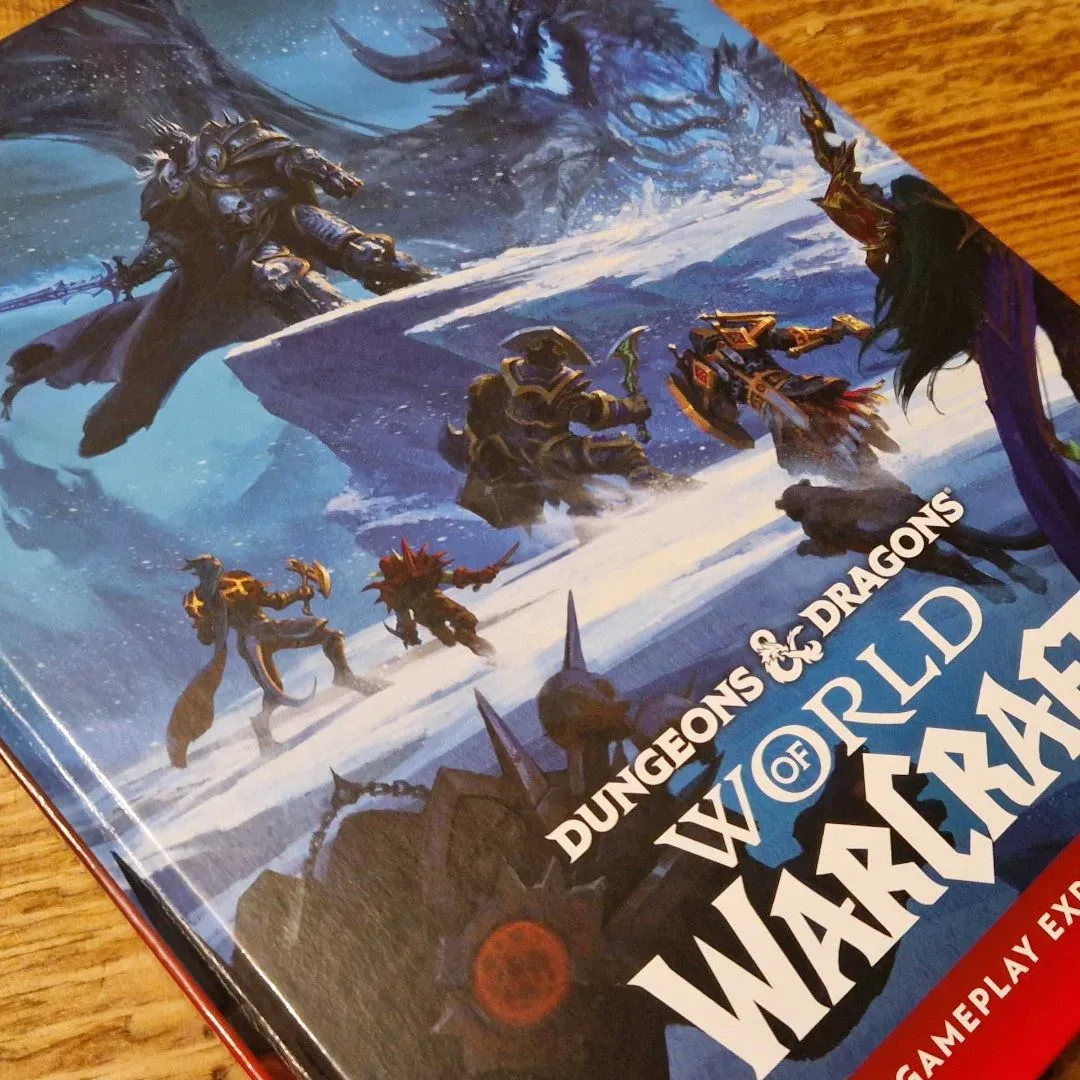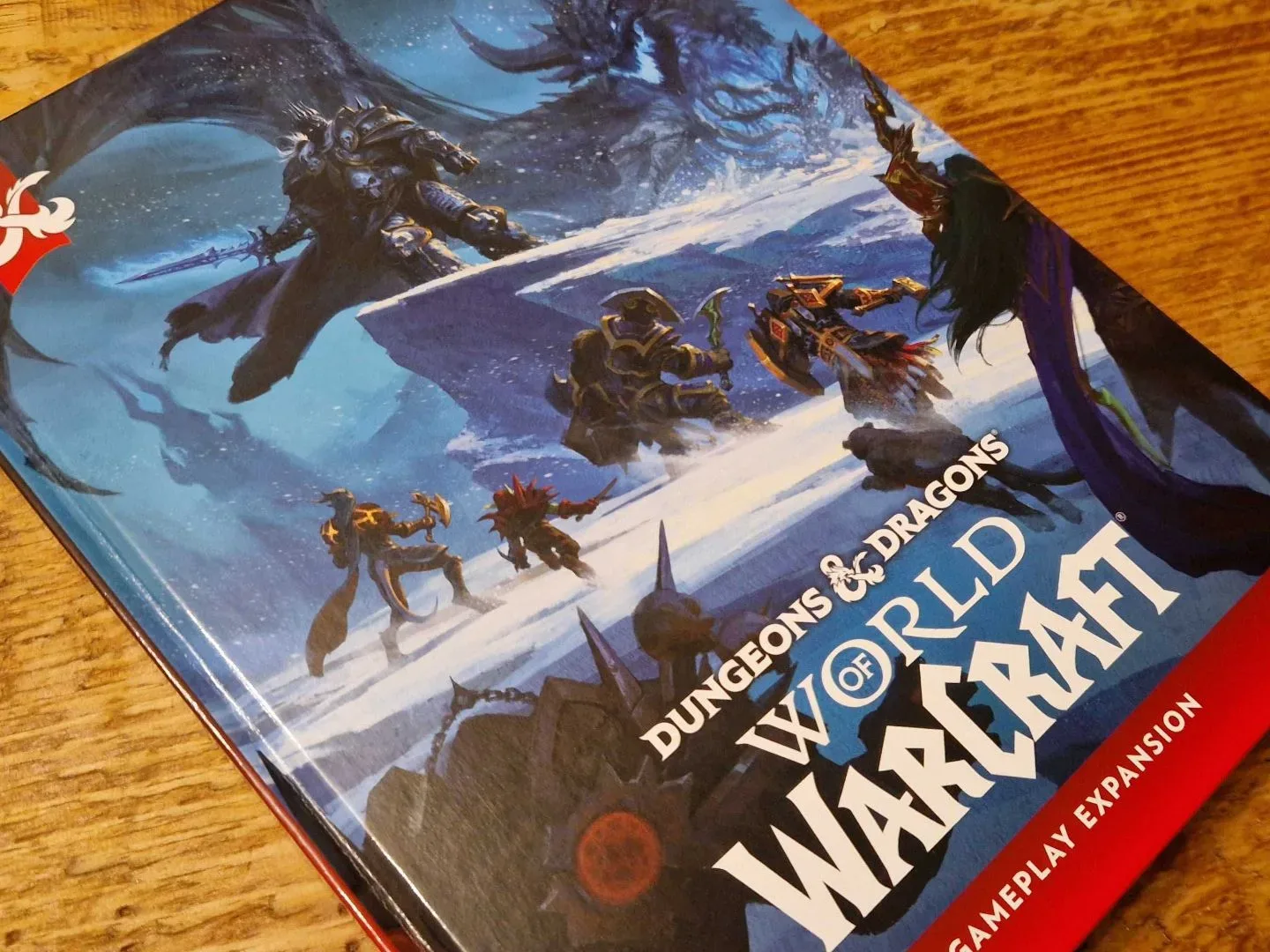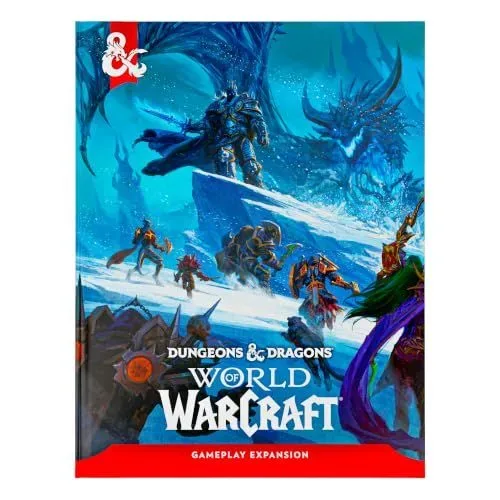
D&D World of Warcraft is attempting a difficult translation: turn an MMO world built around fixed digital spaces, repeatable dungeon runs and recognizable class fantasies into a tabletop setting where a group can wander off-script at the first interesting door. The early picture is encouraging. The book appears to understand that simply transplanting familiar names would not be enough. Its most appealing material gives players new mechanical tools, while its dungeon adventures leave enough room for a party to solve problems in ways a video game cannot readily anticipate.
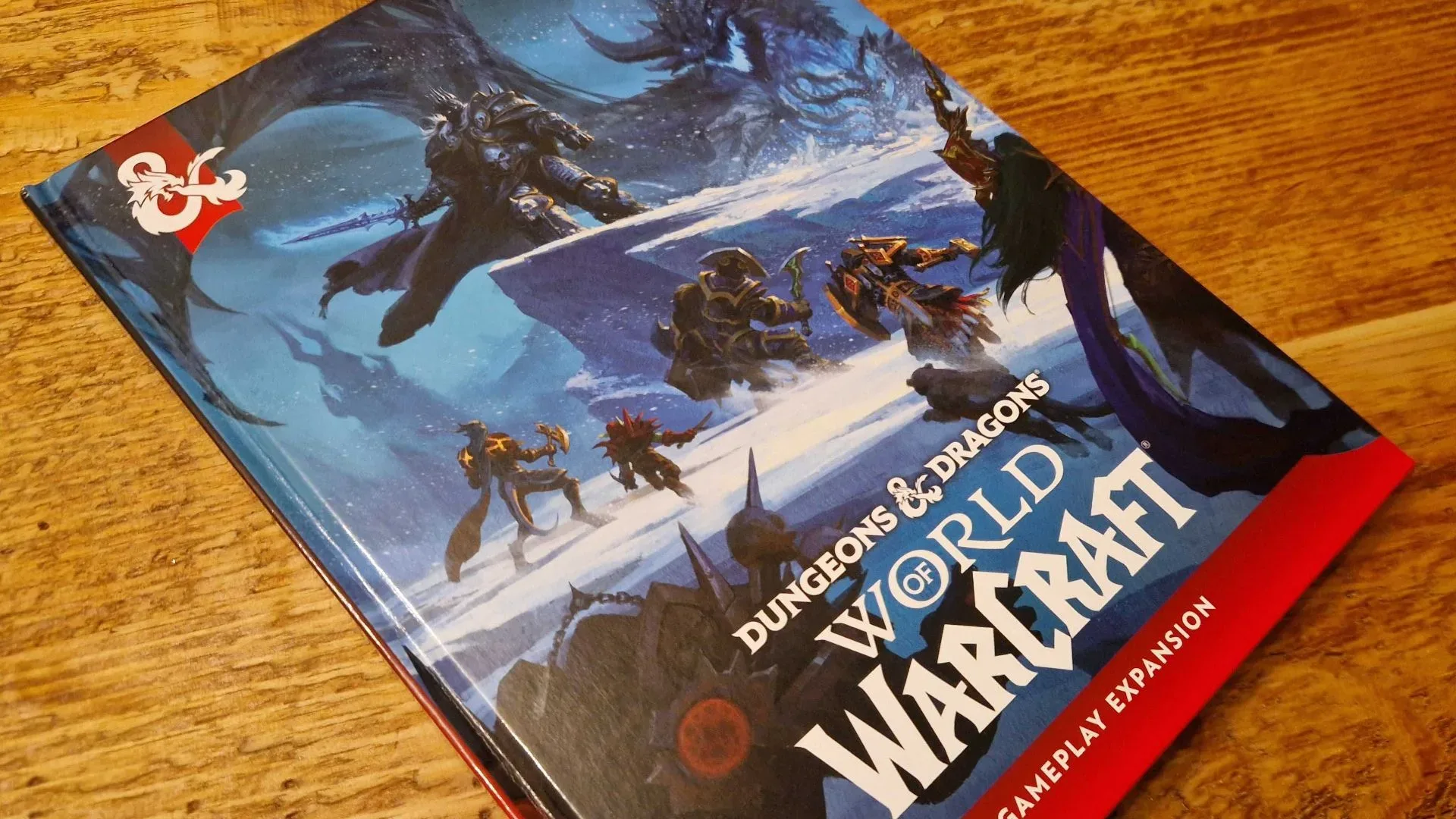
The physical book is available to pre-order ahead of a November 17 release. Those with a Master Tier subscription on D&D Beyond can access the digital file now. It is the first Universes Beyond crossover for Dungeons & Dragons, setting a notable precedent before the planned D&D Star Wars project next year.
Azeroth needs more than a nostalgia tour
World of Warcraft and Dungeons & Dragons already share a great deal of genre language: parties, quests, dangerous ruins, monsters, magical loot and expansive fantasy conflicts. That overlap is an advantage, but it also creates a risk. A crossover can wind up feeling like a book of references that recognizes a place without giving players anything meaningful to do there.
This release instead has two jobs. For an established D&D group, it has to supply usable character options and adventures rather than merely invite recognition. For World of Warcraft players, it needs to make Azeroth feel wider than the routes and systems of the MMO. The setting material covers continents and conflicts, while the adventures point groups toward famous locations. More importantly, the framework permits a party to approach those locations on its own terms.
That distinction gets to the heart of tabletop roleplaying. A dungeon in a video game generally has designed boundaries: encounters trigger in prescribed ways, bosses occupy their intended arena, and success is measured by systems programmed in advance. A tabletop Dungeon Master, often shortened to DM, interprets rules and controls the world in response to player decisions. The best conversion is therefore not one that copies every pull and boss phase exactly; it is one that provides a compelling situation with enough pieces for a group to create its own answer.
Thirteen class options, with clear standouts
The first chapter introduces 13 options framed as subclasses for D&D’s core classes. In Fifth Edition terms, a subclass is a specialization layered onto a character’s base class rather than an entirely separate rules chassis. That approach matters for accessibility: players who already understand the core game can begin with a familiar foundation, then add Azeroth-specific abilities and themes.
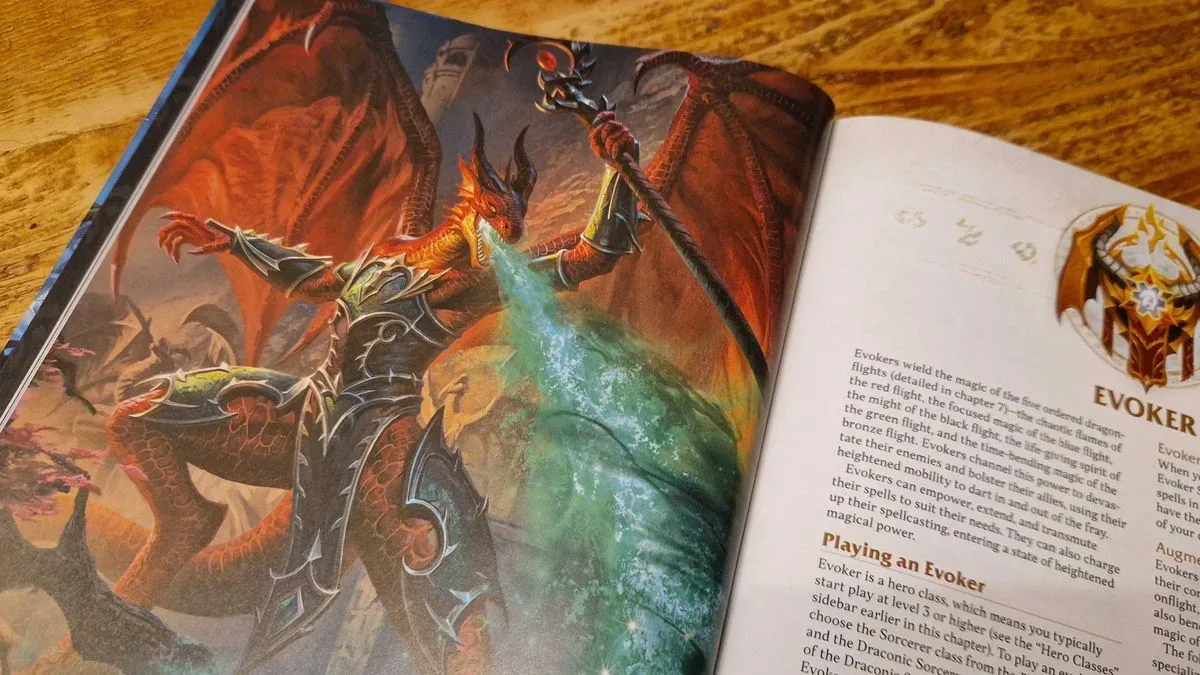
Some of the options are adaptations or revisions of existing D&D concepts; others are more distinct. The three Hero classes—Death Knight, Demon Hunter and Evoker—are the most striking portion of the lineup. They are available beginning at level 3, a limitation that fits their elite status in the setting while also matching a key D&D progression point, when characters commonly select their subclass.
The Death Knight’s toolkit includes Runeforging, ghostly mounts able to move through foes, and potent spells designed to assist allies as well as threaten enemies. That combination captures a particular fantasy beyond surface-level flavor: a character who is imposing and supernatural, yet has mechanical reasons to contribute to the party’s survival and positioning.
Related coverage includes D&D World of Warcraft Brings Azeroth's Dungeons and Hero Classes to the Table.
Demon Hunters also appear to have a strong identity. Their Soul Fragments can support healing while harming opponents, creating a resource loop that rewards engagement with the subclass’s central theme. The option can also double-jump, an unusually playful mobility feature in a tabletop context. Movement powers are often more consequential at the table than they look on a character sheet, because they can change how a player approaches traps, elevations, escape routes and encounters that would otherwise be straightforward.
Not every addition seems equally transformative. Hunter, Monk and Druid options have their own points of emphasis—pets, Mystic Brews and beast forms with dedicated powers—but they read more as expansions of familiar D&D territory than wholly fresh play patterns. The Warrior is the thinnest example, receiving a limited set of new Battle Master maneuvers beyond what Fighters already use.
That unevenness is not necessarily a failure. A supplement does not need every subclass to reinvent a core class. Familiarity can be valuable for players who want an Azeroth identity without mastering a new rules layer. Still, prospective buyers primarily searching for novel mechanics should pay closest attention to the Hero options, where the crossover’s personality appears most vivid.
What “reskin” means—and why it is not always a criticism
A reskin is a rules element whose underlying mechanics resemble an existing option but whose names, imagery or narrative framing have changed. It can be a cost-effective and useful design choice. A reskinned ability may remain easy to learn, fit the game’s balance expectations and still make a player feel at home in a new setting.
The trade-off is that it can feel less exciting to someone who already knows the base game well. D&D World of Warcraft seems to sit on both sides of that line: several options extend established designs, while the Hero classes offer more persuasive reasons to explore the book on mechanical grounds.
Six dungeons aim to preserve player choice
The back half of the book contains six dungeons drawn from different parts of World of Warcraft history, including Shadowfang Keep, Deadmines, Blackfathom Deeps and Onyxia’s Lair. Each runs roughly six to eight pages and includes encounters, plot hooks and boss material. That is a compact format, suggesting adventures intended as ready-to-adapt expeditions rather than exhaustive campaign books.
Several locations have complications that give encounters a purpose beyond simply defeating every hostile creature in the room. In Deadmines, players can sabotage the pirate ship Juggernaut. Blackfathom Deeps includes a sequence in which the group faces enemy waves while ritual braziers illuminate the route to the final boss. These are the kinds of scenario elements that help a tabletop dungeon retain momentum: the party has an objective, pressure is applied, and choices can affect how the situation develops.
The book also encourages DMs to entertain plans such as disguises, stealth and other inventive approaches rather than treating an adventure as a mandatory combat corridor. Random encounter tables further support that flexibility. Such tables provide possible events or adversaries that can be selected or rolled at an appropriate moment, helping the DM make the world feel active without scripting every beat in advance.
This is where the adaptation looks most promising. Familiar dungeons can become a foundation rather than a museum exhibit. A group may recognize the destination but still tell a different story about getting through it, whether that means blundering into a battle, bluffing past guards or devising an entirely unforeseen scheme.
The practical catch: this is not a complete beginner box
The book welcomes both D&D and Warcraft fans, but it is a supplement rather than a self-contained tabletop game. Players will need either the free Basic Rules on D&D Beyond or a Player’s Handbook. A DM will need both the Player’s Handbook and the Monster Manual. The Dungeon Master’s Guide would be useful, though it is not presented as essential.
That matters most for groups new to D&D. The included dungeons provide broad outlines, but they are not line-by-line instructions for running a session. A confident DM who is comfortable improvising can turn that openness into a strength. A first-time DM may need to do extra preparation: understand the encounters, decide how noncombat plans might work, and be ready to fill gaps when players choose an unexpected direction.
There is a meaningful difference between an adventure that is flexible and one that is low-preparation. D&D World of Warcraft appears to favor the former. Its dungeon material provides recognizable places, hooks and confrontations, but asks the person running the game to connect those pieces in play. That should be made clear to Warcraft fans who are attracted by the promise of taking on iconic dungeons with friends but have not previously run a tabletop campaign.
Digital access also should not be confused with an MMO-style experience. The D&D Beyond file supplies game material for a group at a table or online; it does not replace the social role of a DM or automate the adventure into a video game. That distinction is especially relevant in a broader games landscape where a download can mean anything from a rules book to a playable build, as with the recently released Ghost Haunting demo on Steam.
An encouraging first crossover, with the right caveats
On the evidence available, D&D World of Warcraft avoids being a shallow exercise in name recognition. The Death Knight, Demon Hunter and Evoker give the rules side of the book genuine energy, and the six dungeon scenarios appear designed to invite schemes instead of demanding a rigid reenactment of MMO encounters. The worldbuilding section also gives groups a route to explore Azeroth beyond the game’s map and quest structures.
Its limitations are equally clear. The subclass roster is uneven, with certain options closer to familiar D&D builds than bold new designs. The adventure sections are concise and depend on DM interpretation, so complete newcomers should arrive with the appropriate core rules and realistic expectations about preparation.
For groups prepared to meet it halfway, that may be the correct balance. Warcraft’s recognizable dungeons and class identities are present, but the tabletop format is allowed to do what it does best: let a party make a mess of a plan, invent a better one, and leave a place changed in a way no pre-programmed run could predict.
Shop the products
Check current price, model and availability at the retailer.