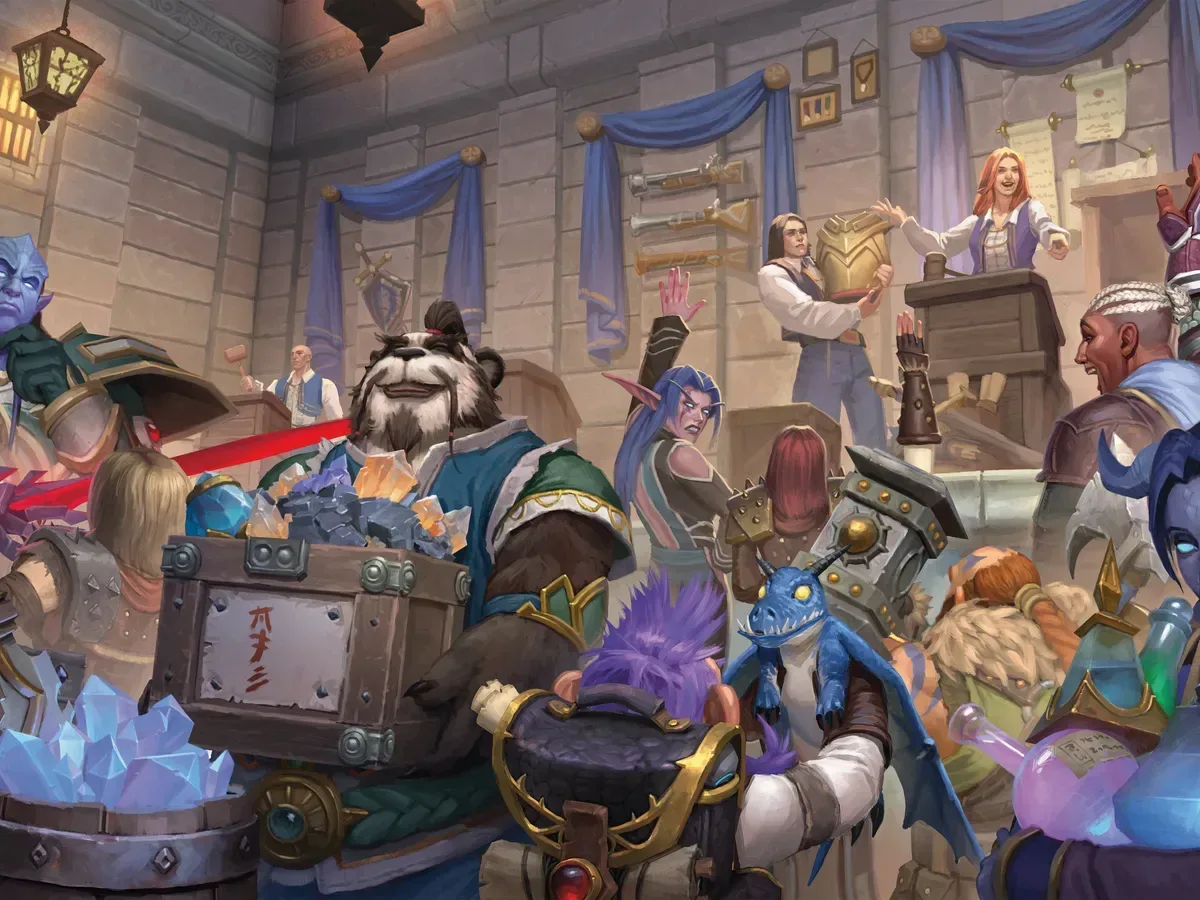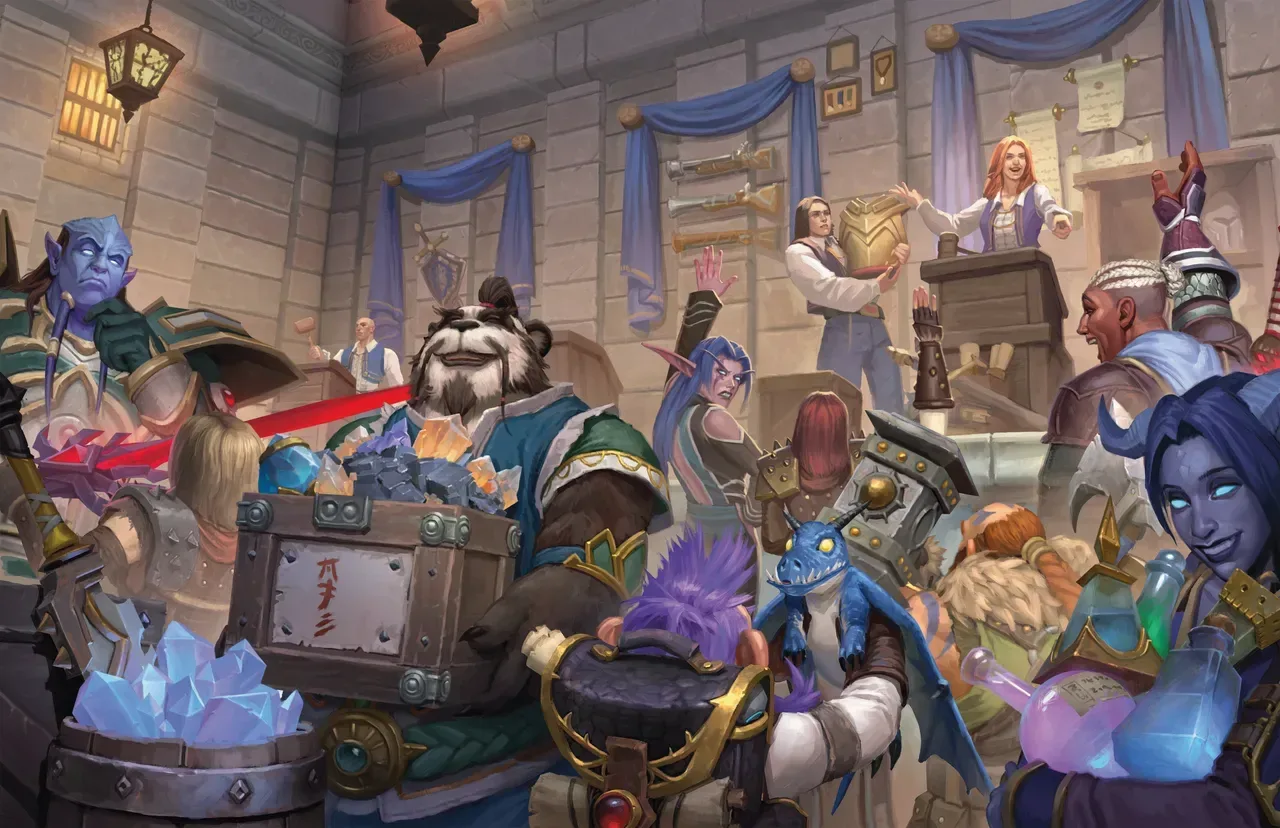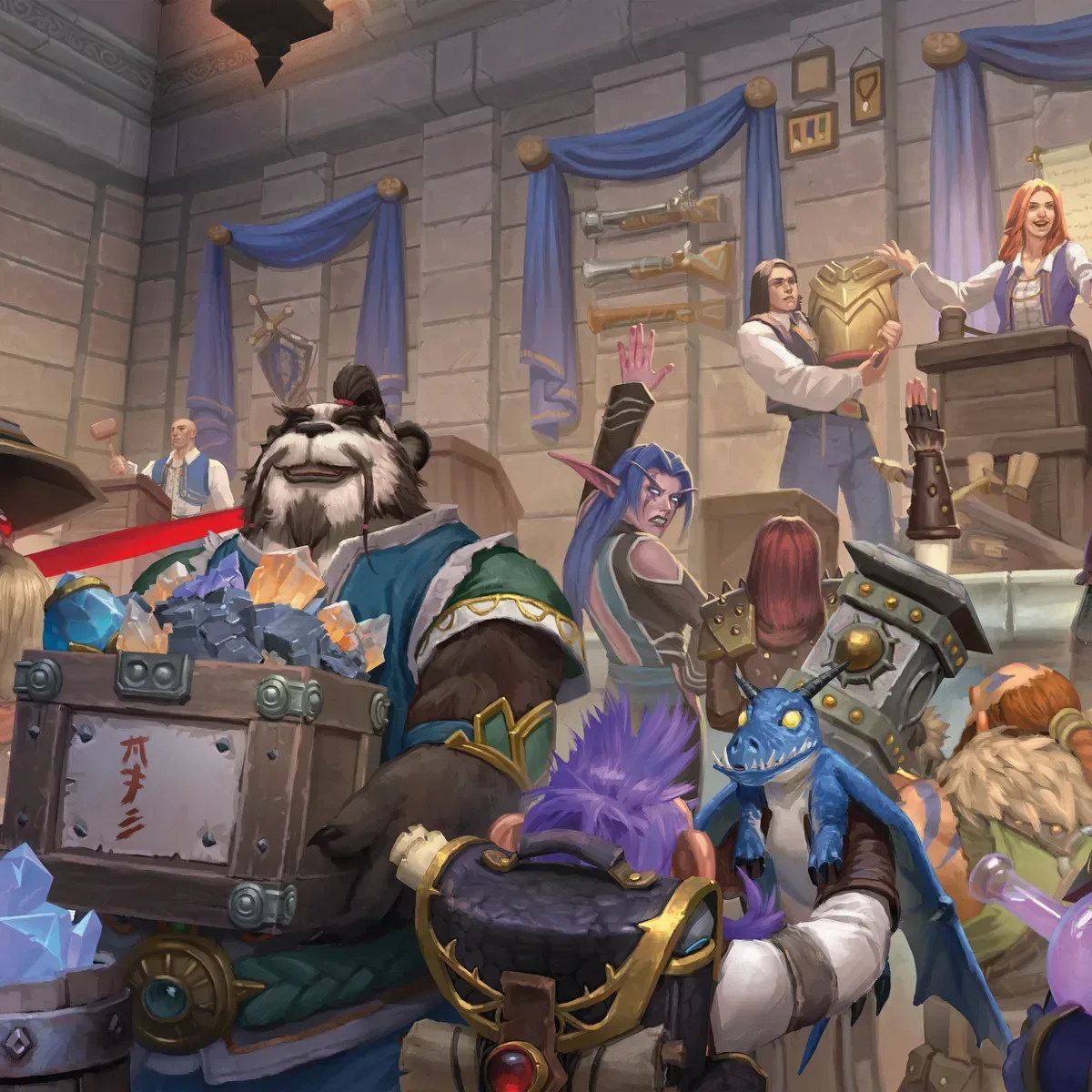
Dungeons & Dragons: World of Warcraft is approaching with an unusually clear design ambition: bring the people, places and conflicts of Azeroth into a tabletop campaign without attempting to reproduce every button, rotation, talent calculation and raid routine from the MMO.
That distinction matters. World of Warcraft is built around software-enforced systems, repeatable activities and highly specific combat roles. Dungeons & Dragons is built around a Dungeon Master responding to player decisions, including decisions no video game designer could practically account for. The new book’s principal designer, James Wyatt, describes its approach as a “paraphrase” rather than a translation. In practical terms, that means preserving Warcraft’s recognizable fantasy while prioritizing the broader, improvisational rules of D&D.
The result sounds less like an attempt to turn a tabletop session into a raid night and more like a substantial campaign toolbox. Players can make Azeroth-flavored characters, Dungeon Masters can use selected dungeons and monsters, and groups can build campaigns around major conflicts in the setting. But the book’s structure is deliberately intended to leave room for negotiations, detours, strange solutions and alternate history—the kinds of things that make a table delightfully difficult to patch-note.
Azeroth as a starting point for new D&D players
The expansion is not positioned as a dedicated beginner box, but Warcraft familiarity may make it a useful route into D&D for people who know Azeroth but not the tabletop game’s usual species and classes. A player who already understands the broad identity of a Warcraft priest, paladin, warlock or demon hunter starts character creation with a strong imaginative anchor. They may not need to first decipher what a tiefling is, or how a D&D class relates to the sort of hero they want to play.
There is also a short introduction explaining what D&D is, alongside direction toward D&D Beyond for further resources. That is a sensible bridge: familiarity with Warcraft’s world can reduce the lore barrier, while the basic D&D explanation can address the very different social rhythm of tabletop role-playing.
The most important adjustment is not mechanical but conceptual. In an MMO, players select from programmed abilities and operate inside boundaries set by encounters. At a table, a player can propose an unexpected plan and ask the Dungeon Master how it might work. During an early playtest, one new player reportedly decided that a Forsaken warlock lacking a lower jaw could not properly cast spells. After a magical mishap, the character tore off an arm and threw it at a monster. It is a wonderfully grim piece of Azeroth role-play, but more importantly it illustrates the book’s intended freedom: the character sheet is a framework, not a menu that exhausts a character’s possible actions.
Why the book is not trying to recreate Warcraft’s combat math
Warcraft classes and specializations carry enormous mechanical detail. Talent trees, level-based abilities and tightly defined roles are designed for a live video game where damage, mitigation, healing and encounter execution can be measured at extraordinary granularity. D&D has combat rules too, of course, but it generally does not ask a group to emulate that same density of numerical decision-making.
Wyatt’s solution was to examine Warcraft’s abilities and talent options—apparently focusing roughly through level 60—and identify the parts that best evoke each class and specialization in D&D terms. The tools include new spells, feats and Battle Master maneuvers, plus selections of feats intended to guide a character toward a recognizable specialization fantasy.
Related coverage includes Dungeons & Dragons: World of Warcraft Aims to Bring Azeroth to the Table Without Copying the MMO.
A feat is an optional character benefit that can grant a distinctive capability or improve a particular style of play. Battle Master maneuvers are tactical techniques associated with that D&D fighter subclass. Both are useful vehicles for this adaptation because they add flavor and choices without needing to rebuild D&D’s entire class architecture.
That means a Warcraft identity should be present without locking characters as tightly into MMO jobs. A healing-specialization paladin and a tank-specialization paladin perform sharply separated functions in Warcraft. A D&D paladin, whatever subclass or feats they choose, remains able to support allies and withstand danger. Similarly, the adaptation does not force a priest equivalent into cloth armor alone, because stripping those wider D&D cleric options away would create more friction than flavor.
The new Devourer Demon Hunter material follows the same principle. Havoc and Vengeance had already provided a foundation, while the Devourer direction adds spells and guidance aimed at its soul-consuming theme. The purpose is not a one-to-one recreation of a spec’s exact toolkit. It is to let a player communicate that fantasy through their choices at the table.
This may frustrate anyone hoping for an exhaustive conversion document, but it is also probably the right call for the medium. D&D characters need enough range to answer unpredictable situations. A group should not have to abandon diplomacy, stealth or a bizarre environment-based scheme because someone’s Warcraft role was originally optimized for one narrow combat purpose.
Dungeons are maps and prompts, not a conveyor belt
Concern about a combat-heavy Warcraft book is understandable. Dungeons and raids are central to the MMO’s identity, and Azeroth has far too many notable instances to fit into one tabletop product. The dungeons selected for the book were chosen partly because they reinforce six major conflicts of Azeroth outlined in the setting material. Their popularity and resonance with players also informed the process, as did space and the level ranges appropriate for characters.
But the dungeon presentation is intentionally light-touch. Dungeon Masters receive maps with points marking bosses the party is expected to meet at some point, rather than a rigid instruction sheet dictating every room-to-room beat. Encounter tables can help create combat if a group wants it, but the intervening material is meant to be open to improvisation and environmental exploration.
That is the key tabletop difference. In Shadowfang Keep, for example, a party can attempt to speak to whoever it meets, manipulate something in the environment, sneak past a threat or turn a presumed boss encounter into an entirely different scene. The Dungeon Master can react. In a video game, even an extremely generous quest design still has to be programmed in advance.
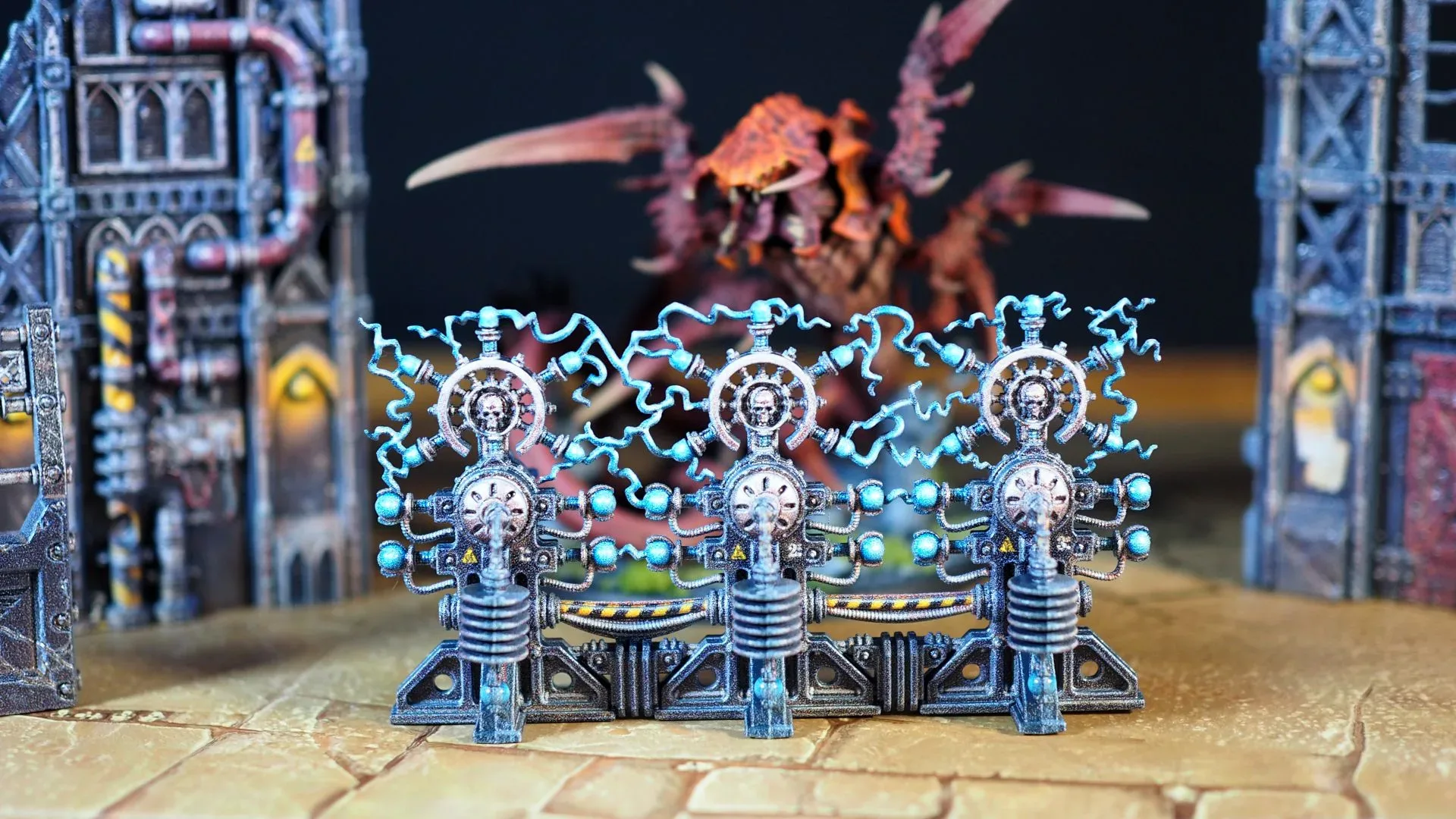
The book’s broader role is therefore closer to a sourcebook than a scripted adventure path. It includes character options, monsters, dungeons and campaign-building guidelines, while leaving the table a large blank space to fill. It is the same reason practical tabletop products such as pre-painted terrain can be valuable: supplied material reduces prep burden, but the people around the table decide what story happens on it.
Icecrown Citadel gets a more focused tabletop treatment
One major exception to the sourcebook’s more modular approach is Icecrown Citadel. It is planned as a digital-download adventure, with a separate map pack containing five double-sided poster maps focused on its boss fights. The map pack includes a code for the adventure.
Its Lich King encounter is a useful snapshot of how the adaptation handles famous raid bosses. Arthas is Challenge Rating 25, a serious number when D&D characters ordinarily top out at level 20. Challenge Rating, or CR, is D&D’s broad measure of how threatening a monster is expected to be. It is guidance rather than a guarantee—party composition, resources and player decisions still matter—but CR 25 clearly signals a climactic, dangerous enemy.
Even so, the encounter cannot and does not aim to reproduce a raid encounter exactly. A D&D fight can consume substantial real-world time despite lasting only three or four rounds in game terms, so neither players nor bosses can cycle through MMO-scale sequences of actions. The stated goal is to create the feeling of the confrontation, with familiar elements, rather than import every mechanic verbatim.
The narrative freedom remains intact, too. In theory, a party could try to persuade Arthas away from his course, infiltrate the Citadel for the Helm of Domination, or otherwise approach the situation at a strange angle. Whether such a plan succeeds is naturally up to the Dungeon Master and the dice. The point is that it is allowed to be attempted.
Renown replaces the grind with campaign momentum
Faction reputation is another Warcraft pillar being reshaped for a tabletop campaign. The book uses the optional renown system from the Dungeon Master’s Guide to give groups a stake in the Alliance, Horde and other factions. Renown is a measure of a character’s standing with an organization; it can provide rewards and help make affiliations matter in the campaign’s fiction.
Crucially, this system is optional rather than “load-bearing.” A group that has no interest in tracking faction points can ignore it. The Dungeon Master’s Guide also provides a way to map renown to character level instead, with an expectation that a hero is exalted with their home faction by 17th level.
Icecrown Citadel uses a bespoke, accelerated version for the Ashen Verdict. Renown rises as the party advances through encounters, so progression belongs to the campaign’s one journey through the Citadel rather than a repeated content loop. Rewards include improved rings through Armis the Penitent, while characters can also gather material associated with creating Shadowmourne.
This is a sharp and welcome translation of the underlying idea behind reputation. The tabletop version is not asking a party to reproduce a massive grind. It uses faction progress to make loyalties tangible, reward advancement and reinforce the feeling that characters are becoming important to the organizations they serve.
Chromie Time is permission to stop policing canon
Perhaps the book’s most valuable piece of campaign advice is Chromie Time. Chromie provides an introduction and scattered notes, but the deeper function of the time-travel framing is simple: it gives groups explicit permission to choose their own period of Azeroth’s history, mix eras or disregard established continuity when that makes for a better campaign.
That is particularly useful in a setting with a long-running, constantly evolving story. A table can decide it wants a campaign during an older era, a current-era story or an alternate timeline where something went dramatically wrong. One example campaign begins with characters in a contemporary Silvermoon City after aiding the effort against Xal’atath, only for a broken time stream to place them in a version of the city ruled by dragons and send them back 20 years to investigate the change.
It is not mandatory setting canon. It is a model for the sort of freedom the book encourages. If a Dungeon Master wants a familiar dungeon populated by different foes, a faction conflict resolved another way, or a version of Azeroth where a major event never happened, Chromie Time offers a clean in-world excuse to do it.
There is room for more, but no promise yet
The book reaches through the beginning of Midnight, but its creators do not present it as an exhaustive account of recent or future Warcraft developments. Wyatt noted that there is little material on Xal’atath and no stat block for her, while the Titans receive some coverage early in chapter five. Future content, including a new class or later stories, could offer obvious material for another book—but no follow-up product has been confirmed.
Likewise, content associated with Forever arrived too late for meaningful inclusion. The designer suggested that adding a new elven lineage such as the Skyborne would not be especially complicated, and raised the possibility of a D&D Beyond release, but that remains only a possibility. The more immediate message is that groups should feel free to adapt new zones, characters and ideas themselves.
For Warcraft players, that may be the clearest expectation to bring to the table: this is not a museum catalogue of every expansion, dungeon, class feature and plot point. It is a set of tools for turning Azeroth into a place where the party can make decisions the MMO could never anticipate—and then live with the spectacular consequences.