There is a particular kind of unfinished-project guilt that lives under a Warhammer player’s bed: the half-painted ruin, the foam hill that needs “just a little texture,” the untouched scenery sprue that has been waiting for its moment since a previous edition of the game. Miniatures tend to receive the attention first. They are the army, the characters, the carefully chosen colors, the reason everyone gathered around the table. Terrain is vital to making that table feel like a battlefield, but it is also a substantial additional hobby project.
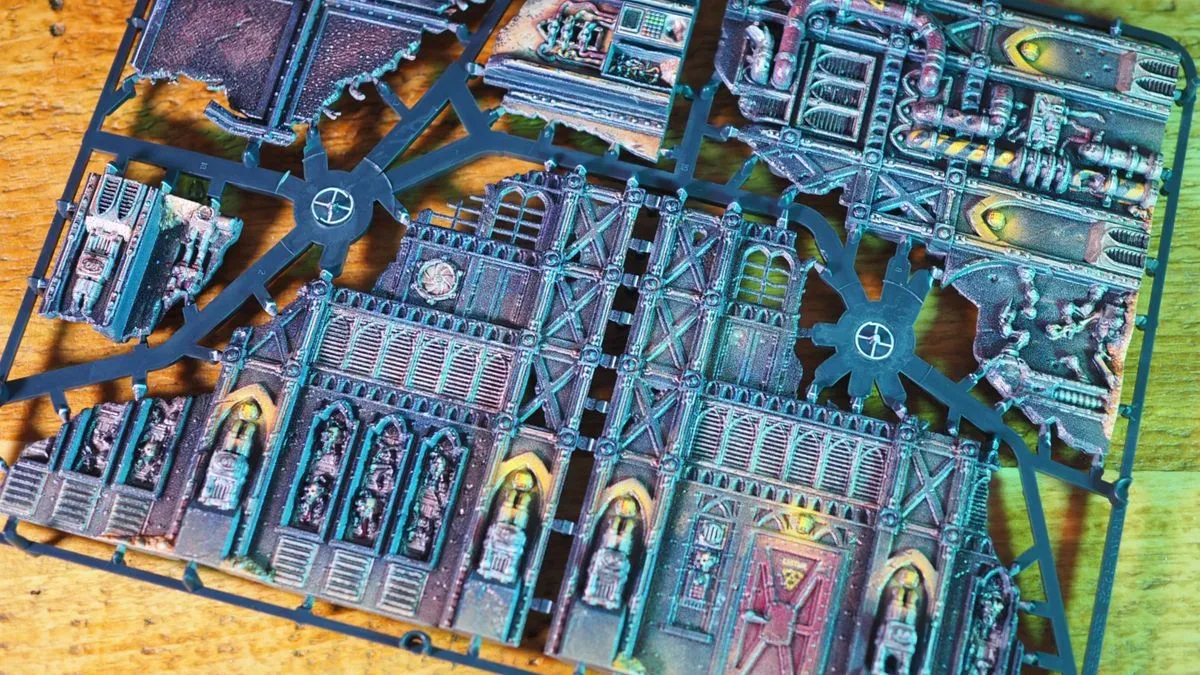
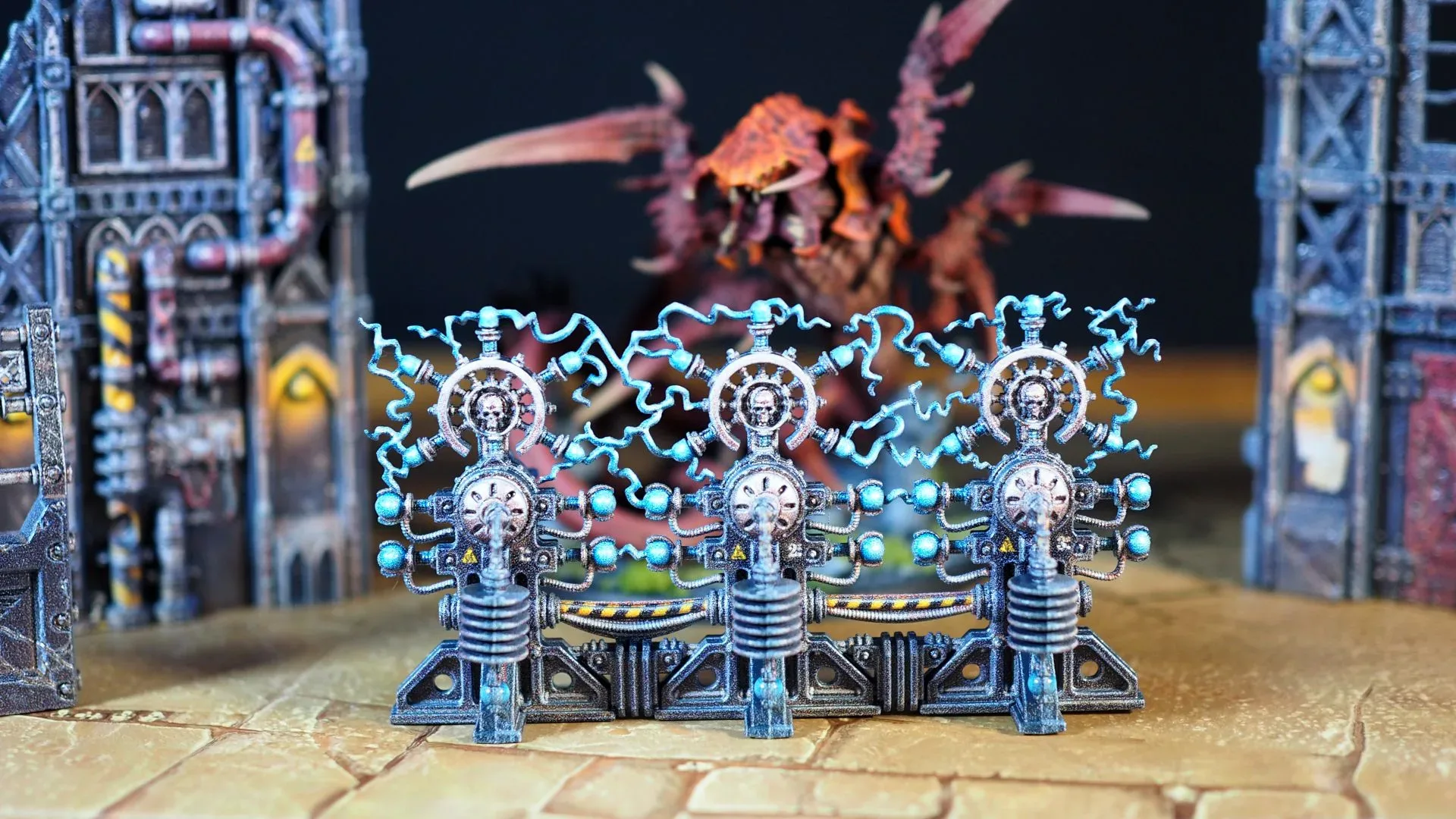
Warhammer 40,000 Battlefields: Armageddon is built around removing much of that bottleneck. The terrain arrives pre-painted while still on its sprues. Buyers clip out the components and slot them together, with no glue required. The intended result is not a terrain kit that demands a separate assembly-and-painting campaign before its first game, but a battlefield that can move from box to table in relatively short order.
That is a straightforward idea, yet it could be unusually consequential for players whose collection has outgrown their available hobby time. The set is due to release on October 31 and is available to pre-order directly. It carries a distinctly premium proposition, estimated at about $350/£220—roughly the reported cost of two Combat Patrol boxes. That puts it far outside impulse-buy territory. But the value discussion is not only about plastic terrain; it is about how much painting, preparation, and project management a player wants to avoid.
A battlefield without the terrain backlog
Warhammer tabletop games ask players to wear several hats. There is list-building, model assembly, painting, rules learning, arranging games, and transporting everything to a club or friend’s house. A full board adds another set of jobs: acquiring the pieces, removing them from sprues, cleaning mould lines and attachment points, priming, basecoating, shading, weathering, drybrushing, adding details, and sometimes building a board surface to put under it all.
None of that makes conventional terrain a bad option. For many hobbyists, hand-building scenery from foam, printed materials, or spare kit components is a rewarding creative outlet. A personally made board can have a distinctive identity and can be altered over time. The important point is that this route asks for labor in addition to money. It competes directly with the work needed to finish the miniatures that will stand on it.
Armageddon’s proposition is therefore best understood as a time-saving product rather than an attempt to replace terrain craftsmanship altogether. A player can still personalize it later if they wish. The immediate benefit is that the table starts from a presentable baseline instead of from bare gray plastic.
The phrase “battlefield in minutes” deserves a little practical caution. The kit does not require glue, and its push-fit construction is designed to be quick, but it includes a great deal of scenery. Clipping and constructing the full contents is still likely to be an hour-or-two task rather than a literal few-minute job. Even so, that remains dramatically less work than assembling, priming, and painting equivalent terrain from scratch.
What “UV printed” means for the finish
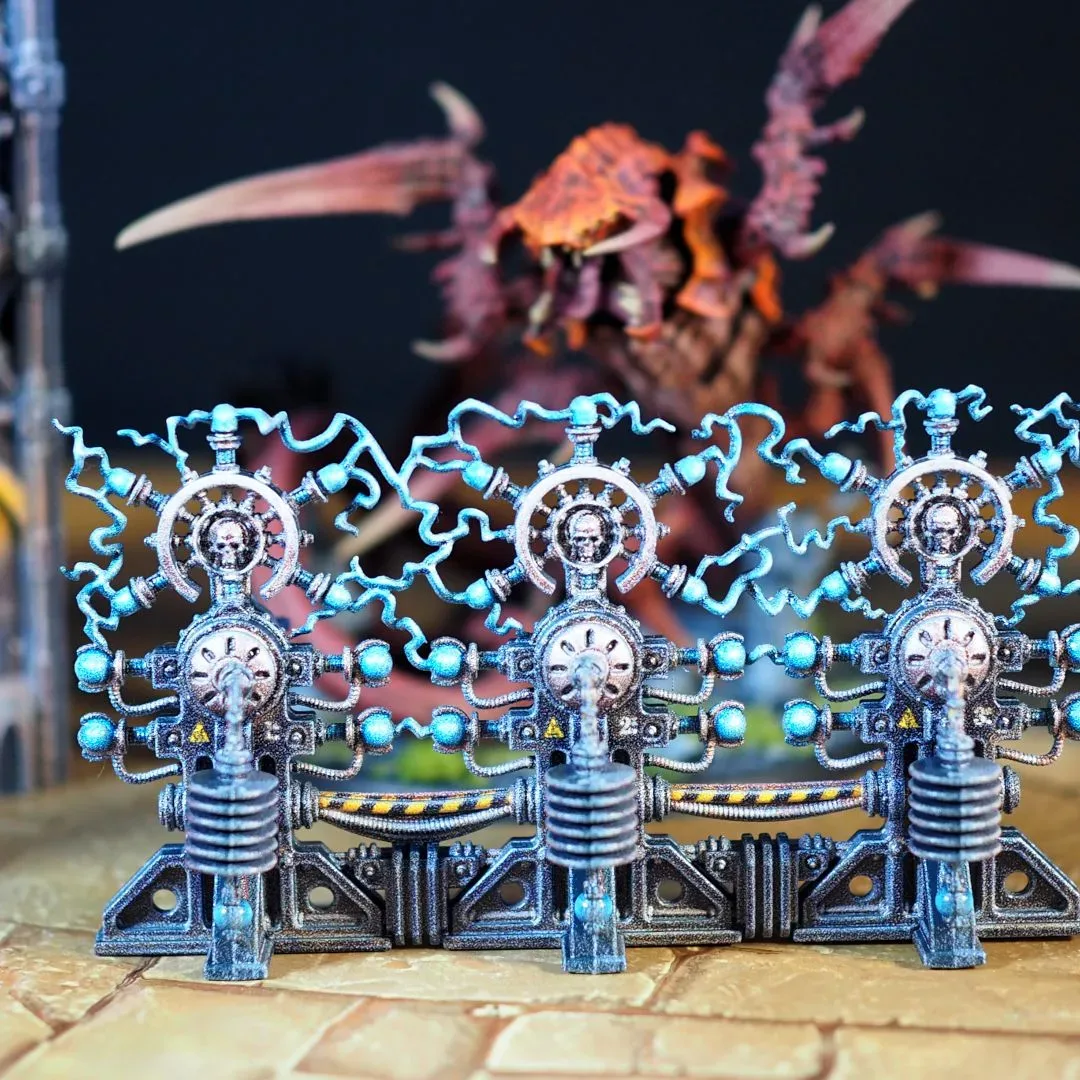
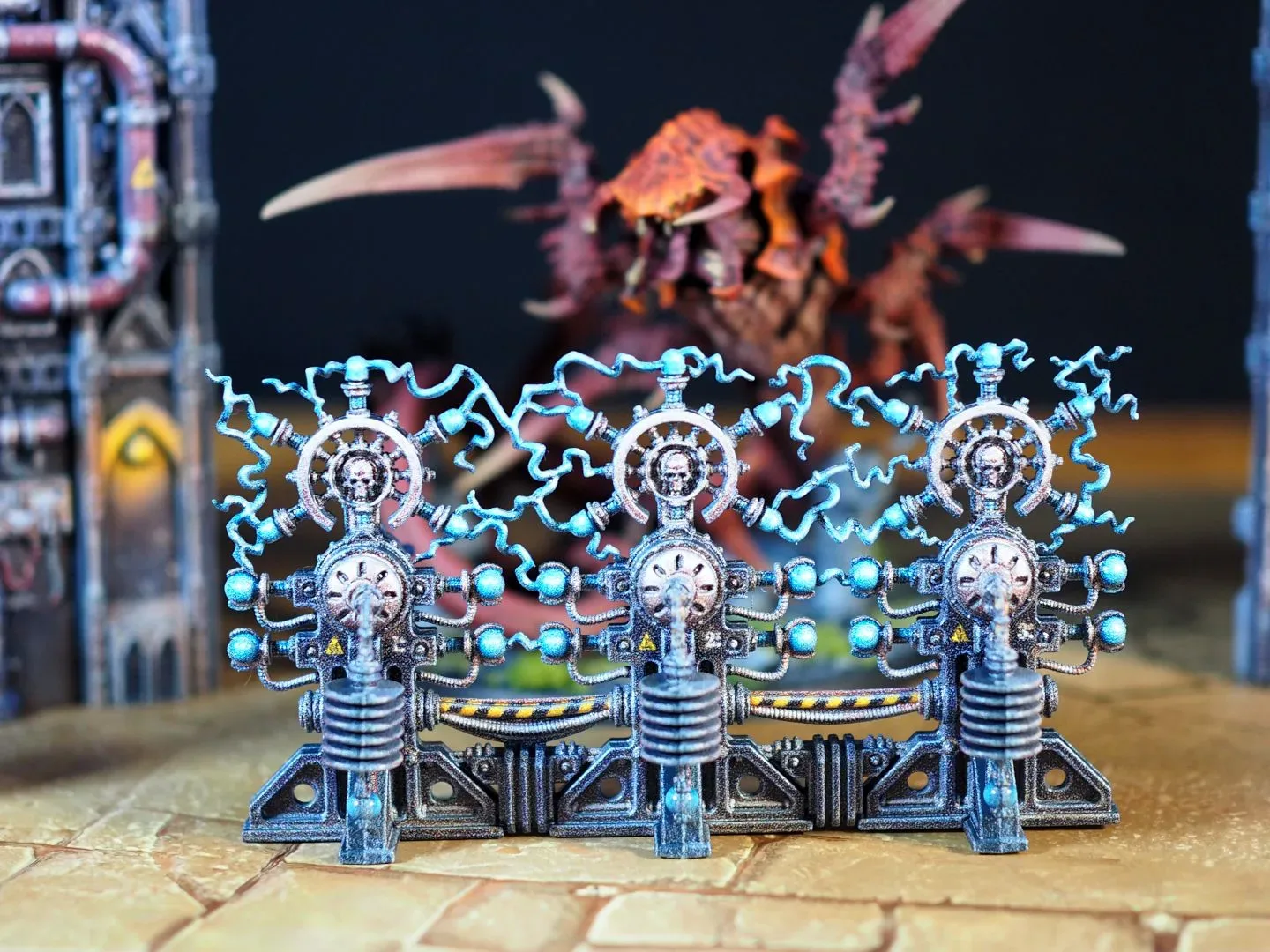
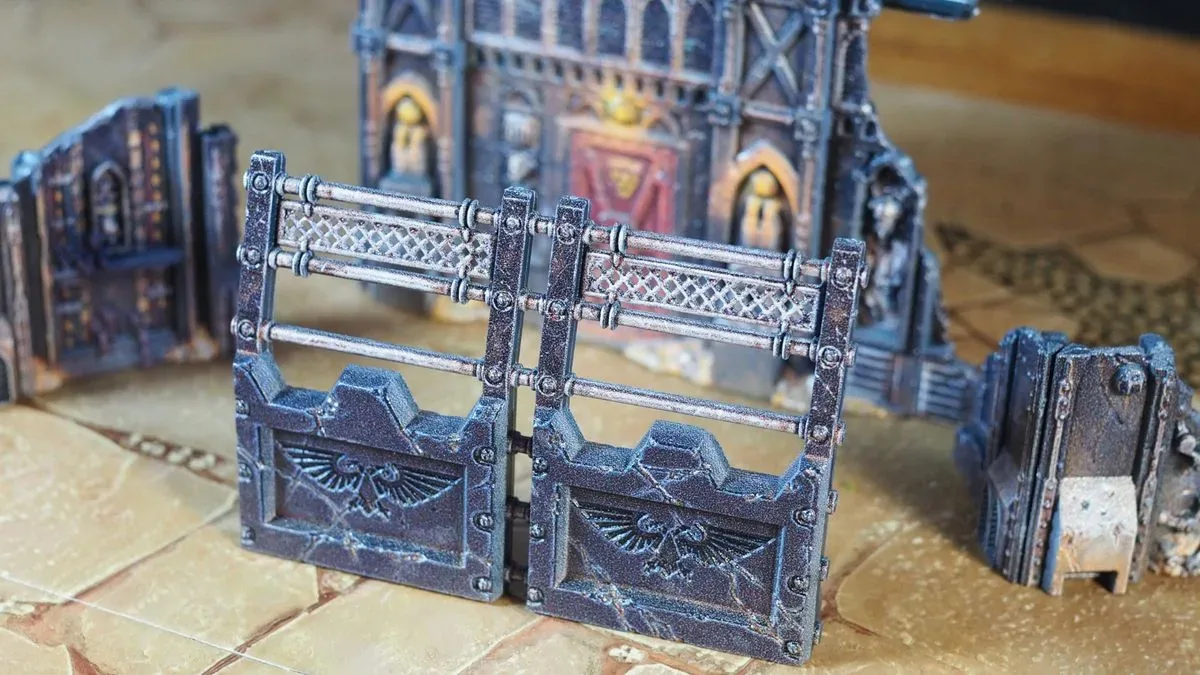
The visual shortcut here comes from UV printing. In simple terms, paint is applied and then cured—dried almost instantly—with ultraviolet light. That process enables the terrain to be sold with its color treatment already applied. It also creates a recognizable graininess in the finished surface.
Related coverage includes Warhammer 40,000 Battlefields: Armageddon Could Make Fully Painted Tables Far More Accessible.
That texture will be subjective. Players who prize a very smooth, carefully blended paint finish may find it less refined than individually painted scenery. At close range, UV printing cannot necessarily preserve every small, recessed, or subtle detail with the same clarity that a patient painter could pursue over multiple sessions.
Yet the technique arguably fits the subject matter unusually well. Warhammer 40,000 thrives on industrial decay, blasted masonry, smoke-stained metal, damaged surfaces, and a universe in which even the architecture looks as though it has endured several apocalypses. A slightly gritty finish does not clash with that visual language. On terrain specifically, which is usually viewed across a table rather than held inches from the eye, the effect can read as atmosphere rather than compromise.
The important details appear to be handled with more precision than the printing method might suggest. Some less prominent features may soften or disappear, but the areas that naturally draw attention retain definition and look neatly executed. That distinction matters. Terrain needs to establish a convincing scene, frame movement and firing lanes, and make the models feel situated in a world. It does not need to compete with a centerpiece character miniature for scrutiny.
Keeping the focus on the armies
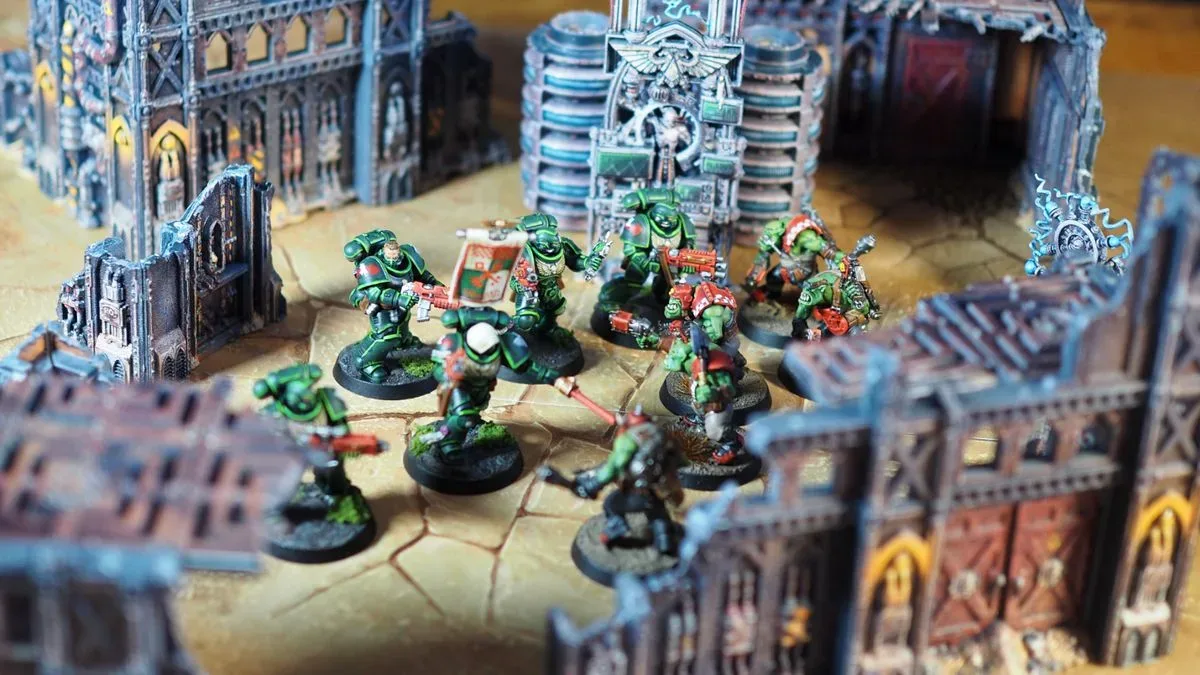
The low-key treatment is another sensible part of the package. A battlefield should be visually coherent, but the armies are the stars. If scenery is too busy, colorful, or contrast-heavy, it can distract from the models players spent their time painting. Armageddon’s grim, restrained presentation is positioned to support the army display instead: the board establishes the harsh future-war setting while allowing miniatures to stand out against it.
That makes the set potentially useful to more than newcomers. A veteran may have a painted army but lack a matching board, or may play enough different forces that a neutral industrial wasteland is more versatile than scenery tied strongly to one faction. A ready-painted layout also lowers the friction of organizing casual games. The difference between “we could play after we build a table” and “the board is already usable” is more meaningful than it sounds.
There is also a social benefit to reducing preparation. A player introducing friends to Warhammer 40,000 may not have the time or inclination to make a custom display board before anyone learns the game. A complete-looking battlefield makes the first session feel more like an event without requiring the host to complete an additional major hobby project first.
The unavoidable cleanup trade-off
Pre-painted on the sprue is convenient, but it cannot erase every piece of assembly evidence. Components still have sprue connectors: the small plastic links joining parts to the frame. Once clipped, they can leave behind little gray nubs. This is the most obvious limitation in the concept, because trimming and sanding those attachment points risks affecting a finish that is already painted.
Fortunately, many connection points are positioned where they become hidden after construction. The exceptions are likely to be rounded pieces, where hiding an attachment point is more difficult. On a conventional gray kit, an imperfect cleanup can simply be covered with paint. Here, any visible mark is potentially more noticeable because the surrounding piece already has a finished printed surface.
That said, the setting works in the product’s favor once again. Weathered, dirty-looking ruins offer visual camouflage for small imperfections, especially at normal playing distance. The issue is real and should be part of a buyer’s expectations, but it does not appear to undermine the larger promise: a good-looking board with vastly reduced effort.
Who is actually paying for convenience?
At an estimated $350/£220, Battlefields: Armageddon will make the most sense for a specific kind of buyer. It is not automatically the economical choice for someone who enjoys painting every surface, has ample time, or already owns enough scenery. Nor is it a substitute for a bespoke board made by a hobbyist who wants a particular narrative setting, color scheme, or layout.
It is more compelling for players who have money available but limited evenings to spend on terrain. That can include people whose armies already wait in a backlog, gaming groups seeking a communal board, hosts who want a reliable table setup, or collectors of miniatures who would rather put paint time into units and characters. The premium buys a much shorter path from unopened box to a cohesive battlefield.
Retail pricing may also vary. Although direct pre-orders are available, independent retailers can sometimes offer discounts, which could materially alter the calculation for anyone already considering the kit. Buyers should weigh the final price against not just other scenery boxes, but also against the supplies and hours that a paint-it-yourself solution would entail.
A format worth watching beyond Armageddon
The most interesting part may be what the set suggests for future tabletop products. If pre-painted, push-fit terrain proves popular, the same approach could fit smaller skirmish boards for Kill Team or fantasy battlefields for Age of Sigmar. A smaller gaming surface could be particularly attractive for players who want an attractive environment but do not have dedicated storage or a permanent hobby table.
That potential should not be confused with a confirmed roadmap; it is simply an evident opportunity created by the format. Still, the appeal is easy to understand. Terrain is often the final unfinished piece of an otherwise completed collection. A product that turns it into an assembly task rather than a multi-week painting assignment could broaden the number of people willing to play on a fully realized board.
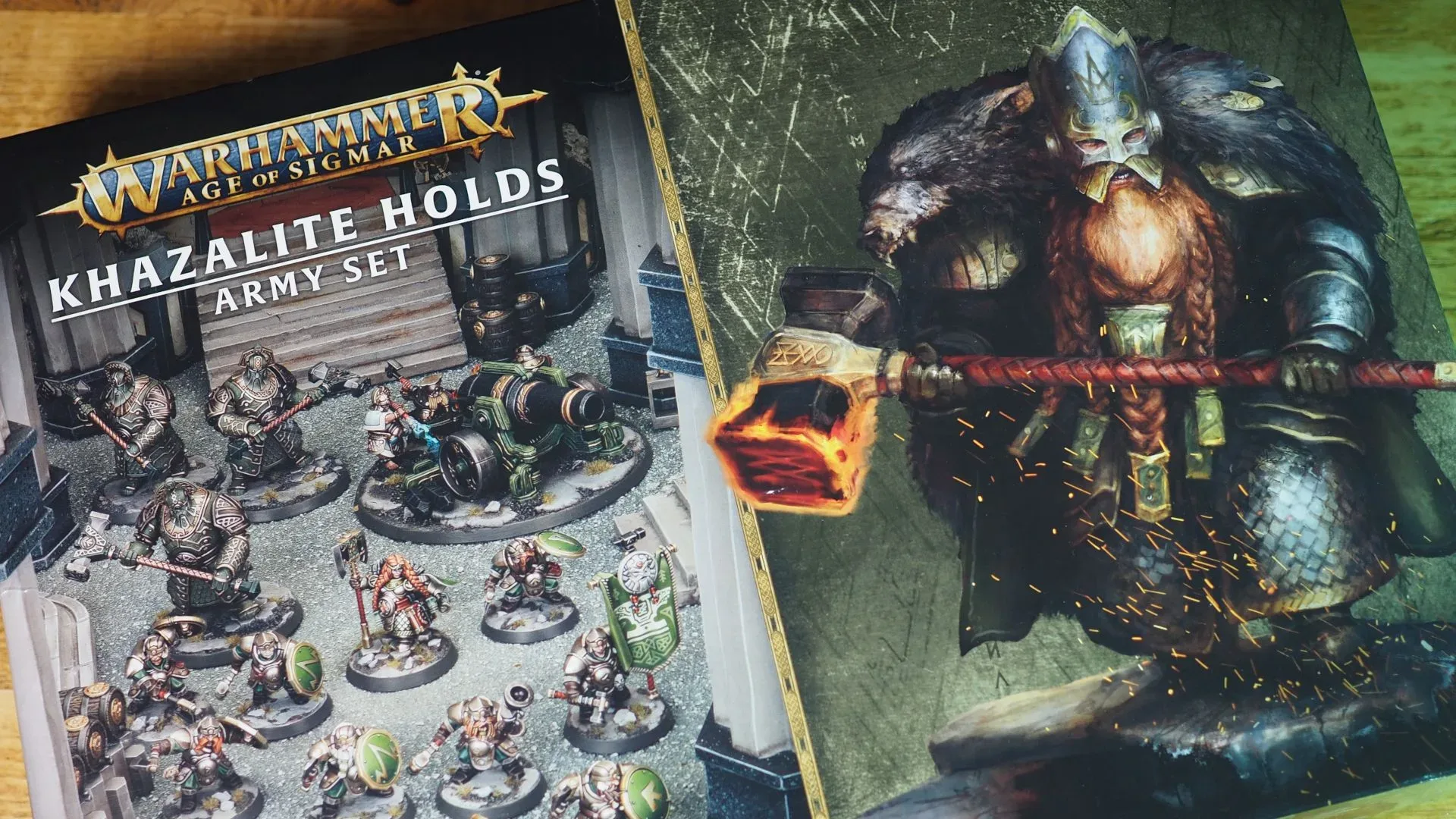
For fans already looking at the other side of Games Workshop’s fantasy range, the hobby conversation around the Khazalite Holds and Age of Sigmar’s duardin direction shows how closely new miniatures, visual identity, and collection priorities can intersect. Terrain rarely gets the same headline attention as an army release, but it has a comparable effect on how that army is experienced on the table.
Battlefields: Armageddon is not perfect, and its price ensures it will remain a considered purchase. Yet its central compromise is refreshingly clear: accept UV-print grain and occasional visible sprue cleanup, and gain a coherent, suitably grim Warhammer 40,000 environment without giving up dozens of hobby hours. For plenty of players, that exchange may be exactly the missing piece between owning an army and actually fielding it on a battlefield that looks ready for war.