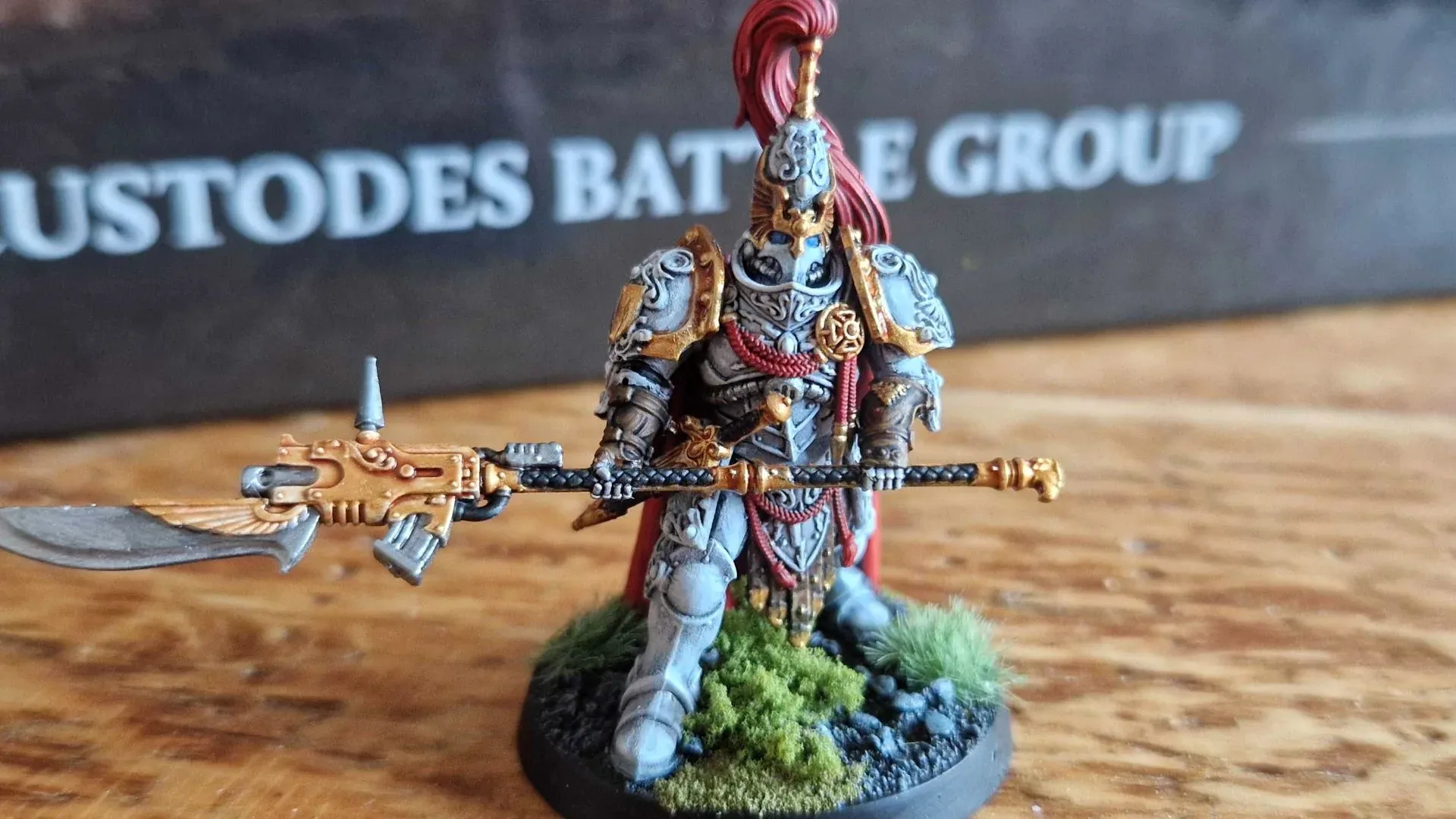
The Adeptus Custodes have always faced a difficult translation problem in Warhammer 40,000. In the setting, they are the Emperor’s personal guardians: warriors portrayed as enormously superior even to Space Marines. On the tabletop, however, an army needs enough models on both sides of the board—and enough opportunities for dice to matter—that no faction can simply be invincible.
That tension has made the gold-armoured force divisive ever since it became a full faction in 8th edition. The new 11th-edition Adeptus Custodes codex appears to make a clear choice about how the army should feel: smaller, exceptionally resilient, brutally dangerous, and defined by elite individual units rather than a mass of relatively interchangeable soldiers.
That does not automatically establish whether Custodes will be balanced. The decisive points values were not available alongside these rules, and points determine how many of these premium units actually fit into an army. But on the information available, the faction’s identity looks far more coherent than it did in 10th edition.
Why the stat changes matter
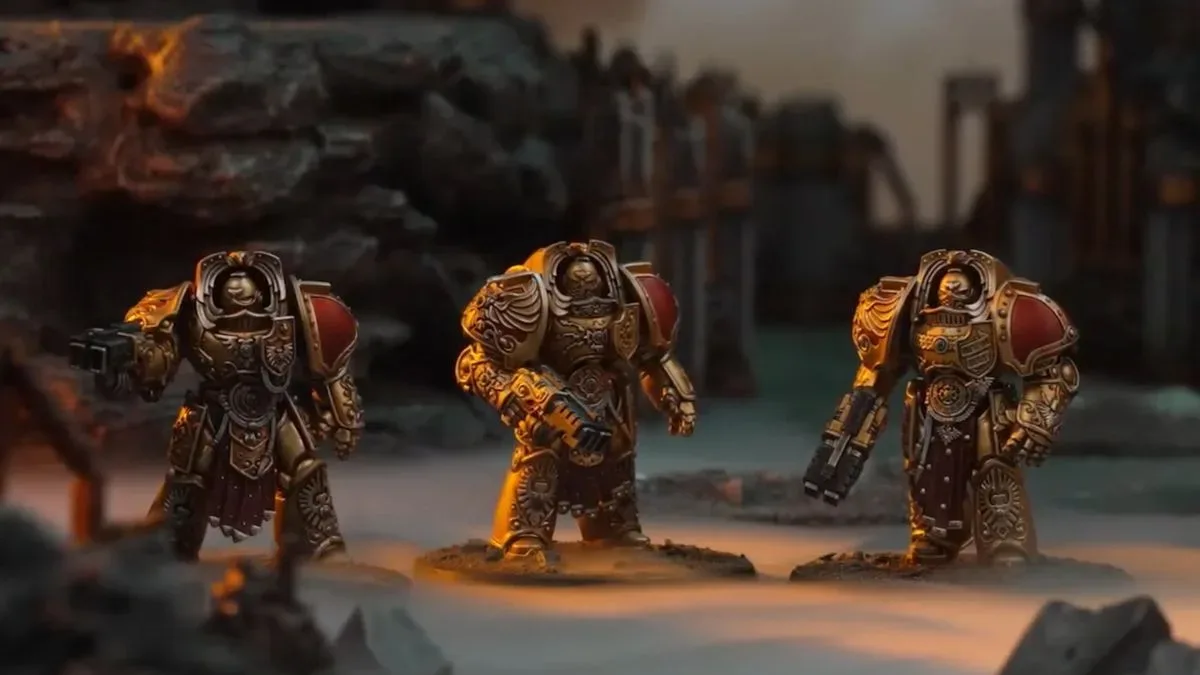
The basic Custodes profile described for the new book begins at Toughness 7, five Wounds, a 2+ armour save, a 4+ invulnerable save, and a 5+ Feel No Pain against mortal wounds. That is an enormous stack of defensive rules for a baseline troop choice, and it matters because each layer protects the model in a different way.
- Toughness affects how readily enemy attacks convert into wound rolls.
- Wounds measure how much damage a model can take before it is removed.
- Armour saves are the normal chance to resist damage after a wound is inflicted; a 2+ is among the best possible conventional saves.
- An invulnerable save is a protected save that remains available when an enemy weapon’s armour-penetration characteristic would otherwise heavily degrade conventional armour.
- Feel No Pain is a further roll used to ignore wounds after damage is allocated. Here it applies specifically to mortal wounds, a category of damage that can bypass many ordinary defensive assumptions.
Put together, those numbers do not make Custodians unkillable. They do mean opponents should expect to commit meaningful, focused resources before a small Custodes unit finally goes down. That is a much more convincing tabletop expression of a force whose members are supposed to be precious strategic assets rather than disposable bodies.
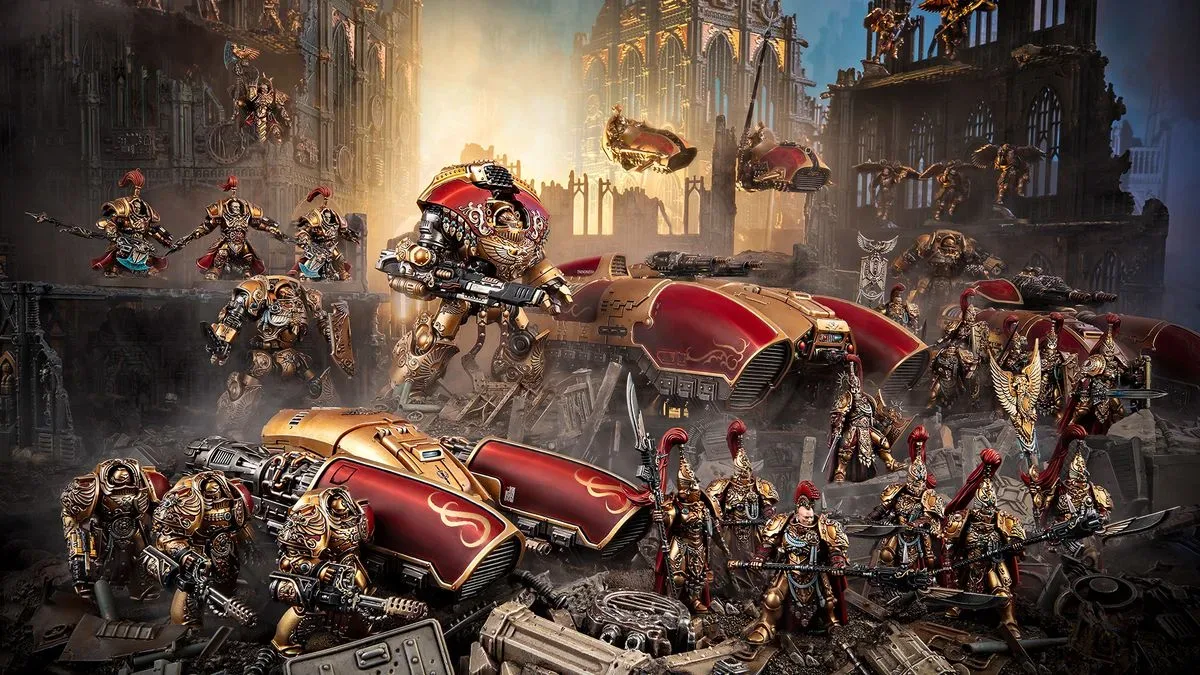
The ceiling appears higher still for elite entries such as Aquilon Terminators and Gyrfalcon Jetbikes. Their profiles are said to outstrip even famous Space Marine chapter-master benchmarks in toughness. The practical result is likely to be an army that asks opponents hard target-priority questions: shoot the durable infantry holding an objective, deal with fast jetbikes, or try to stop the even more intimidating vehicles and dreadnoughts.
There is a real game-design benefit to this. Custodes players can make decisions around a few important pieces and feel their army’s limited model count reflected in play. Their opponents, meanwhile, have an unmistakable battlefield puzzle. The danger, naturally, is that a durability threshold can become frustrating if it is priced too generously. That is why the eventual points document will matter more than any isolated profile.
Damage output is rising too
The codex is not merely making Custodes harder to remove. It also improves much of the army’s offensive hardware. Sentinel Guard blades gain an attack and move to Damage 2. Castellan axes carried by Wardens and Terminators reach Strength 10 and Damage 4. Many ranged weapons reportedly gain Strength and double their number of shots.
Related coverage includes Warhammer 40,000's New Adeptus Custodes Rules Finally Make the Emperor's Guard Feel Legendary.
Those changes suggest an army intended to punish anything caught in its preferred engagement range. In Warhammer 40,000 terms, extra attacks improve the number of chances to land hits; Strength helps determine how easily a weapon wounds a target; and Damage determines how much of a model’s Wounds characteristic each failed save costs. A Damage 4 melee weapon is particularly meaningful into elite multi-wound models, where every successful strike can remove a very expensive figure or dramatically weaken a larger target.
The vehicle updates reinforce the same theme. Custodes no longer retain the Land Raider, but their distinct armoured units are getting substantial attention. The Pallas Grav Attack’s primary weapon is described as changing from a low-damage tool for clearing light targets into a weapon capable of efficiently threatening Terminator-style elite infantry. The faction’s dreadnoughts also receive major durability potential, with a detachment upgrade that could bring a Telemon Dreadnought into the same conversation as a C’tan when it comes to surviving punishment.
That combination—hard-to-kill infantry, better melee, improved shooting and upgraded armour—could be alarming in a vacuum. Yet Custodes have always required an unusual balance equation. If their few units are neither frightening nor durable, they become expensive Space Marines without the numbers, tools or redundancy that Space Marines possess. This codex seems designed to avoid that middle ground.
Martial Ka’tahs restore decision-making
The biggest improvement may be less about raw numerical power than agency. Martial Ka’tahs, the faction’s signature combat disciplines, now reportedly begin each turn with Custodes units in a “readied” state. A player can expend that state to use one of six Ka’tahs when the moment calls for it.
The listed effects cover both positioning and combat. A unit may be able to perform an action and still shoot, move through enemy models, gain Lethal Hits, or reroll hit rolls of 1 in melee. Lethal Hits is an important term: a critical hit automatically wounds its target, allowing elite fighters to bypass part of the usual wound-roll calculation. Rerolling 1s, meanwhile, makes a unit’s output more dependable without guaranteeing success.
This is a valuable direction for an army that can otherwise risk feeling too linear. “Walk forward and charge” may suit the imagery of golden demigods, but it is not enough to sustain interesting games. A resource that is spent at the right time gives Custodes commanders choices about whether they need mobility, mission play, reliability or close-combat force in the current turn.
It also makes the name Martial Ka’tahs feel more appropriate. A martial discipline should be a stance selected for a precise battlefield problem, not merely a passive bonus remembered at list-building time. The ready-and-expend structure sounds like it could turn that theme into a genuine turn-by-turn decision.
Thirteen detachments and the return of Shield Host flavour
The book also introduces 13 detachments. Detachments are army-building frameworks: they provide a package of rules, enhancements and stratagems intended to support a particular unit mix or tactical approach. A broad detachment selection is especially useful for Custodes because the army’s range includes infantry, Terminators, jetbikes, tanks and dreadnoughts, all of which want somewhat different support.
Most notably, the Shield Hosts return as specialised options. The Shadow Keepers are positioned as sturdier objective holders. The Solar Watch lean into mobility. The Dread Host focus on manipulating movement around melee combat. Each has a favoured Ka’tah that offers an extra benefit when activated.
This is more than lore decoration. If those identities play as described, a Custodes collection should not be locked into one obvious plan. A player who wants to contest ground and withstand pressure can lean toward Shadow Keepers; one who values getting into position can explore Solar Watch; and one built around controlling engagements may prefer Dread Host. The army remains elite in every version, but elite does not have to mean identical.
It is also a welcome corrective to a common complaint about stripped-back faction rules: simplification can erase the distinctions that make a force satisfying to collect and play. A codex should not bury players beneath needless exceptions, but it should make a faction’s internal cultures and battlefield preferences legible. The Shield Host structure gives that flavour a mechanical home.
The points question cannot be skipped
For all the appealing rule changes, it would be premature to declare the competitive outcome settled. Points costs have been overhauled, and the expected Custodes army may shift toward a handful of hyper-elite three-model units instead of the larger Allarus Terminator and Warden bricks commonly seen before.
That change has consequences beyond simple power. Very small units can spread across the table, threaten several objectives and force opponents to divide their fire. But they also lack redundancy. Losing one three-model unit can remove an entire portion of a player’s board plan, and a very low model count can make it difficult to screen space, trade units efficiently or cover multiple objectives at once.
Pricing is what decides which side of that equation dominates. If the models are too cheap, armies may field too many extraordinarily durable threats with too much killing power. If they are too costly, the faction may have the right fantasy but insufficient pieces to play missions consistently. Future balance updates can adjust points, which makes the numbers more flexible than the codex’s core identity—but they are still essential before anyone can responsibly call the faction overpowered or weak.
There is room for healthy caution here, particularly after the Space Marines and Orks codexes arrived looking strong. Still, Custodes do not need to be judged solely through the lens of tournament anxiety. A faction should first possess a legible, compelling purpose. On that front, the new rules appear to understand that an army of the Emperor’s personal guard ought to feel like a scarce set of terrifying problems, not ordinary heavy infantry painted gold.
For a useful comparison of how major games and their installments try to establish a clear identity on their own terms, see this look at the pressure for each entry in a remake trilogy to stand on its own. The Custodes codex faces a smaller-scale version of that creative challenge: not just adding stats, but making its rules communicate exactly what this faction is supposed to be.
The evidence so far suggests it succeeds at that part. Custodes may eventually need points corrections. They may even launch a little too hot. But a balance pass can tune costs; it cannot easily rescue an army that feels fundamentally unlike itself. The new book’s strongest achievement is giving the Ten Thousand the profile, weapons and tactical language of a genuinely legendary force.