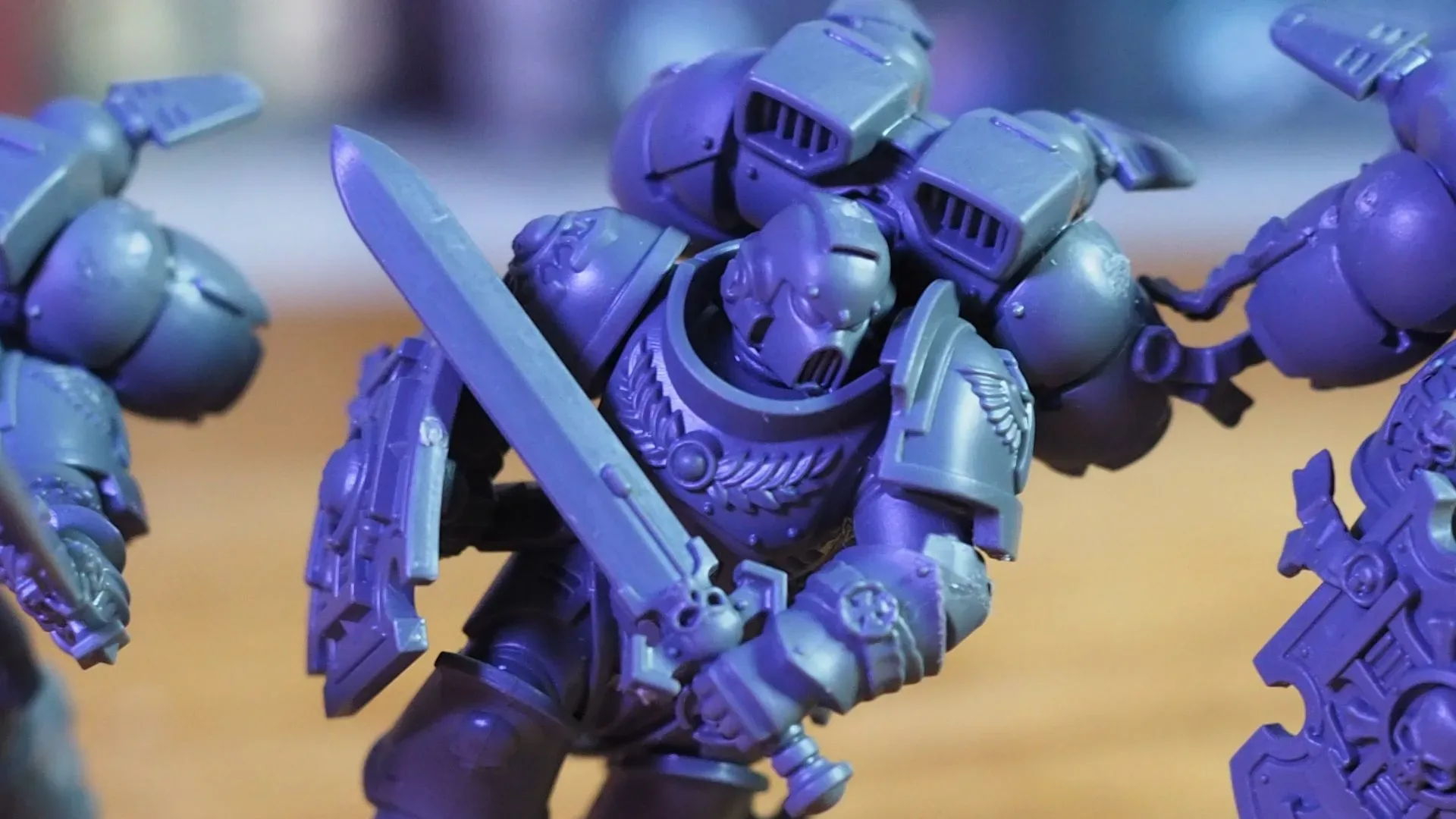
Space Marines have always had the slightly unfair advantage of looking as if a cathedral, a tank factory and a box of action figures all agreed to make one extremely armored soldier. The refreshed 11th-edition range keeps that core appeal intact, but its most interesting trait is not simply that it adds more units. It gives several familiar battlefield jobs a clearer identity while making the physical kits more personal.
The current additions cover a useful spread: a dedicated dueling character, a mobile commander, dependable infantry, mounted assault troops and jump-pack veterans. That breadth matters because a Space Marine force can be built around very different priorities. One player may want a force that races across the table; another may need troops that can hold objectives and still contribute firepower; a third may mostly want an army that looks distinct on the shelf rather than like twenty versions of the same helmet having a meeting.
For prospective buyers, the sensible question is therefore not which release is universally strongest. It is which kit supports the way you intend to play and build. The rules summaries point to clear niches, while the multipart construction of several boxes makes the hobby decision more significant than a simple “buy the unit with the biggest weapon” calculation.
There is a broader appeal to a physical hobby kit having both a game role and a display role. That overlap is part of the wider debate over what counts as a physical game product in the first place, explored in this look at how “physical game” can mean very different things. With Space Marines, the miniatures are not just components for a match: pose, armour variant and chapter details can all become part of the owner’s version of the army.
The short version: match the kit to the job
- Kaius Konorious: the accessible pick for a player wanting a close-combat character built to threaten enemy leaders.
- Captain on Bike: the natural commander for a high-speed or vehicle-heavy force.
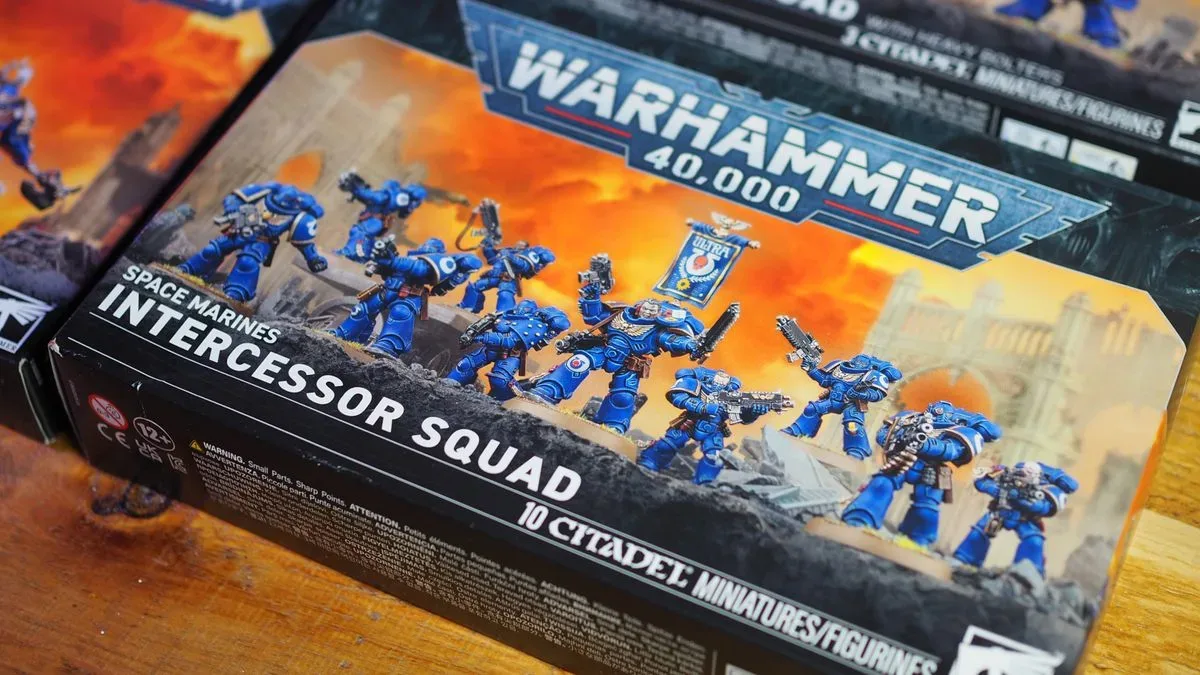
- Intercessor Squad: the foundational choice for players seeking versatile objective-focused troops and deep cosmetic variety.
- Outriders: the choice for relatively lower-points fast assault units, with much more posing freedom than push-fit predecessors.
- Vanguard Veterans with Jump Packs: the aggressive option for deep-striking melee pressure, distant objectives and attacks behind enemy lines.
Those recommendations are deliberately role-based. A character such as Kaius can be imposing, but it will not solve the same problem as a squad of Intercessors. Likewise, the Captain on Bike and Outriders make the most sense together in a fast force; buying one without any units that suit its pace may leave the miniature visually excellent but strategically disconnected.
Kaius Konorious is the focused melee character—and the least intimidating build
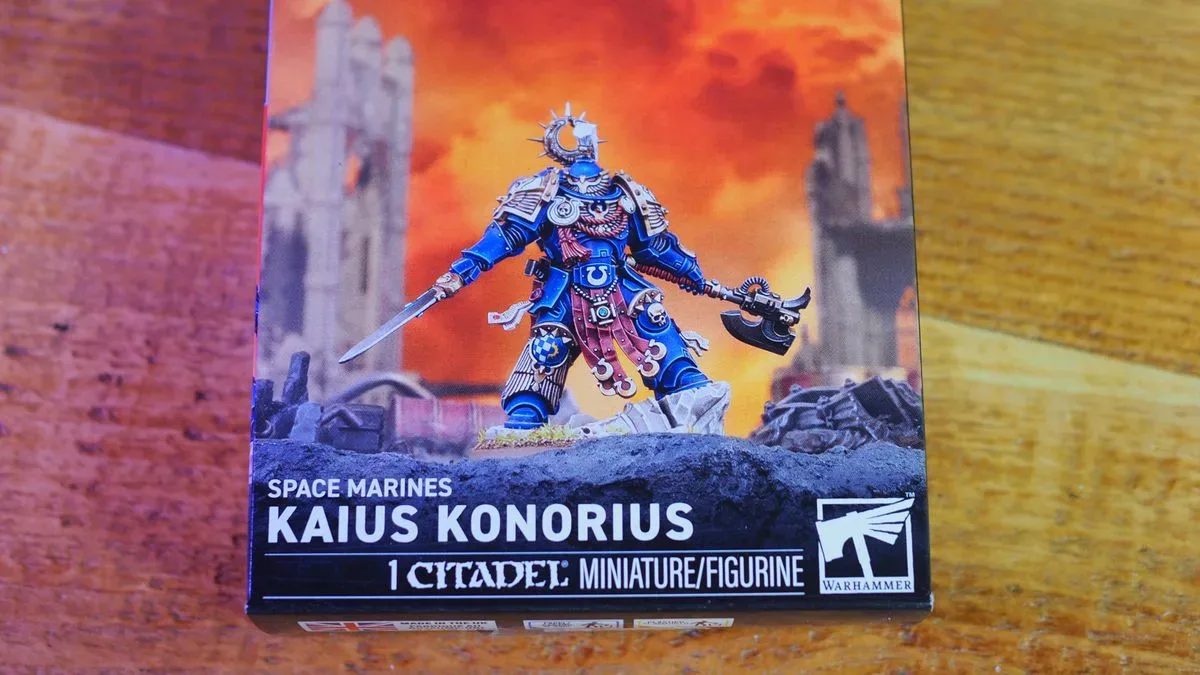
Kaius Konorious is champion to Ultramarines Chapter Master Marneus Calgar, and his tabletop profile is plainly designed for close-range confrontations with important opposing models. His Severance and Rebuke weapon options use either Strike with Precision or Sweep with Cleave 2. The key numbers are aggressive: five or six attacks depending on the selected profile, Weapon Skill 2+, Armour Penetration -3, and damage of 2 or 3 per successful hit.
For newcomers, some terminology is worth untangling. Weapon Skill 2+ means Kaius is highly accurate in melee: he succeeds on most hit rolls. Armour Penetration -3 makes an opponent’s saving throw substantially harder. Precision matters because it is associated with targeting character units, fitting his intended role as a leader-hunter. Cleave 2, meanwhile, signals an attack profile that can cut through foes efficiently. The precise tactical value will always depend on the wider rules context and the target, but the purpose here is clear: he wants to reach valuable enemy personnel and make that interaction hurt.
He is not merely a solo duelist. When attached to a unit, Kaius grants Feel No Pain +4. Feel No Pain is a defensive rule that provides an additional chance to ignore damage after a wound has otherwise been suffered; a 4+ threshold is a particularly meaningful protection benefit. Against a character unit, he may also re-roll hit and wound rolls of 1, further sharpening his specialty.
Related coverage includes New Warhammer 40K Space Marines Bring Retro Flair and More Flexible Army Building.
That makes Kaius a particularly coherent first hero purchase after starter models. His stated build complexity is low, with an estimated five to 10 minutes of assembly and an alternate head for customization. It is not push-fit, but it avoids the elaborate positioning challenges found on mounted figures. One practical warning is unusually specific and worth observing: the blocks beneath the feet can look like sprue connections, but they should not be trimmed away.
The limitation is equally easy to state. Space Marines already have many hero choices, so Kaius is best bought because the player wants his exact combination of bodyguard support and anti-character melee threat, not because every army automatically needs another named combatant.
The Captain on Bike belongs at the front of a rapid army
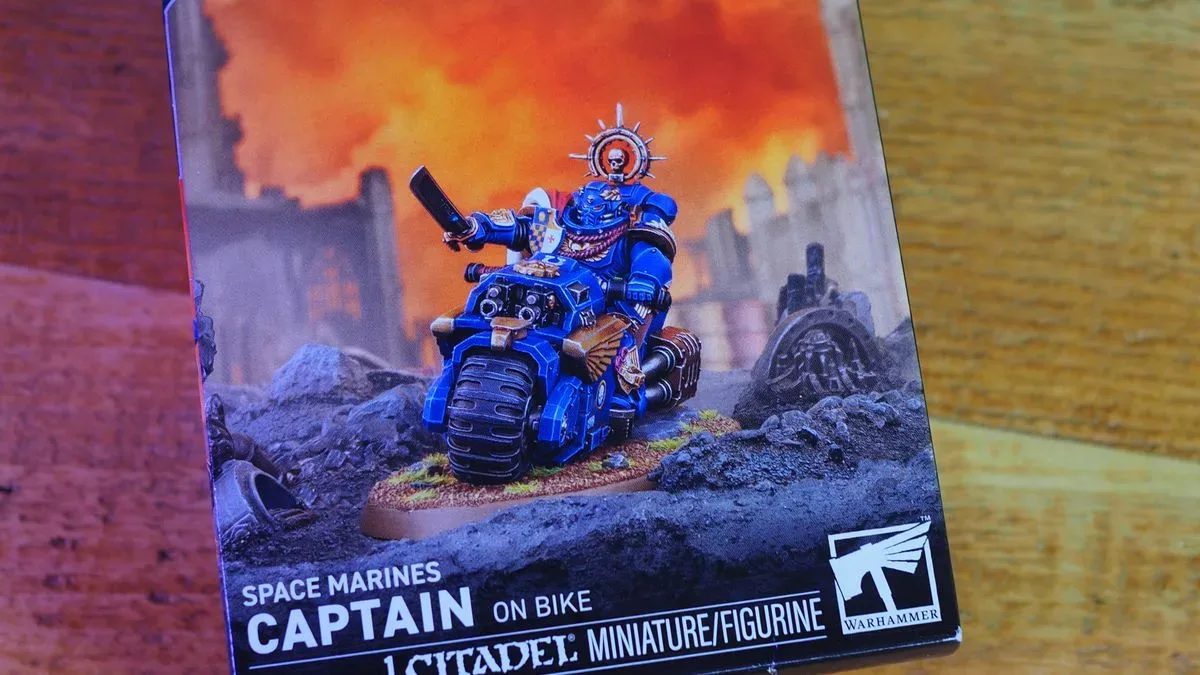
The Captain on Bike is the range’s clearest invitation to build around speed. A bike-mounted leader naturally complements Outriders, tanks, Landspeeders and other vehicles in a force that intends to move forward rather than establish a static firing line. He remains an all-round Captain, with sidearms plus a choice including a Thunder Hammer or Master-Crafted Power Weapon, but the bike adds twin bolt rifles for extra ranged output.
His Strategic Acumen ability allows one combat doctrine to be activated for his unit until the next Command phase. Combat doctrines are tactical states that affect a unit’s conduct on the battlefield, so an ability that enables one for a full turn cycle provides useful flexibility. Into the Fray adds Cleave 1 if he charged that turn, directly rewarding the kind of forward momentum the model promises.
This is a commander whose rules and silhouette tell the same story: get moving, arrive with the fast wing, and turn a successful charge into more effective melee output. That clarity is valuable for newer list-builders. Instead of trying to make one miniature serve every possible army plan, it is often easier to buy a leader that reinforces the army’s central behavior.
Assembly is rated moderate at roughly 25 minutes, with alternate heads, weapons and poses. The major caution is the cape-bearing arm. Its location may not immediately be obvious, and an incorrect fit can push adjacent parts out of alignment. Taking time to dry-fit—placing parts together before glue—is a sensible hobby habit for this area. The kit’s options also make it well suited to chapter-specific spare parts, should a builder already have them.
Intercessors are the most flexible core purchase
If an army needs a reliable centre rather than a flashy spearhead, the new Intercessor Squad is the obvious candidate. These are standard troops, but the changes described for them give their job more resilience and objective utility. Their Toughness has increased from 4 to 5. Toughness is the characteristic that helps determine how difficult a model is to wound, so an increase suggests a sturdier baseline infantry unit.
Their Bolter Discipline ability grants +1 to hit rolls while the unit is within range of an objective or targeting an enemy close to one. This is a practical rules incentive to participate in the central struggle of a mission rather than hang back without purpose. Tactical Mainstay means they may begin an action while engaged or battle-shocked, and beginning that action does not stop them from being eligible to shoot.
That wording carries an important practical implication. An action is a mission-oriented task, while battle-shocked describes a disrupted state that can restrict what a unit normally does. Allowing Intercessors to continue beginning actions under those conditions, while retaining the ability to fire, frames them as dependable workers rather than a unit that shuts down the moment a game becomes messy. They help contest objectives, perform mission tasks and still use their weapons.
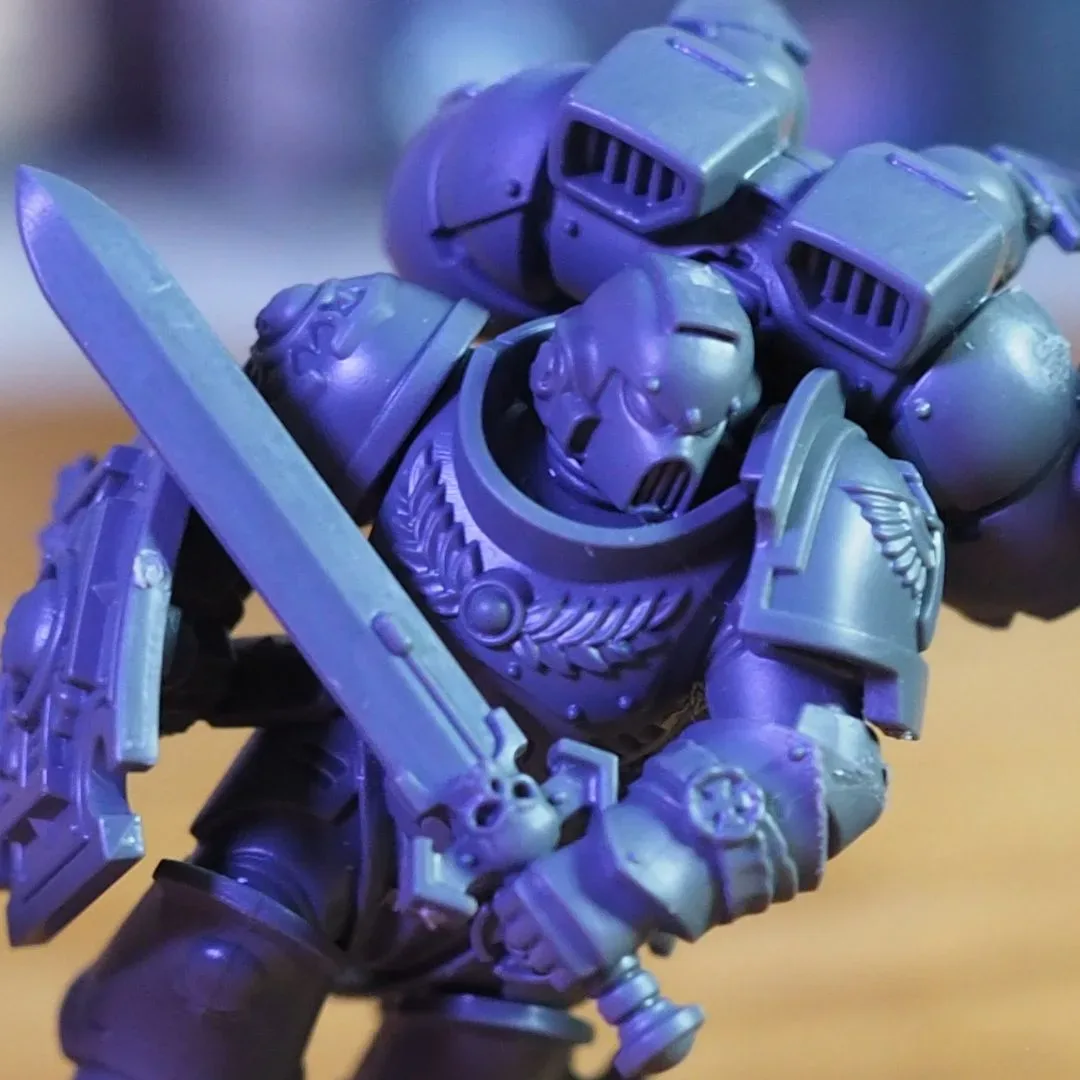
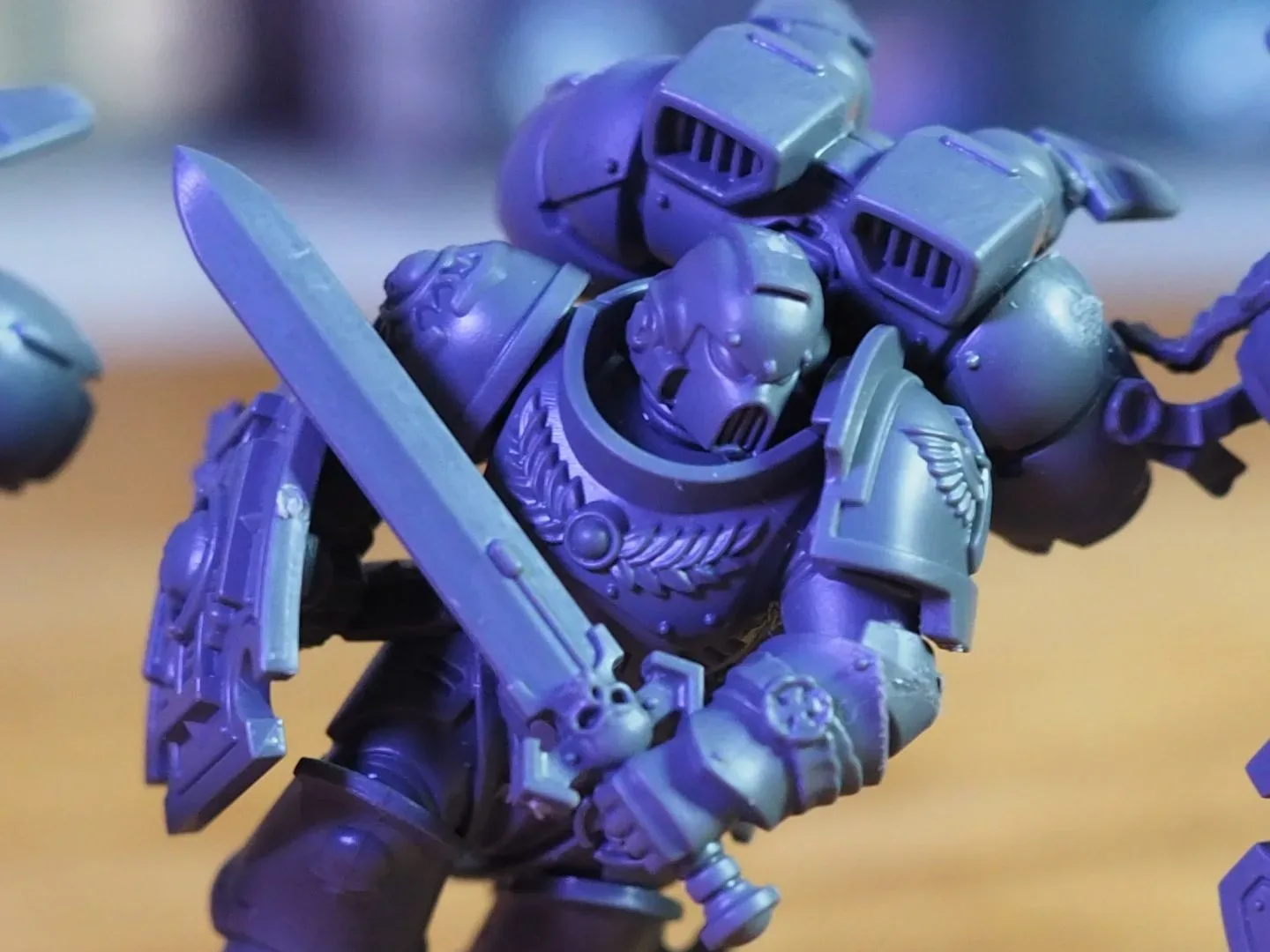
For builders, this may be the most ambitious kit in the batch. It is rated moderate in complexity and takes more than an hour, largely because of the huge range of pieces rather than because each individual assembly step is inherently difficult. Alternate heads, weapons, accessories, poses and armour details offer a great deal of latitude. Old-style helmet designs, battleworn or scavenged-looking combinations, pristine matching armour and even a leader with a back banner are all supported by the included visual vocabulary.
That depth gives the box uncommon longevity. A squad can become a showcase of chapter character or simply a clean, uniform force. The cost is decision-making: a builder should set aside enough time to plan which helmets, armour components and accessories will define the squad before committing glue. Anyone seeking a fast build with minimal choices may find Kaius easier; anyone who wants their core troops to feel individual will find more to work with here.
Outriders trade simplicity for personality
Outriders carry the rule-of-cool banner at a frankly irresponsible speed. Their modern push-fit counterparts existed already, but the new multipart plastics materially change the hobby proposition. Builders have greater freedom over heads, weapons and poses, making it easier to field multiple riders without repeating the same handful of visual arrangements.
On the table, they are geared toward quick assault. Their twin bolt rifle array has a 24-inch range, and they remain threatening once they reach melee. A charging model with a Thunder Hammer gains +1 to hit rolls; other melee weapons gain +1 damage and Sustained Hits 1. Sustained Hits 1 means a successful hit can generate an additional hit, increasing the payoff of an attack sequence without requiring another successful hit roll. Together with their lower points cost relative to Vanguard Veterans with Jump Packs, they present a cost-conscious route to fast, hard-hitting pressure.
The caveat is construction. This is rated moderate-high, with an estimated 45 to 50 minutes. Bike riders require several relationships to line up at once: feet must meet the pedals, the rider needs to sit naturally in the saddle, and hands have to meet the handlebars. These are not problems unique to this kit, but they are the sort of small alignment issues that can become glaring once glue sets.
The best practical approach is to plan accessories early. Grenades, pouches and similar details are easier to attach before the rider is seated on the bike, and tweezers may help in cramped spaces. This is not the first kit to pick solely for speed of assembly. It is, however, the better choice for a collector-builder who felt constrained by the fixed poses of push-fit riders.
Vanguard Veterans with Jump Packs are the surgical assault choice
Vanguard Veterans with Jump Packs combine two potent ideas: veteran Space Marines and sudden vertical mobility. A previous new version appeared in the Armageddon set, but these are multipart plastic rather than push-fit, and the equipment selection includes shields alongside sidearms and power swords, axes and hammers.
Their battlefield assignment is especially direct. They have Deep Strike, allowing them to arrive in a way that threatens remote parts of the board, and Vanguard Assault grants +1 attacks to all melee strikes if the unit charged that turn. Deep Strike is valuable because it creates positional uncertainty for an opponent: the veterans can be used to pressure far objectives or attack from behind enemy lines rather than simply marching straight at the nearest target.
The unit’s appeal is therefore not just raw combat damage. It is reach. They can force the opponent to account for space away from the main battle, potentially diverting attention while the rest of the Space Marine army works elsewhere. That makes them a strong fit for players who enjoy aggressive maneuvering and setting up threats rather than only trading fire from established positions.
Despite their airborne appearance, their build is rated moderate at around 40 minutes. They are described as sturdier than they look, and their poses can read as very dynamic. Alternate heads, weapons and poses help ensure a squad feels like decorated veterans rather than standard Marines with backpacks attached. Visually, their raised profiles can make them a centrepiece even before paint enters the equation.
Buying order depends on whether your army needs a spine or a spear
For a new or expanding Space Marine player, Intercessors offer the broadest all-purpose value because their rules support objectives and actions while their kit supports multiple visual directions. Kaius Konorious follows naturally for someone wanting an easy, specialized hero build. Those two purchases establish both a dependable battlefield core and a forceful close-combat presence.
From there, the decision becomes stylistic. Choose the Captain on Bike and Outriders together if the army is built around velocity and charging. Choose Vanguard Veterans with Jump Packs if the priority is deep-striking threats and melee disruption beyond the immediate frontline. There is overlap between the latter two assault units, but not redundancy: Outriders provide lower-points mounted pressure and shooting at 24 inches, while Vanguard Veterans offer Deep Strike and a more surgical angle of attack.
The unifying feature of the new range is that army-building and model-building are pulling in the same direction. Intercessors reward a player who wants a personalized core. Outriders and the Captain reward a player who wants a fast visual theme. Vanguard Veterans reward dramatic posing and aggressive deployment plans. Kaius provides the straightforward character project with a focused mission. For once, the question of what looks coolest and the question of what role a unit serves have unusually compatible answers.