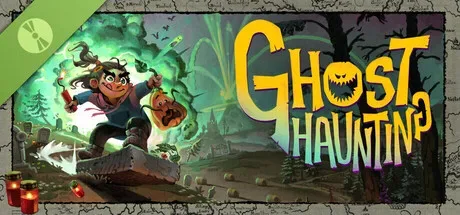
Ghost Haunting, a 2D point-and-click adventure from Daedalic Entertainment and Three Headed Monkey Studios, now has a free demo on Steam. Released on November 4, 2026 during the Steam Point & Click Showcase, the demo will remain available after the event rather than disappearing when the showcase ends.
The game is scheduled for a 2027 launch on PC, Mac, Xbox, PlayStation, Switch and Switch 2. That makes this Steam demo a chance to get acquainted with its particular brand of supernatural problem-solving well before the wider release—one apparently involving a great deal more property damage than sensible ghost-hunting procedure would recommend.
Gigi is going to the afterlife, permission optional
Ghost Haunting follows Gigi, who learns that her grandfather Giovanni is a legendary ghost hunter. Her response is not to quietly absorb this astonishing family information over tea. Instead, she decides to visit the dead herself in an attempt to bring her grandmother home.
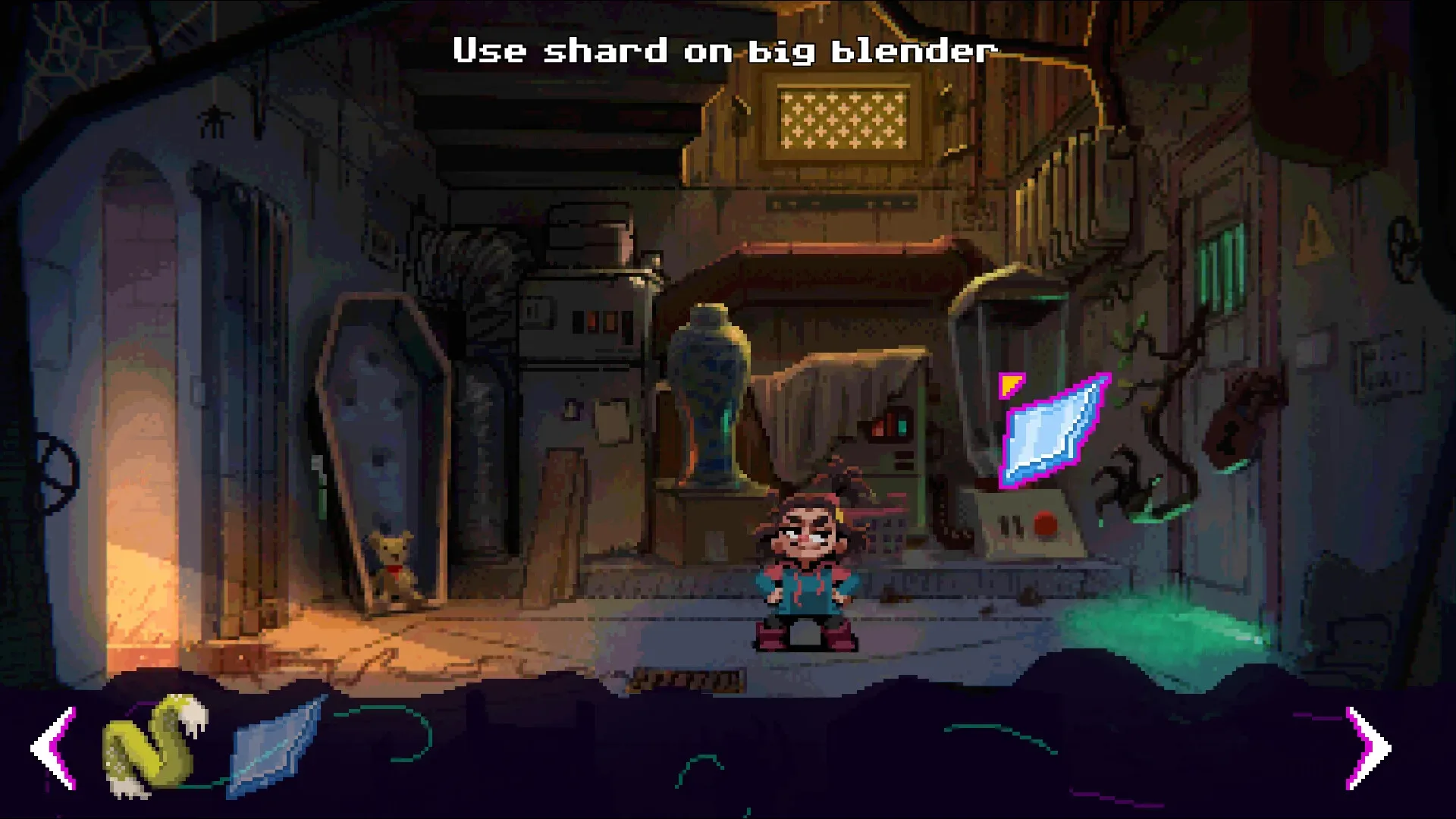
Gigi is joined by Baron Butt(er)nut, a talking pumpkin demon. The setup suggests a deliberately mischievous tone: Gigi’s determination does not appear to depend on receiving Giovanni’s approval first, and her preferred approach to puzzle solving can include breaking furniture. It is an appropriately unruly foundation for an adventure about ghosts, family secrets and a trip somewhere most people would avoid without a very compelling invitation.
That emphasis on dark humor matters. Point-and-click adventures are often built around unusual object combinations, eccentric supporting characters and the entertainingly questionable logic that connects one obstacle to the next. Ghost Haunting is presenting its heroine as an active source of that chaos, rather than simply an observer wandering through an odd world. A player may be looking for the correct interaction, but Gigi’s personality is intended to shape how that interaction lands.
A classic adventure structure with modern safeguards
The game takes inspiration from 1990s LucasArts-style adventures and uses hand-crafted pixel art to match that heritage. In practical terms, a point-and-click adventure is generally driven by examining scenes, talking with characters, gathering items and using information or objects in the right places to solve puzzles. Progress usually comes from observation and deduction rather than reflexes or combat execution.
Ghost Haunting is not treating that older framework as a reason to preserve every old frustration. The full game is set to include a hint system, hotspot highlighting, fast travel and a score system alongside its classic-style puzzles.
- A hint system provides guidance when a puzzle’s next step is unclear. Its purpose is to help players regain momentum without necessarily handing them every solution immediately.
- Hotspot highlighting identifies objects or parts of a scene that can be interacted with. In a dense pixel-art screen, this can reduce the need to move a cursor over every decorative detail in search of the one vital item.
- Fast travel lets players move more quickly between previously visited locations. This is especially useful once a new item or clue sends the player back across an expanding map.
- A score system tracks performance or discoveries in some form. No further details have been specified, so it is not yet clear what actions affect the score or whether it will influence anything beyond tracking progress.
Those tools speak to a familiar tension in the genre. Many players appreciate the satisfaction of untangling an elaborate puzzle, while few are nostalgic for repeatedly revisiting locations because a single usable detail was hard to spot. Hotspot highlighting and hints can preserve the central puzzle-solving structure while making the search for the next actionable clue more transparent. Fast travel, meanwhile, addresses the time spent moving between scenes rather than the time spent thinking through the puzzle itself.
None of that confirms how difficult Ghost Haunting’s puzzles will be, or how its hint system will be structured. But the announced features make the design intent clear: it wants the flavor of a long-lost 1990s adventure without requiring players to accept all of the genre’s former inconveniences as sacred tradition.
What the Steam demo establishes
The demo is an opportunity to see how its ingredients work together: the pixel-art presentation, the dark-comedy voice of Gigi’s quest, its interface and the cadence of its puzzles. Since it is free and remains available beyond the showcase, there is no event-only deadline attached to trying it.
For players curious about retro-styled adventure games, that ongoing availability is useful. A demo can answer basic but important questions that trailers cannot settle: whether the clickable scenes are easy to read, whether the humor suits the player, and whether the game’s version of classic puzzle design feels inviting. It also gives prospective players an early sense of how the modern accessibility features fit around the old-school premise.
The newly released trailer offers another look at the game’s premise and presentation, but the demo is the more direct route to its central interaction: guiding Gigi through a strange world where a ghost hunter’s family business has become a personal rescue mission.
Language support is broad, with two fully voiced languages
The demo includes English and German voice acting. It also supports text localization in 12 languages. English and German receive full localization, while French, Italian, Spanish (Spain), Portuguese (Brazil), Traditional Chinese, Simplified Chinese, Japanese, Korean, Polish and Russian are supported through localized interface text and subtitles.
The distinction is worth spelling out. Full localization means the text and spoken dialogue are localized. Localized interface and subtitles means players can navigate menus and read the game’s written dialogue in those languages, while voice acting remains in the available spoken languages. For a dialogue-led adventure, subtitles are particularly significant because conversations and written clues are likely to be central to understanding both the humor and the puzzle context.
English and German-speaking players can therefore expect voiced dialogue in the demo, while players using the other listed language options can follow the interface and subtitles in their preferred supported language.
The road to a 2027 multi-platform release
Ghost Haunting is planned for PC, Mac, Xbox, PlayStation, Switch and Switch 2 in 2027. The Steam demo only confirms the current PC sampling option; it does not establish demo plans for the other platforms, nor does it provide a specific final release date.
Mac is explicitly among the planned launch platforms, a notable point for adventure-game players who often look for mouse-friendly, narrative-focused games beyond the Windows ecosystem. Readers tracking Mac gaming developments can also find broader platform coverage in this look at native Live Activities arriving in the Mac menu bar.
For now, the firm details are straightforward: Ghost Haunting’s free Steam demo is available, it is not limited to the duration of the Point & Click Showcase, and the full adventure is aimed at a 2027 arrival across PC, Mac and console platforms. Players can expect a ghostly family rescue story, a talking pumpkin demon, hand-crafted pixels and a heroine for whom “handle with care” sounds less like advice than a challenge.