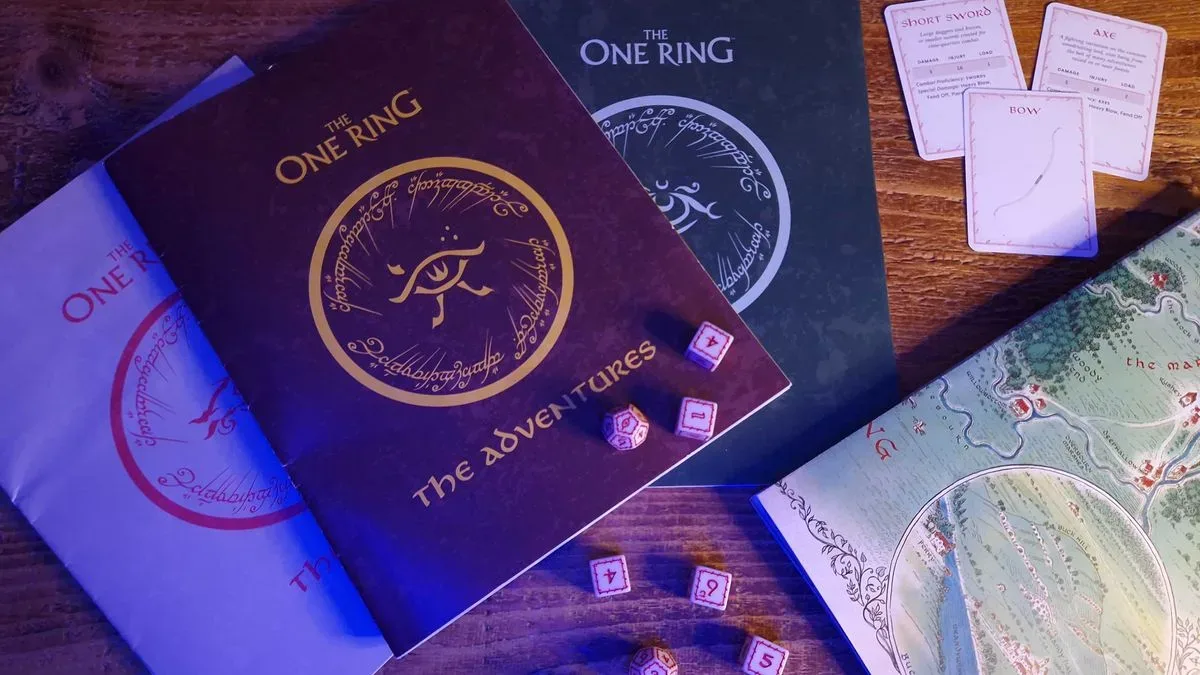
The One Ring tabletop roleplaying game is heading toward $3 million in pledges through its current crowdfunding campaign, an unusually emphatic vote of confidence in a game line that already has a substantial body of material behind it. The campaign exceeded its original goal by 32 times in less than a day, set a new crowdfunding record for Free League, and moved through planned stretch goals quickly enough that the team had to create additional ones.
The project’s central releases are a revision of the current rules, a bestiary called Creatures Strange and Foul, and a new adventure volume, The White Tower and the Hall of Gold. Hardcovers are estimated to ship in October 2027, though no firm release date has been confirmed. The campaign is scheduled to end October 15, 2026, at 3 p.m. EDT, noon PDT, and 8 p.m. BST.
For prospective players, the news is not that an entirely different game is replacing the 2022 edition. Rather, it is a substantial refinement of the existing game: one intended to preserve its identity while making it clearer to run and more responsive at the table. That distinction matters. A rules revision can be a frustrating reset when it invalidates a group’s familiarity with a system; it can also be an opportunity to consolidate years of player feedback into a better-organized set of tools. The stated direction here is firmly the latter.
A revision focused on usability rather than reinvention
Lead designer Francesco Nepitello says the core remains recognizably The One Ring, while the work has concentrated on how rules are structured, explained, and brought into play. Combat has received especially close attention, with refinements spread throughout the book after several years of feedback.
That is a meaningful focus for a tabletop RPG. In this context, a game’s “core system” is the set of procedures players and the game’s facilitator use to resolve uncertain actions: tests, consequences, resources, encounters, and the flow of scenes. Rule organization is not merely editorial polish. If the relevant procedure is hard to find or hard to interpret in the moment, the pace of a session suffers regardless of how strong the underlying design may be.
The game’s facilitator is called a Loremaster, a setting-appropriate equivalent of terms such as game master. The Loremaster prepares challenges, portrays the world and its inhabitants, and interprets rules during play. Improvements to presentation therefore have potential value for both sides of the table: players should be able to understand their options, while Loremasters should have more support in running scenes without interrupting the fiction to untangle procedures.
The combat revision appears to be the most conspicuous mechanical change. The updated sequence is intended to give groups room to coordinate during fights and make choices that carry more weight. Specific final rules have not been detailed, so it would be premature to declare exactly how encounters will change. Still, the design goal is clear: combat is being positioned as a place for deliberate group decisions, not simply a succession of isolated attacks.
That approach fits the game’s broader reputation for fellowship and roleplay. Fellowship, in a tabletop sense, emphasizes the party as a group with shared responsibilities and relationships rather than a collection of characters pursuing separate tactical turns. If the revised combat sequence succeeds at making coordination easier to express, it could strengthen that theme at the point where many RPGs become most mechanically focused.
Related coverage includes The One Ring RPG Crowdfunding Nears $3 Million as Free League Teases More Middle-earth Adventures.
Creatures Strange and Foul aims to make foes story engines
Creatures Strange and Foul is the campaign’s bestiary. A bestiary is a reference book for adversaries and other creatures, but the stated ambition is broader than listing statistics. It will gather enemies from across Middle-earth and focus on their behavior, powers, and the kinds of stories they can generate.
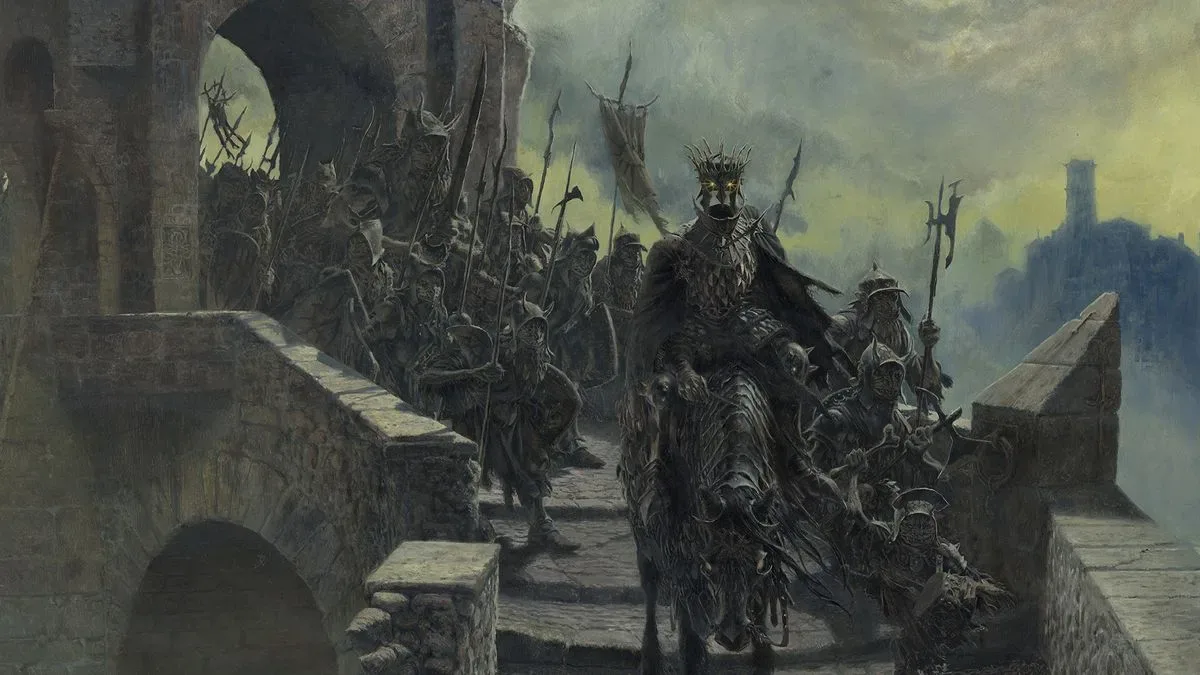
Among the material mentioned are tools for creating an orc warband and entries involving Black Númenóreans. The emphasis on an orc warband is noteworthy because it suggests an encounter need not be framed as a row of interchangeable opponents. A warband can imply hierarchy, tactics, rivalries, objectives, and consequences beyond the immediate fight. For a Loremaster, that can turn an enemy group into a recurring pressure on a region or a springboard for an adventure.
Nepitello’s explanation of the book’s purpose centers on making each adversary feel like a distinct encounter. This is useful framing for a licensed fantasy setting where the tone of a threat can matter as much as its difficulty. A creature that has memorable behavior, narrative possibilities, and a defined relationship to the world gives a group more to react to than an obstacle measured only by combat capability.
There is also a practical benefit to bringing adversaries together in one volume. Over a long-running tabletop line, useful material can become scattered between regional guides and individual adventures. A consolidated bestiary can make preparation less dependent on remembering which earlier book contains the right kind of opponent—provided the finished volume delivers the breadth suggested by its premise.
Gondor and Rohan change the shape of an adventure
The most significant setting shift may come from The White Tower and the Hall of Gold, which moves the line to Gondor and Rohan. It is described as the furthest south the game has gone. Lead writer Gareth Hanrahan said the line had long been conceived as roughly following the Fellowship’s route: Wilderland first, then Eriador, and eventually Gondor. Changes in publishers and the decision to make a revised second edition altered the exact form of that plan, but not the eventual destination.
Geography here is more than a map expansion. Earlier regions in the game line have often foregrounded long travel through sparsely settled territory. Hanrahan contrasts Eriador—where the Shire and Bree stand apart from broad stretches of wilderness—with the more established realms of Gondor and Rohan. Gondor in particular is described as a land of towns, villages, inns, and guarded roads, where the wild is further away.
For play groups, that points toward a different campaign rhythm. Journeys and natural hazards do not disappear from a game simply because roads are better patrolled, but a settled realm gives characters more reasons to deal with institutions, communities, and competing priorities. The stated emphasis is on interaction and intrigue rather than lonely travel and wilderness peril.
Intrigue in this context means adventures driven by social pressure, factions, loyalties, secrets, and difficult choices, rather than solely by exploration or direct confrontation. A party may be deciding whom to trust, navigating competing interests, or trying to prevent conflict from spreading through a populated area. That is a natural fit for a region with entrenched settlements and long histories, and it offers a useful change of pace for groups accustomed to northward journeys through isolated landscapes.
Umbar is one of the locations identified as especially rich in possibility. Known for its corsairs and allegiance to Sauron, the country is described as much older than Gondor and as a meeting point of cultures and factions. Hanrahan highlighted its potential for fantasy intrigue. Cair Andros is another area singled out: a smaller defensive bastion in Gondor, compared to a miniature Minas Tirith, with relatively limited treatment in the books and therefore room for a Loremaster to develop adventures.
The contrast between those two locations illustrates why a southern supplement may matter even to established groups. Umbar suggests a politically charged setting with deep history and competing forces. Cair Andros suggests an outpost where a familiar defensive role can be explored without being over-defined. Both offer a way to build campaigns around places, people, and pressures as much as a route through hostile terrain.
What the campaign response signals—and what it does not
The pledge total and pace of stretch-goal unlocks plainly demonstrate enthusiasm, but crowdfunding totals are not a substitute for a finished book. They do, however, tell the design team that there is a large audience prepared to support additional material for this version of Middle-earth. Nepitello said the response left the team scrambling at points to determine what to offer next, despite having some bonus ideas prepared.
That enthusiasm is especially relevant to the line’s future because the new releases serve different needs at once. The revised rules target table usability; the bestiary provides antagonists and encounter ideas; and the Gondor-and-Rohan book opens a new style of campaign. Together, they suggest expansion in depth as well as in geography. Nepitello described the response as evidence of a long road and many adventures still ahead, while Hanrahan stressed the responsibility of meeting audience expectations and honoring Tolkien’s legendarium.
There is a broader lesson in the project’s approach for tabletop players weighing whether a revision is worth their attention. The most useful updates are often not those that loudly announce a new edition number, but those that address the moments where a game actually slows down: reading a rule mid-session, coordinating a tense encounter, or preparing a memorable adversary. The available details indicate that these are precisely the areas being targeted.
Rules knowledge is a living part of game communities, whether it means a tabletop group incorporating feedback over years of sessions or players discovering new possibilities in a digital classic. For a very different example of the latter, see how a newly identified Ocarina of Time bottle glitch could alter speedrun routes.
What players can reasonably expect next
Backers can expect the campaign to determine which extra material arrives through unlocked stretch goals, but the basic product direction is already established: a refined version of The One Ring, a dedicated adversary book, and a southern campaign setting focused on Gondor and Rohan. The hardcover shipping estimate is October 2027, not a guaranteed street date, so interested players should treat it as a projection rather than a final schedule.
Groups that have not tried the system yet also have an existing entry point rather than needing to wait for the revision. The Over Hill and Under Hill starter set is currently listed at $28.49, while the D&D-compatible The Lord of the Rings Roleplaying equivalent is listed at $29.51. Those prices are current listings rather than a promise of future availability or pricing.
Most importantly, the project does not appear to be abandoning the game’s existing priorities. The identity of The One Ring—a roleplaying game built around Middle-earth, fellowship, and character-driven adventure—is set to remain in place. The forthcoming books instead aim to make that experience smoother in play, richer in adversaries, and wider in the kinds of stories groups can tell once they leave the northern roads behind.
Shop the products
Check current price, model and availability at the retailer.