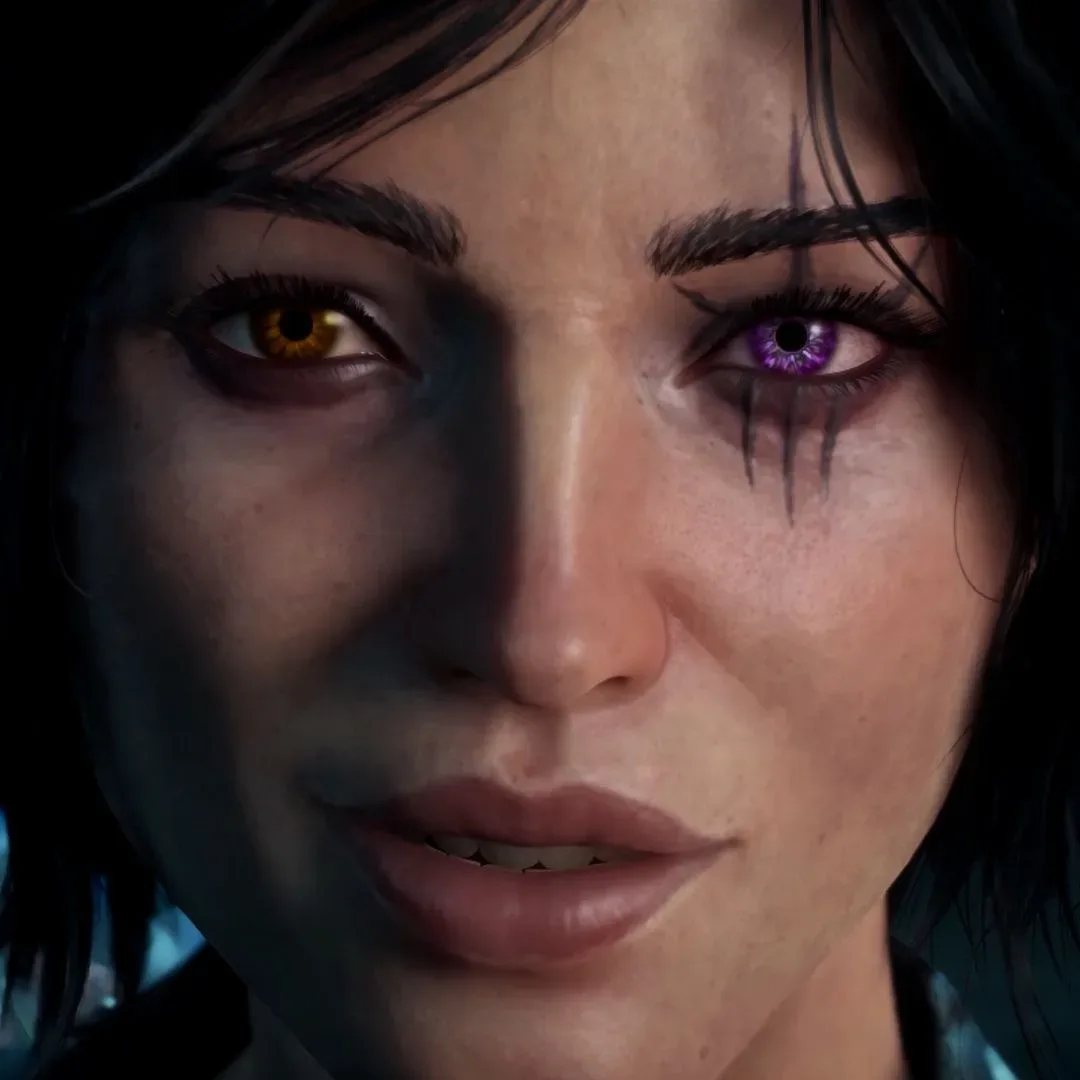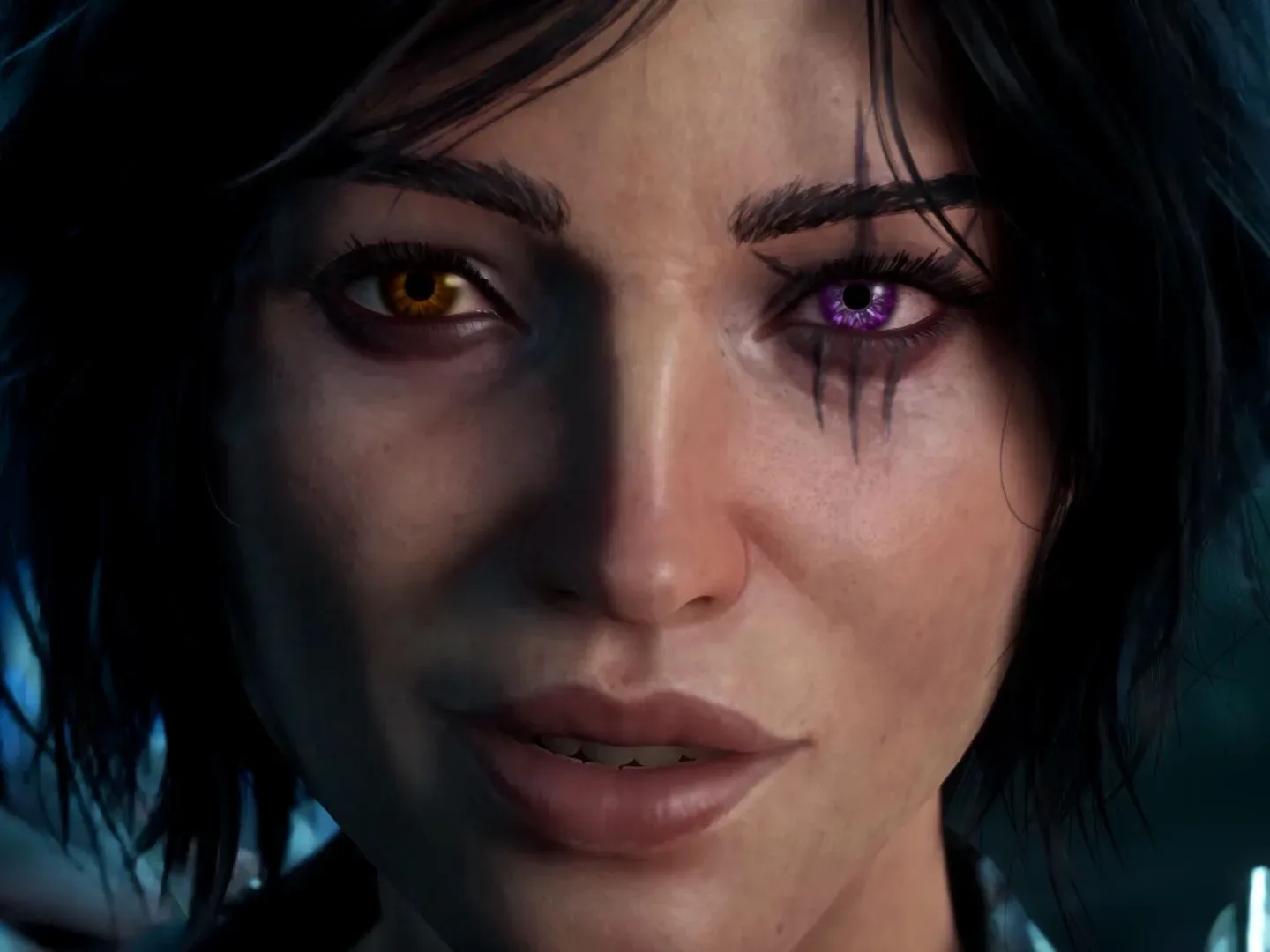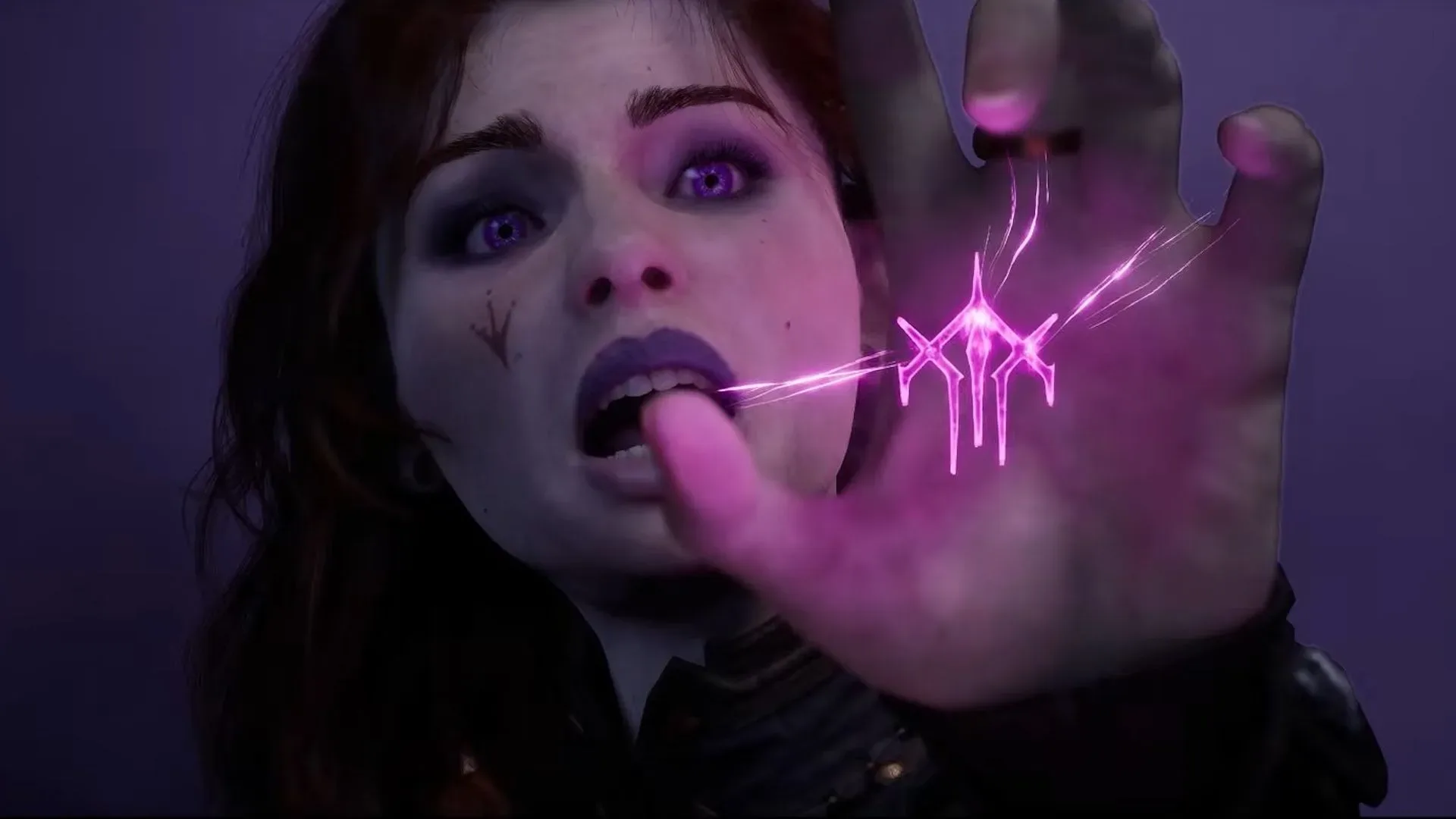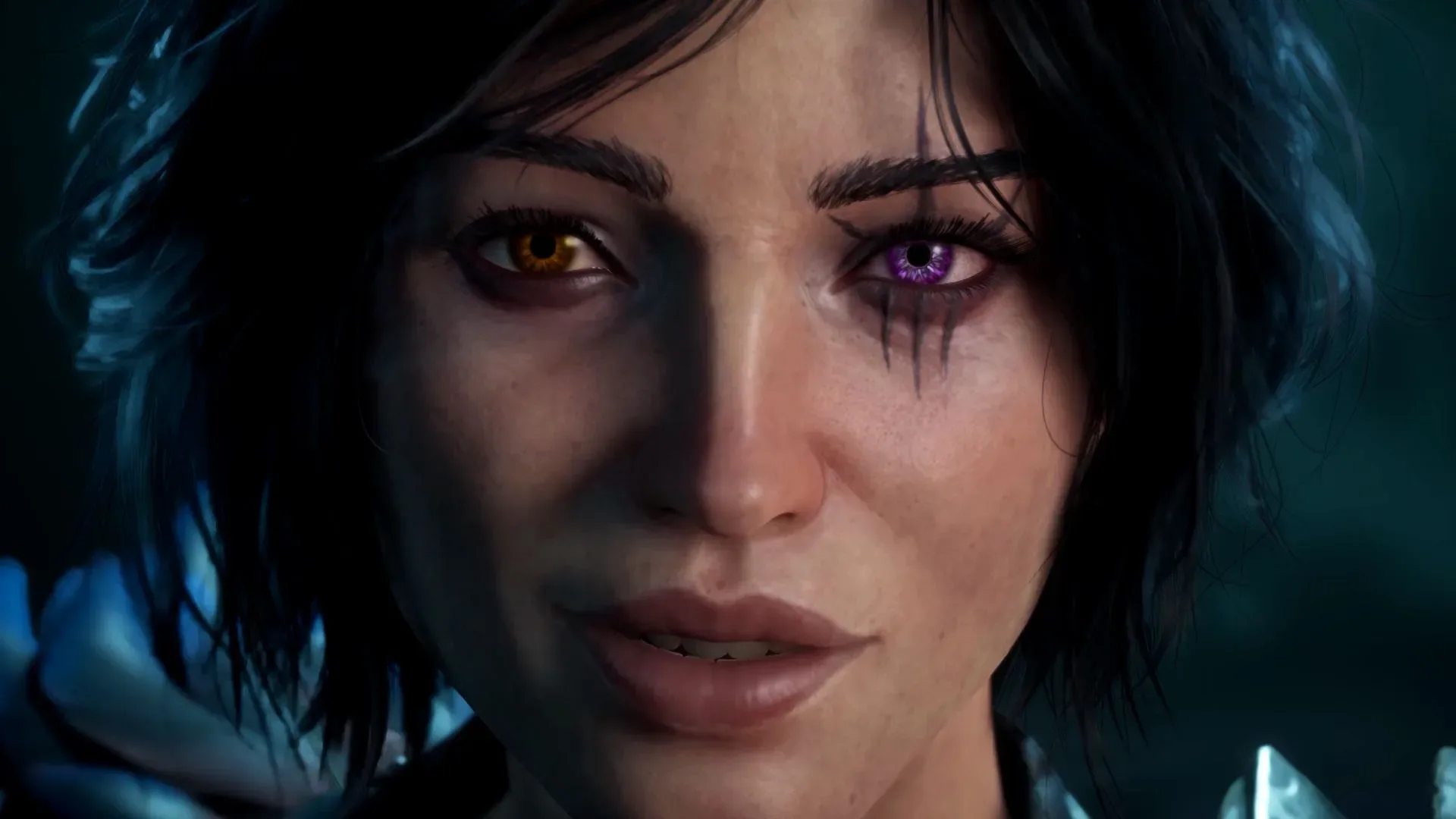
Warlock is taking a deliberately different route through the open-world Dungeons & Dragons formula. The upcoming Wizards of the Coast game, in development at Invoke Studios, will be set in Darkon and feature Tasha, the archmage and demonologist familiar to tabletop fans. But its world is not being positioned as a contest to be bigger than every fantasy map that came before it.
Instead, studio head Dominic Guay has framed the smaller scale as a practical design choice: a way to make exploration meaningful without directing players through every discovery via a waypoint. The core idea is straightforward, but its consequences could shape nearly every part of the game—from how players read the landscape and approach danger to how they build a spellbook and decide whether a second playthrough is worthwhile.
Warlock has already shown roughly 10 minutes of gameplay, with an action-forward feel that has invited comparisons to Dragon’s Dogma. That footage is only a slice of a larger project, so it cannot establish the final breadth of systems, content or structure. Still, Guay’s comments offer a much clearer statement of design intent: the game wants players to explore Darkon rather than simply travel efficiently between marked objectives.
A smaller world can be an exploration choice, not a compromise
“Open world” is often used as shorthand for sheer geographic scale, but size alone does not determine how a world feels. A very large map can encourage long journeys, broad vistas and freedom of route. It can also create large stretches of travel between meaningful decisions. A smaller, denser map aims for something else: more frequent encounters, secrets, alternate paths and reasons to pause.
Guay’s explanation is that density gives the team room to reduce handholding. In this context, density means the concentration of interesting places, activities or discoveries within the game space—not merely packing visual objects close together. The useful version of density is one where a detour might reveal an unusual spell, a new situation, or a location that changes how a player thinks about the area.
That distinction matters for Warlock. If the game is asking players to abandon the most direct route, those detours need to be supported by tangible possibility. A path that is not marked should still feel legible enough to investigate. A secluded corner should sometimes produce a meaningful payoff. And, just as importantly, not every unexplored gap needs to be treated as a failure that the game immediately corrects with a glowing trail.
“Because we wanted this to be exploration-driven, we didn’t want the player just to follow a waypoint around,” Guay said.
A waypoint is the user-interface marker that points a player toward a destination, usually with a distance readout or route guidance. It is an effective accessibility and pacing tool: players know where to go, and developers can keep a story moving. The trade-off is that the marker can become the real object of attention. Players stop observing roads, landmarks and suspicious-looking ruins because their eyes are fixed on the icon and the shortest path to it.
Related coverage includes Warlock's Smaller D&D Open World Is Designed to Make Exploration Matter.
Warlock is not necessarily rejecting navigation tools altogether. Nothing in the available details confirms exactly what its map, quest log or accessibility options will include. The stated ambition is narrower and more interesting: the game does not want progress to depend solely on obeying a marker. That leaves room for the environment itself to become part of the play experience.
Pulling back on “yellow paint” means trusting players to notice things
The discussion also invokes “yellow paint,” a term players often use for highly visible environmental cues that signal a climbable ledge, interactable object or correct route. Such signals can prevent frustration and make action games easier to read in motion. They can also make the intended route feel conspicuously pre-approved, turning an apparent choice into a brightly labeled instruction.
Warlock’s goal, as described by Guay, is to pull back from that degree of guidance. This should not be mistaken for a promise of deliberate obscurity. Good exploration design is not simply withholding information. It gives players clues that can be understood through observation: the silhouette of a structure, an unusual feature in the terrain, a visible threat, or an opportunity that seems plausible within the game’s own rules.
The difficult balance is between discovery and confusion. Too much guidance can flatten the thrill of noticing something first. Too little can leave players unsure whether they missed a secret, misunderstood a system, or are simply unable to progress. A dense world gives developers more tools to strike that balance, because investigation can yield frequent feedback even when it does not advance the main route.
For players, the practical implication is that Warlock may reward a different mindset than an open-world checklist. Rather than treating the map as a sequence of errands, players may need to slow down, look beyond the immediate objective, and accept that an unopened door or unseen spell is sometimes part of the game’s intended uncertainty. That can make a first journey feel more personal, even when other players reach the same broad destination by different means.
Missable spells are central to the game’s replayability pitch
The clearest example of this philosophy is magic. Guay has said that Warlock contains many compelling spells and that players may not discover every one. Missing a spell is not being framed as a mistake the game must immediately remedy; players may instead find different abilities elsewhere.
“Maybe you won’t find them, and that’s ok, because you’ll find others,” Guay said of the game’s spells.
That is a notable approach for a D&D-based RPG. In tabletop Dungeons & Dragons, different characters can have sharply different tools and strategies. One group’s solution may hinge on a spell, while another group gets through with an entirely different plan. A video game cannot perfectly reproduce the improvisation of a tabletop session, but optional magic can preserve some of the sense that not every player’s toolkit has to be identical.
There is an important difference between optional content and content that feels arbitrarily hidden. Optional spells work best when the game’s core route remains viable without them and the spell is an exciting expansion of possibilities rather than a mandatory answer that some players happen to miss. Based on Guay’s description, Warlock appears to be leaning toward the former model, though the exact methods of finding spells and their effects have not been detailed.
This could also support replayability. Replayability is the likelihood that players will want to return after completing or advancing far through a game. It does not come just from having more content. It comes from the prospect that another run can create a meaningfully different experience. If exploration leads to different magical options, a return to Darkon could alter how encounters are approached and what players notice.
That promise carries a responsibility, too. The appeal of “you will find others” depends on those alternatives feeling distinct and worthwhile. A collection of spells that differ only slightly would not produce the same sense of discovery as abilities that encourage genuinely different tactics or interactions. Warlock has not yet outlined its full magic system, so that question remains open, but it is one of the most important details to watch as more of the game is shown.
Real-time magic is about expression, not just speed
Guay has also described Warlock’s controls as seeking a “real-time expression of magic” rather than something slower. The phrase suggests an action-oriented combat model in which casting is directly tied to moment-to-moment player input and timing.
Real-time combat means actions happen continuously rather than waiting for turns. In practical terms, players must react while enemies and the environment continue moving. That can make positioning, aim, timing and quick decision-making central to combat. It is a different rhythm from a turn-based role-playing system, where players generally have time to assess a board state before committing to an action.
“Expression” is the especially revealing word here. It implies that the goal is not only to make spellcasting faster, but to make a player’s style of using magic visible in play. The available details do not explain the exact control scheme or spell interactions, so it would be premature to draw conclusions about combo systems, build crafting or companion mechanics. But a game that places optional spells inside an exploration-focused world has an obvious opportunity: discoveries could change not just a menu of abilities, but a player’s physical relationship with fights and traversal.
That may be why the project’s smaller world and its combat philosophy fit together. A world designed for close observation benefits from tools that feel active and responsive. Conversely, a magical toolkit has more character when players are regularly invited to use it in unexpected places rather than only inside prescribed combat arenas.
Warlock is not trying to be Baldur’s Gate 3, and it does not need to be
Comparisons to Baldur’s Gate 3 are inevitable whenever a major D&D video game appears, but Invoke Studios has described Warlock as very different from Larian’s RPG. That is consistent with everything currently said about the project. Warlock’s emphasis is on an open world, real-time magical action and exploration that can leave some abilities undiscovered; those priorities point toward a separate kind of D&D adaptation rather than an attempt to replicate another game’s structure.
“Different” should not be read as a quality judgment. Dungeons & Dragons can support many kinds of video game interpretation because its appeal includes fantasy settings, character-building, spells, adventure and problem-solving. One adaptation can foreground party-based decisions and turn-based encounters; another can focus on embodied action and a more self-directed trek through a dangerous region.
Warlock’s design proposition is therefore less about how much land it covers than what the player is expected to do with that land. A smaller Darkon could feel substantial if it consistently offers things worth noticing, if magic creates interesting choices, and if the lack of constant direction becomes an invitation rather than a roadblock.
Players watching the broader RPG space may recognize a similar question in other ongoing open-world conversations: whether a map is built to be cleared or explored. For another perspective on how progression and player economies can be reshaped by a fresh-start approach, see our look at RuneScape Reignited’s reset of Gielinor’s economy and progression.
What remains unknown
There is still a great deal that has not been confirmed about Warlock. The current information does not establish a release date, platforms, precise map size, the number of spells, how spells are acquired, how quests are structured, or the full range of systems that will support exploration. Nor does it tell players how much guidance can be adjusted, if at all.
What is clear is the intended direction. Warlock is being designed around a denser Darkon, reduced dependence on waypoints, optional magical discoveries and a real-time approach to casting. That is a focused set of ideas rather than a promise to satisfy every open-world convention. If Invoke Studios can make the world rewarding to read and make missed magic feel like a different story rather than lost homework, its smaller scale may become an advantage rather than an asterisk.