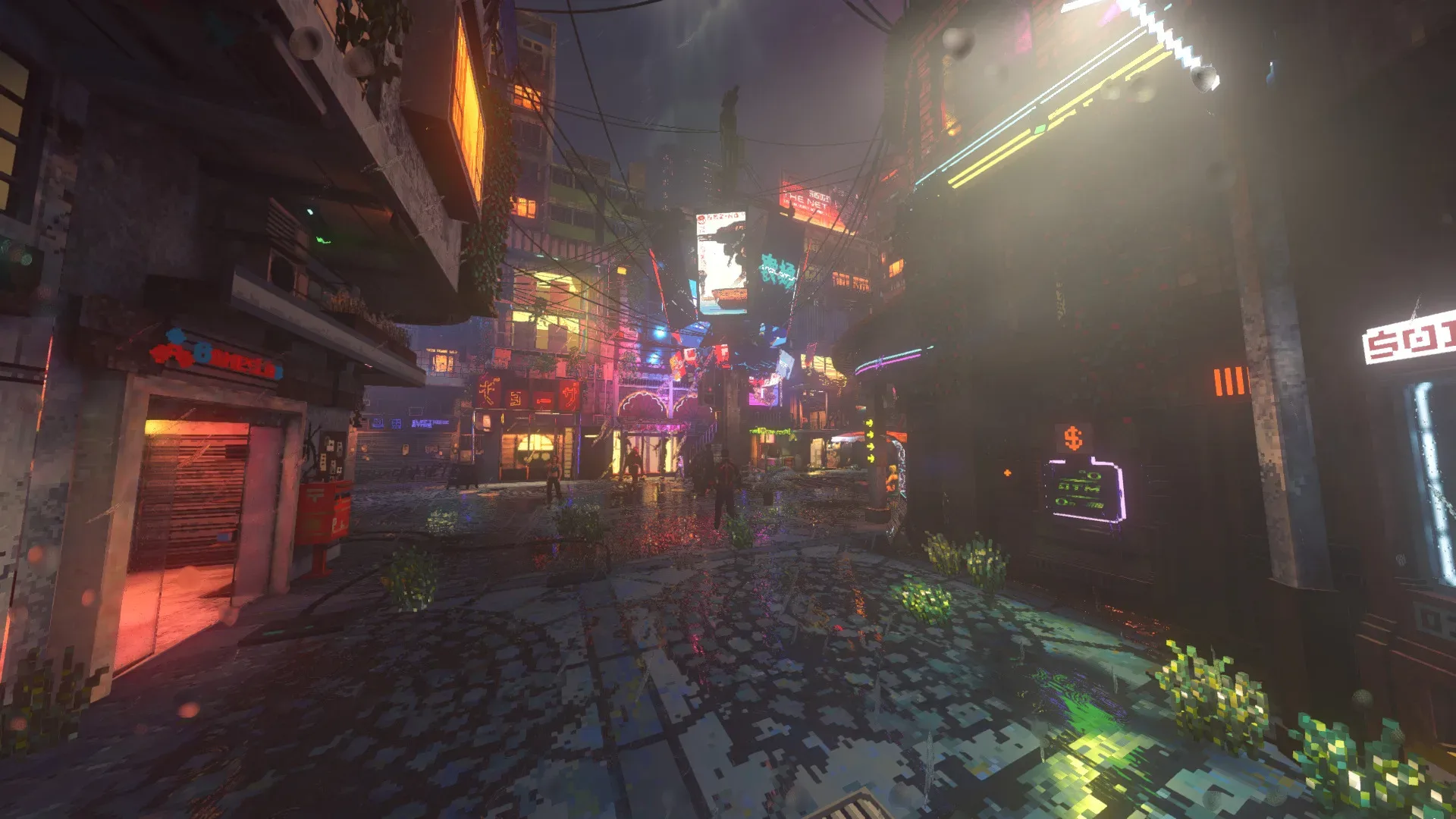
Nivalis Nights begins with an immediate, persuasive image: a high-rise apartment looking over a rain-slicked cyberpunk city, its windows carrying the reflected colors of neon below. It is the kind of opening that sells a place before it explains it. The city of Nivalis looks like a destination worth inhabiting, and its grim details give that beauty some bite: debt hangs over the player, security bots enforce a curfew, a powerful corporation looms over daily life, and a killer is reportedly at large.
That is an excellent foundation for ION LANDS’ follow-up to Cloudpunk. It also makes the early concerns around Nivalis Nights more frustrating. The game combines restaurant management, life-sim activities, relationship elements, quests and a story-driven city. Based on its opening hours, though, it appears so determined to introduce every part of that package that it rarely lets a player settle into one. The result is a game with substantial personality and evident ambition that can feel hurried through its own best ideas.
A city built to be stared at
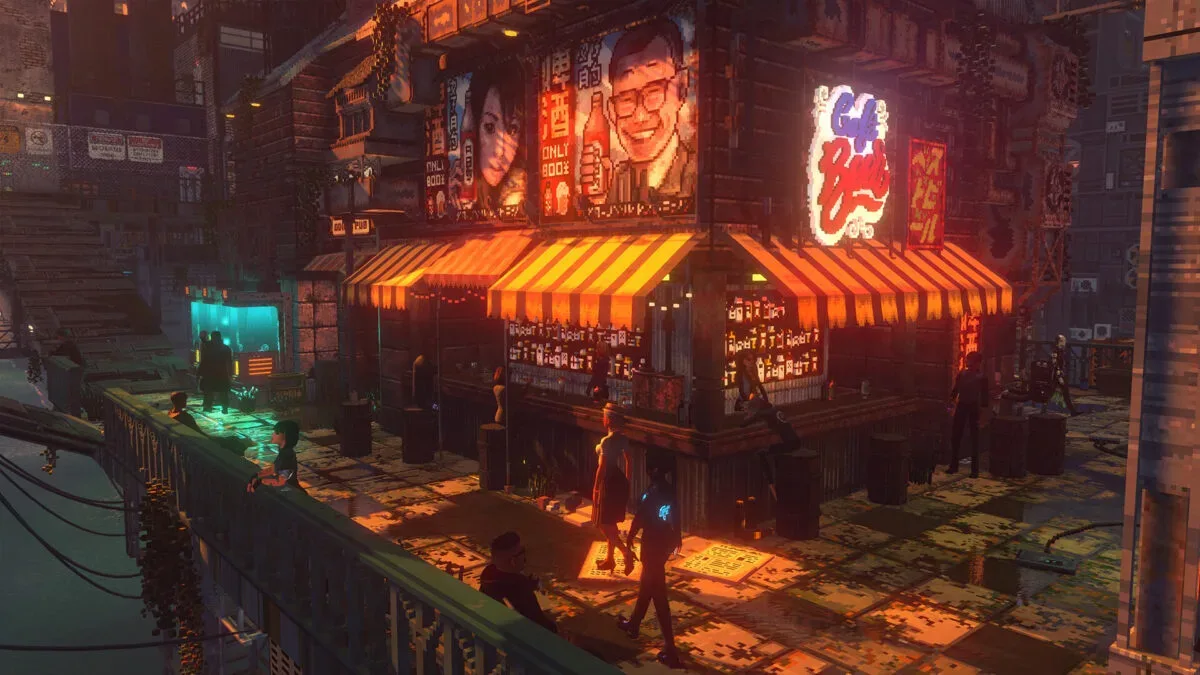
The strongest case for Nivalis Nights is its environment. Its voxel-built cityscape creates an attractive texture for the cyberpunk setting: blocky forms, wet windows and multicolored lighting make the skyline feel stylized rather than merely dark and metallic. A voxel is, simply put, a three-dimensional counterpart to a pixel—a small volumetric building block used to construct objects and environments. Here, that visual approach gives Nivalis a distinctive, crafted look.
The world’s social atmosphere also seems deliberately uncomfortable. The player is not arriving in a carefree restaurant-owner fantasy. There are threats in the streets, a mandatory curfew, financial pressure and an oppressive corporate presence. Even the local sense of humor has teeth, with one NPC reportedly offering the recipe for a particularly hostile pie. Those details suggest a city where running a restaurant could be more than a cozy loop of buying vegetables and expanding a dining room. Food, money, labor and survival can all naturally fit a dystopian setting.
For more context, explore Joni Mitchell Becomes a U.S. Citizen, Marking a 62-Year Journey Across the Border.
That contrast—warm hospitality work inside a hostile urban machine outside—is the game’s most compelling promise. It is a potentially fresh angle for the management-sim format. The challenge is that a game needs room to make a contrast felt. If the player is immediately moved through the next tutorial, unlock and quest, the city can become scenery rather than a place with a rhythm.
When a tutorial becomes an interruption
One early obstacle is Ava, an automaton who exists in the protagonist’s mind and provides instruction and conversation. A diegetic tutorial character—one presented as part of the game world rather than as a detached interface—is not an inherently bad idea. In fact, a voice embedded in the player character’s consciousness could be a fitting device for a cyberpunk story about technology and control.
The issue is presentation. Ava’s conversations reportedly take over the full screen and stop movement, including during ordinary tasks such as heading to a market for restaurant supplies. That is a significant friction point in a game that otherwise encourages living in a city. A tutorial should clarify the player’s next meaningful decision; it should not repeatedly feel like a handbrake being pulled without warning.
Related coverage includes Nivalis Nights Has a Stunning Cyberpunk City, but Its Opening Hours Move Too Fast.
There is an important difference between guidance and control removal. Guidance tells players what a mechanic does, offers an objective, or makes information available when needed. Control removal temporarily prevents them from acting. The latter can be useful for major narrative scenes, but frequent full-screen interruptions can erode the sense of ownership that life sims and management games depend on. When players are handling inventory, walking through a district or deciding how to spend limited money, their freedom to prioritize is part of the fantasy.
A less intrusive delivery method—short optional prompts, messages, a log, or dialogue triggered at natural pauses—could better preserve Ava’s narrative role without making her feel like an obstacle. The premise does not need to change. The cadence does.
The management loop has ingredients, but not enough texture
The restaurant side of Nivalis Nights has genuine appeal. There is a wide selection of ingredients, recipes to make from them, and a progression path built around new dishes and upgrades. Unlocking an improved tool or a new recipe provides a clear reward for the work of operating a business. That loop is familiar for a reason: it turns growth into something visible, practical and satisfying.
Yet the hands-on activity described in these opening hours sounds limited. When helping employees, the player may repeatedly watch the same food-processor animation rather than take part in a more varied preparation sequence. Minigames are not automatically necessary for restaurant management, and repetition can be intentional in a game about work. But repeated actions need either satisfying tactile feedback, meaningful strategic choices, or enough variation to prevent them from becoming dead time.
In management games, the key question is often not whether an action is realistic, but whether it creates a decision. Does the player have to balance cost against quality? Choose ingredients based on customer demand? Adapt to staffing pressure? Decide whether to expand, upgrade or save cash? The early restaurant loop has the raw material for this kind of engagement, particularly because it includes many ingredients and recipes. It may simply need more space and more mechanical expression before the next obligation arrives.
Expansion arrives before the first restaurant feels like home
The clearest pacing concern is how quickly the game appears to push a second business. The first restaurant is still struggling to turn a profit, customer meals are receiving three-star ratings, and the dining room has only two tables. Fewer than three in-game days have passed. Instead of allowing the first establishment to become a familiar base—one the player understands, improves and feels responsible for—the game shifts attention toward another property.
That choice has broader implications because the main story is said to involve 14 businesses across roughly 20 hours. Those figures do not reveal exactly how the game is structured, and they should not be treated as a guarantee of what every player will experience. They do, however, explain the concern that individual locations may pass by too quickly. A large number of businesses can make for variety, but variety does not automatically create attachment.
In a restaurant-management game, the first location should ideally establish a baseline. Players learn its problems, recognize its regulars, see the effect of small upgrades and develop their own working routine. Only then does a new venue feel like a meaningful expansion of responsibility rather than a new tab in an already crowded checklist. Rapid growth may suit a story about relentless corporate ambition or debt, but that theme is most effective when the player has had time to value what they are being asked to leave behind.
Too many new systems can make progress feel weightless
The fast introduction of the greenhouse and a boat produces a similar problem. Both sound like major systems or locations with the potential to alter the player’s routine. A greenhouse could connect food production to restaurant supply; a boat could reshape traversal and broaden the city. Unlocked almost back to back, they risk becoming features that players register rather than explore.
This is a problem of onboarding, the gradual process through which a game teaches its systems and gives players an opportunity to use them. Strong onboarding is not just a tutorial checklist. It establishes why a mechanic matters, lets the player make a low-stakes choice with it, and then expands its complexity once the basics are familiar. Throwing several systems at players quickly may look generous on a feature list, but it can dilute the excitement of every individual reward.
The quest structure compounds that pressure. New tasks reportedly arrive while earlier tasks are still active, building an expanding quest log that cannot be organized and occupies a notable portion of the HUD. A HUD, or heads-up display, is the persistent interface layer that conveys objectives, meters and other status information while playing. It is essential for usability, but an oversized or cluttered HUD can continually remind players of unfinished chores rather than invite them to inhabit the world.
Organization tools would not solve every pacing issue, but they could reduce the feeling of being pulled in several directions. Sorting by urgency, location or category; allowing players to hide low-priority tasks; and ensuring that new quest prompts wait for natural breaks would all support a game with this many overlapping activities.
A mismatch between characters and the city
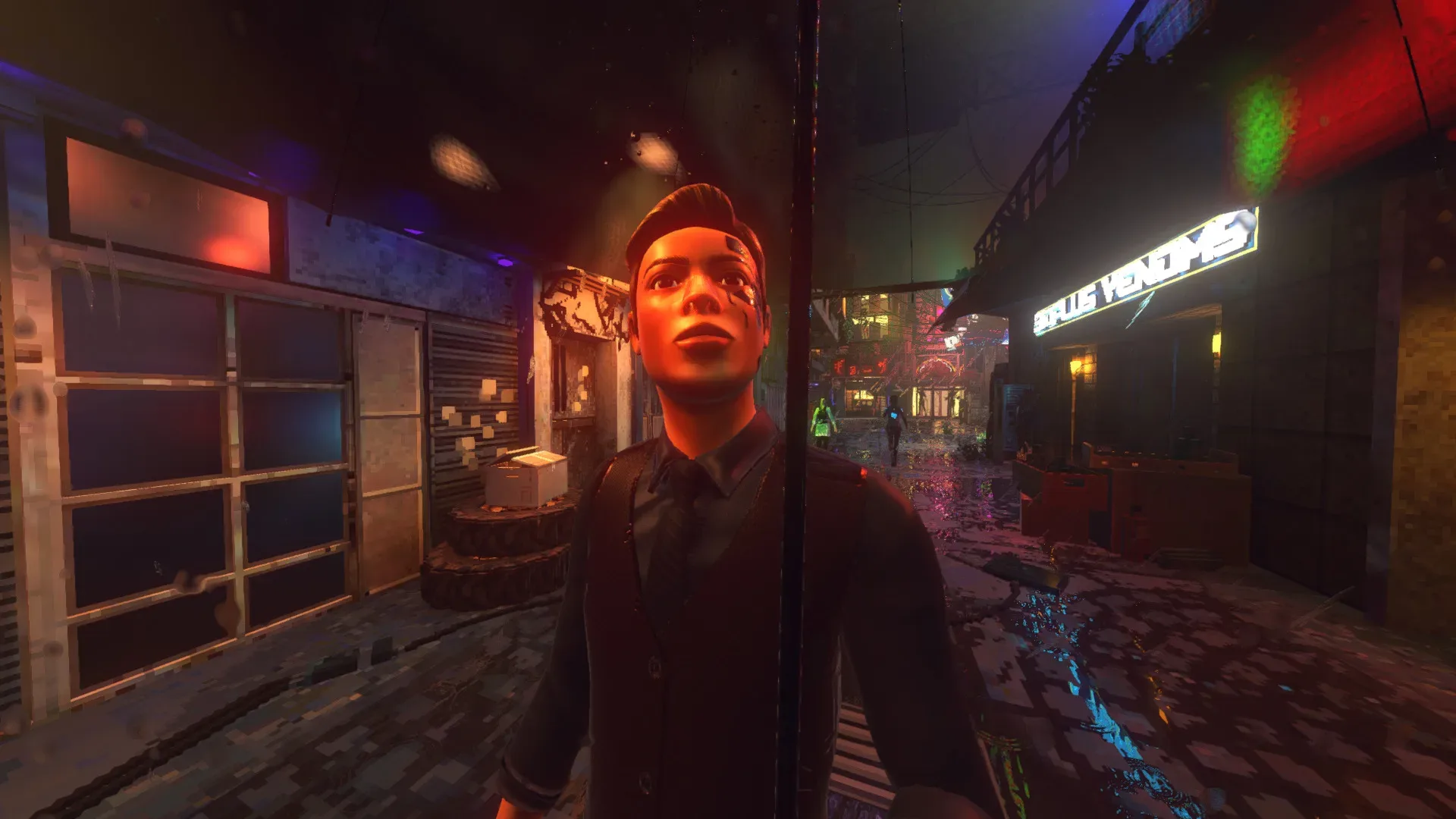
There is another visual tension at work. The voxel environments are being praised for their atmosphere, while the character models are described as comparatively conventional 3D figures whose clothing and proportions do not always match the world’s style. That gap matters especially because the game’s early shape reportedly leans more heavily toward dialogue, fetch quests and visual-novel-style scenes than its restaurant-sim branding might imply.
A fetch quest is a task centered on retrieving an item or traveling to a destination for another character. It can be useful for introducing areas or establishing a routine, but it puts NPCs and conversations at the center of the experience. If a game frequently asks players to stand in front of characters, visual cohesion becomes more than a minor aesthetic complaint. The player spends a great deal of time looking at the part of the presentation that feels least aligned with the city.
Interestingly, the occasional pixel-art portraits are said to be excellent. That suggests the game already has an appealing character-art direction available. More frequent use of those portraits, or adjustments that bring the 3D models closer to the environmental style, could reinforce the identity that the city has already established so effectively.
The meal is there; the game needs to let it be tasted
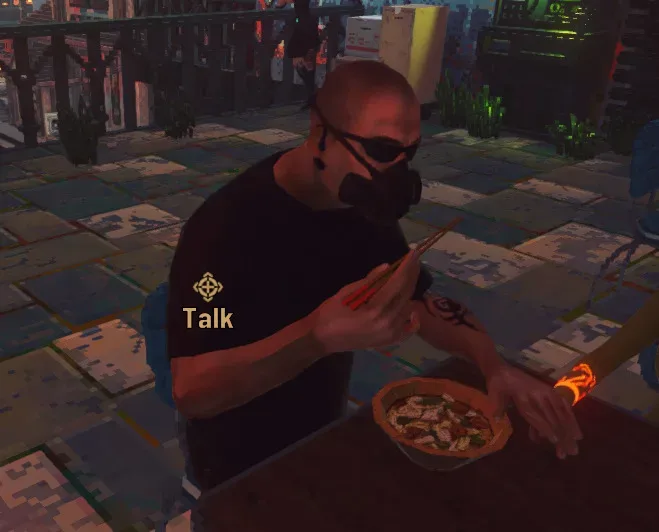
Nivalis Nights is not short on ideas. It has an unusually attractive cyberpunk setting, a restaurant system with meaningful ingredients and recipe progression, solid voice work in many places, and a story premise that could make everyday management feel consequential. Even a minor animation oddity—a masked customer attempting to eat without taking the mask off—adds an oddly memorable bit of visual comedy.
But the early experience points to a design that mistakes constant delivery for momentum. More quests, more businesses, more features and more dialogue do not necessarily make an opening richer. Sometimes the most useful thing a game can provide is an uninterrupted hour with one restaurant, one neighborhood and a manageable list of problems.
The city of Nivalis already looks worth lingering in. For its systems and story to land with equal force, the game needs to trust that its strongest ideas can hold attention without all arriving at once.