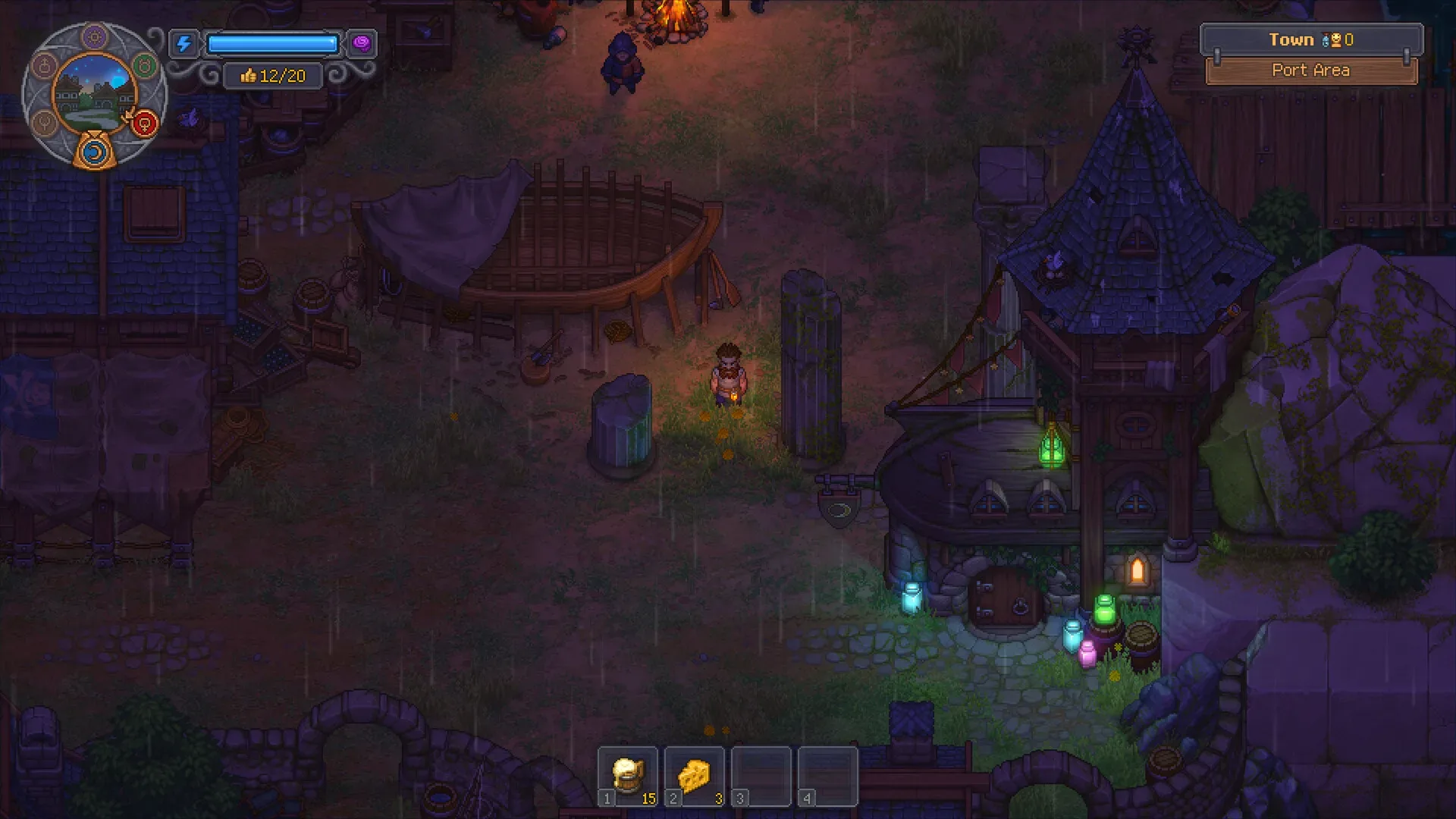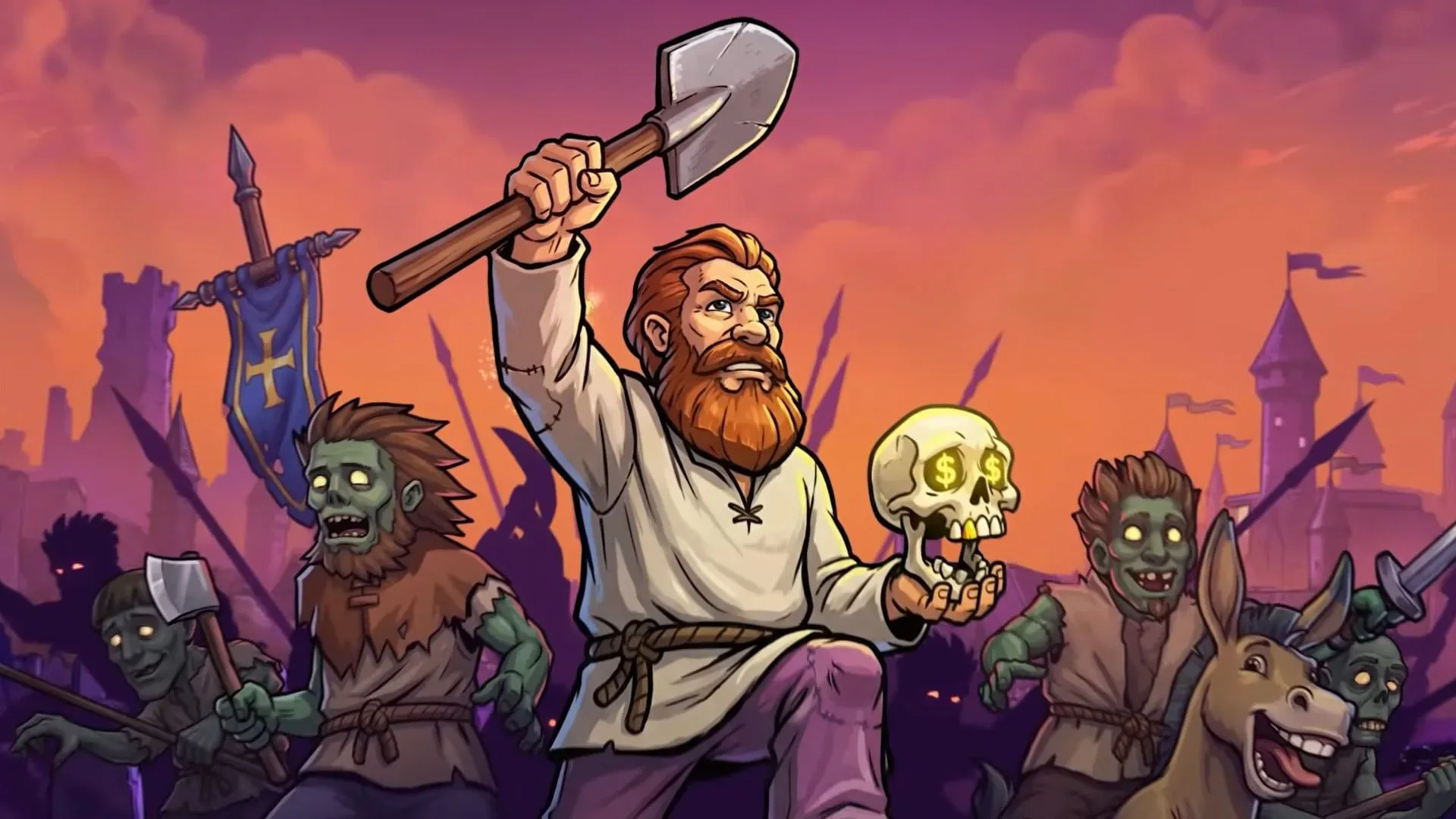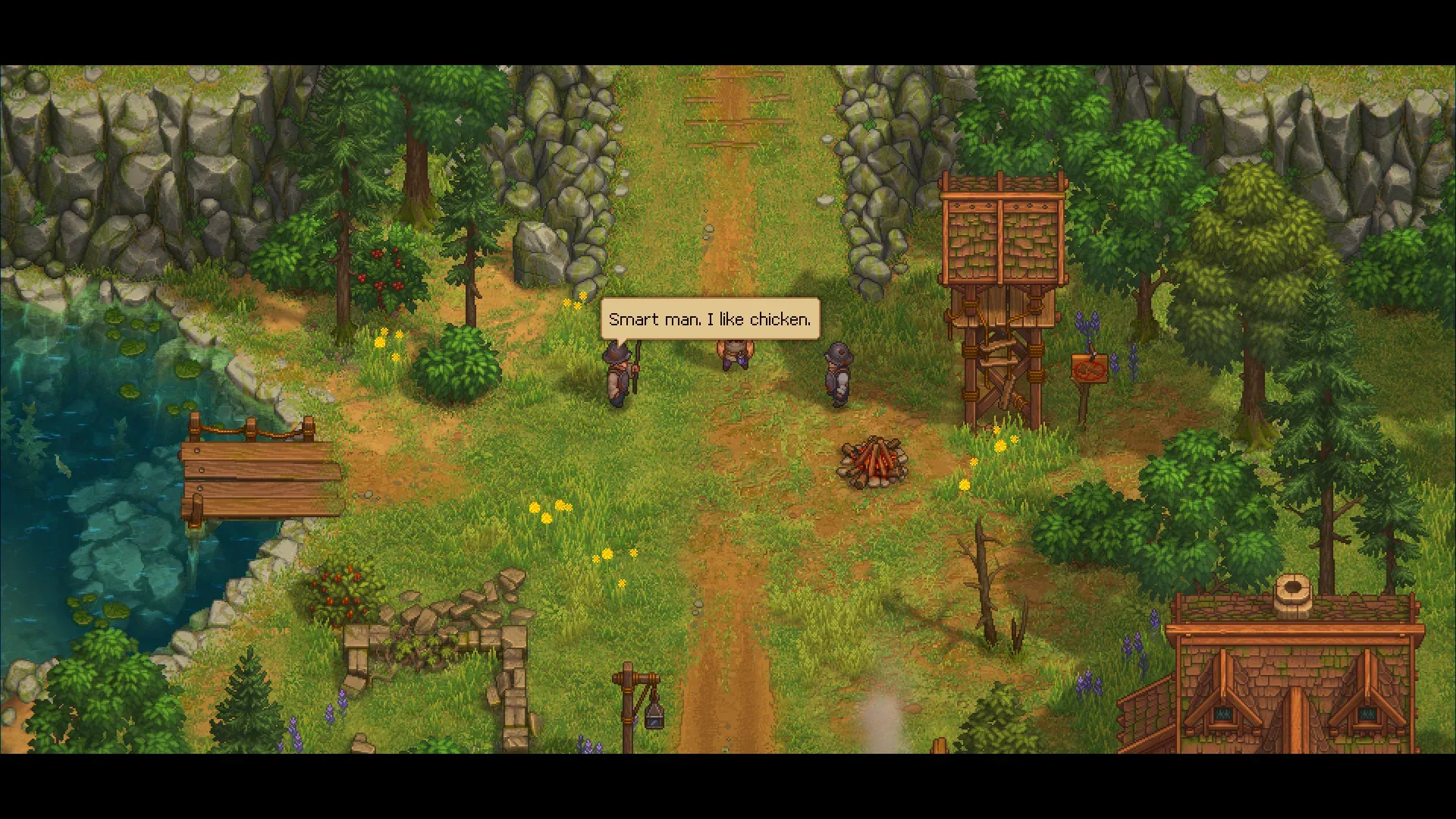
Graveyard Keeper 2 arrived on September 22 from developer Lazy Bear Games with a familiar proposition: return to a grimly cute pixel-art world, gather materials, refine them through workstations, and keep improving the tools and facilities needed to do it all again. The sequel is said to make some welcome practical improvements, including less punishing inventory management, a less grind-heavy feel, crisper art, and fully voiced dialogue.
But one early criticism cuts directly against those quality-of-life gains: the sequel’s much greater focus on story and NPC conversation may repeatedly derail the management-sim rhythm rather than enrich it. That is a particularly awkward problem for a game whose core appeal is not merely completing jobs, but maintaining momentum between them.
For players considering the $25 sequel, the important question is therefore less “is the loop still here?” than “how often does the game let that loop breathe?” The available impression suggests that the familiar loop remains enjoyable, while narrative interruptions can make its flow feel more constrained than in the original.
The loop is the point
A resource-management loop is the chain of small decisions and transformations that governs games in this style. A player obtains a raw material, uses it to build or improve a station, processes another material at that station, then turns the result into a tool, upgrade, or prerequisite for the next task. Its pleasures are cumulative: an initially modest action creates the means for a more capable action later.
Graveyard Keeper’s version of this structure combined a macabre setting with approachable pixel art and a deliberately workmanlike progression cycle. It had some grind, but that did not necessarily undermine the experience; for the right audience, planning the next requirement and gradually opening new production steps is the experience. The original was reportedly the kind of game capable of absorbing dozens of hours precisely because players could settle into that pattern.
On that foundation, a sequel that preserves the formula is not automatically a disappointment. Familiarity can be a virtue in a simulation-oriented follow-up, especially if the new version reduces mundane friction. The reported inventory improvements matter because inventory is where an otherwise satisfying crafting game can become repetitive administration. When a game asks players to collect and process many ingredients, making those ingredients easier to manage is a genuine enhancement rather than an invisible technical detail.
The updated visuals and full voice work are similarly understandable attempts to make the return trip feel more polished. Yet polish only helps if it does not get between the player and the reason they returned.
More dialogue can mean less player control
The central complaint is not simply that Graveyard Keeper 2 has a story. The first game had one too. Rather, the issue is the cadence—the pacing created by the alternation of work, travel, dialogue, quests, and rest. In a management game, cadence can be as meaningful as any individual feature because players tend to arrive with their own immediate plans: sell goods, hand in an objective, plant crops, build a station, or finally sleep and start the next day.
Related coverage includes Graveyard Keeper 2's Expanded Story Risks Getting in the Way of Its Best Ideas.
The sequel’s conversations are described as much more frequent and harder to avoid. Entering town can trigger a cutscene. Delivering a quest can produce extended exposition that redirects the player to another character. Even moments intended to close out a day can reportedly be interrupted by more lore or a fresh assignment. The talking skull Larry, who is positioned near the player’s bed, is cited as one source of these untimely explanations.
None of those individual beats is inherently disastrous. NPC scenes can establish a place, introduce a goal, or create comic texture. Problems emerge when the player cannot reasonably predict or defer them—especially when they appear in the middle of a routine task. A short detour becomes a friction point when it happens repeatedly, and a game built around efficient little chains of activity is unusually sensitive to that friction.
That distinction helps explain why “you can skip through it” is not a complete answer. Rapidly advancing text may reduce the time spent reading, but it does not restore the feeling that the player decided when to stop working. It can also turn dialogue into an obstacle course: something mechanically endured to reach a shop menu, quest hand-in, or next morning rather than a reward for engaging with a character.
Quality-of-life is more than inventory space
Quality-of-life, often shortened to QoL, usually refers to changes that reduce irritation without altering a game’s main challenge. Better inventory handling is a textbook example. But player control over interruptions can be quality-of-life too. The sequel’s reported tension illustrates why that broader definition matters.
Making materials easier to sort and carry improves the physical side of the loop. Giving players clearer control over when a long scene begins protects the temporal side of it. Both determine whether a session feels smooth. A crafting game can have smart menus and still feel cumbersome if ordinary actions regularly lead to uninvited narrative pauses.
There are several ways games can preserve that agency without abandoning storytelling: clearly signposting a scene trigger, letting a player postpone a conversation, separating optional relationship scenes from progression gates, or keeping compulsory exchanges concise when the player is clearly trying to access a basic service. The concern raised here is that Graveyard Keeper 2 reportedly does not provide enough of that separation, because advancement in its simulation systems is often tied to quests and the dialogue surrounding them.
That linkage is crucial. Optional chatter is easy to leave behind. Mandatory story sequences connected to management progress are not. When the route to a new tool or workbench runs through an NPC exchange, every extended scene gains a practical cost for players who would rather be producing, upgrading, or tending to their next task.
Why the Stardew Valley comparison matters
The comparison with Stardew Valley is useful not because every cozy or craft-focused game should imitate it, but because it highlights a design difference: opt-in social engagement. In that model, players who enjoy building relationships can pursue them through gifts and conversations, while players focused on farming or other activities have considerable room to do their own thing.
Scheduled events can also provide advance warning. A player has a chance to decide whether to enter an activity likely to involve a lengthy sequence, rather than discovering the commitment only after walking into a required location. That is a small courtesy with outsized value in games where one player’s ideal session is social and another’s is a tightly planned production run.
Graveyard Keeper 2 is not required to copy that structure, and a sequel with a stronger plot can be a reasonable creative choice. A more narrative-led approach succeeds, though, only when the writing gives players a compelling reason to welcome the interruption. The early impression here is that the humor remains unappealing, NPCs feel thinly drawn, and the added volume of dialogue has not been matched by more persuasive character work or narrative stakes.
Voice acting complicates rather than resolves that criticism. Fully voiced scenes can make a world feel more present for players who value presentation and comedy. But voice work also makes the design commitment more conspicuous: more dialogue is no longer just more text boxes, but a more deliberate demand on the player’s attention. If the player is unconvinced by the jokes or the characters, that added production layer cannot by itself make a compulsory sequence welcome.
A sequel needs a reason to replace the original
The sharpest implication is about sequel value. Graveyard Keeper 2 is described as broadly similar to its predecessor, with its major differences appearing to be polish improvements and the enlarged narrative component. If the polish is welcome but the expanded story feels intrusive, then the new package can appear to offer a mixed trade: smoother management in exchange for more frequent loss of momentum.
That does not make it a universal dealbreaker. Players who want more voiced character material, do not mind regularly tapping through dialogue, or simply want another helping of the established management structure may find plenty to like. The core loop is still presented as the reason the series works, and the changes to grind and inventory handling could be meaningful for anyone frustrated by those parts of the first game.
For players who valued the original specifically as a low-pressure work cycle with narrative largely in the background, however, this is worth treating as a genuine caveat rather than a minor tonal preference. A game can be technically more polished while feeling less accommodating of the way its audience prefers to play.
That same question of player-led creativity is visible in another recent simulation-game community, where players are already using Dressmaker’s systems for inventive projects. Different games have different aims, but the common lesson is simple: systems shine brightest when players have room to follow their own priorities.
What to watch for before committing
Anyone weighing Graveyard Keeper 2 should look beyond whether it has better art, voice acting, or inventory behavior. Those are real improvements, but the practical fit may come down to tolerance for story pacing.
- Management-first players: Consider whether frequent, mandatory dialogue and cutscenes would interrupt the reason you play these games.
- Story-curious players: The sequel offers more narrative presence than the first, but the available assessment finds its humor and character writing unconvincing.
- Returning players: Expect a familiar core rather than a wholesale reinvention, with reduced grind and friendlier inventory handling among the notable refinements.
- Players who prefer autonomy: The reported progression ties between quests, conversations, and simulation advancement may be the most important concern.
Graveyard Keeper 2’s predicament is a useful reminder that “more” is not synonymous with “better” in a sequel. More dialogue, more voiced scenes, and a larger narrative footprint can all be assets. In a management sim, though, they need to serve the player’s rhythm—or at least get out of its way. The early verdict suggests that the sequel has improved several of the right systems while risking its strongest asset: the satisfying freedom to put one more material into one more machine and see what it unlocks next.