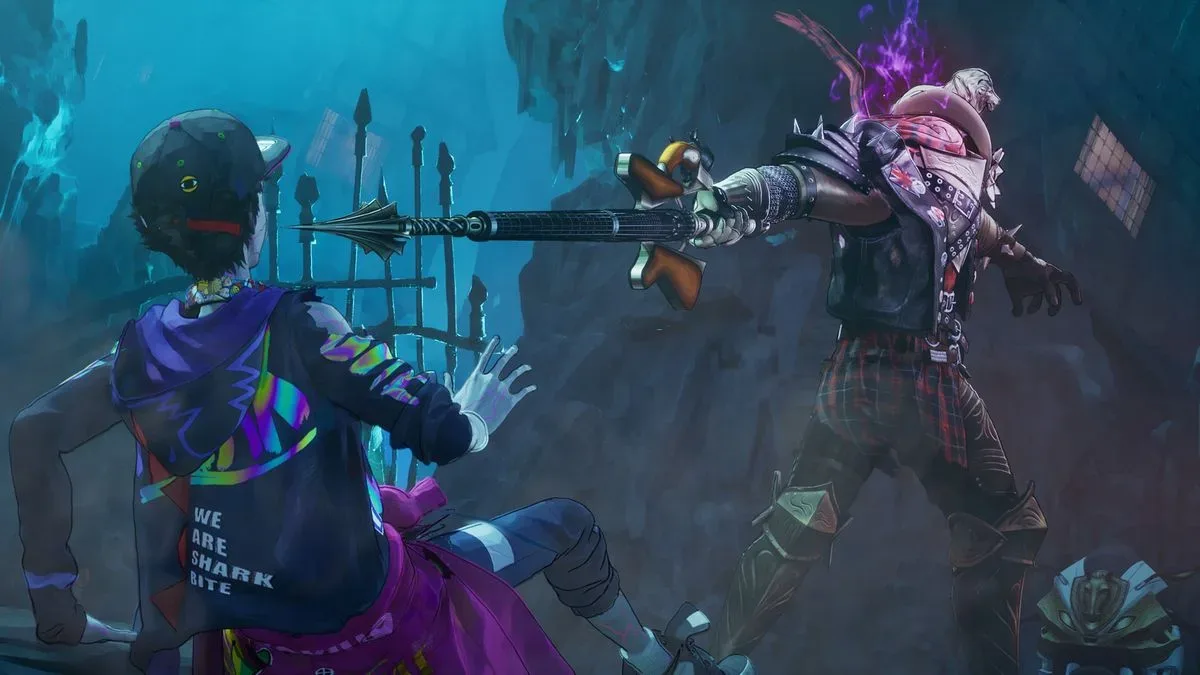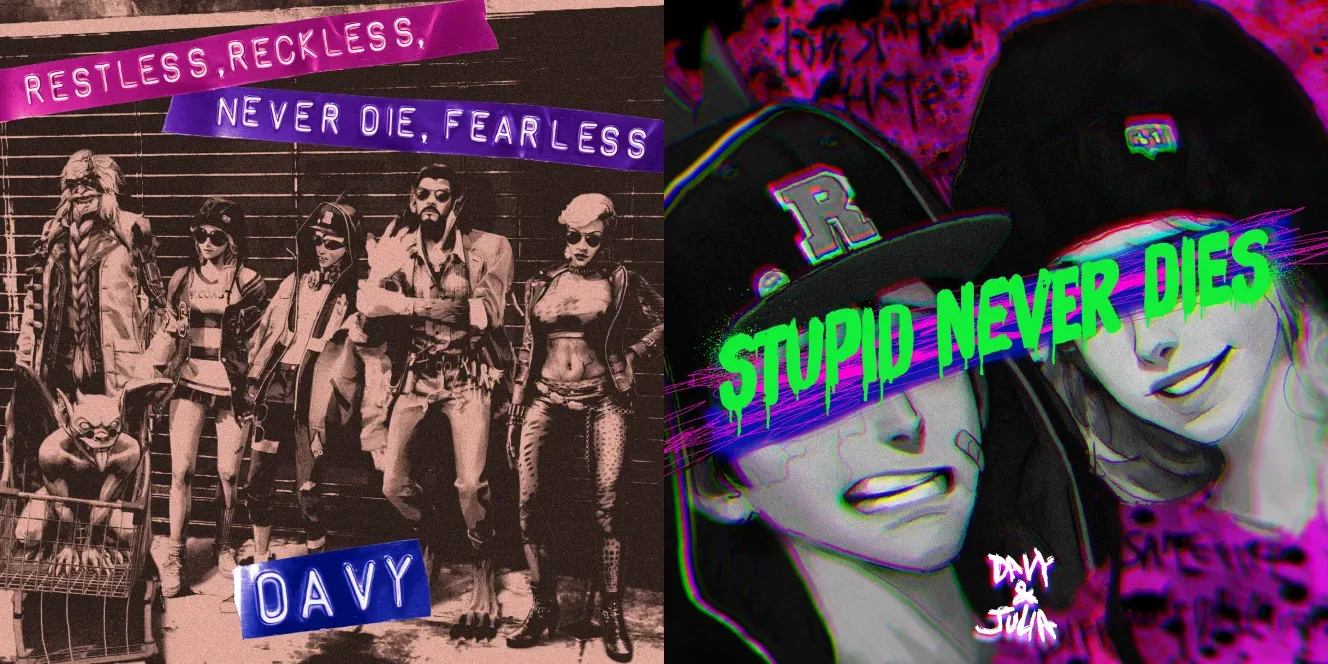
Stupid Never Dies is built around a premise that should be nearly impossible to ignore: a baseball-cap-wearing teenage zombie rebels against the horde, descends into monster-packed dungeons through a toilet, and hopes to rescue the cheerleader he likes from an accidental freezer-bound cryostasis. It is loud, absurd, deeply committed to early-2000s pop-punk attitude, and packed with supernatural forms to steal from its enemies.
That personality is the game’s clearest strength. The trouble is that its most exciting ideas depend on combat systems that reportedly struggle with precision, enemy behavior and balance. What ought to be a flexible action RPG about constantly adapting to each fresh monster body can instead encourage players to settle on a small number of reliable forms and grind levels until the next area stops resisting.
Developed and published by GPTRACK50, Stupid Never Dies is due on PC and PlayStation 5 on October 21, 2026. It is the studio’s debut, and its design carries some notable action-game lineage: GPTRACK50 was founded by veteran Capcom producer Hiroyuki Kobayashi. The game’s visual maximalism and crude humor also recall Kobayashi’s work with Suda51 on Killer7, while its dungeon combat draws on aerial melee, combo evaluation and extremely large enemy crowds.
A mall hub with a freezer romance and a toilet to the underworld
Davy, the protagonist, is a zombie who has left the undead collective behind. His goal is not merely survival: he wants to save the cheerleader on whom he has a crush, despite the pair having never spoken. She remains frozen in the storage freezer of an ice-cream shop, giving the story’s romance an intentionally goofy and morbid foundation.
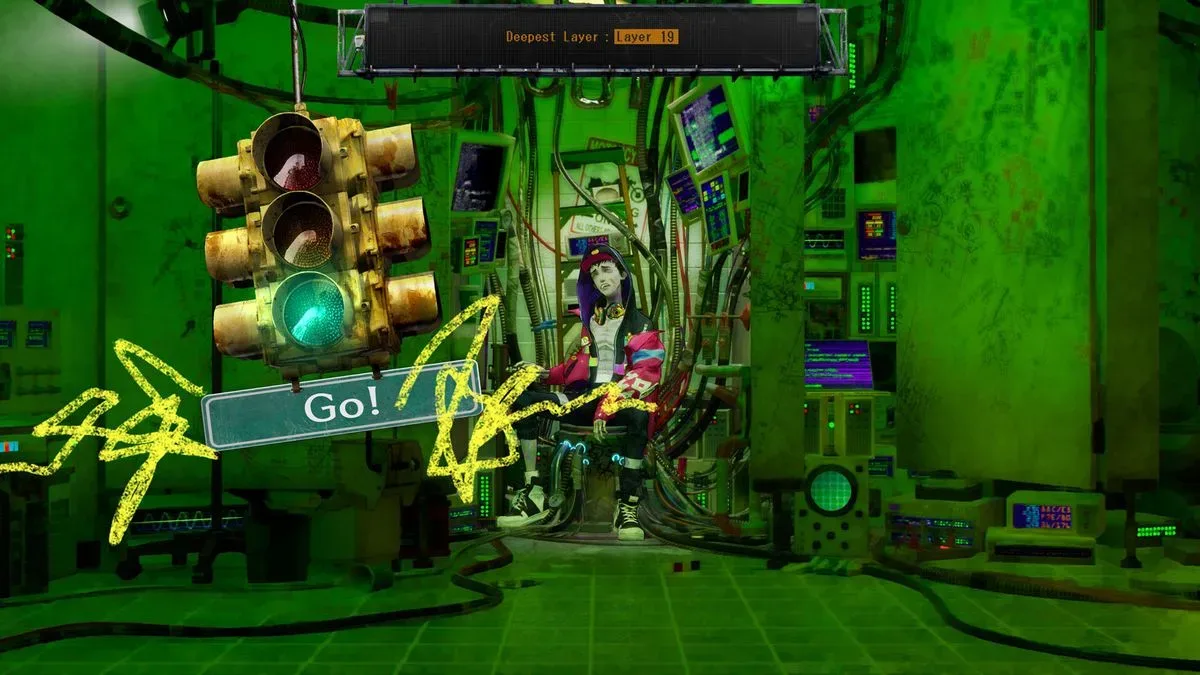
The mall serves as a home base between dungeon expeditions. It houses vendors and unusual allies, including a were-chihuahua and a gargoyle riding in a shopping trolley, alongside Davy’s frozen would-be love interest. Players return there to handle upgrades before setting out again. Structurally, it is a hub-and-run setup: prepare, venture down into hostile layers, build progress, return, then repeat. The game’s particular contribution to fantasy travel is having Davy flush himself into the dungeon.
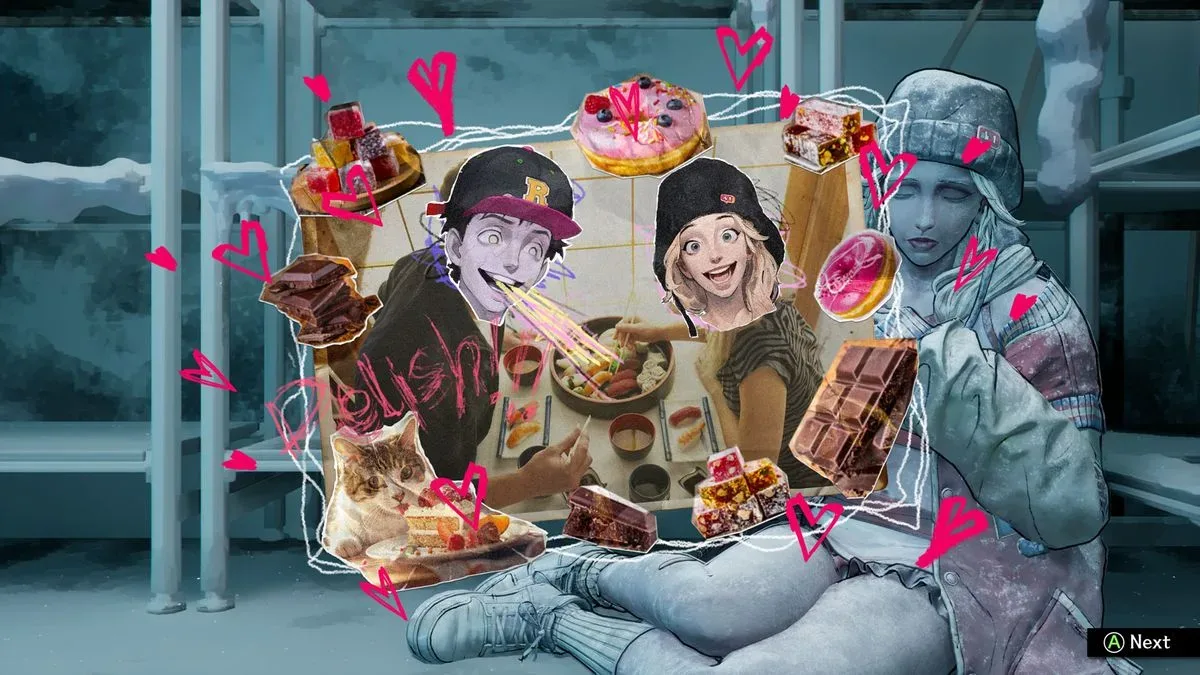
The presentation does the heavy lifting from the moment-to-moment interface to the cutscenes. Davy’s hoodie, cap and trainers establish the pop-punk silhouette, while marker scrawls, stickers and magazine-cutout imagery form a zine-like collage across menus, collectibles and narrative scenes. A theme song even has a music video available from the start menu. Those choices make the game feel authored rather than anonymous. Even where the action falters, it appears to have a strong visual point of view.
That distinction matters because action RPGs often ask players to repeat their core loop for long stretches. A memorable hub, playful UI and energetic soundtrack can make reruns easier to tolerate. But presentation cannot replace clarity and responsiveness once enemies fill the screen.
Style Eat is the game’s best idea
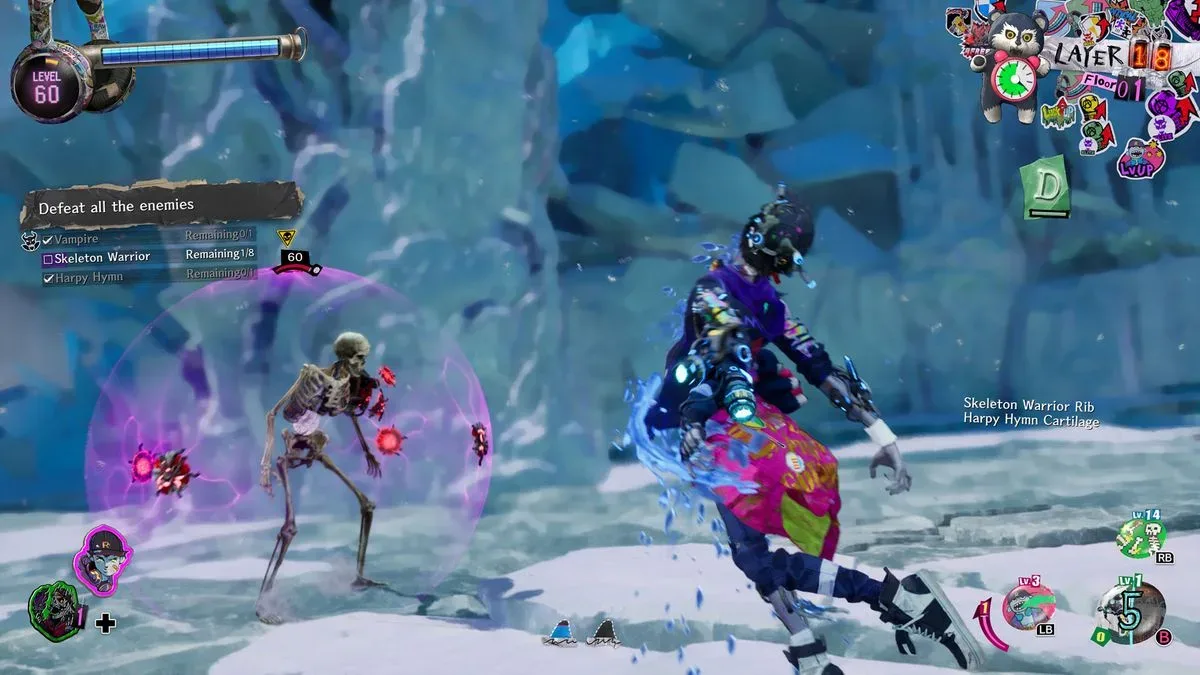
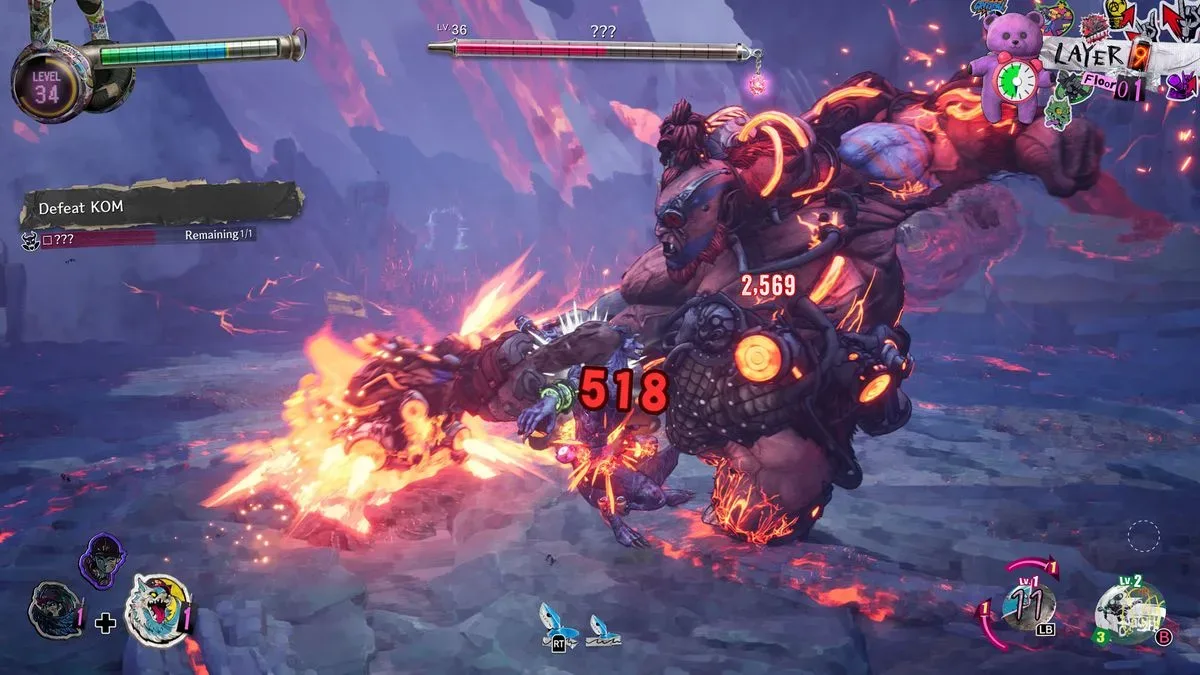
The central mechanic is called Style Eat. Davy can bite the exposed core of a defeated or stunned monster and take something from it. Ordinary enemies such as skeletons and lizardmen grant one-use Instant Skills, temporary attacks that can, for example, fire bones or produce lizard-claw strikes. Elite enemies offer the much more substantial reward: an entire transformation.
Related coverage includes Stupid Never Dies Review: Punk-Rock Style Can't Save Its Sluggish Monster Mash.
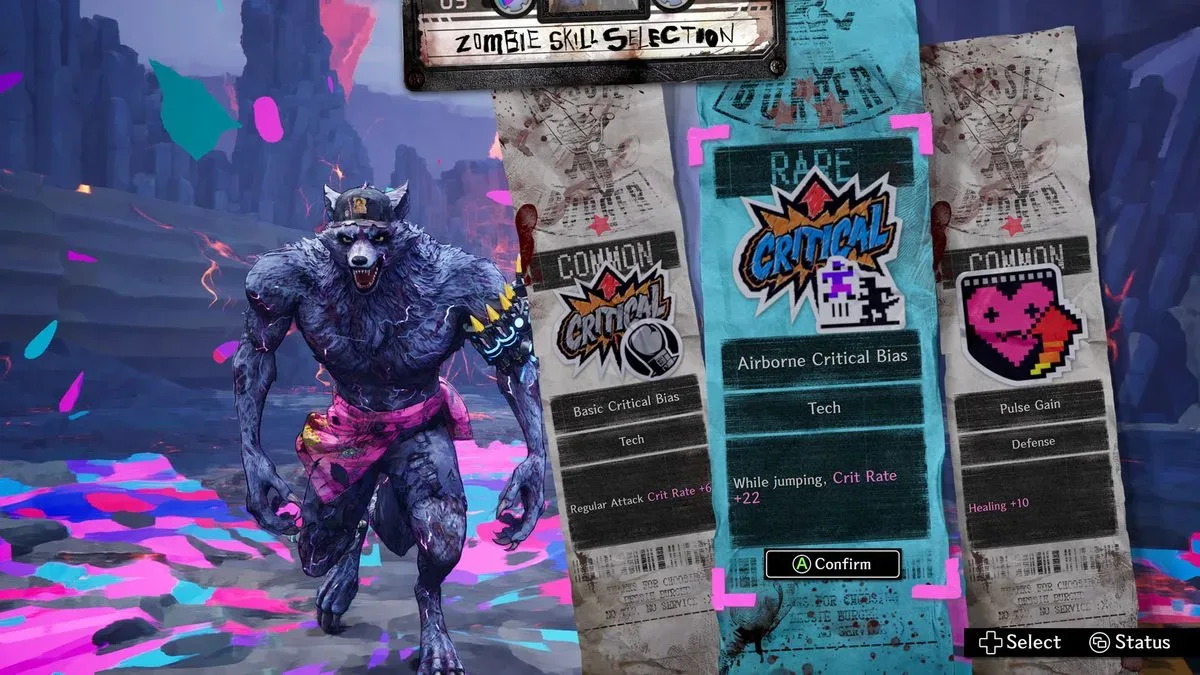
A successful Style Eat can turn Davy into versions of a werewolf, vampire, fairy or other elite creature, always retaining the hero’s unmistakable cap. Including Davy’s default zombie state, there are 11 Styles. Each has its own movement and combat characteristics, while a random Style Skill is selected from a pool of five potential special abilities. That combination gives the game a sizable number of possible loadouts even before upgrades enter the picture.
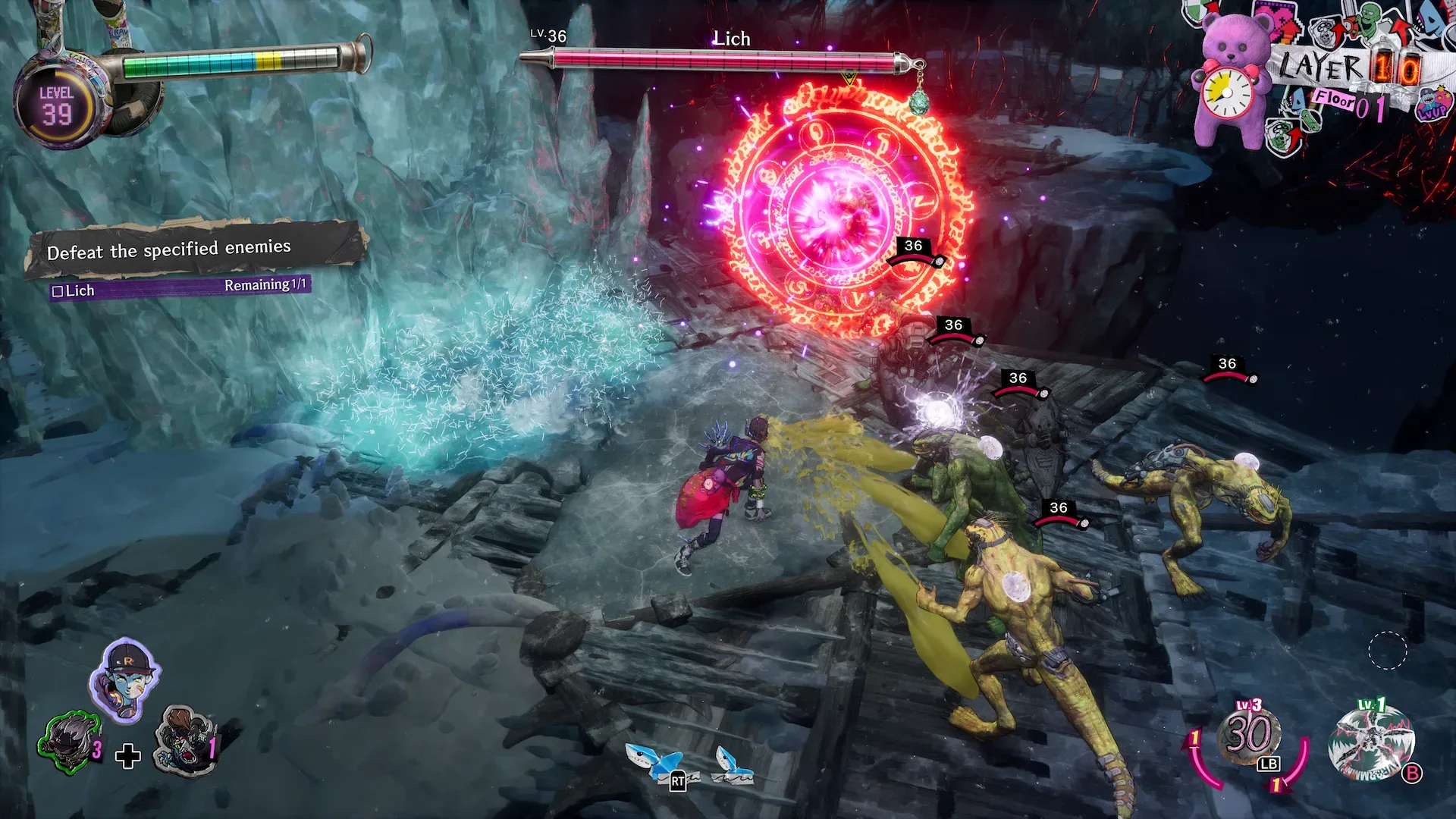
The lich demonstrates the breadth of the idea. This necromantic form can summon skeletons to fight alongside Davy. Its potential Style Skills include a huge scythe attack, a damage increase powered by draining the health of its own skeletons, and a spinning-top move that sends both the lich and its minions into damaging rotation. These are not merely different visual skins; they are attempts to create separate combat identities.
The werewolf is particularly important because it supplies speed, claw flurries and a wall-backflip that can reach elevated ground. It is the form most directly suited to quickly moving through enemy-heavy spaces. The designs of the transformations themselves are a consistent highlight, with each monster reinterpreted through Davy’s punk-zombie identity.
In theory, the system answers a frequent action-RPG problem: how to make enemy variety meaningful beyond different health bars and attack animations. Here, enemies can become part of the player’s toolkit. The more monsters Davy eats, the more approaches become available. That is an inventive foundation for a game about being an undead outsider who literally builds a fighting style out of other creatures.
What Stupid Parry is trying to accomplish
Another key term is Stupid Parry, which is deliberately not a conventional risk-free defensive counter. Davy dashes into an incoming strike and takes damage whether or not there is actually an attack to meet. When he does collide with a hit, however, the damage is reduced and turned into recoverable chip damage.
Chip damage generally means health that has been lost provisionally rather than permanently. In this case, the system ties recovery to aggressive follow-up rather than passive waiting. The player is expected to accept a hit, use the resulting opening, and regain ground through attack. It is a fitting mechanic for a reckless zombie game: success comes from deliberately charging into danger rather than neatly avoiding it.
The payoff is greater when the parry meets a gold-flashing Heat Attack. That produces a Stupid Impact, stunning the foe and revealing its core for the bite that activates Style Eat. The intended combat loop is therefore easy to outline: seek out a powerful attack, dash through it, absorb manageable damage, trigger the stun, eat the core and use the stolen monster capability to control the encounter.
It is an elegantly interconnected concept on paper. Parrying is not just defense, and transformations are not just a bonus; each is supposed to feed the other. The problem is practical reliability. If attacks fail to connect cleanly, or if enemies do not perform the moves the system asks players to engage with, the loop loses its rhythm.
Ambition runs into targeting and balance problems
Not every Style appears equally useful. Heavy options such as the golem and cyclops make intuitive sense as slower, more cumbersome bodies. Less intuitively, some ostensibly nimble forms can also feel unwieldy. The fairy and will-o’-the-wisp do not consistently deliver the agility their appearances suggest.
The merfolk Style shows the tension especially clearly. It can swim below the ground briefly, then burst upward with a strong uppercut. That is a clever fantasy ability with obvious ambush potential. Yet it is reportedly difficult to use efficiently when rooms demand rapid crowd-clearing, and its underground movement lasts only a short time before a slow refill on the swim meter. On land, the form is much less graceful.
Other Styles have similarly interesting but conditional designs. The snow fairy gains power by freezing enemies, while the will-o’-the-wisp can set itself ablaze to injure enemies that come close. Those mechanics ask players to establish particular situations before getting their reward. In a game that often sends enemies in large quantities, conditional tools need dependable controls and clear impact to justify the extra effort. Otherwise, a faster all-purpose form becomes the logical answer to almost every room.
The lack of lock-on targeting compounds the issue. A lock-on system normally anchors attacks or the camera to one selected enemy. Omitting it is understandable when the screen is crowded, since a single-target focus could become awkward amid large packs. But without one, accurate placement is harder, and attacks may not land where intended. That is especially costly in a game whose main progression mechanic requires getting close enough to bite a specific exposed core.
Enemy behavior reportedly creates a second layer of uncertainty. Foes can remain inactive for several seconds, then commit to major attacks that miss by a wide margin. Ordinarily, an enemy whiff might feel generous. Here, it can be counterproductive: Davy needs enemies to offer usable Heat Attacks so he can perform Stupid Parries and reach the Style Eat payoff. Chasing an attack only for the dash or bite to pass the target turns a deliberately chaotic combat design into an imprecise one.
When level becomes more important than mastery
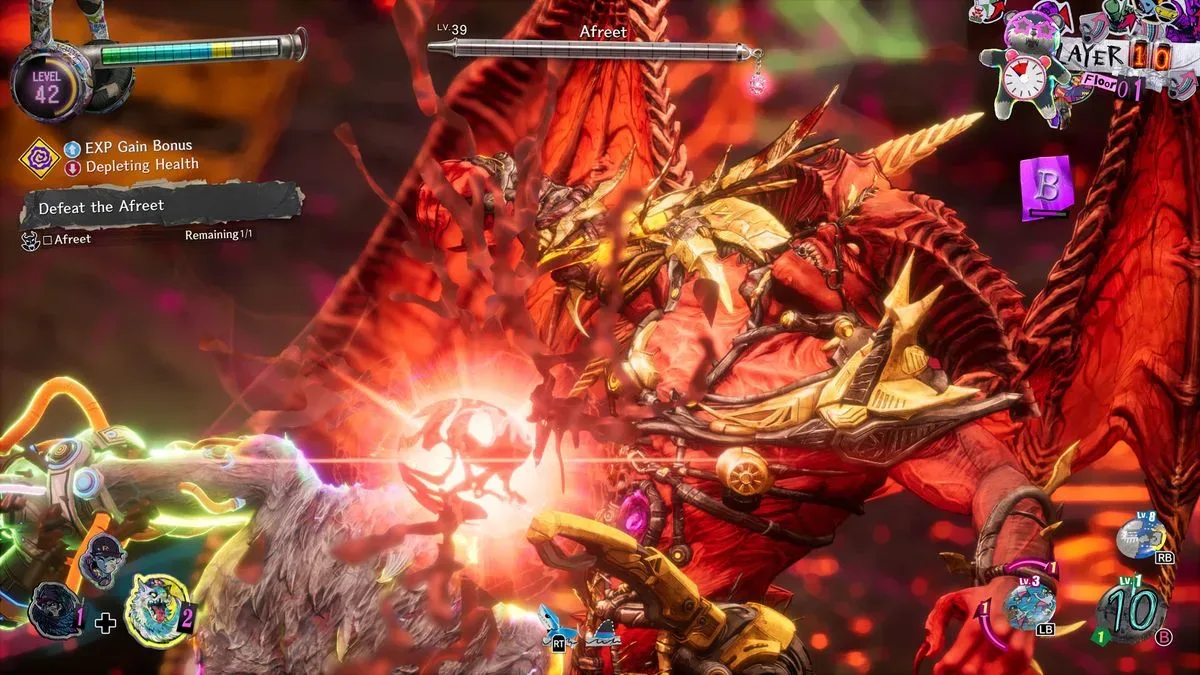
The dungeon also has a time limit. Staying down too long does not instantly end the run, but it severely weakens Davy. That pressure should encourage decisive play and discourage endlessly cautious clearing. Yet it also gives players another reason to rely on the quickest, most proven combat forms rather than experiment with abilities that have long cooldowns or awkward execution.
The progression model further shifts the emphasis away from finesse. Dungeon runs increase the XP Davy can collect, and repeated attempts can accelerate advancement to an extreme degree. Eventually, the game can reportedly produce a string of level-ups almost immediately after a run begins. The audiovisual reward of a rapidly rising number can be compelling, but it changes what determines success.
In broad terms, an action RPG balances mechanical skill—aiming, timing, positioning and decision-making—against character power, meaning levels, stats and upgrades. Stupid Never Dies appears to lean heavily toward the latter. Entering a layer at or above its expected level can make the challenge relatively easy; pushing ahead while underlevelled can feel like trying to punch through a wall.
That does not make fast progression inherently wrong. Some players enjoy a power curve that rapidly turns a vulnerable character into a wrecking ball. The issue is whether the many Styles retain a reason to exist once a few effective forms, notably the werewolf, lich and sometimes vampire, handle most situations more efficiently. A system offering 11 distinct identities is at its strongest when players want to rotate through them because each solves a real problem. It is weaker when the best strategy is to pick speed, grind and move on.
Go Nuts Mode makes that philosophy unusually explicit, offering a substantial strength boost for players who want to push through repetitious sections. It may be a useful accessibility or pacing option, but its presence also underlines the reported frustration: the game’s ideas are more adventurous than the flow of its fights.
Who the game may still suit
Players looking for a polished technical brawler may want to approach cautiously. The reported issues with hit connection, targeting, inactive enemies and uneven Styles strike directly at the qualities that make a melee action game satisfying. Fans of deep build variety should likewise temper expectations: the menu of transformations is broad, but breadth does not automatically yield equally viable choices.
There is still a distinct audience for its particular mix. Anyone drawn to irreverent monster designs, collage-heavy presentation, exaggerated leveling and a knowingly ridiculous undead romance may find enough charm in Davy’s world to make the rougher edges easier to forgive. The premise is not timid, and neither is the art direction.
For players who chiefly want an action RPG with more dependable build experimentation, the broader genre has stronger options; our look at why build freedom can sustain an ARPG for thousands of hours offers a useful contrast in what long-term mechanical flexibility can mean.
Stupid Never Dies has the memorable ingredients: a stylish zombie lead, a mall full of oddball allies, monster forms with real imagination, and a mechanical vocabulary that wants every reckless collision to become an opportunity. But those ingredients do not always combine into a satisfying fight. Its exuberant presentation gives it life; its combat and progression structure may make it difficult for that life to last.