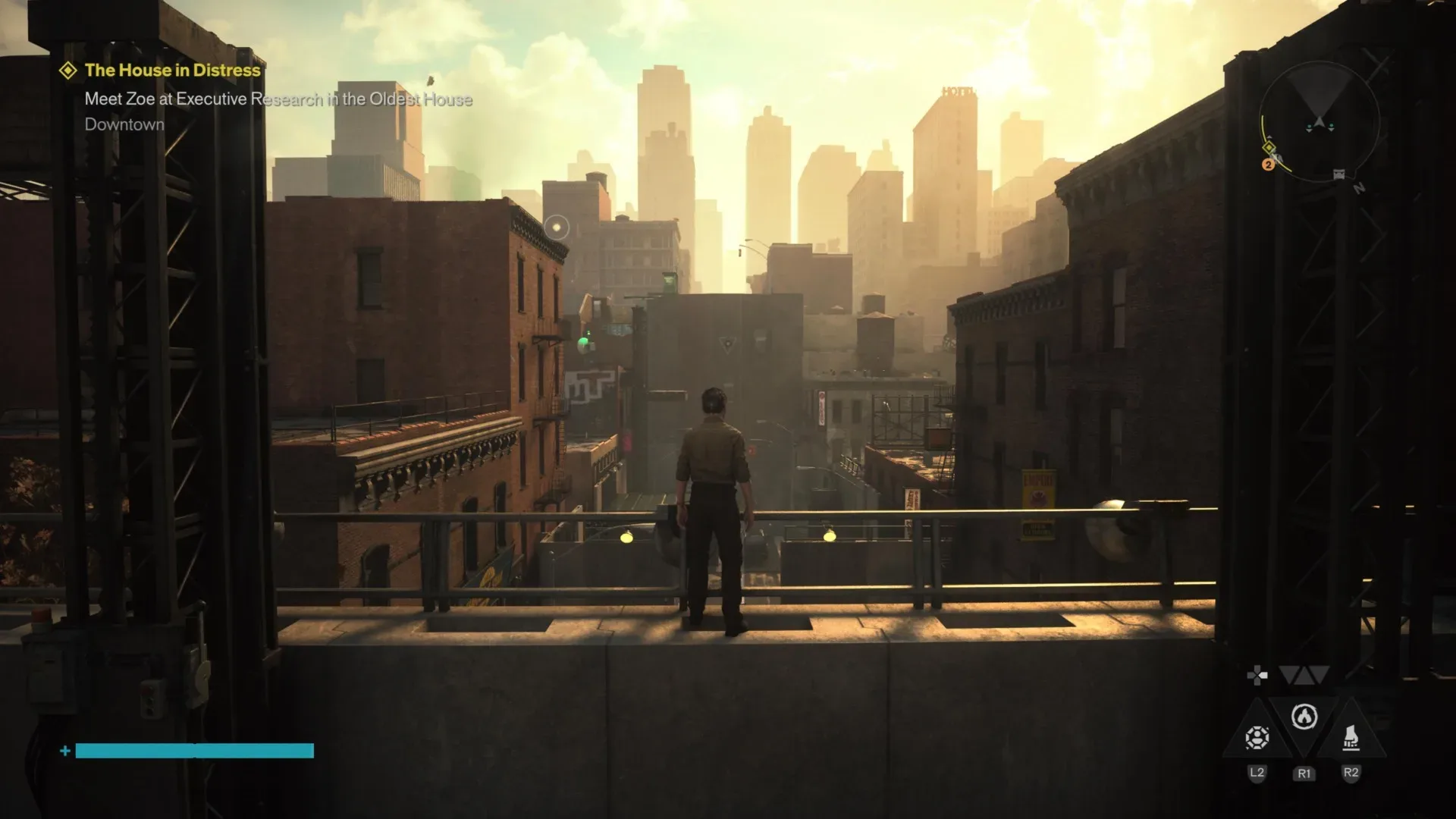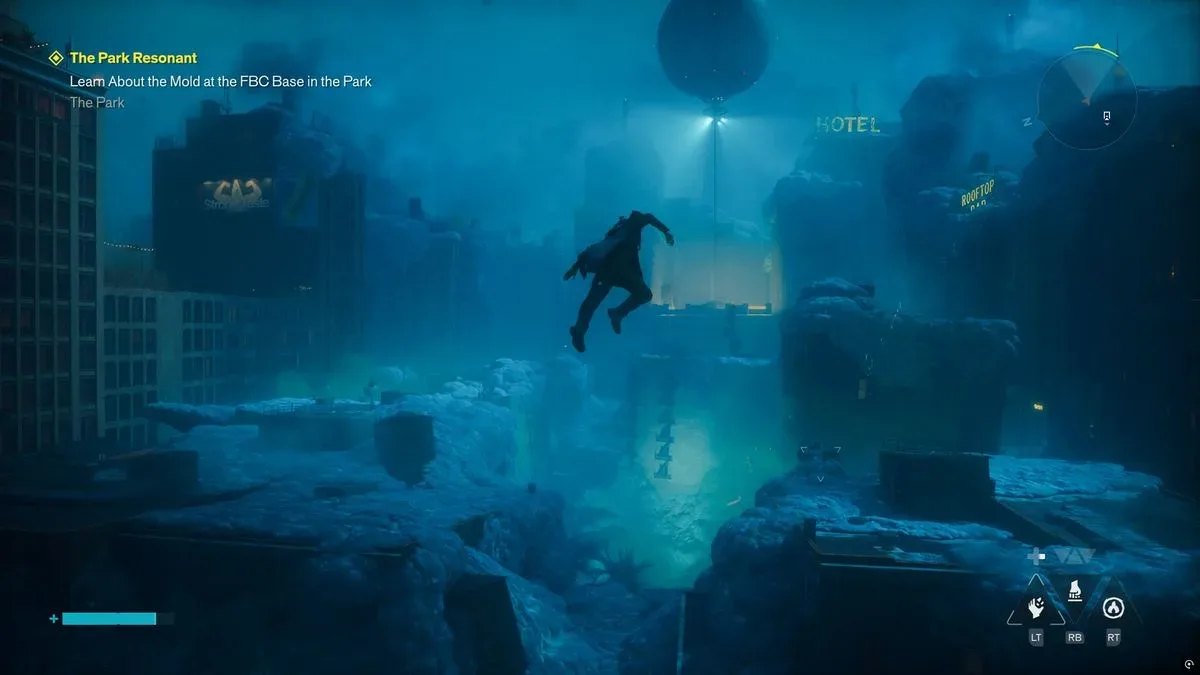
Some games spend years building a mythology of unknowable paranormal institutions, reality-warping objects, dangerous family histories and entities that may or may not be running the show from somewhere beyond ordinary perception. Control Resonant appears to understand that, after all of that, one of the sharpest ways to make an otherworldly authority feel truly alien is to let it make a noise that players cannot immediately classify.
The Board, the mysterious supernatural presence connected to the earlier Control, has become an unexpected audio standout in Control Resonant. Its voice is described less like conventional dialogue and more like a startling physical effect: extraordinarily low, distorted, popping and groaning, with an underwater brass-like weight to it. The reaction from players is not merely that it is creepy. It is that it is creepily delightful.
That distinction matters. Horror-adjacent games have no shortage of whispers, radio interference, reversed speech and jump-scare stingers. The Board’s apparent new vocal identity instead seems built to be enjoyable in the moment, even as it signals that something profoundly unnatural has just inserted itself into the scene. A line, a combat prompt or an idle vocal flourish can turn into a miniature performance.
A new sound for an old supernatural authority
Control Resonant places Dylan Faden at the center of its story. Dylan is the supernaturally gifted brother of Jesse Faden, who led the original 2019 Control. He has acquired a powerful artifact described as a shapeshifting rod, a weapon used to fight hostile creatures. The artifact also appears to be tied to The Board, placing the entity in a role that is difficult to pin down: handler, boss, guardian and benefactor are all plausible readings, and none of them are especially comforting.
The ambiguity is part of the appeal. A friendly guide gives clear instructions. A villain makes its demands obvious. The Board sits in a more uncomfortable space, seemingly giving Dylan access, attention and direction while remaining fundamentally beyond normal human terms. That makes its presentation especially important. Every element surrounding it has to preserve the sense that players are not dealing with a person who simply happens to speak strangely.
The revised voice helps establish precisely that. It is explicitly unlike the way The Board sounded in 2019’s Control. This is not a small performance adjustment meant to make a returning character a touch more ominous. It is a substantial sonic reinvention, and it can change the perceived scale of the entity before a player ever untangles its motives.
In audio terms, a voice does not need intelligible words alone to carry character. Its timbre—the set of qualities that makes one sound feel different from another even at the same pitch—can convey texture, material and presence. A rough, deep, compressed or unusually resonant voice can suggest size and distance. If it is used sparingly, it can also make the room around the sound feel less safe. The Board’s voice seems to derive its force from that sense of mass: it does not simply enter a scene; it seems to bear down on it.
Why “COMBO” is such a good place to put weirdness
Combat chatter is usually functional. A game announces a streak, a special move or a completed execution to keep momentum high and make the player’s success readable. These feedback cues are a key part of action-game communication: they tell players that the system has noticed what they did and, often, that they are playing well.
In Control Resonant, The Board reportedly speaks after a stylish execution, with the sound resembling the word “COMBO.” That may be a simple scorekeeping-style acknowledgement, but the delivery changes the joke and the mood at once. Rather than a clean arcade voice congratulating the player, an unknowable entity may be issuing something that sounds like approval from the bottom of a submerged nightmare.
It is a smart collision of tone and function. An execution is already an emphatic punctuation mark in action gameplay. Adding a brief vocal signal makes it even more legible. But assigning that signal to The Board means a moment that could have been mechanically routine instead reinforces the larger fiction: Dylan is not just fighting effectively; he is fighting under the observation of a force whose interest in him is still unsettlingly unclear.
There is also comedy in the disproportion. “COMBO” is a very ordinary video-game word. It belongs to arcades, score attacks and the language of players trying to extend a chain of moves. Having it seemingly emerge from a booming paranormal presence turns a mundane systems cue into something players want to repeat, imitate and share. The humor does not undercut the horror so much as make it memorable.
Sound design that players carry away from the game
Players are already responding to the Board’s sounds online, including short clips and humorous edits. That kind of reaction is useful evidence of an audio idea landing beyond the immediate play session. Visual details can become symbols for a game, but sound often has an even quicker route into collective memory. A single recognizable noise can prompt an impression, a parody or a running joke without anyone needing to explain the entire plot.
The Board’s voice is especially suited to that treatment because it works as both atmosphere and punchline. It can be menacing in a lore-heavy exchange, absurdly exuberant when it seems to acknowledge an execution, and oddly charming during an extended idle moment. Reports indicate that waiting in the Gap for several minutes can result in The Board singing. That is exactly the sort of hidden or patient-player reward that can make an entity feel larger than its formal narrative appearances.
It also gives the game a strong headphone argument. Spatial detail, low-end rumble and unusual vocal processing can all be more immediate through headphones than through television speakers. That does not mean a particular setup is required to understand the game, but it does mean the Board’s presentation may reward players who pay attention to the audio mix rather than treating dialogue as background texture.
For a series dealing in altered spaces and supernatural uncertainty, that is a meaningful design advantage. A frightening image can be turned away from. An intrusive sound arrives on its own terms. When a game makes a recurring entity sonically unmistakable, it can create tension before the entity has even said anything useful.
The Board does not need to be trustworthy to be lovable
No conclusion about The Board’s ultimate goals should be drawn from a good vocal effect. The world of Control has always made room for darkness, complication and entities whose help comes with consequences. The Board may prove dangerous; its connection to Dylan and the shapeshifting rod may prove more troubling than supportive. Those remain story questions, not answers supplied by the sound of its voice.
But the lack of certainty is what makes the affection around this portrayal more interesting. Players can appreciate The Board’s sounds while remaining wary of what it represents. In fact, the voice may be working best because it never asks the audience to resolve that contradiction. It can make an entity feel sinister, ridiculous, majestic and strangely endearing in the span of a few seconds.
That is also a reminder that technical game audio is not merely supporting material. A strong vocal treatment can do narrative work, establish identity, improve combat feedback and inspire community creativity at the same time. The Board’s altered sound does all four. It gives Control Resonant a recurring signal that is instantly recognizable, mechanically useful and bizarre enough to become a conversation of its own.
For more discussion of how presentation choices reshape players’ reactions to a game, see the debate over detail, darkness and atmosphere in The Witcher 3 Remastered. In the case of Control Resonant, the standout detail is not a texture setting or a lighting pass. It is an eldritch supervisor apparently barking—or burbling—its approval after a particularly good hit.
Not every memorable game sound needs to be beautiful. Sometimes it just needs to feel impossible, loud in exactly the right way and totally committed to sounding unlike anything that ought to have a human language. The Board has apparently found that frequency.