Boss fights are often asked to do a great deal in a very small amount of time. They can punctuate a chapter, demonstrate an enemy’s importance, pressure-test the player’s command of a combat system, or simply provide a memorable spectacle. The less successful version is familiar: a larger health bar, a handful of attacks with obvious warnings, and a long enough endurance test to make a routine encounter feel grand.
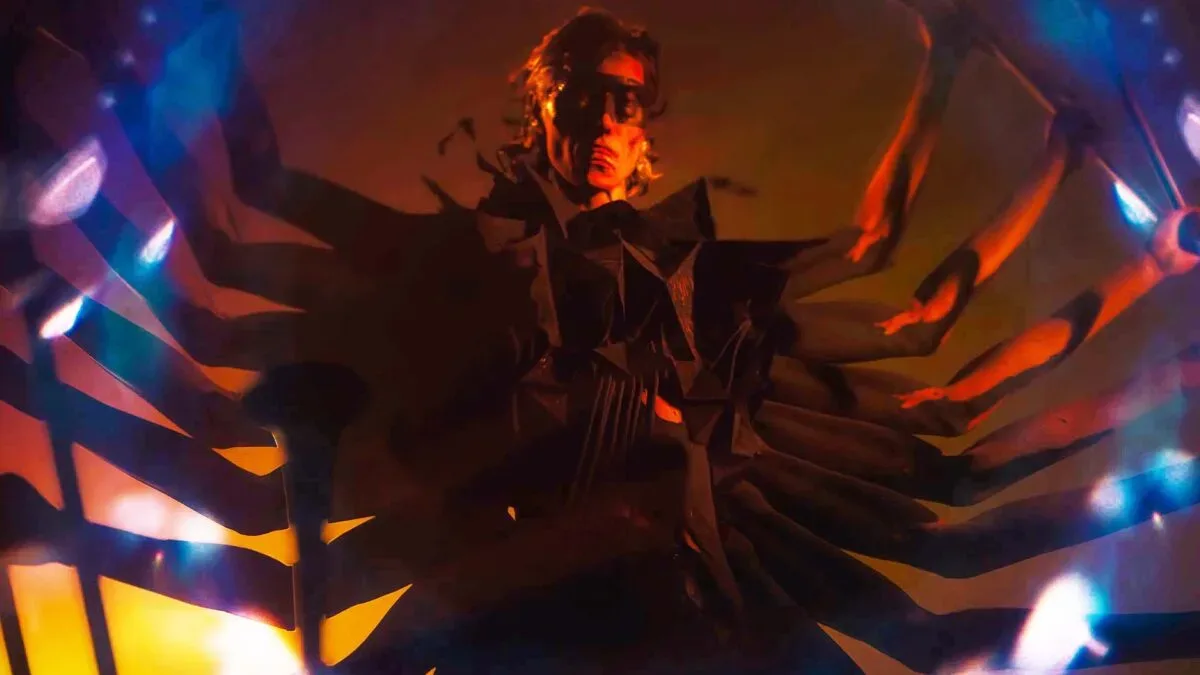
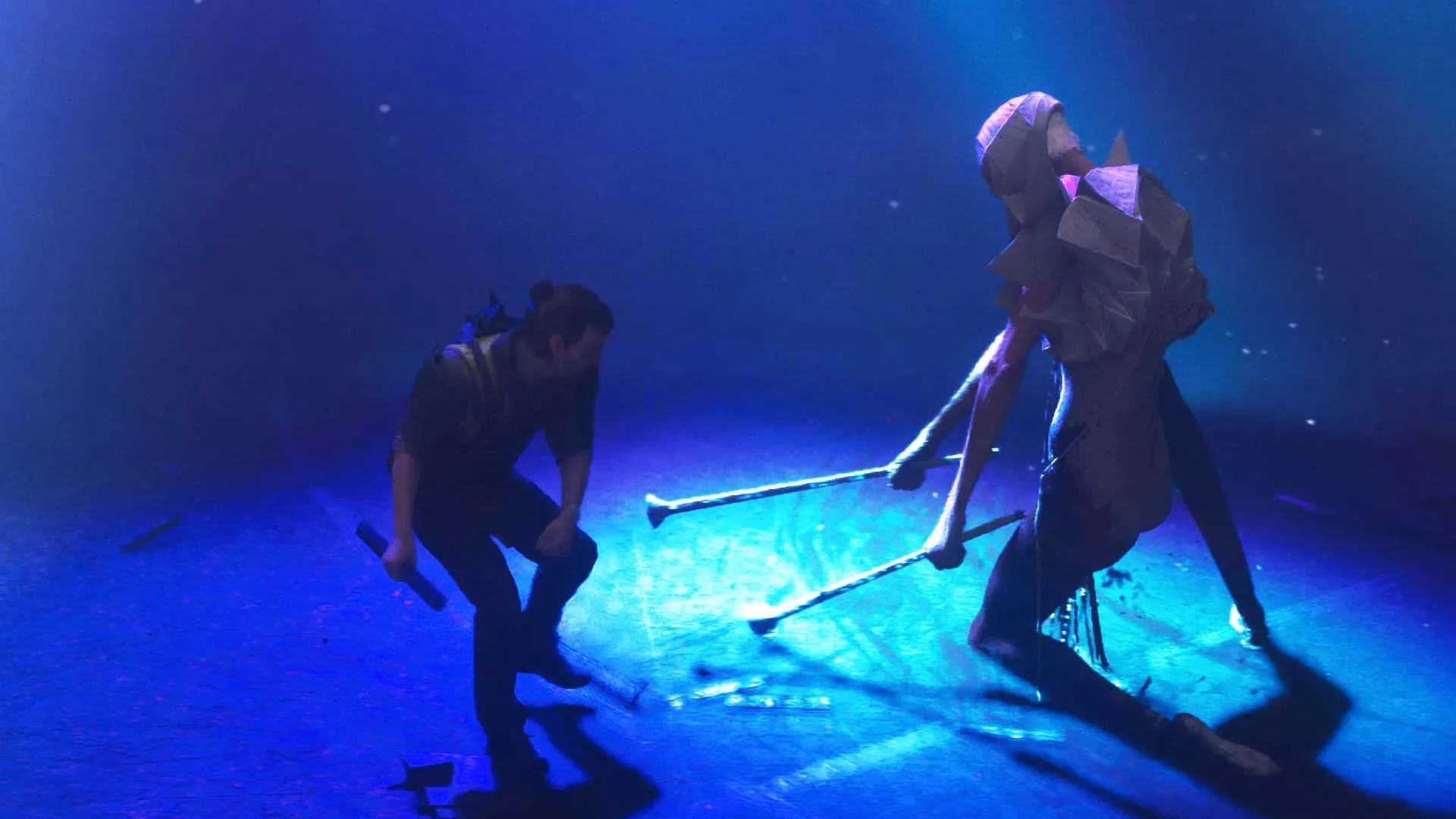
Control Resonant appears to find a more interesting purpose for one of its major encounters. The battle against The Dancer, a slender enemy that moves through its arena with hops and chassés, does not merely ask the player to survive an escalating second phase. It asks them to reconsider the tempo and assumptions they brought into the arena. That distinction gives the fight its force.
The encounter takes place in a theater, with paralyzed people floating around the space as an audience. Its staging is not just decoration. The first phase functions as a performance rehearsal, while the more dangerous second form becomes the full production. Players who charge through the opening may still reach the real challenge, but they risk overlooking the lesson the fight is quietly presenting: The Dancer’s movement has a rhythm, and success depends on recognizing it.
A first phase that means more than a warm-up
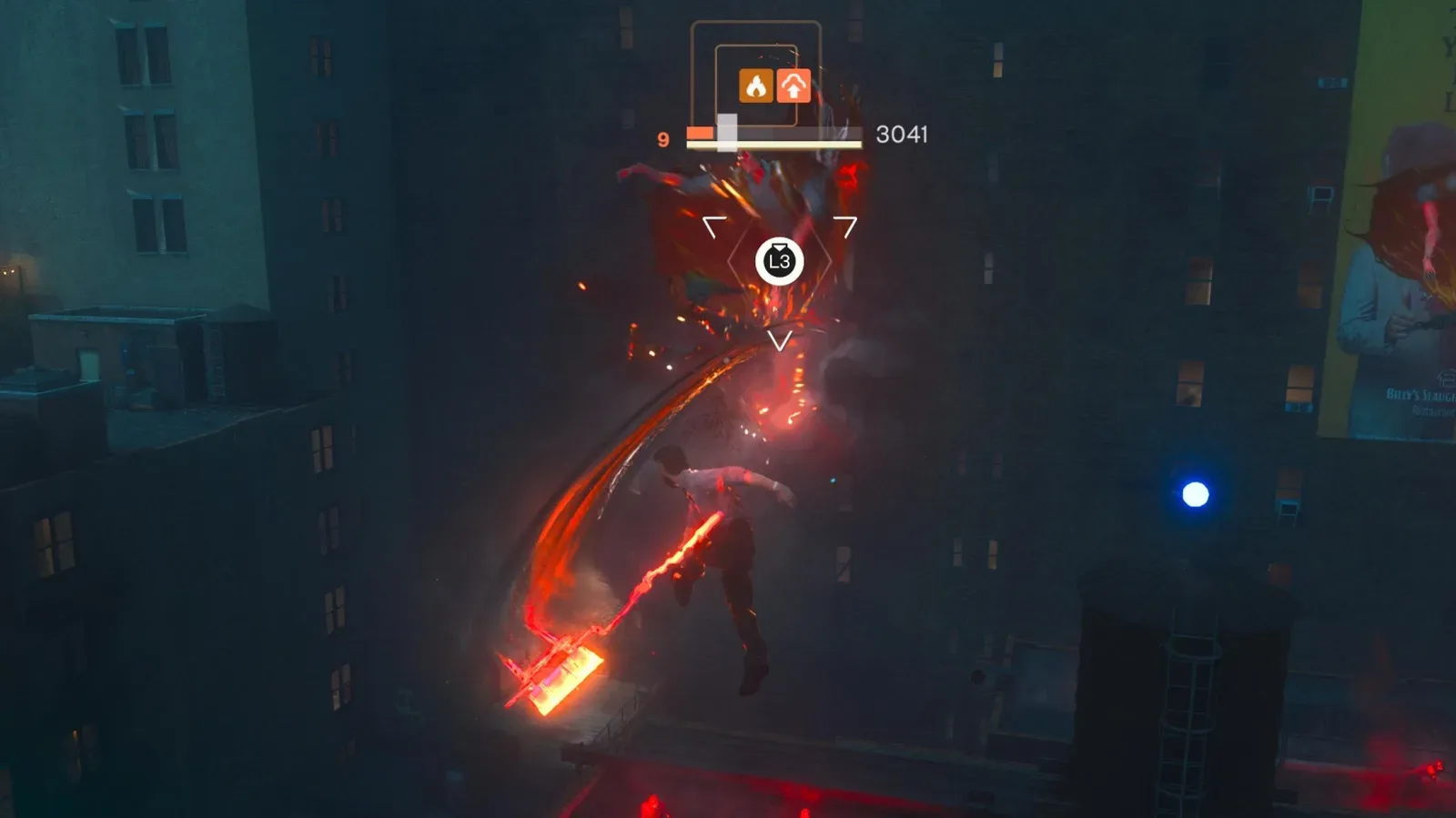
Early in the encounter, The Dancer can seem surprisingly manageable. Repeated aerial attacks can push it through that initial phase even while the player absorbs some damage. At a glance, that could look like a conventional fake-out: an easy opening followed by a transformation designed to surprise the player.
But the second form reframes the first. The Dancer becomes faster and more aggressive, and a strategy built around rushing in, taking hits and maximizing immediate damage stops being reliable. Multiple attempts can produce a familiar downward spiral. Frustration leads to impatience; impatience creates mistakes; mistakes reduce both survivability and damage output. Eventually, even the portion of the fight that initially felt simple can begin to fall apart.
That is an important element of boss design that is easy to miss when every failure is treated as a simple demand for cleaner execution. A good encounter can expose an ineffective habit rather than merely punish imperfect reflexes. Here, the issue is not presented as a lack of access to damage or an arbitrary wall of difficulty. The player has been using the wrong approach for what the fight is trying to communicate.
In this context, the first phase is not disposable preamble. It is a readable, lower-pressure version of the behavior needed later. The Dancer rehearses its movements before it performs them at a pace where careless aggression is far more costly. Once that relationship becomes clear, the two phases feel designed as parts of a single idea instead of two unrelated tests stacked together.
What “telegraphing” means—and why it is not enough by itself
In action games, an attack is telegraphed when an enemy provides a recognizable cue before the dangerous part happens. A wind-up animation, change in posture, sound, flash or shift in position can tell the player that they need to dodge, block, move away or prepare a counterattack. Telegraphing is one of the basic tools of fairness in combat design.
Related coverage includes Control Resonant's The Dancer Shows How Boss Fights Can Still Surprise Players.
Yet a boss can have clearly telegraphed moves and still be forgettable. If the player’s only task is to identify signals and repeat a safe response, the encounter may be functional without becoming expressive. The Dancer’s apparent strength is that its cues are connected to character and environment. The chassés and dance-like motion are not simply animations attached to attack timing. They establish an idea the player can understand: this is a performance, and participating successfully means following its pace rather than trying to bulldoze it.
That thematic connection matters because it makes observation feel like interpretation. The player is not only learning which motion comes before which attack; they are learning what the boss is doing. The theatrical arena and silent floating audience reinforce the same reading without requiring an explanation to interrupt the encounter.
Beating the urge to force damage
The pivotal adjustment in this fight is modest but meaningful: slow down, jump around less, and pay closer attention. Rather than treating every opening as a prompt to unload the biggest available combo, the player matches The Dancer’s tempo through more deliberate movement and dodging. This produces a victory with health remaining on the next attempt.
That outcome illustrates the difference between damage opportunity and damage obligation. Action games often teach players to exploit every opening instantly, particularly when their toolset supports powerful aerial or repeated attacks. Usually, that is sound advice. But an encounter can become more memorable by identifying when that familiar rule no longer applies cleanly.
The Dancer does not invalidate aggressive play altogether; the available account does not establish a specific required build, move list or universal strategy. What it does show is that relentless offense was not enough. The player had to choose attacks with more care and place them inside a better understanding of the enemy’s patterns. The reward was not just clearing an obstacle, but realizing that the arena had been explaining the encounter’s solution from the start.
For players, there is a useful practical lesson here that applies well beyond one boss: when repeated attempts become increasingly sloppy, changing tactics may be more productive than simply attempting the same sequence faster or harder. The reset can be mental as much as mechanical. Watch a full cycle of attacks. Identify where positioning breaks down. Notice whether an early phase previews a later one. Preserve health rather than assuming it is an acceptable cost of racing forward.
- Use early phases as information: An easy opening may introduce timing, spacing or animations that return under pressure later.
- Separate urgency from speed: A boss may demand attention without rewarding constant movement or nonstop attacks.
- Look at the arena: Setting can signal the encounter’s intended mood and behavior, not merely provide visual flavor.
- Interrupt tilt: If every retry is worsening, pause long enough to decide what specifically needs to change.
Difficulty options and the value of choosing a different answer
Control Resonant includes difficulty options and sliders that could be adjusted to make the confrontation easier. Their presence is valuable: players have different needs, different comfort levels and different reasons for playing. A more accessible route through a difficult moment is not a lesser way to experience a game.
In this instance, however, leaving those settings unchanged created room for a different discovery. The obstacle was eventually overcome not through lowering the encounter’s pressure, but through understanding what its design was asking for. That makes the win feel connected to the boss’s central theme. The player did not merely outlast The Dancer; they learned to move with it.
The broader takeaway is not that players should refuse accessibility tools or view adjustment as surrender. It is that difficulty and comprehension are different things. Sometimes a player wants fewer demands on timing, damage tolerance or endurance. Sometimes they want to preserve the challenge but need a clue that changes how they read the battle. A thoughtfully designed boss can support the latter by embedding that clue in animation, staging and phase structure.
Why the theater makes the fight stick
Arena design often receives less attention than a boss’s attacks, but it can be essential to the encounter’s meaning. The theater surrounding The Dancer gives the battle a built-in performance frame. The floating, immobilized people form an audience, while the enemy’s dance vocabulary positions it as a performer. The rehearsal-to-performance structure follows naturally from those elements.
This is what thematic cohesion looks like in interactive design. The story suggested by a space, the animation used by an opponent, and the skills demanded of a player all point in the same direction. The setting does not need to deliver a lengthy explanation. The player can infer the relationship through participation.
That is especially effective for a boss because games can turn recognition into action. A film viewer might understand that a dance sequence has become more intense. In a game, recognizing the intensified rhythm changes where the player stands, when they dodge and whether they commit to an attack. The meaning is carried not only by what is seen but by what the player does next.
It is a reminder that memorable boss encounters do not have to depend solely on scale, spectacle or punishing complexity. The Dancer is memorable because the fight challenges a habit—spamming attacks—and replaces it with a behavior that fits the creature, arena and escalation. The player’s improved performance becomes part of the scene’s dramatic logic.
Control Resonant’s encounter points to a stronger boss-fight standard
As an open-world action game from Remedy, Control Resonant returns to the eerie, unusual world established by the original Control. The Dancer encounter shows how a boss can carry that identity into combat rather than leaving atmosphere at the arena door. Its strangeness is not limited to appearance: the battle’s dance concept informs its phases and the player’s route to understanding it.
That makes a compelling benchmark for bosses in any action game. The strongest fights do not simply verify that players can use mechanics they have already acquired. They create a specific problem, supply readable evidence, and invite the player to make a meaningful adjustment. Failure can then feel instructive rather than empty, while victory becomes more personal than the disappearance of a health bar.
There is also a useful contrast with the idea of a boss as a final exam. Tests have their place, and games often need difficult battles that bring several learned systems together. But an encounter can be more satisfying when it also teaches—particularly when the lesson is delivered through the fight itself rather than a tutorial box or an external explanation.
The Dancer’s apparent lesson is elegantly direct: stop trying to overpower the performance and learn its rhythm. Once understood, the response is not a hidden trick or a detached puzzle answer. It is a shift in attention, timing and movement. That is the kind of interaction games are uniquely positioned to create, and why a well-designed boss can remain in a player’s mind long after a standard damage race has faded.
For more on the challenges of translating a game’s central movement into new dimensions, see Sonic Team’s reflections on the leap to 3D speed in Sonic Adventure.