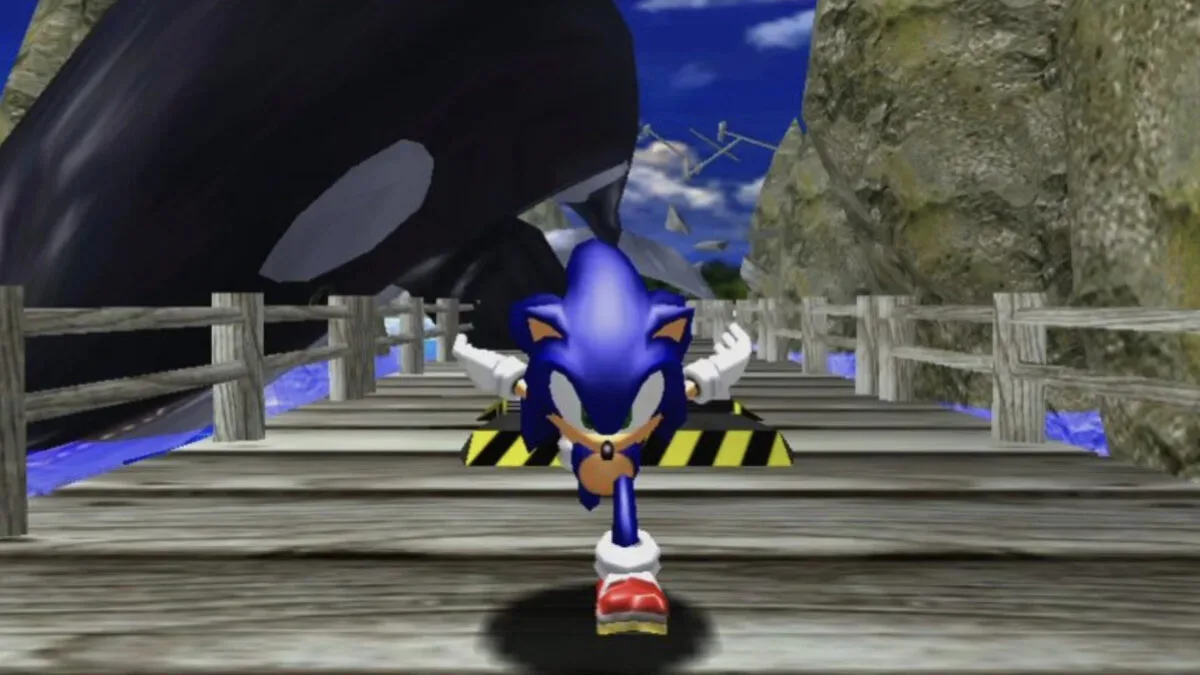
Sonic Adventure remains the Sonic Team project that Takashi Iizuka most strongly associates with difficulty rather than uncomplicated nostalgia. Reflecting on the series’ 35th anniversary, Iizuka said the game made the deepest impression on him because he wrote its specifications and served on its development staff. But the memory he emphasized was the strain of making it, not simply the satisfaction of finishing it.
That distinction matters. Sonic Adventure was not merely a case of taking a familiar mascot into a more technically advanced presentation. The team was confronting a design problem it did not yet know how to solve: how can a character defined by momentum, speed and directed movement stay fun once players can move through a three-dimensional environment?
Iizuka’s account suggests that the first experiments were sobering. The team tried bringing Green Hill Zone into 3D, but found that simply allowing Sonic to run around a 3D version of that space was not enjoyable on its own. The hard part was not producing a world with depth. It was identifying what turns speed through that world into a compelling game.
A 3D space does not automatically make a fast game
In a tightly directed game, designers can guide a player along a prescribed route. That lets them arrange pace, hazards and visual information around the direction of travel. Iizuka described prior Sonic games as experiences with a path to follow, an approach that made it easier to build something fast and fun.
Moving Sonic into 3D complicated that relationship. A player can approach terrain and objects from many angles, potentially making the simple act of running less clear or less exciting. The team had no established template for this particular kind of 3D movement, Iizuka said, and spent development searching through trial and error.
Trial and error, in this context, means more than ordinary polish. It describes a development process in which the fundamental answer is still being discovered: what players should do in the space, how movement should feel there, and what design elements make the experience work. The team was not just refining a settled formula; it was building one while the project was underway.
That helps explain why Iizuka singled out Sonic Adventure as the franchise’s most difficult development. The game’s challenge was creative as well as technical. A faster processor or a larger environment does not, by itself, resolve questions about readable routes, player motivation or the balance between freedom and direction.
The workload extended far beyond Sonic’s movement
Jun Senoue, Sonic Team’s composer and sound director, remembered the project as an unprecedented volume of work. Development began in 1997, and the game required stories for six characters as well as the Chao and Chao Garden, field music and voice acting.
Related coverage includes Sonic Team Veterans Call Sonic Adventure the Series' Toughest Development Challenge.
Each of those elements carries its own production demands. Multiple character stories increase the amount of narrative material that must be planned and coordinated. Field music means the audio team must support areas outside the most obvious action sequences. Voice acting adds another layer of work, including the challenge of managing recorded performances within a game structure. Senoue said that responsibility was unfamiliar to him at the time, making the overall task especially demanding.
The Chao and Chao Garden are also significant in understanding why the project’s scope felt so large. They represented an additional activity and set of systems alongside the main character stories, rather than a single linear run built only around Sonic. Taken together, these elements made Sonic Adventure a much broader production than a straightforward conversion of a speedy platforming formula into 3D.
“We started that project without any answers on how to make this space exciting,” Iizuka said of Sonic Frontiers—an observation that also captures the uncertainty Sonic Team faced while making Sonic Adventure.
The point is not that every part of Sonic Adventure was unfamiliar in isolation. It is that the team was handling several unfamiliar or enlarged demands at once while still working out the central question of 3D Sonic gameplay. That combination can put pressure on every department: game design needs to establish the experience, while story, audio and supporting features have to be created around a moving target.
Sonic Adventure 2 benefited from a clearer direction
Iizuka contrasted the first Adventure with Sonic Adventure 2, which he recalled as much more enjoyable to develop. The sequel was developed in the United States, where team members lived during production, in a manner comparable to the development arrangements for Sonic the Hedgehog 2 and Sonic the Hedgehog 3.
That environment fed directly into one of the sequel’s memorable ideas: City Escape. The example illustrates a practical advantage of a follow-up once the earlier project has established a direction. A team can spend more of its energy on distinct scenarios and implementation rather than on resolving the basic question of what the game should be.
It would be too simple to say that a sequel is automatically easier. The developers did not make that broad claim. But their recollections show why Sonic Adventure 2 felt different: the preceding game had forced the team through an extensive process of discovery. The sequel could build from lessons earned under pressure.
Why Sonic Frontiers brought back the same problem
Iizuka identified Sonic Frontiers as another major challenge for a related reason. The idea of Sonic running across a huge expanse was decided quickly, but the difficult question was how to make an open space engaging when there was no single route for players to follow.
Open space here refers to an environment where players have more freedom to choose where they go, rather than being continuously directed along one defined path. That freedom is appealing in theory, but it changes the designer’s job. In a path-based game, the route itself can control timing and progression. In an open space, the game needs other ways to make exploration, movement and choices feel purposeful.
Iizuka said Sonic Team began Frontiers without the answer to that problem and only found it around the project’s halfway point. He explicitly connected that experience to Sonic Adventure: both projects asked the team to make a new kind of Sonic space exciting before it had a settled model for doing so.
The comparison is revealing because it frames Sonic Adventure as more than an early 3D transition. It was an example of a recurring franchise problem: Sonic’s identity is closely tied to forward motion, while larger and less directed environments demand that players create more of their own route through the world. Finding a satisfying middle ground can require a long period of experimentation.
Difficulty and success are not opposites
The retrospective also pushes back against the idea that a troubled or uncertain development necessarily produces a forgotten game. Iizuka and Senoue pointed to difficult projects that became successful and remain especially well remembered by fans. Sonic Adventure and Sonic Frontiers fit that pattern, while Senoue also recalled that the music work on Sonic Generations was difficult despite that game’s critical and commercial acclaim.
There is an important limit to that observation. It does not mean difficult development is a guaranteed route to a celebrated game, nor does it turn pressure into something inherently desirable. Rather, the team’s memories show that the projects which demand the most searching can be those attempting the biggest changes to a series’ established language.
For Sonic Adventure, the change was the move into a new kind of 3D speed. For Frontiers, it was the challenge of giving that speed meaning across a vast area without a single mandatory path. Those are different projects, but Iizuka’s comparison links them through the same design reality: freedom and velocity are not automatically compatible, and making them work takes answers that may only emerge during development.
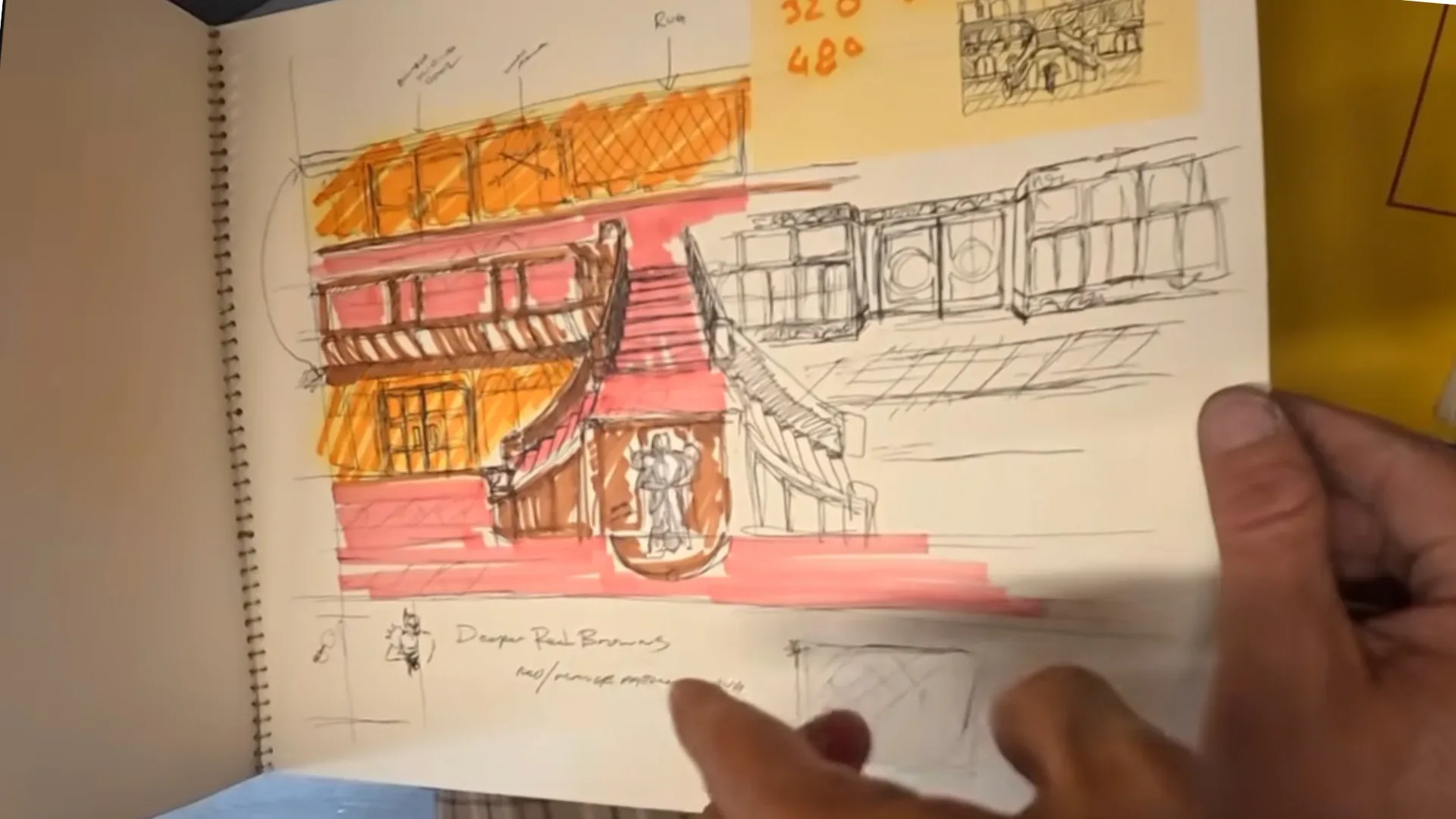
That history also gives extra value to documentation of game-making, including the materials and prototypes that can show how ideas changed over time. A separate preservation debate involving prototypes and a developer archive underscores why records of iterative work can matter beyond a finished release.
Sonic Team’s reflections make Sonic Adventure’s legacy more specific than “the first big 3D step.” The game was a difficult attempt to invent a workable approach to 3D Sonic movement while carrying a far larger collection of stories, systems and audio responsibilities. The answers were not waiting at the start. The team had to discover them in the act of making the game.