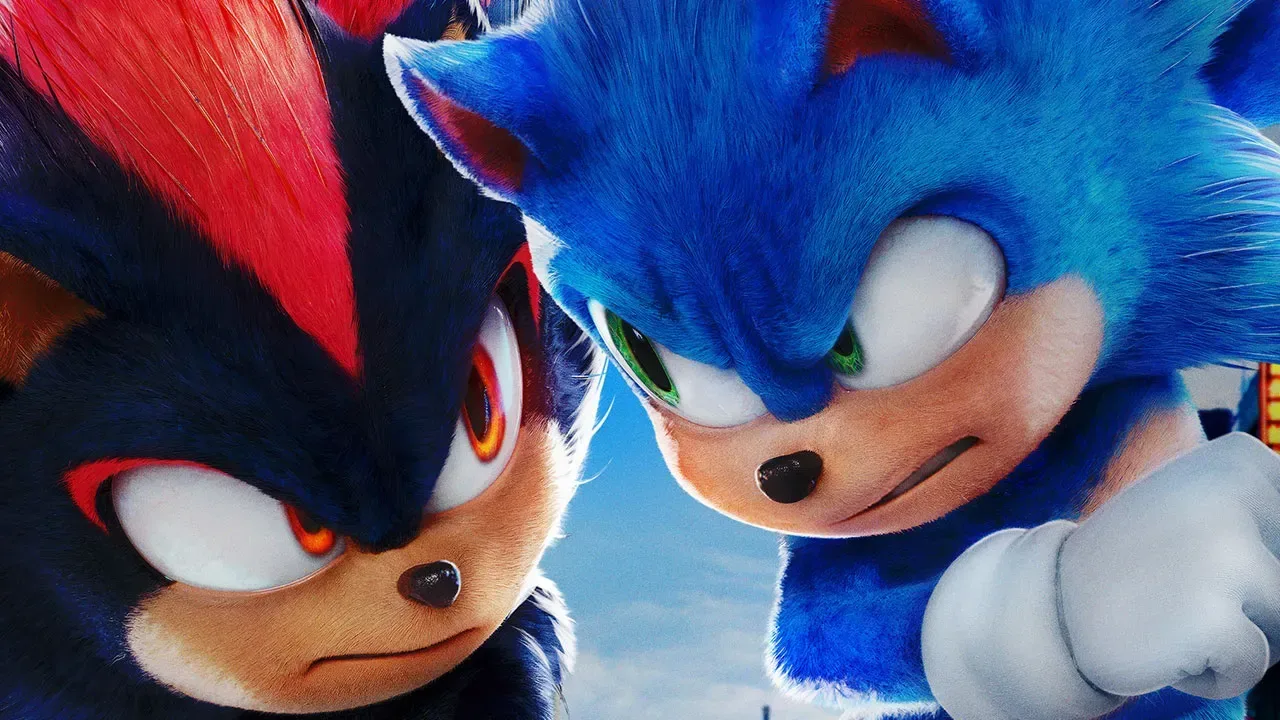
Sonic fans asking for old favorites to return on current hardware have received a clear, if cautious, answer from Sonic Team lead Takashi Iizuka: the requests are being heard, but new games are the greater priority.
Iizuka said the team receives many calls from its community for remakes and remasters, identifying Sonic Unleashed as a particularly common request. Yet he framed the decision as a matter of finite development capacity. Sonic Team would rather use its available resources to create new games and new surprises than devote them to revisiting previous releases.
“Our resources are limited,” Iizuka said, explaining that the stronger desire is to deliver new games rather than focus those resources on remakes and remasters.
That position does not necessarily mean the demand for older Sonic games is invisible, or that a remake can be treated as an easy side project. In fact, Iizuka’s explanation gets to the central issue behind many modern revival campaigns: a remake can require an investment comparable to making a brand-new title.
A remake is not simply an old game with a sharper resolution
The terms port, remaster, and remake are often used interchangeably in fan discussions, but they imply very different scopes of work.
- A port generally brings an existing game to another platform. The objective is compatibility and preservation of the original experience, though technical adjustments may still be needed.
- A remaster usually retains the underlying game while updating elements such as resolution, image quality, performance, interface work, audio, or selected assets.
- A remake rebuilds much more substantially, potentially including graphics, systems, controls, structure, and other design elements.
Iizuka’s comments focus on why the latter two categories can become far larger undertakings than their labels suggest. He said all of a game’s graphics need to be remade, and that simply releasing historical gameplay unchanged can be difficult because aspects considered acceptable at the time may now feel rough by modern standards.
That is an important distinction. A request for “just remake it” can contain several separate requests: preserve the original’s identity, update its technical presentation, make its controls feel current, address older pain points, and release it across contemporary systems. Those goals can conflict. Changing too little can leave the project exposed to criticism that it feels dated; changing too much can undermine the very version fans wanted back.
For a series as recognizable as Sonic, that balancing act is especially visible. Speed, physics, camera behavior, level flow, character movement, and presentation all shape how an entry is remembered. Updating any of them is not merely a coat of paint. It is a design decision with consequences for players who want an authentic return and for newer players encountering the game for the first time.
Why Sonic Unleashed keeps coming up
Iizuka specifically noted that Sonic Unleashed is one of the games fans frequently mention. That does not amount to an announced remake, remaster, or port; it is an acknowledgement of demand, not a commitment or roadmap.
Related coverage includes Sonic Team Prioritizes New Games Over More Remakes and Ports.
Still, the example helps illustrate the gap between what players ask for and what a development team must weigh. A requested return might be a straightforward availability question from a player who wants legal access on newer hardware. For the people making the decision, it can become a choice between allocating staff to compatibility work, a broader revision, asset reconstruction, gameplay changes, quality assurance, and platform-specific technical needs—or placing those people on the next original project.
Iizuka’s point is that the second path is not inherently cheaper or simpler. Rebuilding an older game to a standard suited to the present may consume resources on the scale of an entirely new release, while offering an experience that is, at its core, familiar to part of the audience.
The practical middle ground: access without a full remake
There is room between a lavish remake and leaving a game unavailable. A native-form port or a carefully handled collection can serve a different purpose from a modernization project. Rather than attempting to reinterpret every system for current expectations, it can prioritize making the original work accessible and functional on supported platforms.
That is likely where the conversation will continue for many fans. The desire to play a legacy game does not always mean players are demanding a rebuilt version with redesigned mechanics. Sometimes the request is simpler: let the original game be purchased and played on the hardware people use now.
Sonic Adventure 2 is another example raised in this wider accessibility discussion. A native-form release for systems such as Switch 2 or PlayStation 5 would answer a practical preservation and access need without necessarily carrying the same ambition as a full remake. No such release was announced here, but it demonstrates the kind of distinction worth making when discussing a franchise catalogue.
Preservation does not mean that an old game must remain untouched forever, and modernization does not automatically mean that its original version should disappear. These can be complementary approaches. A team could, in theory, make a new game while another effort works on catalogue access—but Iizuka’s comments make clear why that should not be assumed. “Limited resources” means even seemingly obvious projects compete for people, time, and attention.
What Sonic Team’s stance does—and does not—say
The statement is a priority call, not a rejection of the past. Iizuka explicitly acknowledged the steady volume of requests from fans. What he did not provide was a schedule, a list of candidates for future rereleases, or a promise that a particular title will return.
It also should not be read as proof that every past Sonic game is permanently off the table. The stated emphasis is on making new games because Sonic Team sees more value in creating fresh experiences than repeating existing ones when development capacity is constrained. Priorities can change, and different forms of rerelease require different levels of effort. But on the evidence available, fans should not treat the recognition of requests as an imminent announcement.
There is precedent within the franchise for revisiting material in more than one way. Sonic Colors Remastered has already brought one game back, while the remastered Sonic Generations package paired that return with an additional game. The broader catalogue also continues to find ways to revisit Mega Drive-era titles. Those examples show that Sonic’s history remains part of the franchise’s present, even if Iizuka is arguing that it should not overtake the drive for new work.
Analysis: novelty is the bet, but availability remains the unresolved question
From a creative standpoint, Iizuka’s reasoning is easy to follow. A long-running series needs new ideas to remain a living series rather than a museum of previous hits. New releases can move Sonic forward, introduce new surprises, and give the team an opportunity to respond to what it wants the franchise to be now.
From a player perspective, however, new games and old-game access solve different problems. A new Sonic title offers something no archive can provide. A port, collection, or compatibility release lets players experience a specific work that may otherwise be difficult to reach through normal modern hardware. One does not fully replace the other.
That is why calls for ports are likely to persist even after Iizuka’s explanation. Fans may accept that a complete remake is a costly undertaking while still asking for an official, practical route to play older entries. The most productive version of that conversation recognizes both realities: development teams cannot make every project at once, and a franchise’s history has value beyond nostalgia.
For readers in the mood to revisit how platforming eras are remembered beyond Sonic, Joking Joystick’s Top 10 Nintendo 64 Platformers offers another look at games whose legacy continues to shape present-day discussion.
Iizuka has worked with Sonic for 35 years and has described the character in deeply personal terms, saying the hedgehog feels like his own son and is technically older than his human children. That perspective gives his emphasis on the future added context. The message is not that Sonic’s back catalogue has no value. It is that, when forced to choose where limited resources go, Sonic Team currently wants to make the next surprise rather than rebuild an old one.