The Nintendo 64 platformer library is unusually concentrated around the leap into three dimensions. That makes it easy to treat every colorful action game as another collectathon, even though the system also has linear stage games, 2.5D experiments and platform-adventures built around unusual systems. This list includes games released for Nintendo 64 in at least one region and treats platforming as central when jumping, traversal, stage navigation or movement-based environmental challenges drive the experience.
The ranking weighs movement quality, level design, mechanical identity, variety, objective clarity, replay value and historical importance. Open 3D games are not automatically placed above 2.5D ones, and a game’s limitations matter alongside its ambition. The Legend of Zelda: Ocarina of Time and Majora’s Mask, Paper Mario, Star Fox 64, GoldenEye 007, Perfect Dark and Jet Force Gemini are excluded because their core genres are action-adventure, RPG, rail shooter or first-person shooter rather than platforming. Regional availability also matters: several entries were released under different names, in different territories or with differences between the Nintendo 64 version and later ports.
10. Space Station Silicon Valley
Space Station Silicon Valley is one of the system’s strangest platform-adventures. Instead of relying on a fixed hero moveset, it builds progression around taking control of animals, each with abilities suited to different hazards and environmental problems. A small creature may access a route that a larger one cannot, while another can attack, swim or interact with machinery in a different way. The result is closer to a puzzle-driven exploration game than a straightforward jumping challenge.
That unusual structure is its greatest strength and its main barrier. The animal system creates memorable solutions and gives the world a sense of systemic surprise, but objectives and routes can be less immediately readable than those in Mario or Rayman 2. Players who value invention, exploration and oddball world design should give it time. Players wanting a clean sequence of platforming challenges may find its progression opaque. Its Nintendo 64 release is also notable for technical quirks, so it should be approached as an inventive cult game rather than a polished genre template.
9. Goemon’s Great Adventure
Goemon’s Great Adventure is a useful reminder that Nintendo 64 platforming did not have to mean free-roaming 3D spaces. It uses polygonal presentation while keeping most movement on a side-scrolling gameplay plane, making it a 2.5D platformer. The format supports colorful stages, brisk traversal, enemy encounters and a more traditional rhythm of moving from one side of a level to the other. Its visual presentation still feels distinctly N64 without abandoning the readable structure of classic platform games.
The game’s focused format gives it stronger pacing than many large collectathons, and its two-player cooperative option adds another way to approach the stages. It is not the right choice for someone specifically looking for analog-stick exploration or sprawling worlds. Regional availability is also important: the game appeared in Japan and selected European markets under different titles and was not distributed uniformly across territories. For 2.5D action and a more compact stage structure, however, it is one of the N64’s most valuable alternatives.
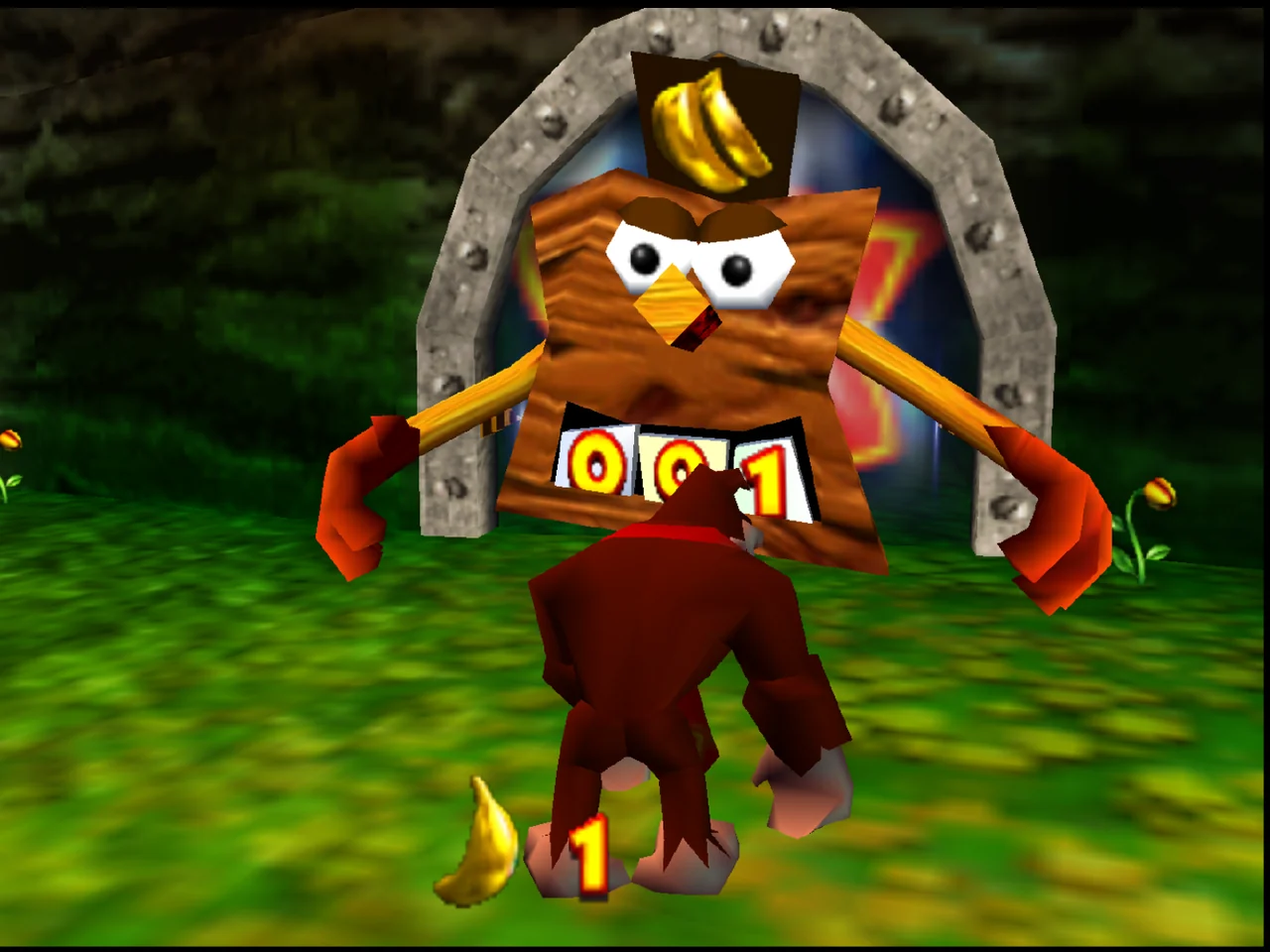
8. Donkey Kong 64
Donkey Kong 64 turns the collectathon into a team sport. Five playable Kongs bring different abilities, weapons and routes, allowing the game to gate objectives by character. A location may contain one collectible for Donkey, another for Diddy, and a third that requires Lanky, Tiny or Chunky. That structure creates broad mechanical variety and gives familiar environments multiple layers of access. Minigames, shooting galleries, races and environmental puzzles further widen the campaign.
The tradeoff is a great deal of repetition and backtracking. Character swapping is essential to progress, but it can interrupt momentum when the required Kong is far away. The abundance of collectibles also makes the game feel more like a long checklist than a tightly paced platforming journey, especially late in the campaign. It suits players who enjoy completionist exploration, ability-gated worlds and a large amount of content. Those who prefer elegant movement and concise objectives will likely prefer Banjo-Kazooie or Super Mario 64.
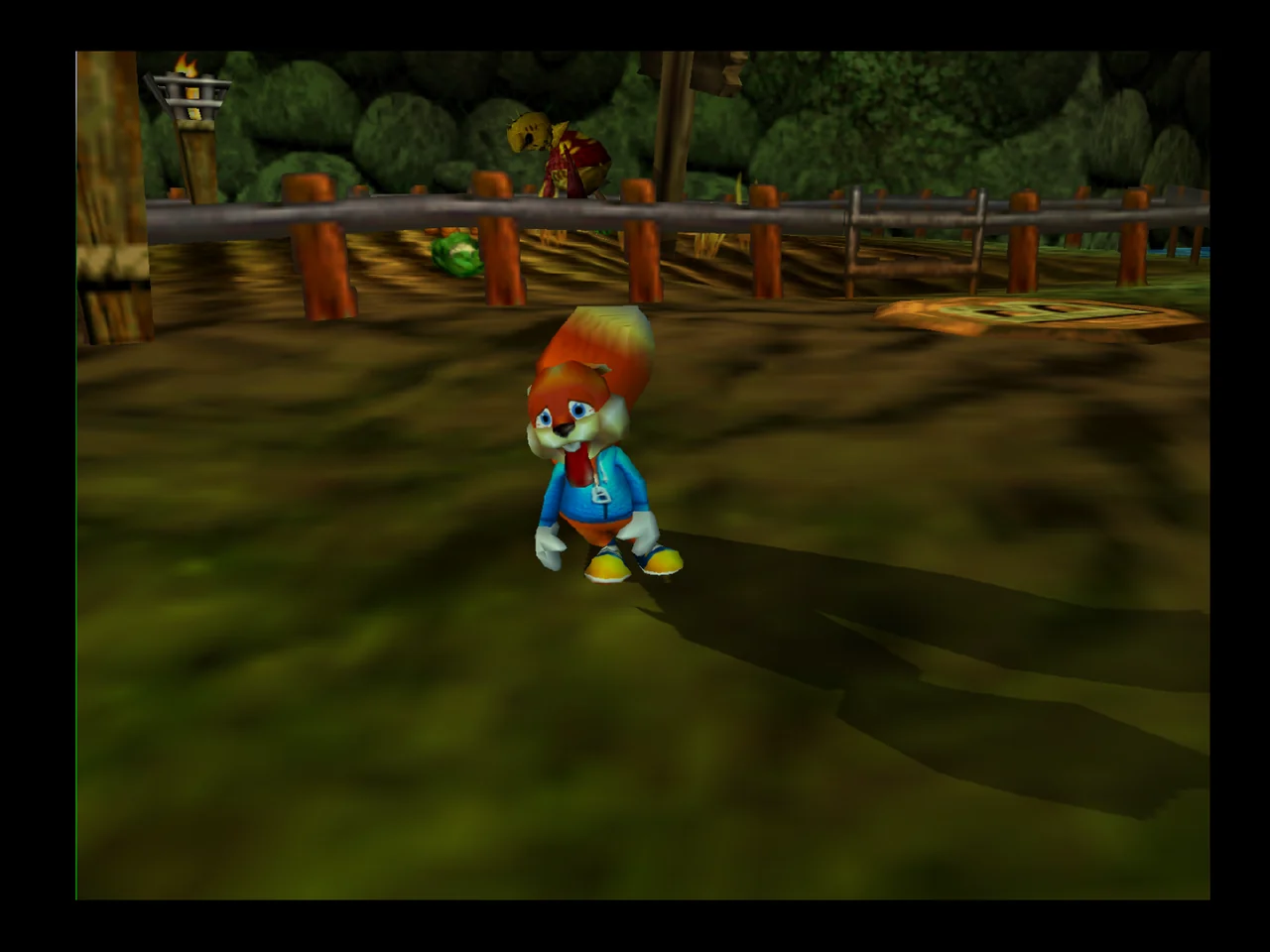
7. Conker’s Bad Fur Day
Conker’s Bad Fur Day is a platform-adventure with a much broader toolkit than its comic presentation initially suggests. Conker jumps and climbs, but he also uses context-sensitive actions, weapons, vehicles, environmental objects and situational abilities. Its campaign moves between traversal, combat, puzzles and heavily staged sequences, giving each area a different tone and often changing the rules of interaction from one chapter to the next.
That variety makes the game memorable, but it also means it is not the best recommendation for someone seeking a pure movement playground. The adult comedy is deliberately crude, and its frequent tonal shifts can overwhelm players who prefer a consistent world or family-friendly humor. Platforming fans interested in cinematic set pieces, dark comedy and constantly changing scenarios will find a singular N64 experience. Players who mainly want precise jumping and open-ended exploration should choose Mario, Banjo or Rayman instead.
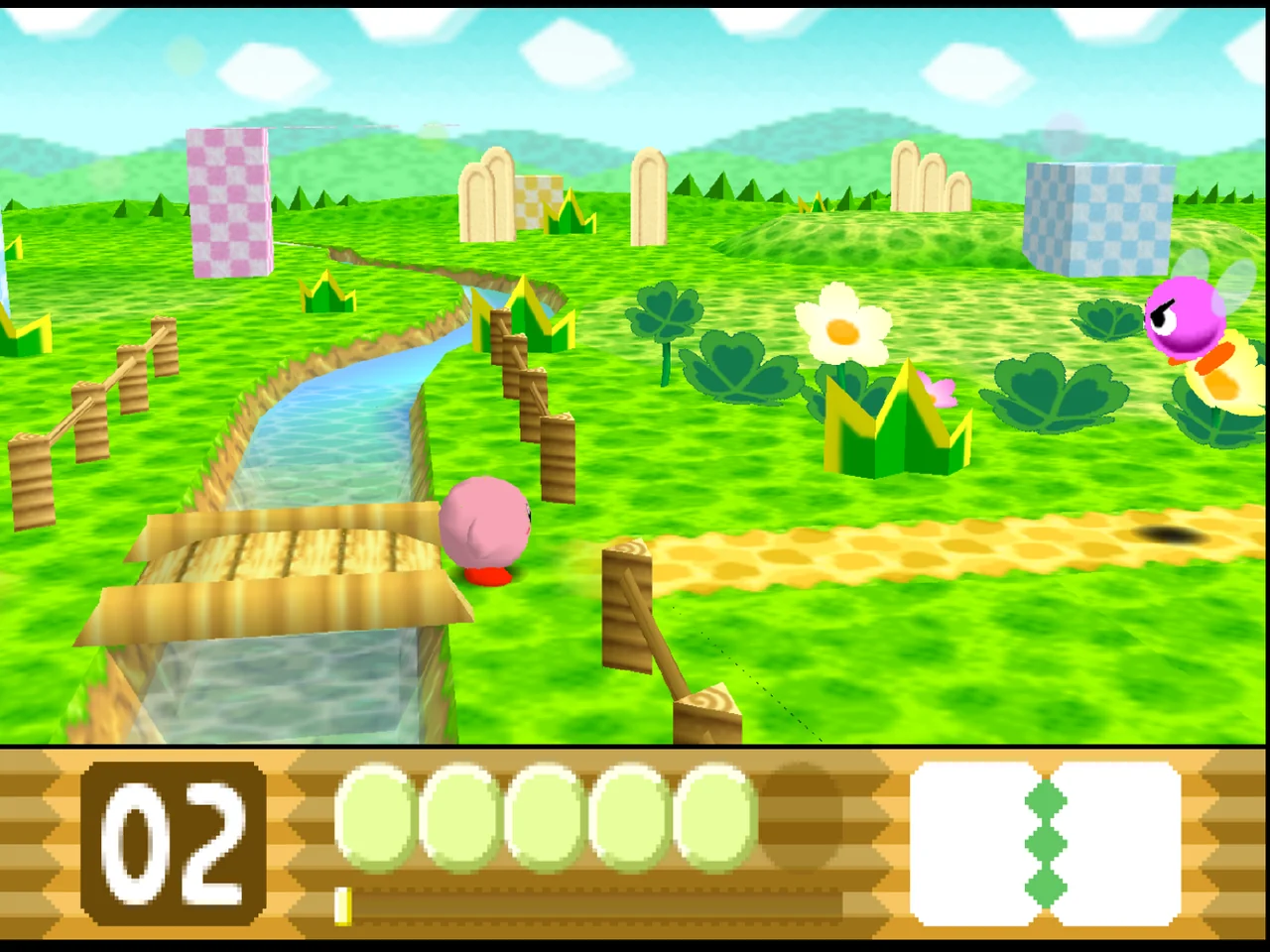
6. Kirby 64: The Crystal Shards
Kirby 64: The Crystal Shards offers one of the most approachable platforming campaigns on the system. Kirby moves through compact stages using jumps, floating, enemy inhalation and copy abilities. Its defining system lets players combine two abilities, creating attacks with different functions and appearances. That combination mechanic gives players reasons to experiment, while crystal-shard objectives encourage them to look beyond the obvious route and revisit cleared stages.
The campaign is generally less demanding than the upper half of this ranking, and experienced platformer players may find its basic path too gentle. Its strength is clarity: stages are easy to read, Kirby’s abilities are immediately expressive, and exploration rarely becomes exhausting. The Nintendo 64 release also includes multiplayer minigames, but the main platforming campaign remains a single-player adventure. It is a strong choice for younger players, relaxed sessions or anyone who wants creative abilities without punishing precision. The Nintendo 64 version and later digital releases should not be assumed to represent every regional edition identically.
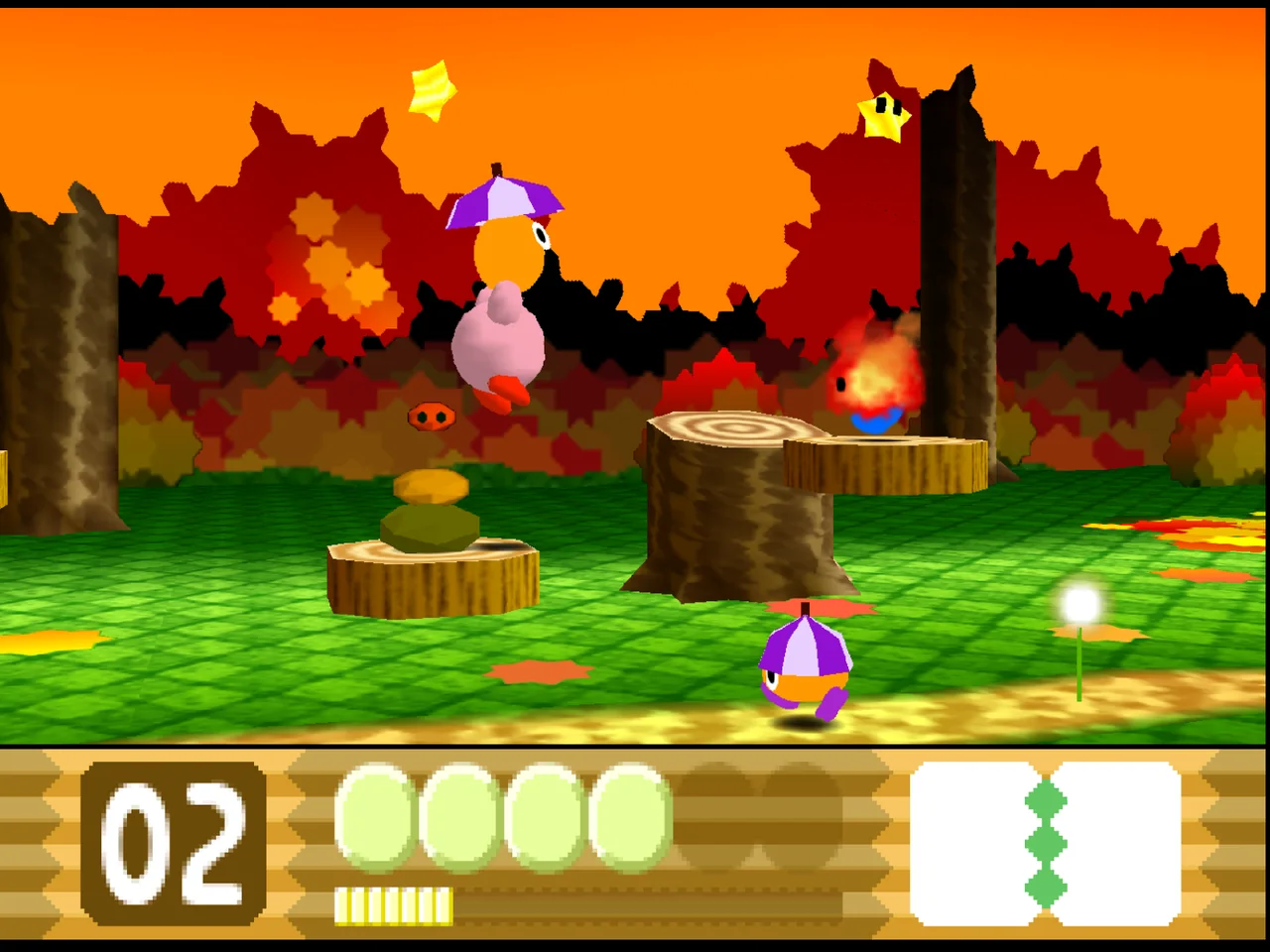
5. Yoshi’s Story
Yoshi’s Story is built around short, replayable stages presented as pages in a storybook. Rather than asking players to survive a long fixed campaign, it encourages route selection, fruit gathering and repeated visits to discover different stage paths. Yoshi’s flutter, swimming, egg throwing and enemy-eating abilities make navigation accessible, while fruit choices affect how players pursue better results and which routes become available.
Its compact design is both its appeal and its limitation. A player looking for a lengthy 3D adventure may find the game slight, but that criticism misses its emphasis on replay and variation. The storybook presentation gives the stages a strong visual identity, while the selectable routes make each run feel more deliberate than a simple march to the goal. Nintendo’s regional catalog information confirms its Nintendo 64 platform identity, but release timing and availability differed by territory. Choose it for brief, colorful sessions and repeated experimentation rather than a massive campaign.
4. Banjo-Tooie
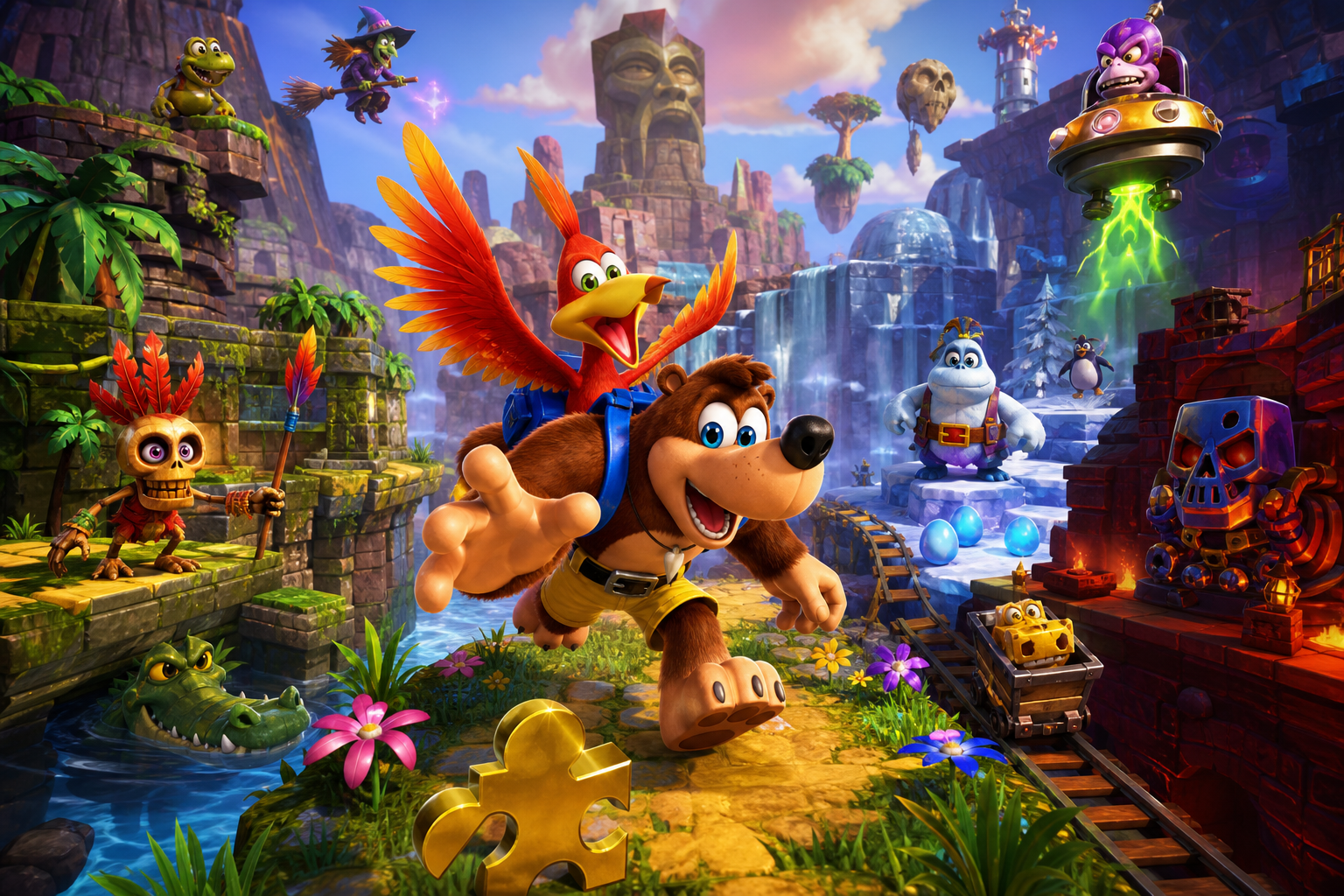
Banjo-Tooie expands the first game’s formula into larger, more interconnected spaces. Banjo and Kazooie retain their partnership-based moves while adding new abilities, combat options, transformations and interactions with other characters. Worlds connect more heavily, and progress often depends on remembering a location that became accessible only after learning a later move. That structure gives the adventure a stronger sense of continuity than a collection of isolated stages.
The same ambition can make the game harder to navigate. Backtracking is a deliberate part of progression, but long distances and layered objectives can blur the distinction between satisfying discovery and busywork. Its larger environments also place more pressure on camera control and memory. Banjo-Tooie is best for players who want a substantial platform-adventure with puzzles, combat and interconnected objectives. Those who prefer the tighter pacing and simpler collectible logic of its predecessor may find it overextended.
3. Rayman 2: The Great Escape
Rayman 2: The Great Escape is one of the N64’s best answers to the sprawling collectathon. Its campaign is more linear and stage-focused, giving movement challenges, enemy encounters and new abilities a clearer forward rhythm. Rayman’s platforming expands as the adventure proceeds, and the level designs vary their demands instead of relying on one repeated type of collectible hunt. The result is a campaign that feels purposeful without losing the sense of wonder associated with 3D platformers.
Its ranking reflects that balance: Rayman 2 combines readable progression with enough exploration and mechanical growth to avoid feeling restrictive. The Nintendo 64 edition is one version among several releases, including versions for other consoles and computers, so features, presentation and content should not be assumed to match every later edition. Players who want a focused single-player journey should choose this over a larger collectathon. Players seeking the greatest freedom to improvise movement will still find Mario more open-ended.
2. Banjo-Kazooie
Banjo-Kazooie is the Nintendo 64’s most polished alternative to Super Mario 64. Banjo and Kazooie function as a single movement team, combining jumps, glides, wing-assisted launches, ground attacks and other learned techniques to navigate themed worlds. The game’s collectibles are organized around clear objectives: puzzle pieces open progress, musical notes expand access to moves and other items reward exploration without making every corner feel mandatory on the first visit.
Its worlds are substantial without becoming as sprawling as Banjo-Tooie’s, and the moveset gives each new ability an immediate purpose. The tradeoff is that some objectives lean heavily on repeated collecting, and the camera can still struggle in cramped spaces. Banjo-Kazooie is the best choice for players who want a traditional 3D collectathon with strong character movement, playful world design and a more guided structure than Mario’s star missions. It also represents the N64 platformer field more completely than a list built only around Nintendo’s mascot.
1. Super Mario 64
Super Mario 64 remains the strongest overall Nintendo 64 platformer because its movement, objectives and world structure reinforce one another. Mario’s running, jumping, long jumping, wall jumping, ground pounding and other moves form a flexible movement language rather than a list of isolated tricks. Players can approach many obstacles in different ways, and the game makes the results of those choices easy to understand. The analog controls give the central act of moving through space a remarkable range of expression.
The castle hub and star-based objectives make exploration feel organized without turning it into a fixed sequence. A player can pursue challenge, discovery or experimentation, then return to the same worlds with a different goal in mind. Its camera and occasional awkward surfaces reveal its age, and later platformers improve individual elements. Yet the combination of movement quality, readable feedback, open-ended stages and replayable objectives remains unusually complete. Choose Super Mario 64 for the clearest introduction to N64 3D platforming, the most influential movement design on the system and the best all-round starting point.
The best Nintendo 64 platformer depends on the kind of movement and structure you want. Super Mario 64 is the broadest movement playground, Banjo-Kazooie is the strongest traditional collectathon, Rayman 2 is the most focused 3D campaign, and Banjo-Tooie offers larger interconnected challenges. Yoshi’s Story favors short replayable runs, while Kirby 64 is the accessible ability experiment. Goemon’s Great Adventure supplies 2.5D action, and Space Station Silicon Valley is better suited to players who enjoy unusual systems more than polished convention.
This ranking is an editorial selection rather than an objective scorecard. The N64 library is relatively small, so its platformers overlap in broad identity while differing sharply in pacing, camera design, collectible structure and mechanical ambition. That variety is precisely why the system remains worth exploring beyond its most famous mascot.