The Nintendo 64 is often remembered as the console that put four controller ports in the living room. That reputation can make its solo library look narrower than it is. Many of the system’s best games are built around individual movement, exploration, planning, story progression or repeated attempts to improve a route.
This is not a universal quality ranking. The order reflects how convincingly each game serves a particular solo mood, how quickly it teaches its core ideas and what gives you a reason to return after the novelty has faded. The list covers only the original Nintendo 64 editions, so later remasters, ports and region-specific changes are outside the scope.
How to choose a solo N64 game
The useful question is not simply which game is most famous. It is whether you want a stage that can be finished in one sitting, a world that rewards careful revisits, a campaign that asks for sustained attention or a completion project that can occupy many separate sessions. A good solo game gives each session a clear purpose, even when you do not finish a major objective.
Learning curve matters too. Super Mario 64 and Kirby 64 let you understand their basic pleasures quickly, while Majora’s Mask and Perfect Dark ask you to absorb systems, schedules or mission rules before they become comfortable. A demanding game can still be an excellent choice, but it should match your available patience rather than your nostalgia.
The N64 hardware also matters for a few entries. The original Majora’s Mask and Donkey Kong 64 require the Expansion Pak, and Perfect Dark requires it for its solo missions. Those requirements belong to the original editions discussed here; they should not be assumed to describe every later release.
- Choose by session shape before choosing by reputation.
- Separate original N64 hardware requirements from those of later versions.
- Treat replay value as movement practice, route variation, experimentation or completion progress.
10. Kirby 64: The Crystal Shards
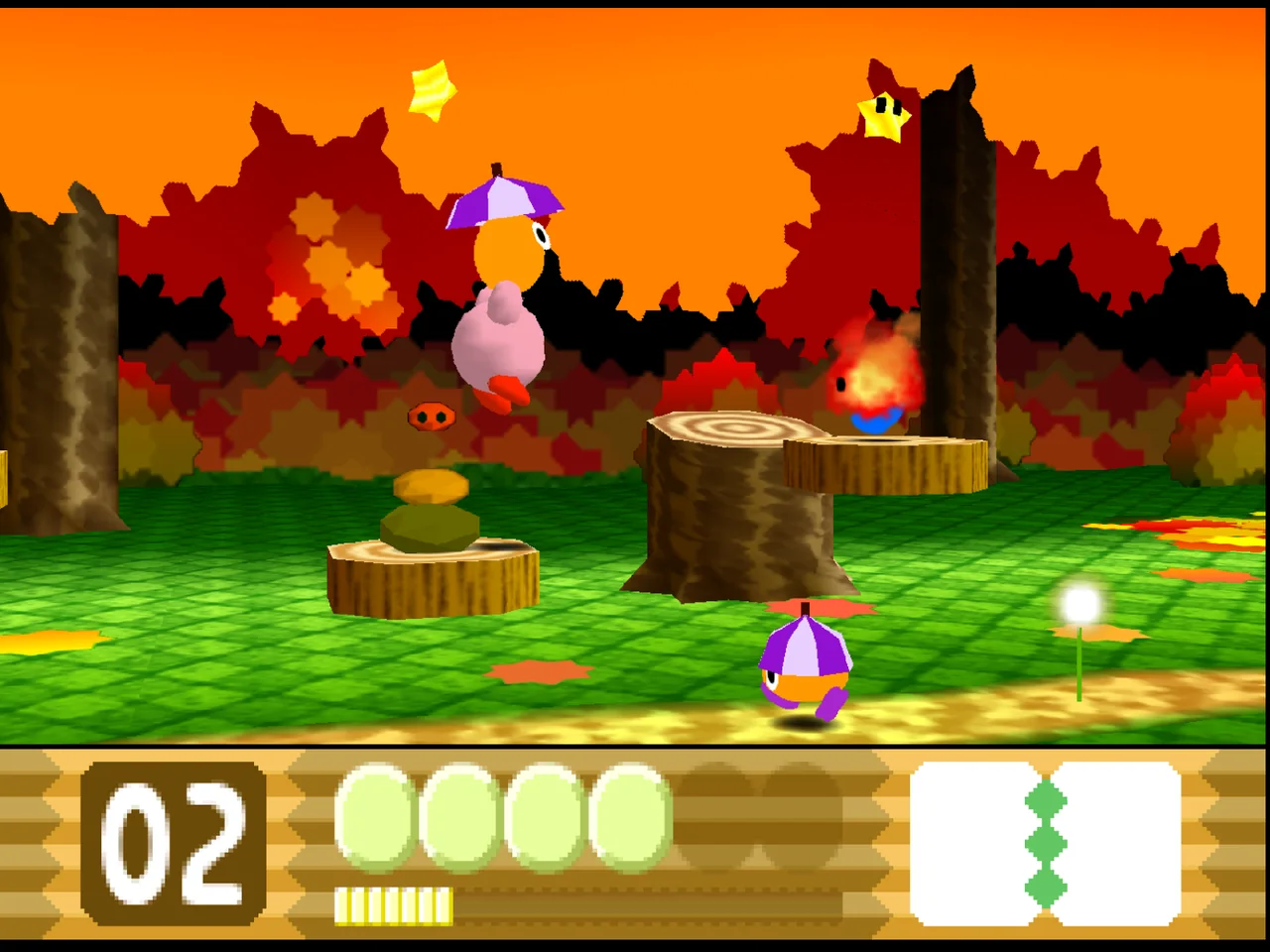
Kirby 64 is the most approachable entry in this group. Its platforming is generally less demanding than the precision movement in Super Mario 64 or the combat and exploration systems in the Zelda games, making it a sensible choice when you want a bright solo game without a long onboarding period. Stages are structured clearly enough that you can play one, make progress and stop without losing the thread of the larger adventure.
Its defining solo idea is the ability-combination system. Kirby can combine powers to create different effects, turning some encounters and environmental obstacles into small experiments. You do not need to master every combination to advance, but trying unusual pairings gives familiar stages another layer. That makes the game more than a simple run from one checkpoint to the next.
Kirby 64 earns its place because it is comfortable in short or medium sessions and remains useful as a change of pace after a heavier adventure. Its tradeoff is that experienced platform-game players may find the basic challenge modest. The appeal is low friction, readable objectives and light experimentation rather than severe execution pressure.
Audience: players who want accessible platforming, colorful presentation and a gentle introduction to solo N64 play.
- Best fit: low-pressure sessions and players returning to platformers after a break.
- Revisit for: ability combinations and collectible goals.
- Tradeoff: less demanding than most of the list.
9. Star Fox 64
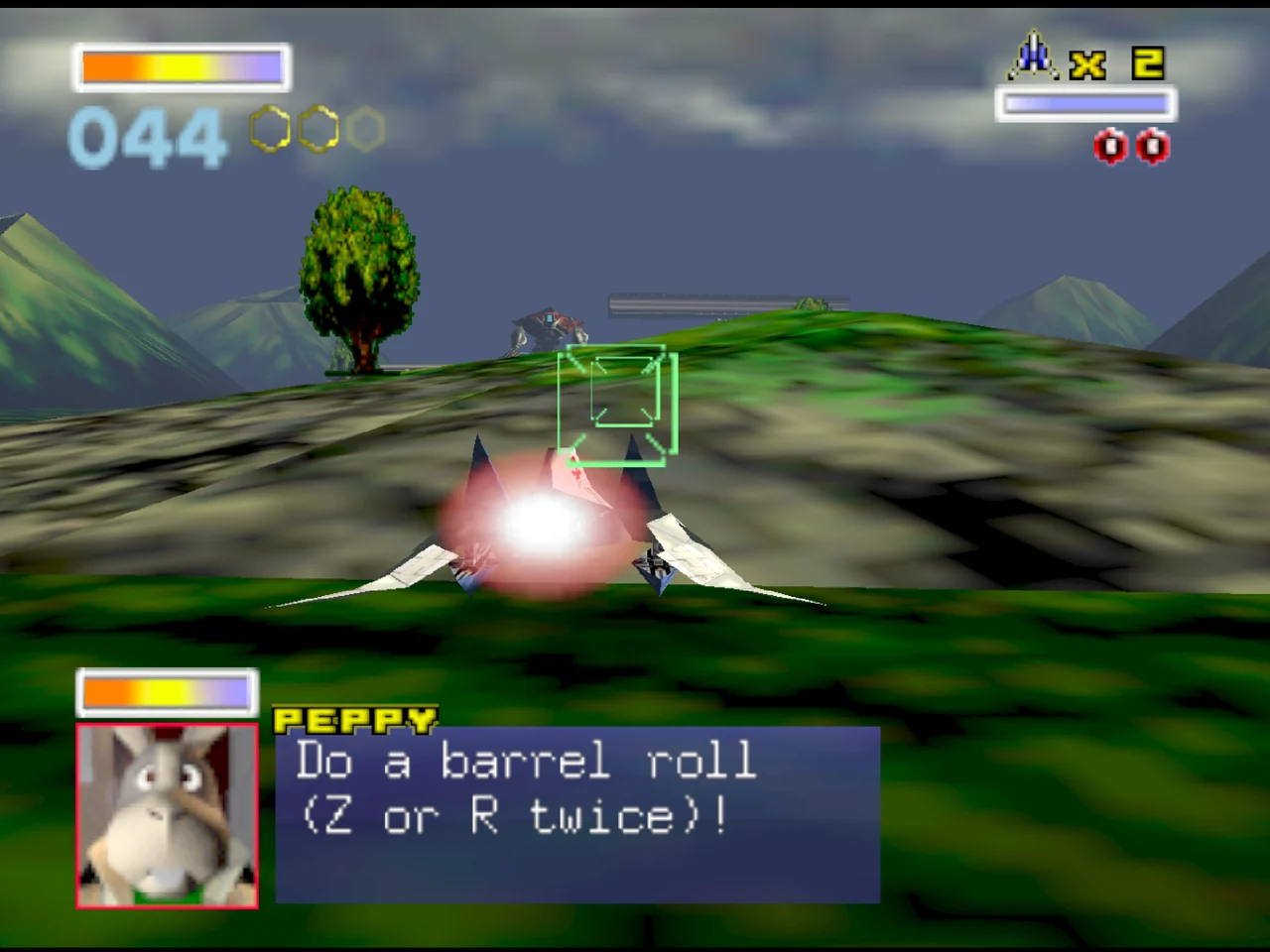
Star Fox 64 is the clearest recommendation here for a compact action session. Its stages deliver immediate goals, readable movement and a strong sense of forward momentum, so you can play without committing to a large open world or a long chapter. The solo campaign is not merely a warm-up for multiplayer: its route structure gives every run a chance to develop differently.
Branching paths and hidden routes provide the main reason to replay. A first attempt can focus on surviving and seeing what comes next; later attempts can concentrate on finding alternate objectives, protecting allies or improving the score. That creates a useful progression from learning the controls to learning the level logic. The game’s action is direct, but its best replay loop is built around knowledge as much as reflexes.
Nintendo’s product information identifies a campaign with 15 levels and multiple vehicles, including the Arwing, Landmaster and Blue Marine. Those changes in vehicle handling help prevent the solo experience from becoming one repeated kind of shooting gallery. The tradeoff is that it is more linear than the exploration-heavy games below, so it is a weaker choice if you want a world to wander through.
Audience: players with limited time who enjoy route discovery, score improvement and energetic action.
- Best fit: short sessions with a clear beginning and end.
- Revisit for: alternate routes, hidden paths and better runs.
- Tradeoff: less suitable for players seeking a broad inventory or story-driven world.
8. Super Mario 64
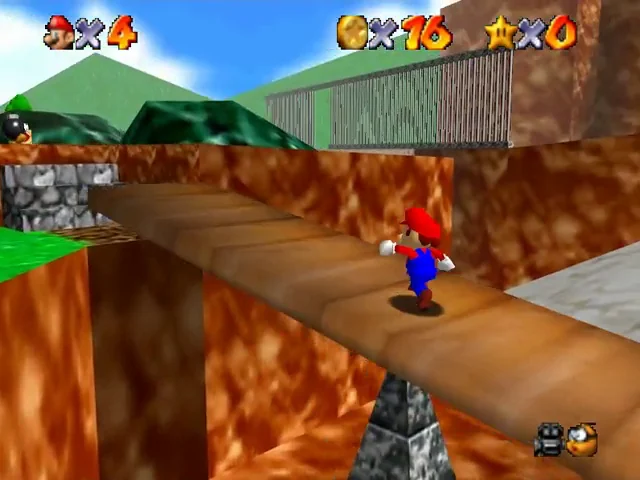
Super Mario 64 remains one of the best solo demonstrations of why analogue movement can be the entire point of a game. Its stars give you destinations, but the lasting pleasure comes from learning how Mario accelerates, jumps, turns, recovers and links actions together. A player can enter for one objective, spend time practicing movement in an open area and leave with a stronger feel for the controls even without clearing a major section.
The star structure also supports flexible sessions. You can pursue a specific objective, explore a level for surprises or return to a familiar course to improve a movement challenge. Progress is easy to understand, yet the same spaces remain useful after the basic route is familiar because precision, shortcuts and unusual approaches become their own goals.
Its learning curve is unusually well balanced for a 3D game of its era. Basic movement is immediate, while advanced control takes continued practice. The camera and dated presentation can still create friction, particularly for someone expecting modern 3D platforming conventions. That is the tradeoff, but it is also why the game earns a place beyond reputation: its replay value is tied to a physical skill that the game teaches through use.
Audience: players who want open-ended objectives and a movement system worth practicing for its own sake.
- Best fit: flexible sessions where you choose the size of the objective.
- Revisit for: movement mastery and alternate solutions to familiar stars.
- Tradeoff: camera behavior can be less forgiving than modern platformers.
7. Banjo-Kazooie
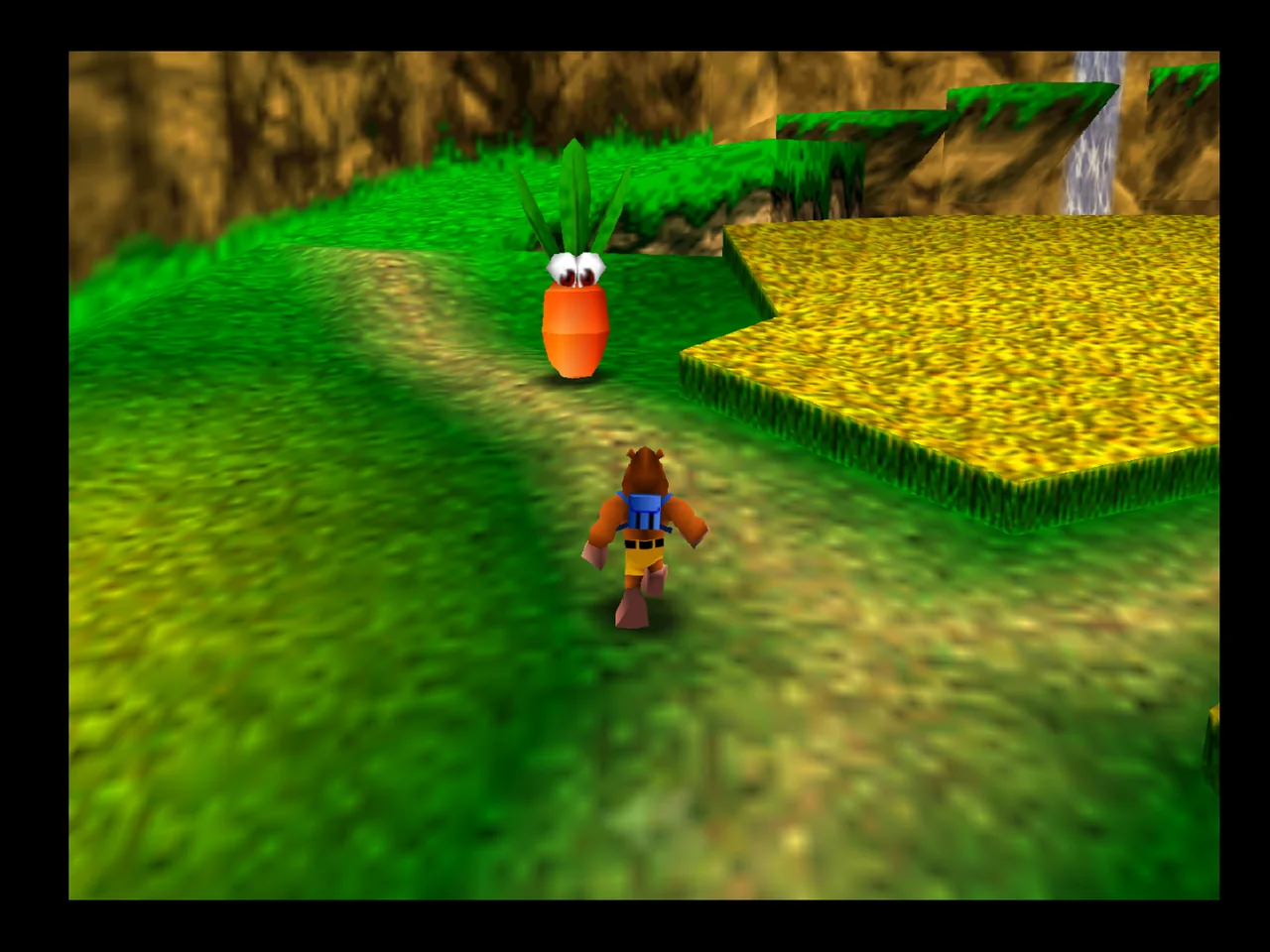
Banjo-Kazooie suits solo players who want exploration to come with a visible checklist. Its worlds contain Jiggies, musical notes and other collectible objectives, but the important distinction from Super Mario 64 is how strongly the duo’s learned moves shape the experience. New abilities change what you can do in earlier spaces, encouraging a return visit with a concrete purpose rather than an aimless search.
The game’s structure rewards players who enjoy noticing relationships between landmarks, abilities and environmental puzzles. You can make progress by following obvious objectives, then return later when a newly learned move suggests that an earlier obstacle has another solution. That rhythm produces a more deliberate adventure than Mario’s movement playground, with collecting and world knowledge sharing the spotlight.
Banjo-Kazooie is a strong choice for medium or long sessions, although its density can make a casual stop feel less tidy than a Star Fox 64 stage. Collectible-heavy design can also become tiring if you treat every item as mandatory. The better approach is to use the objectives as prompts for exploration, not as a demand to empty every area immediately.
Audience: players who like character abilities, environmental puzzles and progress markers that support world revisits.
- Best fit: exploratory sessions with a clear collecting framework.
- Revisit for: new moves, overlooked objectives and route planning.
- Tradeoff: more backtracking and item tracking than Super Mario 64.
6. Paper Mario
Paper Mario is the strongest fit here for a relaxed, chapter-based solo session. Its adventure combines exploration, conversations, partners and turn-based battles, so progress does not depend on constant camera control or precise platforming. You can spend one session advancing a story chapter, learning an area’s characters and then making tactical choices in battles without needing to maintain a high-speed rhythm.
Timed action inputs give the combat more involvement than simply selecting commands and waiting. They reward attention while keeping the system understandable, and the partner roster encourages you to think about which ability suits a particular encounter. The result is a game that asks for decisions but rarely demands the same physical precision as the platformers or shooters on this list.
The tradeoff is pacing. Paper Mario is built around dialogue, travel between objectives and gradual character progression, so it is not the ideal choice for someone seeking immediate action in every minute. Its solo appeal comes from steady narrative movement and the satisfaction of developing a party and understanding the battle system. Nintendo identifies the original game as a one-player adventure and RPG, which makes its intended solo structure especially clear.
Audience: players who want story, turn-based decisions and progress that works well across repeated evening sessions.
- Best fit: slower sessions with chapter or quest progress.
- Revisit for: battle timing, partner choices and optional discoveries.
- Tradeoff: dialogue and travel make it less immediately action-focused.
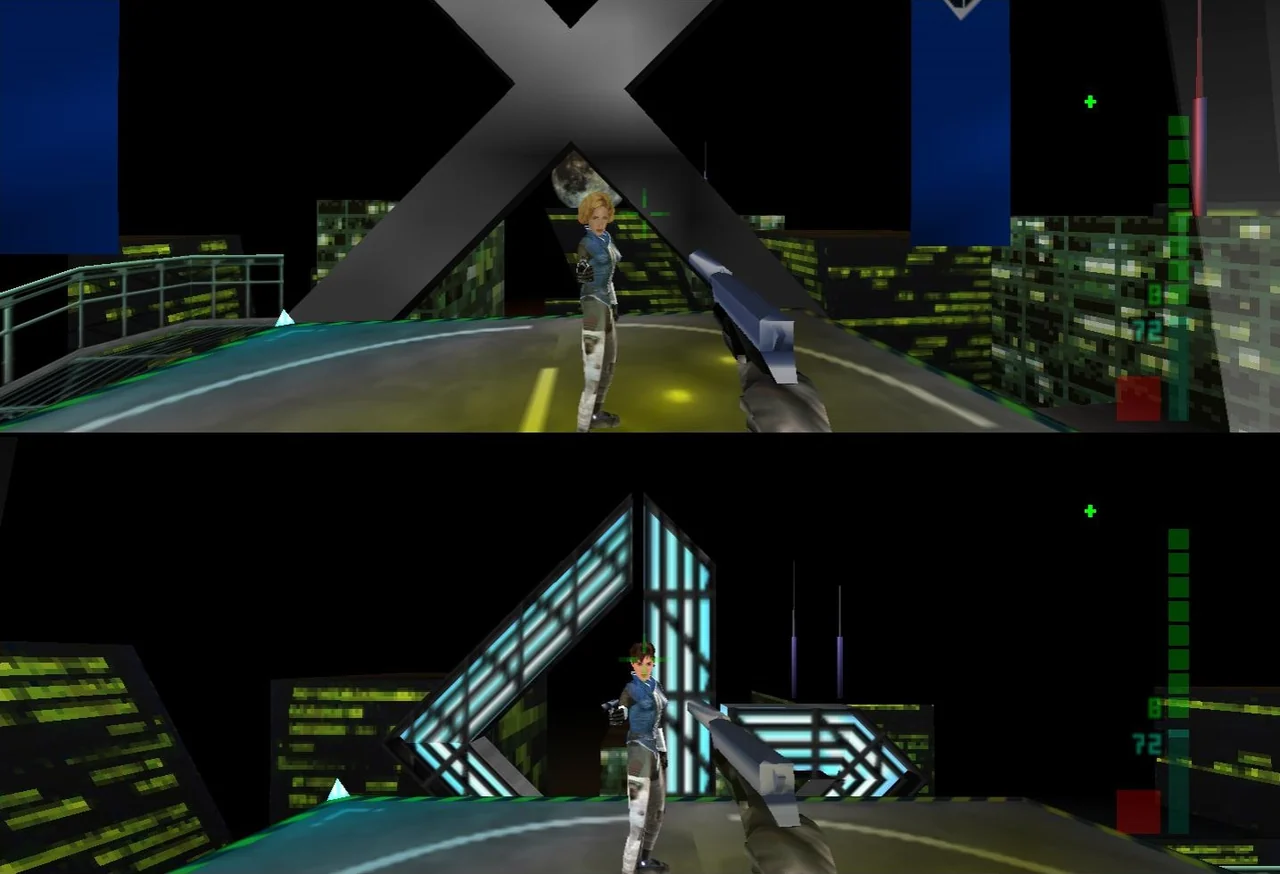
5. Perfect Dark
Perfect Dark deserves a solo recommendation independent of its multiplayer reputation. Its campaign is organized around missions with objectives, equipment choices and difficulty settings, giving each session a defined assignment. The challenge is not limited to defeating every opponent. Paying attention to instructions, using weapon functions appropriately and completing the required tasks are central to making progress.
That mission structure gives the game several layers of replay. A first attempt can be about understanding the level and surviving. Later attempts can focus on a higher difficulty, cleaner objective completion or more deliberate use of secondary weapon functions. This is a different kind of return value from Star Fox 64: instead of chasing a route through a compact action stage, you are refining your approach to a set of operational problems.
The original N64 edition has an important limitation. Nintendo’s product information states that the Expansion Pak is required for the solo missions; without it, only one- and two-player deathmatch-style play and Challenge Mode are available. That accessory check should happen before choosing the cartridge for a solo campaign. The game’s controls and mission expectations can also feel demanding at first, so it is better for players willing to learn than for someone seeking instant comfort.
Audience: players who want objective-based shooting, experimentation with tools and a campaign that rewards repeated attempts.
- Best fit: focused missions and players who enjoy learning level rules.
- Revisit for: difficulty settings, objective completion and weapon experimentation.
- Hardware note: the original N64 solo missions require the Expansion Pak.
4. Donkey Kong 64
Donkey Kong 64 is the list’s clearest completion project. Its solo structure is built around five playable Kongs, each with distinct abilities, weapons and instruments. That division gives many objectives a specific solution, but it also means that progress involves remembering which character can handle which obstacle. Players who enjoy long-term checklists and returning to previously visited areas will find a lot to organize.
The game is not as immediately economical as Kirby 64 or Star Fox 64. Its breadth makes it better for a player who wants a substantial world to chip away at over time than for someone who only has a few minutes. The collection design can feel repetitive when approached as a demand to gather everything in one sweep, so a more comfortable rhythm is to choose one area, one Kong or one objective type and stop at a natural point.
The original Donkey Kong 64 manual states that the Expansion Pak is required, while also identifying support for the Rumble Pak. The Expansion Pak requirement is the important solo hardware consideration for this original edition. Donkey Kong 64 earns a high place not because every task is equally brisk, but because it offers an unusually large personal project with abilities, revisits and completion goals that stand without a multiplayer setup.
Audience: players who enjoy expansive collectathons, ability-gated exploration and a long checklist.
- Best fit: extended completion projects divided across many sessions.
- Revisit for: Kong-specific abilities and unfinished collections.
- Tradeoff: the broad structure can feel repetitive or administratively heavy.
3. Banjo-Tooie
Banjo-Tooie is a more demanding follow-up, not simply another version of Banjo-Kazooie. It expands the platforming and collecting framework with larger environments, more complex ability interactions and objectives that connect different parts of the world. That gives experienced players more to investigate, but it also raises the amount of information they must hold in mind.
Its solo appeal is strongest when you enjoy solving connections over time. An obstacle in one area may point toward an ability, character or route elsewhere, and returning with new knowledge can be as important as returning with a new move. The game therefore suits deliberate exploration better than quick, self-contained play. It can be rewarding to leave an unsolved task alone and revisit it later rather than repeatedly forcing an answer.
The larger scope is also the main warning. Players who found Banjo-Kazooie’s collecting structure exhausting may not want a denser sequel. Players who liked the first game’s world logic, however, get a richer set of relationships to untangle. Its reason to revisit is not nostalgia for the original; it is the satisfaction of understanding how a more interconnected adventure fits together.
Audience: experienced collectathon players who want larger spaces and more involved ability puzzles.
- Best fit: patient exploration and multi-session problem solving.
- Revisit for: connected objectives, expanded moves and environmental relationships.
- Tradeoff: higher cognitive load and a heavier completion burden than Banjo-Kazooie.
2. The Legend of Zelda: Ocarina of Time
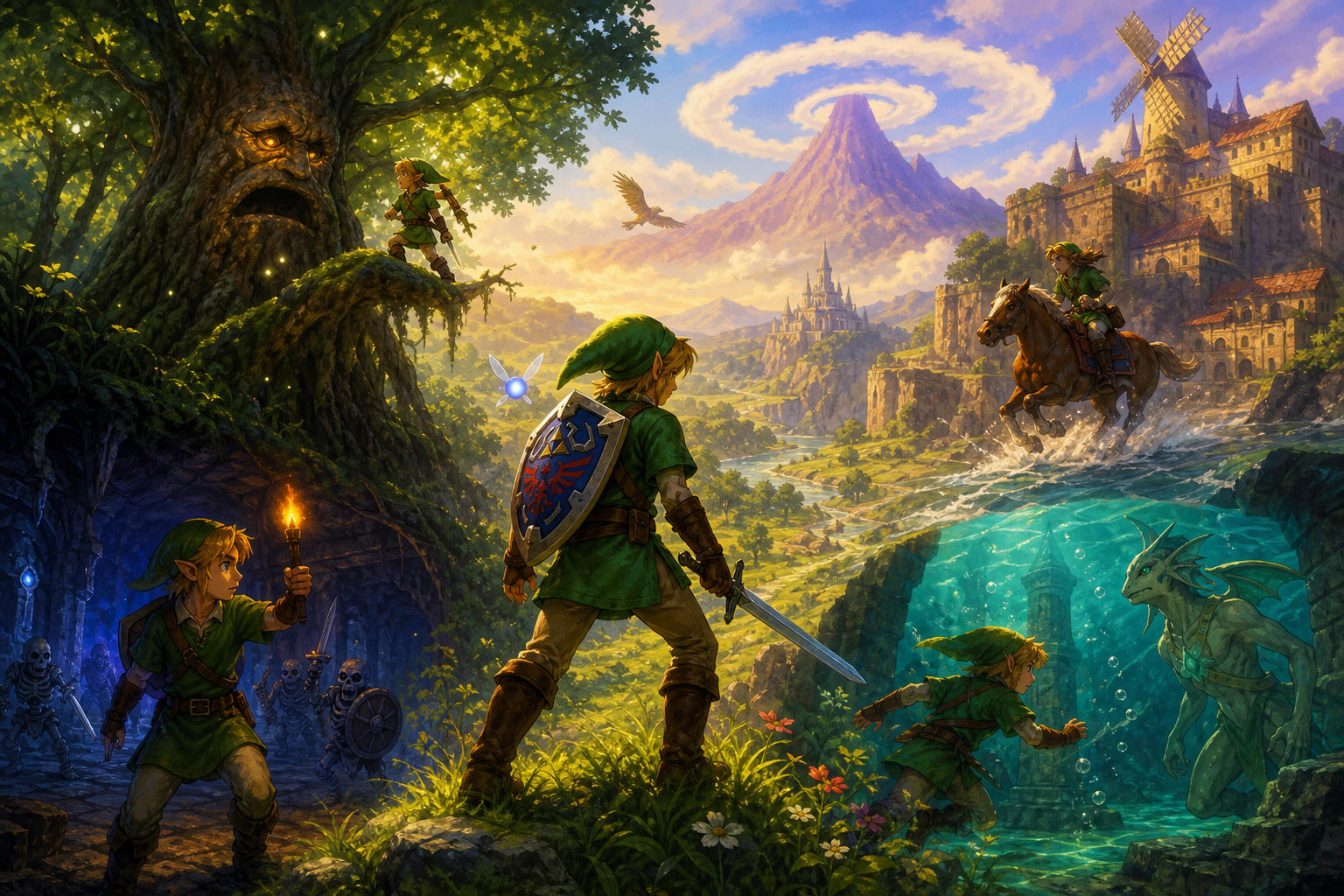
Ocarina of Time is the broadest all-purpose solo adventure in the group. It combines combat, item-based exploration, dungeon progression and an overworld that links its major objectives. That mix gives a returning player several ways to spend a session: advance a dungeon, investigate a newly accessible area, practice combat or simply move toward the next major objective.
Its learning curve is one of its greatest strengths. The game introduces its ideas in a readable order, so a new player can learn movement, targeting, equipment and puzzle logic without needing to understand the whole adventure at once. Later areas ask for more deliberate planning, but the earlier systems remain useful rather than being discarded. That makes it easier to resume after time away than a game built around one continuous mechanical challenge.
Ocarina of Time is less convenient than Star Fox 64 when you only have a brief window, because its progress is organized around a sustained adventure. It is also less structurally unusual than Majora’s Mask. Its place near the top comes from balance: it is a dependable recommendation for players who want one N64 game that offers exploration, combat, puzzles and a clear sense of long-term progression without making any single system the whole experience.
Audience: players seeking a substantial first or returning solo adventure with a balanced mix of systems.
- Best fit: sustained sessions and players who want varied adventure systems.
- Revisit for: dungeon problem solving, item-based exploration and route familiarity.
- Tradeoff: its broader campaign rewards continuity more than very short drop-in sessions.
1. The Legend of Zelda: Majora’s Mask
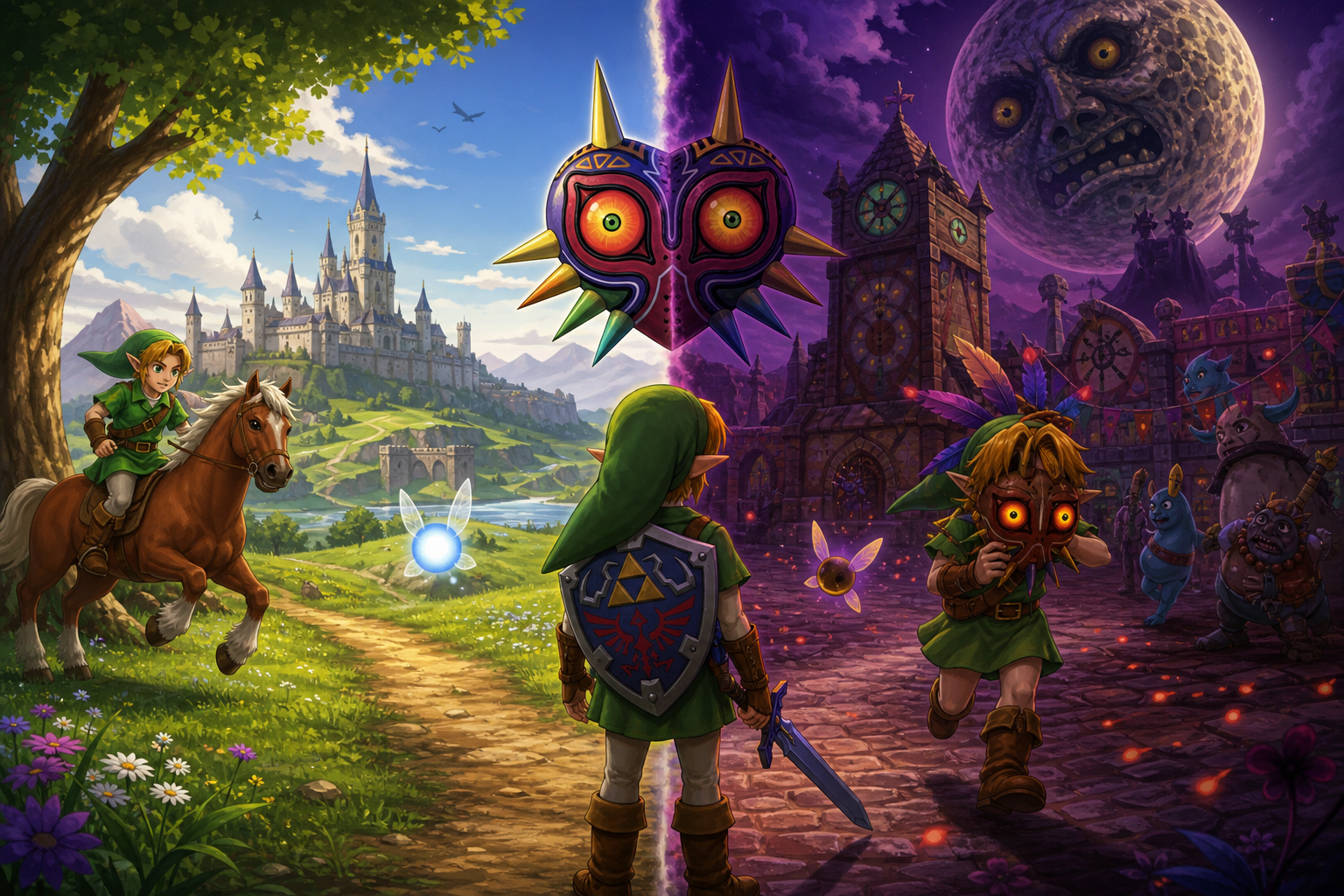
Majora’s Mask is the strongest choice for players who want a solo game with a distinctive rhythm rather than a straightforward continuation of Ocarina of Time. Its three-day, 72-hour cycle, masks and recurring character schedules make time management part of exploration. You are not only asking where to go; you are deciding what can be accomplished before the cycle advances and what information is worth carrying into the next attempt.
That structure creates an unusually strong reason to replay familiar situations. A first visit may reveal a schedule or problem. A later visit can use that knowledge to plan more efficiently, combine objectives or approach a character at a different point in the cycle. The game’s world feels less like a set of static stages and more like a system that changes according to time and preparation.
The learning curve is less immediate than Ocarina of Time because the game expects you to understand deliberate saving and reset behavior. The original manual explains that the Song of Time preserves important progress such as key items, maps and notes, while some cleared events, inventory quantities, keys and other temporary progress can reset. The original N64 edition also requires the Expansion Pak. Those are not minor details: they define how a solo session should be planned.
Majora’s Mask is therefore not the universal first choice, but it is the best match for players who enjoy schedules, experimentation, repeated attempts and the tension of deciding what to preserve. Its solo identity is strong enough that multiplayer is irrelevant to the recommendation.
Audience: players who welcome time pressure, recurring schedules and a more experimental adventure structure.
- Best fit: thoughtful sessions built around planning and revisiting.
- Revisit for: schedules, masks, side objectives and improved cycle management.
- Hardware note: the original N64 edition requires the Expansion Pak.
- Save note: distinguish permanent progress from temporary progress before resetting a cycle.
A quick match for every solo mood
Choose Kirby 64 if accessibility matters most, Star Fox 64 if you want compact action, or Super Mario 64 if movement itself is the reason to play. Pick Banjo-Kazooie for collectible exploration with a clear ability arc, Paper Mario for a slower story-led RPG rhythm, and Perfect Dark for mission objectives and replayable shooting challenges.
Choose Donkey Kong 64 when you want a large completion project, Banjo-Tooie when you want a denser and more interconnected collectathon, and Ocarina of Time when you want the most broadly balanced adventure. Choose Majora’s Mask when the idea of repeating a timed cycle sounds more appealing than following a conventional campaign.
The important distinction is between a game you admire and a game that fits tonight. The N64’s solo library supports quick attempts, patient exploration, careful planning and long-form progression. You do not need a second controller—or a multiplayer excuse—to find a worthwhile way into the system.
- Quickest action loop: Star Fox 64.
- Most approachable platforming: Kirby 64: The Crystal Shards.
- Movement practice: Super Mario 64.
- Collection projects: Banjo-Kazooie, Banjo-Tooie and Donkey Kong 64.
- Story and progression: Paper Mario and Ocarina of Time.
- Mission replay: Perfect Dark.
- Time-cycle experimentation: Majora’s Mask.
The best solo N64 choice depends on the shape of your session. Start with Kirby 64 or Star Fox 64 when you want low commitment, Super Mario 64 or Banjo-Kazooie when you want movement and exploration, and Paper Mario or Ocarina of Time when you are ready to follow a longer progression arc.
For a more specialized challenge, Perfect Dark offers mission refinement, Donkey Kong 64 and Banjo-Tooie offer substantial completion projects, and Majora’s Mask turns planning and reset timing into the heart of the adventure. Check the original hardware requirements before starting, then choose the game whose repeatable loop matches the way you actually want to spend time.