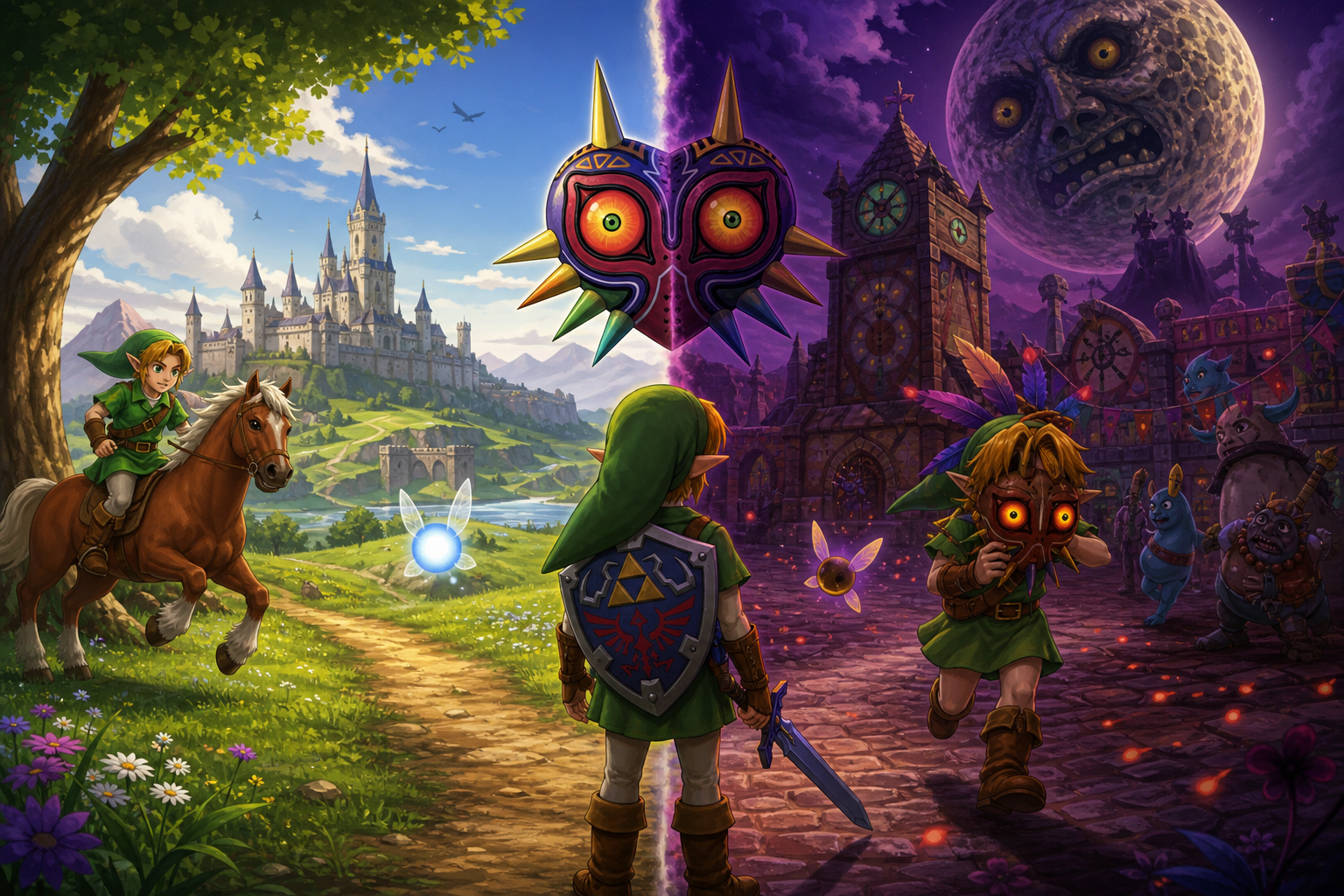
Exploration can mean very different things on Nintendo 64. In Super Mario 64, a familiar course becomes a new route when a different jump is required. In Paper Mario, finding the next path may depend on remembering a character, a partner ability or a change in a town. The Legend of Zelda: Majora’s Mask asks for something more demanding: noticing when the same place behaves differently as time passes.
This ranking is not a universal quality list. It is a guide to five distinct exploration identities: character-led RPG spaces, movement experimentation, collecting, classic dungeon discovery and timed-world observation. The comparison uses the original Nintendo 64 editions as its baseline, with attention to how clearly each game teaches its systems and how much memory or planning it expects from the player.
How the ranking works
The order weighs five practical questions. First, how well does the game communicate where exploration matters? Second, what kind of learning friction does it create? A demanding game can still be welcoming if its landmarks, counters, characters, item gates or time cues explain what to do next. Third, does returning to an earlier space feel purposeful rather than merely repetitive? Finally, how closely is exploration tied to meaningful progression?
The five games are deliberately separated by identity. Paper Mario ranks lower not because its spaces are unimportant, but because its exploration is more contextual and less physically open than the other entries. Majora’s Mask ranks first because its central clock turns observation, memory and route planning into the game’s defining navigation skills. Players who dislike schedules may reasonably prefer another game on this list.
This is a subjective ranking, but the criteria remain consistent. The games are not being judged by sales, review scores or an invented measurement of map size. They are being compared by the kind of attention they ask from a player and the clarity of the cues they provide in return.
- Use the original N64 releases as the comparison point.
- Treat the ranking as a preference guide, not a review-score table.
- Expect different kinds of backtracking, searching and environmental reading in every entry.
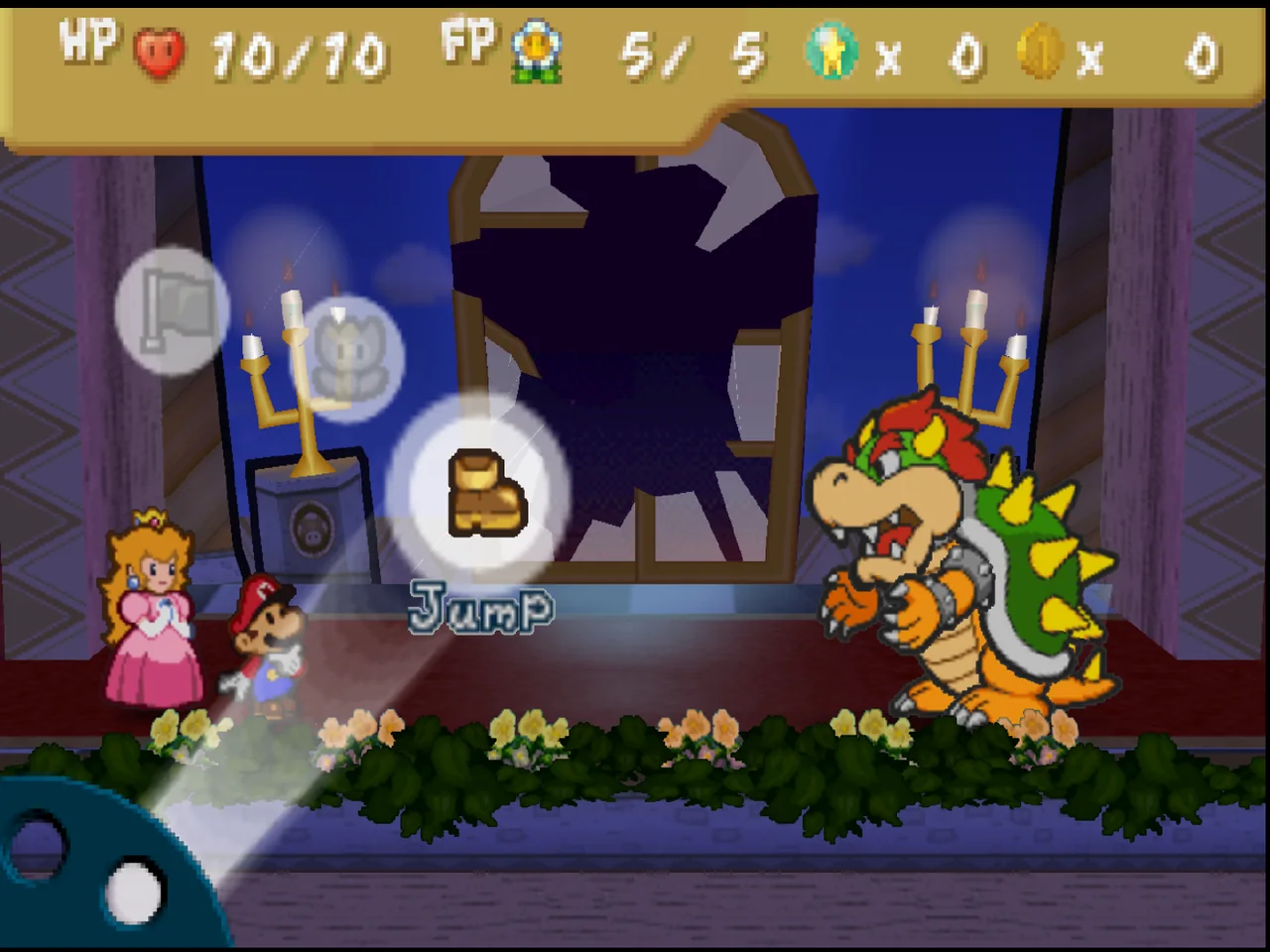
5. Paper Mario: exploration through characters and context
Paper Mario is the clearest choice for players who explore by talking, remembering and interpreting rather than by crossing large three-dimensional spaces. Its adventure is arranged around towns, roads, chapter regions, non-player characters, items and revisits. The important question is often not how to reach a distant platform, but who mentioned a problem, what changed since the last visit and which companion can help with the obstacle.
Partners are central to this style of navigation. The original instruction booklet presents them as active members of the adventure, and their abilities affect how the player reads familiar scenery. An obstacle that looked decorative may become relevant after a new partner joins. A character’s request may also give a previously ordinary location a clear purpose. The world is therefore explored through a combination of physical movement and social context.
Paper Mario’s field screens are more structured than the open courses in Super Mario 64 or the connected regions of Zelda. Pipes, paths, towns and chapter destinations divide the journey into readable pieces. That structure helps players who prefer clear boundaries and recognizable hubs. It also means that revisiting is usually motivated by a new conversation, item, partner ability or story development rather than by the desire to search every corner of a large 3D space.
This makes Paper Mario approachable for players who enjoy readable objectives and story-shaped spaces. Towns provide recognizable anchors, dialogue supplies clues and chapter progression gives the journey a strong rhythm. The tradeoff is that some progress depends on remembering conversational context. Players who skip dialogue or expect every destination to advertise its purpose visually may find the game less direct than Mario or Zelda.
Its exploration is also closely tied to RPG systems. Battles, badges, items and partners influence what the player can attempt, so route planning is partly about preparation rather than reflexes. The game asks for patience with reading and revisiting, but it rarely demands the same camera management or platforming precision as the three-dimensional entries. Paper Mario is the best fit for players who see exploration as following relationships and interpreting clues.
- Choose Paper Mario if towns, character hints and partner abilities sound more appealing than open-ended movement.
- Pay attention to characters who mention unfinished business or future help.
- Expect exploration to be interrupted by dialogue and turn-based battles.
- Do not judge its navigation by three-dimensional platformer standards.
- Revisit familiar areas when new partners, items or chapter progress change what is possible.
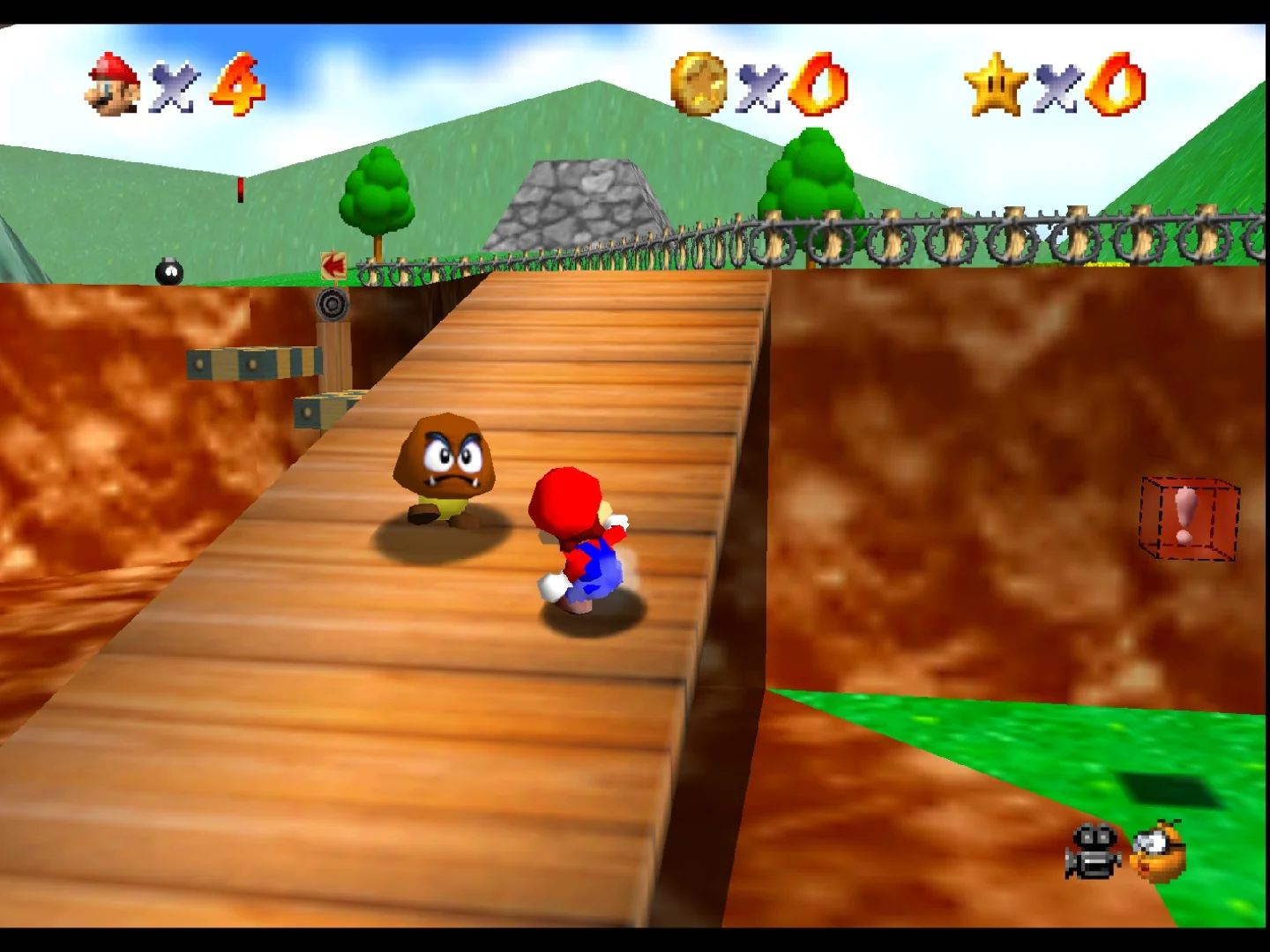
4. Super Mario 64: movement as a way of seeing
Super Mario 64 is the strongest fit for players who want exploration to emerge from movement itself. Its Mushroom Castle acts as a hub, while paintings lead to courses containing multiple Power Star objectives. The same course can therefore be reread through a different movement problem instead of being a single route that is completed once.
The original instruction booklet teaches a broad movement vocabulary: running, swimming, crouching, sliding, wall jumping, long jumping, backflips, side jumps, triple jumps and climbing. That variety creates the game’s main learning friction. The player is not primarily sorting inventory items or following a dialogue chain; they are learning momentum, jump timing, landing space and the relationship between Mario and the camera.
The booklet also frames the camera as part of ordinary play. The Lakitu Bros. are presented as Mario’s camera operators, and the camera controls are taught alongside movement rather than treated as an optional technical adjustment. That captures an important part of the design. Viewpoint adjustment is part of reading a ledge, lining up a jump and understanding where a course continues.
Early mistakes often come from treating a jump as a simple button command when it is really a judgment about speed, angle and available space. A player may recognize the destination immediately but still need to learn how to approach it. This is why Mario’s worlds feel like movement laboratories: the main discovery is often not a hidden object but a new way to cross a familiar gap.
Ability-based discoveries add another layer. Red, green and blue Cap Switches introduce special traversal options in relevant areas, allowing some spaces to be reconsidered later. Mario’s navigation cues are usually visual and physical: a distant platform, a suspicious gap, a climbable surface or a route that looks possible with a different jump.
The tradeoff is that the game offers less explicit task tracking than Banjo-Kazooie. If the appeal of exploration is improvising movement and gradually understanding a playground, this is an excellent match. If the appeal is checking off clearly separated collectibles, another game on this list is more structured.
- Choose Mario if movement practice is itself the reward.
- Use landmarks and course layout to remember promising routes.
- Expect the camera and momentum to be part of the learning curve.
- Return to courses with a new movement idea instead of assuming a missed Star requires a guide.
- Treat each course as a group of related challenges rather than one fixed path.
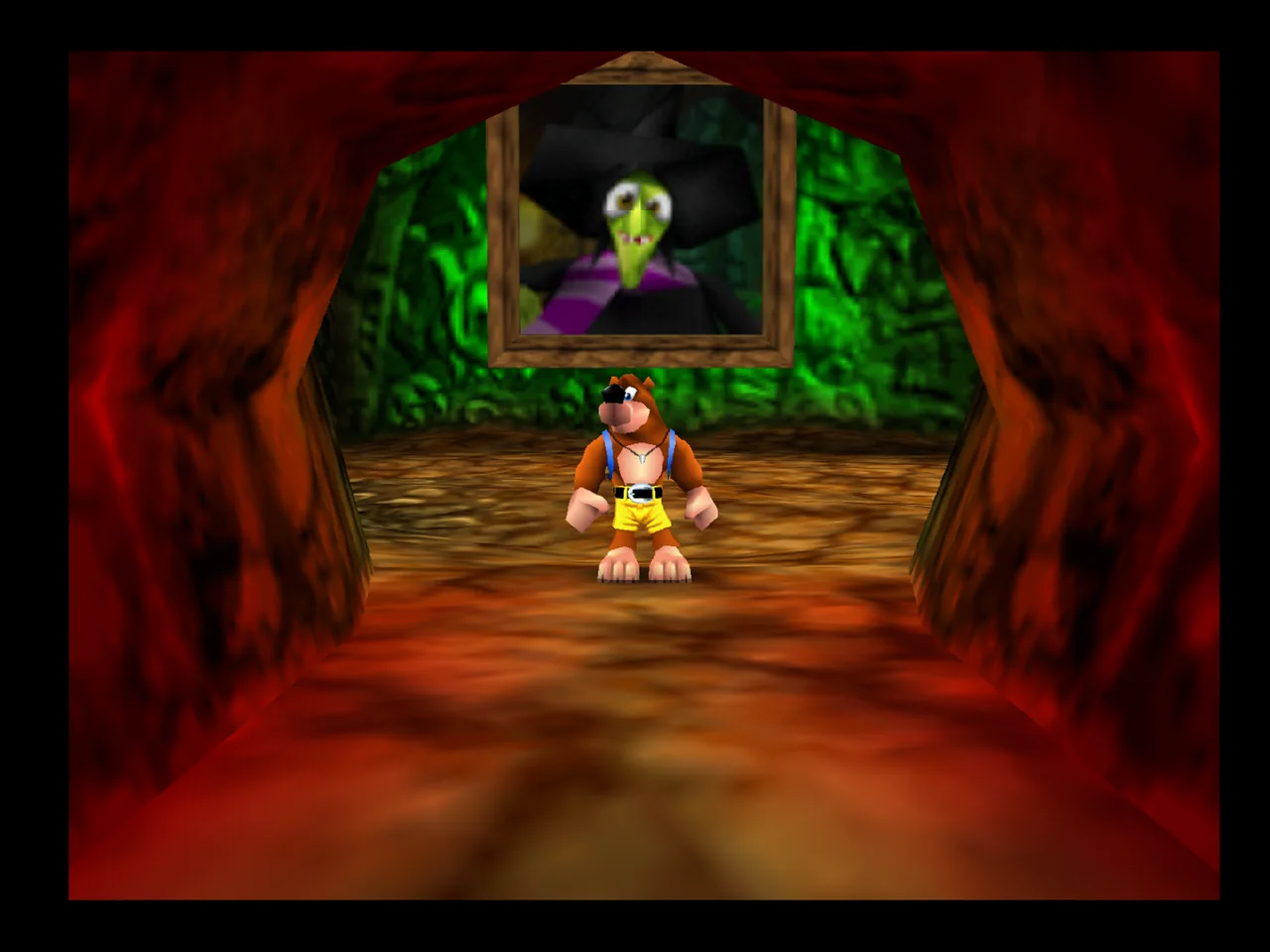
3. Banjo-Kazooie: the checklist explorer
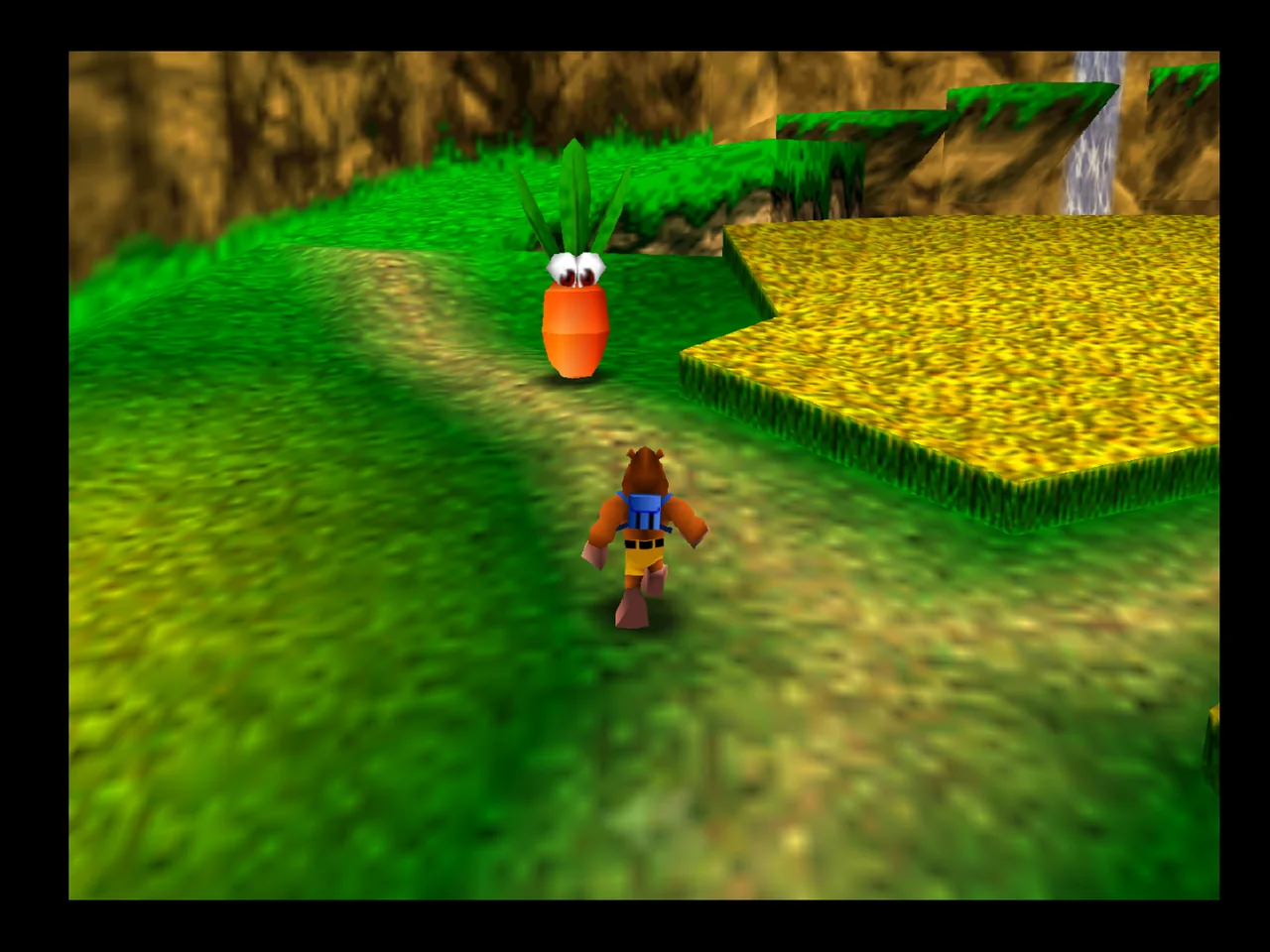
Banjo-Kazooie gives exploration a stronger collection structure than Super Mario 64. Spiral Mountain serves as a training area where Bottles introduces moves before the pair enters Gruntilda’s Lair and its connected worlds. Once inside, each main world presents several overlapping reasons to search: ten Jigsaw Pieces, 100 Musical Notes, five Jinjos and additional ability- or transformation-based challenges.
That density makes the game satisfying for players who like visible progress categories. Jigsaw Pieces are major objectives, while Musical Notes contribute to totals used by Note Doors in Gruntilda’s Lair. Finding all five Jinjos in a world also awards a Jigsaw Piece, so careful environmental searching is directly connected to substantial progression rather than being a purely optional scavenger hunt.
Banjo-Kazooie’s navigation cues are both visual and numerical. A distinctive landmark can help locate a hidden route, while the View Totals screen confirms which categories remain incomplete. The result is an adventure that encourages players to sweep a space, notice odd corners and return after learning a new move. Bottles-taught moves, pads, eggs, feathers, Wading Boots, Running Shoes and Mumbo transformations give the worlds more contextual traversal tools than Mario’s basic movement set.
The game’s nine worlds are not merely isolated stages. Gruntilda’s Lair connects them through a central progression space, and the lair itself contains routes, doors and thresholds that make collection totals matter beyond the individual worlds. That arrangement gives the player a useful reason to remember where they have been and what remains inaccessible.
The cost is cognitive clutter. A player may remember a suspicious ledge but not whether it held a Note, Jinjo or Piece, and some spaces ask for a move learned elsewhere. The camera can zoom, rotate, center behind Banjo and switch to a first-person-style view, but vertical areas still require deliberate viewpoint management. The game’s collecting identity is strongest for players who enjoy turning an environment into a checklist without needing every objective to be completed immediately.
Compared with Mario, Banjo-Kazooie offers more explicit completion feedback and more ability-gated revisits. Compared with Paper Mario, it asks less conversational memory and more spatial scanning. Its ideal player enjoys the feeling that a world has been thoroughly read, even when the final few items require another pass.
- Choose Banjo-Kazooie if counters and collection categories motivate you.
- Learn Bottles’ moves carefully because later spaces expect contextual use of them.
- Use landmarks to divide each world into manageable search areas.
- Expect completion to require revisits and attention to several collectible types.
- Accept that the game’s overlapping objectives can make a nearly completed world difficult to audit from memory alone.
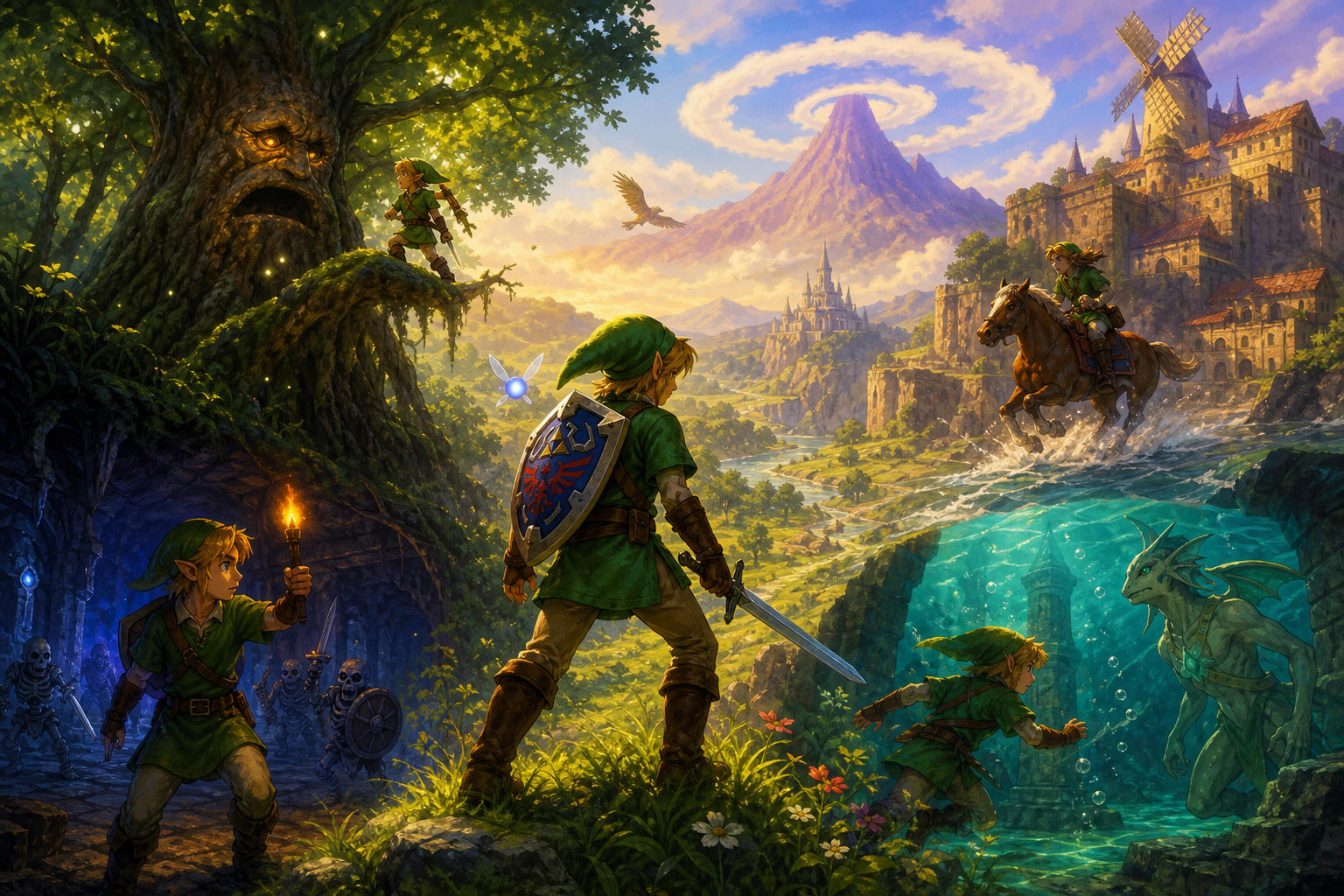
2. The Legend of Zelda: Ocarina of Time: learning spaces from the inside
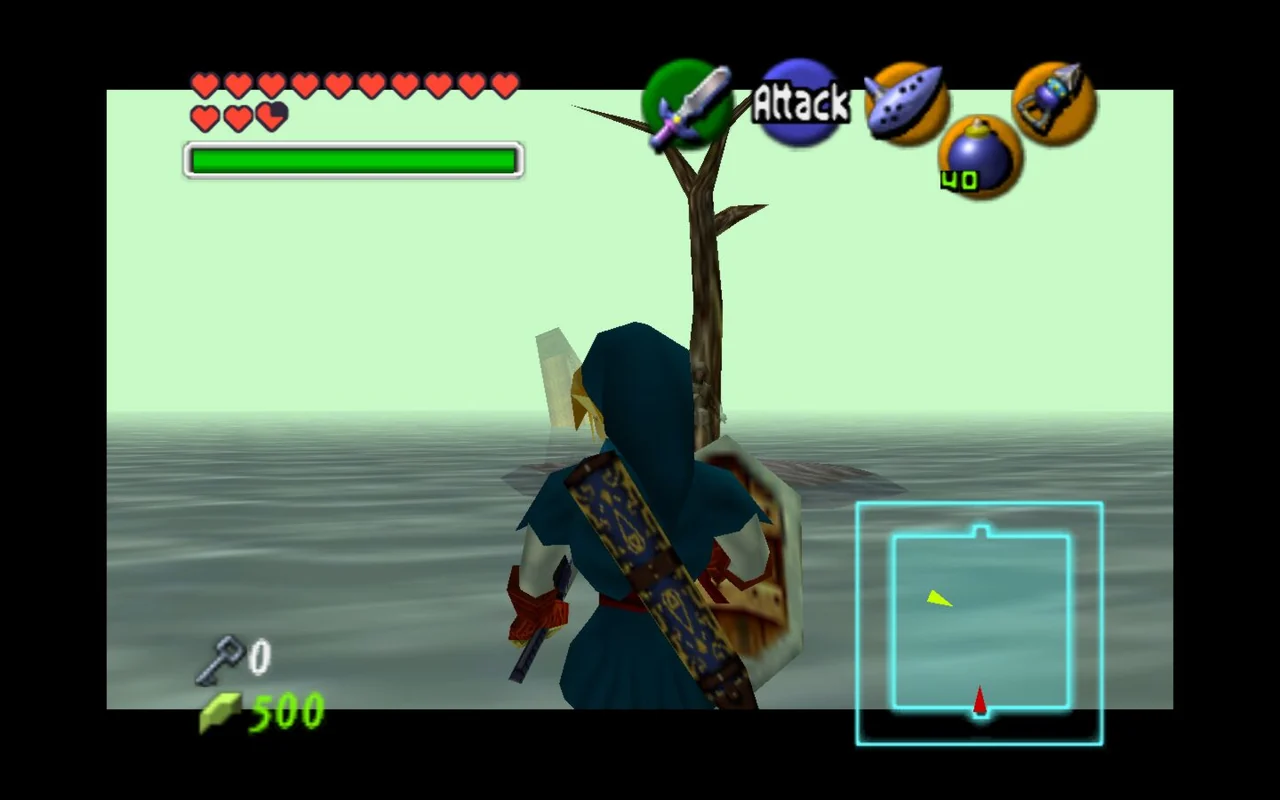
Ocarina of Time is the best fit for players who define exploration as understanding a dungeon’s internal logic. Hyrule Field, settlements and connected regions establish a broad sense of place, but enclosed areas provide the most focused form of discovery in this group. Rooms, doors, switches, keys, maps, compasses and specialized equipment turn navigation into a sequence of spatial questions.
The game’s cues are unusually layered. A locked door suggests a key search; a conspicuous object may invite a particular item; a room’s architecture can hint that an unexplored route connects to a familiar one. Z-targeting also helps the player read three-dimensional spaces by focusing Link’s attention on a nearby enemy, object or character. It is both a combat system and a way to make important things legible in a world that could otherwise feel visually noisy.
The ocarina adds a different kind of exploration. Nintendo’s original material treats learned songs as functional tools whose effects can depend on the place or person involved. Music therefore becomes part of the game’s navigation language rather than merely a reward for progress. Equipment and story advancement open new interactions across the overworld, while dungeon items often change how the player interprets rooms already visited.
This structure produces a satisfying learning curve, but it can create friction when the player has identified a destination without yet understanding the route or required tool. Ocarina of Time is more guided than Majora’s Mask and more architecturally focused than Banjo-Kazooie. It usually gives the player a clear next problem, then asks them to understand the space well enough to solve it.
The best navigation moments come from recognition. A room that once seemed like a collection of disconnected doors begins to make sense after the player notices its vertical structure, locked thresholds or relationship to a previous chamber. The game rarely needs a large collection counter because the environment itself records progress through opened routes and newly meaningful objects.
Choose Ocarina of Time when exploration means building a mental map, recognizing dungeon grammar and feeling a previously confusing area become readable. It is less suitable for players who want constant freeform movement or a world that changes independently of their actions.
- Choose Ocarina of Time if dungeon structure is your favorite form of exploration.
- Treat landmarks, locked doors and unusual objects as navigation information.
- Use songs and equipment as part of your understanding of the world.
- Expect enclosed spaces to demand more deliberate mapping than Mario’s courses.
- Look for relationships between rooms instead of treating every locked door as an isolated obstacle.
1. The Legend of Zelda: Majora’s Mask: exploration by observation and time
Majora’s Mask is the most distinctive explorer on this list because its world is governed by a repeating three-day cycle. The original instruction booklet explains that time passes continuously, that the cycle runs for 72 hours and that the Song of Time returns Link to the beginning of the First Day. That structure changes what it means to be lost. The problem may not be finding a place, but reaching it when the right person, route or event is available.
The Bombers’ Notebook supports this design by giving the player a place to record information and observations. Termina’s regions are reused across cycles, so the player gradually learns how people move, when access changes and which clues matter. Exploration becomes a combination of spatial memory and time management. A familiar street can present a different opportunity at another point in the cycle without becoming a new map.
This is a different form of backtracking from the one found in Ocarina of Time. Returning to an area is not only about carrying a new item through a previously locked door. It can mean arriving earlier, later or with a different plan. The player is learning the behavior of a living schedule rather than simply opening a sequence of permanent gates.
Masks add another layer to route reading. Different forms and abilities change how Link interacts with the environment, while the clock creates pressure around every plan. The player must decide whether to investigate, pursue a task, gather resources or reset the cycle. This is not simply a faster version of Ocarina of Time’s dungeon progression; it is a world-observation game with dungeons inside it.
That design also creates the highest learning friction here. Players who prefer uninterrupted wandering may find the cycle stressful, particularly when they have not yet learned how to organize a plan. Players who enjoy schedules, cause and effect, note-taking and revisiting the same streets from a new angle will find that friction meaningful. The game rewards attention more than raw movement skill.
Majora’s Mask is the best overall match for the article’s most demanding exploration identity because time is not background scenery. It is a navigation system, a planning constraint and a source of environmental information. The original N64 cartridge also requires the Nintendo 64 Expansion Pak, so hardware owners should confirm that requirement before treating it as a straightforward cartridge-only purchase.
- Choose Majora’s Mask if schedules and repeated observation sound exciting rather than restrictive.
- Use the Notebook and brief personal notes to track clues, places and unfinished plans.
- Plan a cycle around a small number of goals instead of wandering until time expires.
- Remember that the original N64 edition requires the Expansion Pak.
- Expect the game to teach its world through repetition rather than one uninterrupted route.
Learning friction from immediate movement to layered memory
These five games form a useful progression in the kind of attention they request. Super Mario 64 begins with physical judgment: where will Mario land, how much momentum is needed and which camera angle makes the route readable? Banjo-Kazooie adds explicit collection management and a larger movement vocabulary. Paper Mario moves the challenge away from physical navigation and toward dialogue, context and the recognition of changed opportunities.
Ocarina of Time asks the player to understand spatial systems. Its friction is often productive because rooms, keys, equipment and landmarks gradually form a coherent grammar. Majora’s Mask combines nearly all of those demands with continuous time, schedules and repeated cycles. Its difficulty is less about one difficult control than about coordinating several kinds of memory.
This makes ease of navigation a preference rather than a simple ranking. Paper Mario may be the most comfortable choice for a reader who likes explicit conversations and chapter structure, while Mario may feel clearer to someone who learns by trying movement. Majora’s Mask can be the most rewarding option for a planner and the least comfortable for a player who wants to stop anywhere without considering the clock.
The distinction matters because none of these games removes friction entirely. Mario’s friction is physical, Banjo’s is organizational, Paper Mario’s is contextual, Ocarina’s is spatial and Majora’s is temporal. Picking the right game means choosing the kind of problem you are willing to learn.
- Immediate physical feedback: Super Mario 64.
- Collection feedback: Banjo-Kazooie.
- Conversation and context: Paper Mario.
- Spatial systems: Ocarina of Time.
- Time, schedules and memory: Majora’s Mask.
Which navigation cues suit you?
Visual landmarks dominate Super Mario 64. Its courses invite the player to look across a space and imagine a route. Banjo-Kazooie supplements visual reading with counters, totals and recognizable collectible categories. Paper Mario relies on character dialogue, town layouts and changes in available partner actions. Its most important clue may be a sentence rather than a distant platform.
Ocarina of Time makes architecture and equipment meaningful. A door, switch or unusual room arrangement is often a promise that the player will eventually understand its purpose. Majora’s Mask adds clock-based cues: a location is not fully described by where it is, because when it is visited can matter just as much.
A useful mistake to avoid is demanding the same type of signposting from every game. Mario does not need Paper Mario’s conversational explanations, and Majora’s Mask would lose much of its identity if every schedule were reduced to a permanent objective marker. The right choice depends on whether you prefer seeing a route, counting progress, remembering context, decoding architecture or observing change.
These cue systems also explain why players can disagree about which game feels easiest to navigate. Someone who naturally scans for platforms may find Mario transparent but miss Paper Mario’s conversational hints. A player who likes maps and locked doors may prefer Ocarina of Time, while a schedule-minded player may find Majora’s Mask more coherent than a game with less explicit time structure.
- Look for visual route cues in Mario.
- Look for counters and collectible patterns in Banjo.
- Listen for contextual information in Paper Mario.
- Read dungeon architecture in Ocarina of Time.
- Watch time and recurring behavior in Majora’s Mask.
A practical choice guide
Choose Super Mario 64 if you want an adventure where movement is the main language. It is the most immediate entry for players who enjoy experimenting with jumps and rereading a course from several angles. Choose Banjo-Kazooie if you want a substantial completion checklist, with multiple collectible types and ability-based revisits giving every world a sense of unfinished business.
Choose Paper Mario if you prefer character-led spaces, readable chapter regions and exploration that grows from conversation, partners and item use. Choose Ocarina of Time if your ideal adventure involves learning the logic of dungeons, connecting overworld landmarks and turning equipment into new ways of reading a place.
Choose Majora’s Mask if you enjoy planning around schedules and learning a world through repetition. It asks the most from memory and time management, but it also provides the most unusual relationship between navigation and observation. None of these choices requires the same definition of adventure, which is exactly why the group remains useful together.
For a player returning to N64 after a long break, Paper Mario or Super Mario 64 generally provides the least complicated starting point, but the better choice depends on the preferred type of feedback. Mario responds immediately to movement experiments. Paper Mario responds to conversations, item use and chapter progress. Banjo-Kazooie is the natural next step for players who want explicit completion categories, while Ocarina and Majora suit players ready for more layered spatial or temporal systems.
- Movement practice: Super Mario 64.
- Completion hunting: Banjo-Kazooie.
- Character and context: Paper Mario.
- Dungeon discovery: Ocarina of Time.
- Timed observation: Majora’s Mask.
Editions and spoiler boundaries
This comparison concerns the original Nintendo 64 versions, not later remasters, ports or digital re-releases. That distinction matters because controls, presentation, saving behavior and hardware requirements can differ between editions. Majora’s Mask is the clearest hardware example: its original N64 cartridge requires the Expansion Pak.
The original-edition focus also keeps the comparison consistent. Later versions may change control layouts, visual presentation, save behavior or other conveniences, so a reader should not assume that a guide written for another release will describe the same experience precisely. The ranking is about the N64 games listed in the assignment, not every version released afterward.
The article stays at the level of systems and navigation rather than giving solutions, exact schedules or full completion routes. That keeps the focus on choosing an exploration style without turning the ranking into a walkthrough. Readers who want exact routes or item locations should match any guide to the edition they are actually using.
The supplied artwork is identified as Nintendo 64 game imagery or box artwork. None of it should be read as a claim about a modern emulator interface, controller setup or current hardware compatibility.
- Confirm the edition before following a guide.
- Check Expansion Pak requirements for the original Majora’s Mask cartridge.
- Keep system differences in mind when comparing later versions.
- Use this list to choose a style, not to replace a game-specific walkthrough.
The five games show why exploration is too broad to describe with one favorite formula. Mario turns movement into discovery, Banjo turns space into a collection checklist, Paper Mario turns conversation into direction, Ocarina of Time turns architecture into a puzzle and Majora’s Mask turns time into a map.
The best starting point is therefore the friction you want to learn. Pick the game whose clues make you curious rather than impatient, and its version of getting lost may become the reason you keep returning.