Super Mario 64 and Banjo-Kazooie are often discussed together because both helped establish the Nintendo 64’s approach to 3D platforming. That comparison is useful, but it can obscure the most important difference between them: each game asks you to pay attention to something different.
Super Mario 64 makes movement the main attraction. Its courses are built around jumps, momentum, camera positioning and repeatable objectives. Banjo-Kazooie gives movement a broader supporting role inside worlds filled with Jigsaw Pieces, Musical Notes, Jinjos, Mumbo Tokens, special Honeycomb Pieces and ability-specific routes.
The simplest choice is this: choose Super Mario 64 when you want to practice jumps, improvise routes and retry a clearly framed objective. Choose Banjo-Kazooie when you want to search a world, unlock new ways through it and keep track of several kinds of progress. Neither design is automatically better. The right choice depends on which kind of friction sounds enjoyable.
The decision in one sentence
Super Mario 64 is a movement playground organized around entering a course, choosing an objective and deciding how to reach it. The same stage can support a race, a platforming challenge, a boss encounter, a hidden-area search or a coin-focused attempt. Its structure gives you a clear reason to return without requiring every visit to become a full cleanup pass.
Banjo-Kazooie treats each world more like a connected collection of tasks. Jigsaw Pieces provide major progress, Musical Notes help open Note Doors, Jinjos lead to another Jigsaw Piece, and equipment or learned moves reveal routes that were previously impractical. The game often asks not only whether you can reach a location, but whether you understand which ability, character move or nearby clue makes it relevant.
That difference affects session length. Mario’s course-based format works well for a single attempt or a short burst of practice. Banjo-Kazooie encourages longer searches because remembering an unexplained obstacle can be part of the reward. If you prefer finishing one compact objective before stopping, Mario is the cleaner fit. If an incomplete world makes you curious, Banjo-Kazooie has the stronger pull.
- Choose Super Mario 64 for movement practice, short objective-based sessions and route improvisation.
- Choose Banjo-Kazooie for exploration, layered collectibles and ability-gated revisits.
How Super Mario 64 turns courses into movement playgrounds
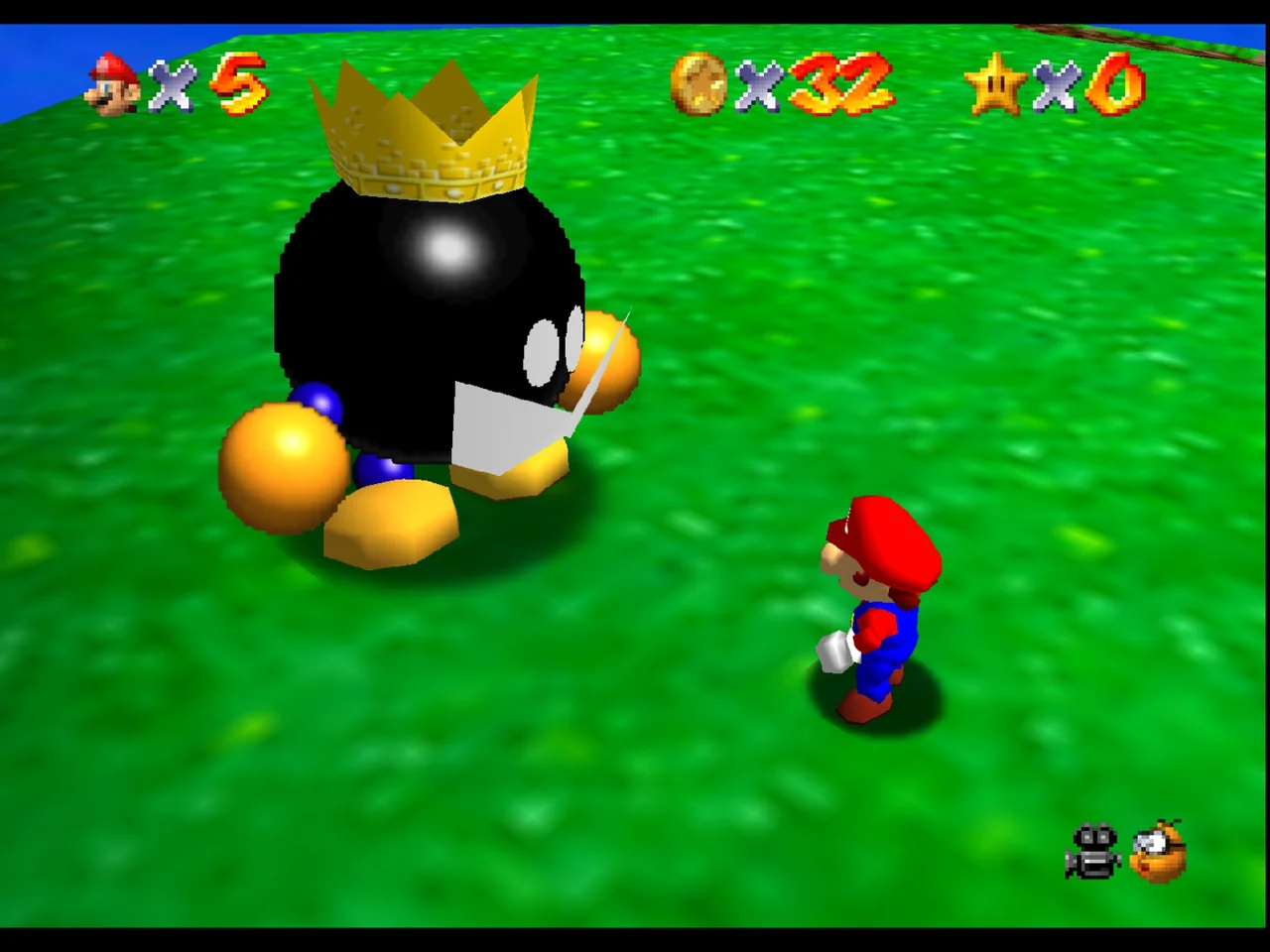
Super Mario 64 uses the Mushroom Castle as a hub leading to 15 main courses and several smaller areas. Power Stars open castle doors and expand access, while paintings generally serve as entrances to the main stages. Some courses are reached through less obvious castle entrances, so the hub is part of the discovery process rather than merely a menu between levels.
Inside a course, the selected Star changes the player’s purpose without necessarily changing the whole environment. A stage can become a racecourse during one visit and a vertical obstacle course during another. That gives the player room to make decisions: follow the obvious route, test a shortcut, use a cannon, or attempt a movement sequence that was not clearly required by the objective.
Mario’s movement set supports that freedom. Regular, side and triple jumps combine with wall kicks, long jumps, crouch slides, swimming, climbing and other actions. The challenge is frequently about momentum, spacing and recovery rather than choosing the correct item from an inventory. Even when a route is familiar, a different jump sequence can change the character of the attempt.
The original manual describes six Power Stars hidden in each main course, but that description should not be treated as a complete account of every Star-related opportunity in the finished game. The more useful comparison point is structural: Mario’s main reward is usually attached to a clearly framed objective, so replay often means returning to the same course with a different movement problem.
This also makes Mario unusually good for self-directed practice. A player can revisit a course to improve a jump, search for a faster route or simply experiment with how far Mario’s movement system can be pushed. The game does not need a separate challenge mode to support that behavior because its ordinary courses already function as movement laboratories.
- Use Mario when the pleasure of a jump matters as much as the reward at the end.
- Expect to revisit familiar courses because their objectives change how you read the same space.
- Treat the existing Super Mario 64 walkthrough as a reference for specific goals rather than as a replacement for discovering the movement system.
How Banjo-Kazooie makes exploration feel like a checklist
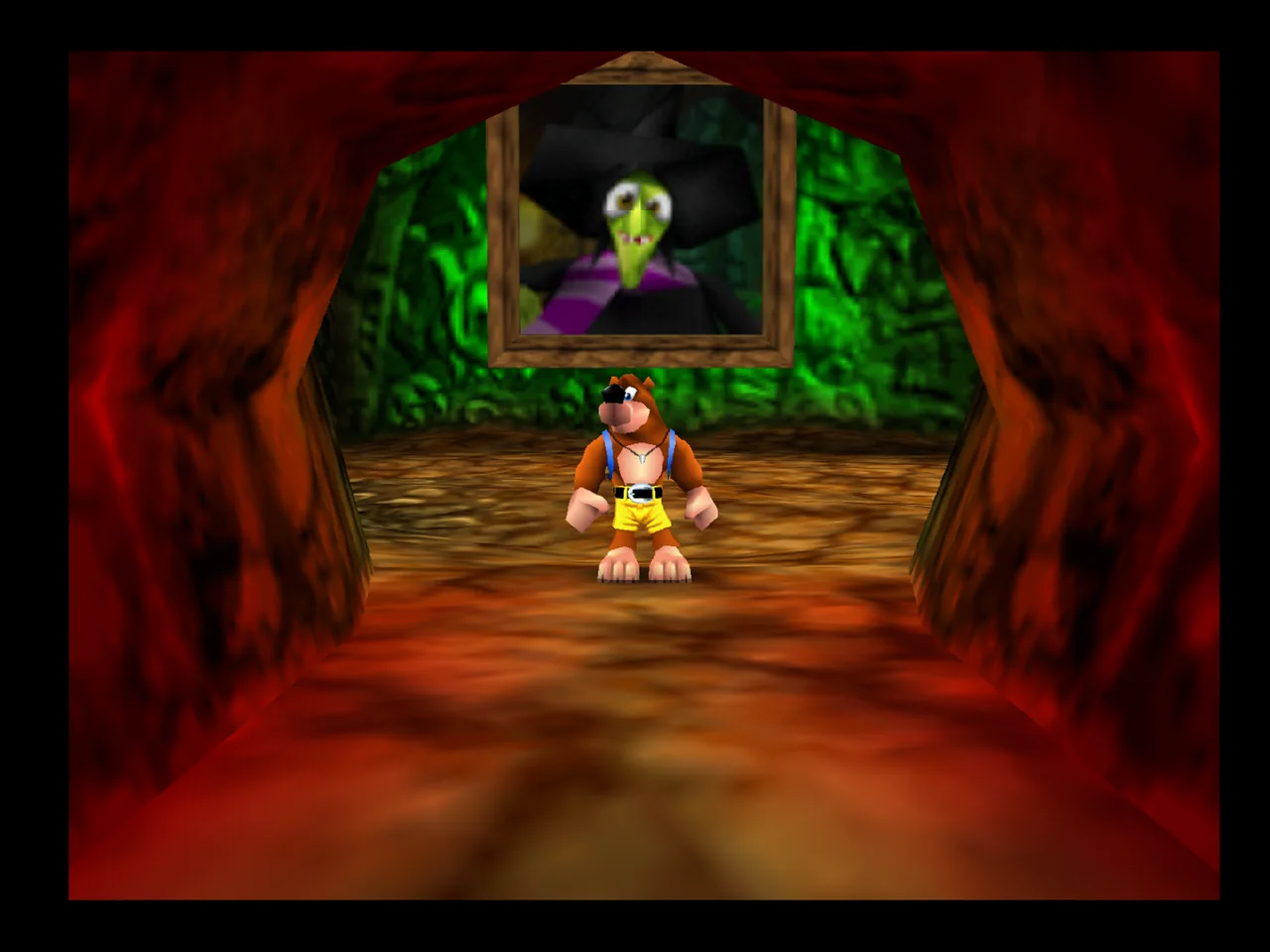
Banjo-Kazooie begins with Spiral Mountain, which acts as a training area where Bottles introduces the pair’s foundational techniques. From there, Banjo and Kazooie enter Gruntilda’s Lair and its connected worlds. Jigsaw Pieces are the major progression currency: inserting enough pieces into the lair’s jigsaws opens access to another world or area.
Each main world contains ten Jigsaw Pieces. They come from varied challenges, hidden locations and character-related tasks, so the player is encouraged to inspect the environment rather than follow one prescribed route. The five Jinjos in each world add another layer. Rescuing all five awards one of that world’s Jigsaw Pieces, making Jinjo searches a secondary route to major progress rather than a detached bonus.
Musical Notes create another reason to sweep through a stage. The original manual describes 100 Notes in each world, and collected totals are used to pass Note Doors in Gruntilda’s Lair. This gives Banjo-Kazooie a stronger checklist identity than Mario, especially for players who enjoy seeing several counters move toward completion.
The pause menu reinforces that structure through View Totals, which tracks Jigsaw Pieces, Musical Notes, special Honeycomb Pieces and elapsed game time. Other objects, including Eggs, Red Feathers, Golden Feathers and Mumbo Tokens, have practical uses even when they are not all presented as the same kind of completion counter.
The tradeoff is attention. A player who dislikes backtracking or keeping track of partially solved spaces may find Banjo-Kazooie busier than Mario. A player who enjoys noticing an unreachable opening, learning a move and returning later may find that same structure unusually satisfying. The game turns memory into part of the adventure.
- Choose Banjo-Kazooie if several collectible categories make exploration more rewarding.
- Expect progress to involve both individual world tasks and access through Gruntilda’s Lair.
- Use notes about unexplained obstacles if you want to reduce aimless backtracking without following a full completion route.
Movement: precise solo control versus a paired move vocabulary
Mario’s moves are direct and immediately legible. The character’s jump arc, momentum and recovery options define nearly every challenge. A player can spend time refining a long jump, wall kick or landing without needing to consider another character’s stance or an equipment state. That simplicity gives Super Mario 64 a clean movement identity even when its stages become demanding.
Banjo and Kazooie share basic movement but expand their options through paired techniques. The original manual lists moves such as the Feathery Flap, Flap Flip, Talon Trot, Beak Barge, Beak Buster and egg firing. Their move vocabulary covers attacks, climbing, swimming, traversal and puzzle interaction, producing a wider menu of techniques than Mario’s basic kit.
This does not mean Banjo-Kazooie is simply the more advanced movement game. Its moves are often introduced as answers to specific environmental problems. Mario’s moves more often feel like a general-purpose language that the player can apply creatively. Banjo-Kazooie’s language is broader, but remembering when and where each part applies can add friction.
Banjo-Kazooie also makes the partnership itself part of the control identity. Some actions emphasize Banjo, some emphasize Kazooie, and others depend on the pair working together. That produces more variety, but it can make the character feel less immediately transparent than Mario. The player is not only learning what a button does; they are learning which member of the team is responsible for the action.
For a player who wants to master one character’s physical control, Mario is the clearer choice. For a player who enjoys switching between techniques and recognizing the intended use of a new move, Banjo-Kazooie offers more variety.
- Favor Mario for jump timing, momentum and route experimentation.
- Favor Banjo-Kazooie for contextual techniques, attacks and traversal tools.
- Expect Mario’s movement to feel more universal and Banjo-Kazooie’s moves to feel more connected to specific spaces.
Mission structure: selected Stars versus world-wide challenges
Mario’s course entry and Star selection create a compact contract. You know which objective you chose, even if the route to it is open-ended. That makes failure easy to interpret: perhaps the jump was mistimed, the camera was poorly positioned or the chosen route was too risky. The player can then try again with a specific adjustment in mind.
The game also allows Mario to leave a course from the pause menu. That matters more than it may seem. A player can enter a course, attempt one objective and return to the castle without treating the entire stage as a single uninterrupted commitment. This supports short sessions and makes repeated practice feel natural.
Banjo-Kazooie’s objectives are less consistently separated into individual visits. A world can contain several tasks that become meaningful only after a move is learned, an item is found or a route is understood. You may enter for one Jigsaw Piece and leave having solved several smaller problems, or discover that an apparently complete area still contains an unexplained gap.
The difference matters when deciding how much information you want before playing. Mario generally gives you a focused target and lets execution fill in the rest. Banjo-Kazooie rewards observation and memory, but some players may prefer a written checklist once the number of collectible categories grows.
Neither structure eliminates repetition. Mario repeats courses because objectives invite another attempt. Banjo-Kazooie repeats worlds because new abilities expose old possibilities. The emotional texture is different: Mario asks whether you can perform the route, while Banjo-Kazooie asks whether you have understood the space.
- Choose Mario if clearly framed objectives reduce decision fatigue.
- Choose Banjo-Kazooie if an unfinished world makes you curious rather than tired.
- Expect Mario’s repetition to emphasize execution and Banjo-Kazooie’s repetition to emphasize discovery.
Ability progression: caps, training and contextual equipment
Super Mario 64 separates Mario’s ordinary movement from three castle-unlocked Cap Switch functions. The red, green and blue switches make Wing, Metal and Vanish Cap abilities available in relevant courses. These powers are temporary during individual stages, but activating the switches expands what Mario can do when a course provides the appropriate cap box or challenge.
That system is relatively clean. The player learns a global upgrade, then looks for places where it applies. The ability may create a route, protect Mario from a hazard or change the way a section is approached, but it does not replace the game’s central movement language. The player is still primarily navigating as Mario, not managing a changing loadout.
Banjo-Kazooie distributes progression more widely. Bottles teaches moves, while Shock Spring Pads, Flight Pads, Wading Boots and Running Shoes provide contextual ways to cross or interact with terrain. Eggs function as ammunition and puzzle tools. Red Feathers support flight, and Golden Feathers activate Wonderwing. Mumbo Tokens also contribute to access to transformation magic in the worlds where Mumbo appears.
These tools give Banjo-Kazooie a denser relationship between resource, move and environment. A player may learn a technique, notice a matching pad or item, and then reinterpret an earlier space. The progression is less centralized than Mario’s Cap Switch structure, which makes individual worlds feel more distinctive but also asks the player to remember more.
The tradeoff is clarity versus texture. Mario’s cap abilities are easier to categorize, while Banjo-Kazooie’s tools make individual locations feel more specialized. If you enjoy learning a move and searching for its uses, Banjo-Kazooie has the stronger progression loop. If you prefer movement to remain the main event, Mario’s smaller ability layer is less distracting.
- Mario’s progression is easier to read as a set of global switches and temporary powers.
- Banjo-Kazooie’s progression offers more contextual tools but asks you to remember more applications.
- Do not treat Banjo-Kazooie’s equipment pads as a direct equivalent to Mario’s Cap Switches; they serve different structural roles.
Collecting and revisit pressure
The games differ most sharply in how collecting affects the player’s attention. In Mario, Power Stars are usually the reason for a visit, and coins or other items often support that selected objective. You can focus on the task in front of you without treating every corner as part of a large inventory audit.
Banjo-Kazooie places more systems side by side. Jigsaw Pieces are major progress, Musical Notes support access through Note Doors, Jinjos lead to another Piece, and other items contribute to survival, abilities or completion. The pause menu’s View Totals presents several progress categories, including Pieces, Notes, special Honeycomb Pieces and elapsed time.
That richer accounting creates a satisfying rhythm for completion-minded players. It can also create uncertainty about when to stop. A player may leave a world after securing its main progress, or keep searching because one missing category suggests that an overlooked route remains.
Banjo-Kazooie’s collecting is therefore not just a larger version of Mario’s Star system. Stars usually frame the purpose of a particular course visit. Banjo-Kazooie’s objects overlap more heavily with world access, resources and future route planning. That makes collecting feel more like the game’s central activity rather than a reward attached to a movement challenge.
Be careful with original-edition assumptions about persistence. The N64 manual documents Save and Quit but does not fully explain the behavior of every collectible encountered inside a world. Do not automatically import later Xbox collection features or modern conveniences into an N64 comparison. Treat permanent progress and temporary stage progress as separate questions, and consult documentation for the original release when planning a completion run.
- Mario usually produces lower checklist pressure during ordinary play.
- Banjo-Kazooie rewards systematic searches, but its original N64 save expectations deserve extra care.
- Do not assume that a later version’s collectible-retention behavior applies to the original Nintendo 64 cartridge.
Camera limitations: two answers to the same N64 problem
Both games belong to a period when 3D camera control was still being established, so neither should be judged by modern free-camera expectations. Narrow passages, tall platforms and awkward corners can make the view part of the challenge. The useful comparison is how each game asks the player to manage that limitation.
In Super Mario 64, the Lakitu Bros. are presented as the camera operators. The manual gives the player control over viewpoint and camera distance through the C Buttons, including a close view, a wider view and rotation around Mario. The manual also explicitly presents camera handling as part of the game’s skill set.
Camera management is therefore closely tied to movement practice. Before a difficult jump, the player may need to stop, adjust the view and choose a better angle rather than rely on constant automatic correction. A failed jump may be a movement mistake, a camera mistake or a combination of both.
Banjo-Kazooie offers its own camera controls. The C Buttons change zoom or rotate the viewpoint, and the R Button centers the camera behind Banjo or holds it in that position. The manual also provides a first-person-style view through the C Up button. Those options are useful, but they do not remove the need to position the camera deliberately.
Banjo-Kazooie’s denser moves and more varied spaces can make visual alignment feel contextual. A pad, narrow ledge, flight route or character-specific action may require a particular view before the player can judge the approach. Mario’s camera friction is more visible because precise jumps are so central. Banjo-Kazooie’s camera friction is more likely to appear during exploration or when several environmental systems meet.
Neither has a universal advantage. Choose Mario if you are willing to treat camera positioning as part of movement practice. Choose Banjo-Kazooie if you prefer using camera tools to inspect spaces and prepare ability-based routes.
- Practice camera adjustment as part of movement in Mario.
- Use centering, zoom and deliberate positioning in Banjo-Kazooie before committing to ability-based routes.
- Do not expect either original N64 game to behave like a modern dual-stick platformer.
Saving and progress in the original N64 editions
Save expectations matter when comparing these games because later releases can change convenience, controls and collectible behavior. This article concerns the original Nintendo 64 editions, not a later collection or remaster. A modern version may feel more forgiving without representing what the cartridge asked of the player.
Super Mario 64 records progress when Power Stars or Keys are collected. Its manual also explains that collecting an already-earned Star can provide another opportunity to finish the course and save. The manual separately describes saving after activating a Cap Switch. This design supports repeat visits: you can return to a familiar objective, earn a durable milestone and continue without treating every session as one uninterrupted run.
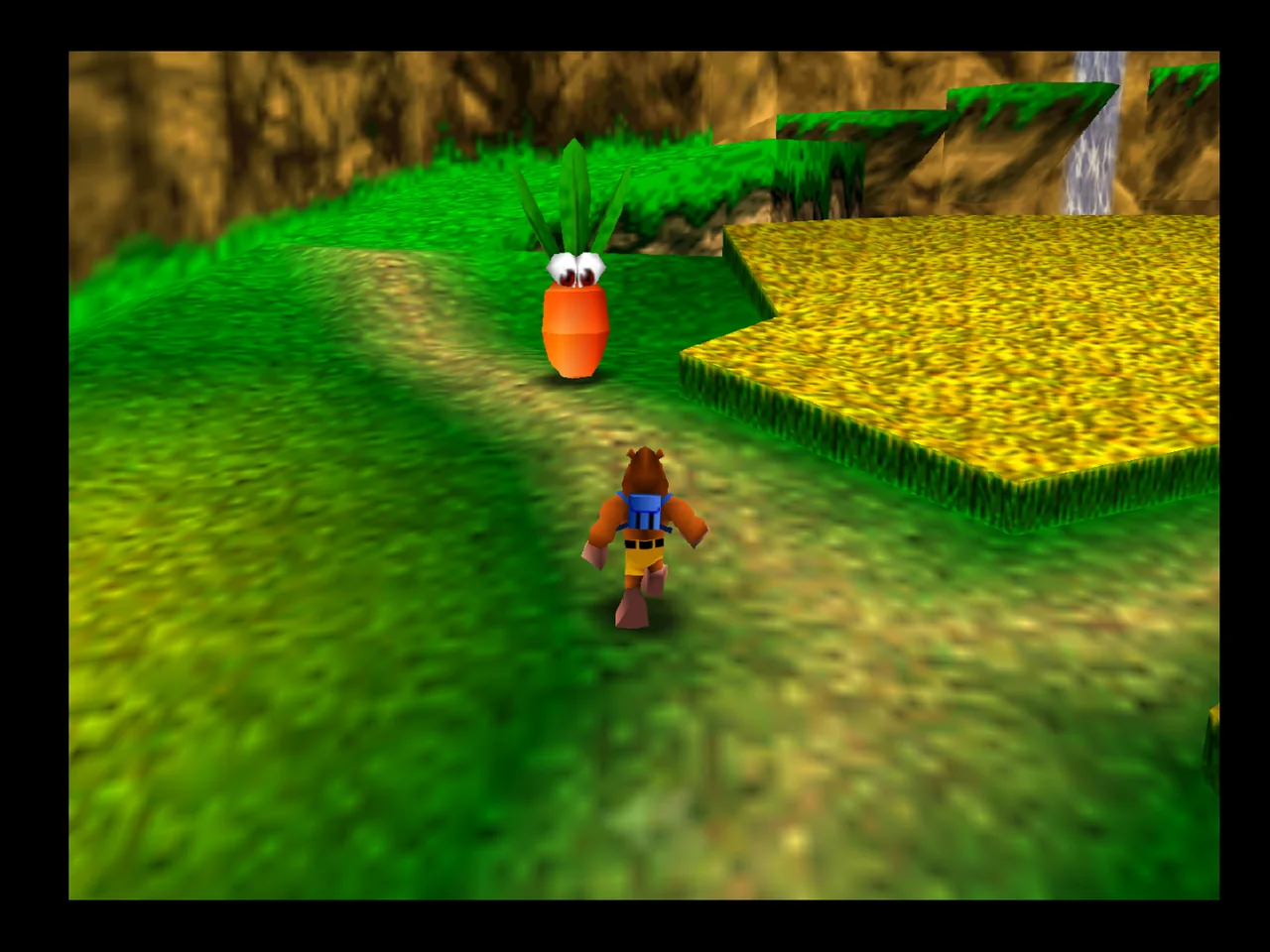
Banjo-Kazooie includes Save and Quit in its original manual, but the documentation does not fully establish the persistence rule for every collectible encountered inside a world. That is why it is risky to promise that every Note, Jinjo or other item remains collected in every situation, or to claim that all temporary progress resets in a particular way without edition-specific evidence.
The safest practical advice is to distinguish saved progress from the state of an unfinished visit. Jigsaw Pieces and other major progression should be treated as durable game progress when the game records them, while the manual’s general Save and Quit description is not enough to make a universal claim about every in-level collectible. Players pursuing completion should confirm behavior against the exact release they are using rather than rely on memories of later versions.
For emulator users, keep in-game saves distinct from save states. A save state can be convenient for a difficult jump, but it is not a replacement for understanding the game’s own save system. The separate Joking Joystick guide on save states and in-game saves provides useful background when moving between original hardware and emulation.
- Verify which release you are playing before applying advice about saves or collectible retention.
- Use each game’s own save function for durable progress.
- Treat save states as a separate convenience rather than proof of how the original cartridge stores progress.
Replay habits: practice, completion or alternating both
Super Mario 64 is especially good for players who replay a small section with a specific purpose. You may practice a jump, attempt a race, revisit a course for a different Star or test whether a route can be shortened. The game’s open movement and focused objectives make it easy to create your own challenge without needing to reset a large checklist.
Mario also supports replay without requiring a strict order. Since a course can host several different kinds of objectives, the same location can feel like a race track, an obstacle course or a search area depending on the current goal. That flexibility is one reason the game remains useful for players who enjoy practicing control more than completing a checklist.
Banjo-Kazooie is better suited to a slower completion rhythm. A first visit may establish landmarks and reveal blocked paths. Later visits become more productive after Bottles teaches a move or a new piece of equipment becomes available. The reward is less about shaving seconds from one jump and more about recognizing how the world connects.
This also changes how guides should be used. Mario benefits from a route reference when you want to locate a particular Star, but a full sequence is not necessary to understand its design. Banjo-Kazooie benefits from notes about unresolved obstacles and collectible categories, especially if you want to avoid wandering through a large world without a plan. In either case, a guide can support memory without replacing discovery.
If you want to compare both, playing Mario first makes the contrast especially clear. Its movement teaches the vocabulary of early N64 3D platforming. Banjo-Kazooie then shows how that vocabulary can support a more layered, collection-led adventure. Playing them in the opposite order is also valid, especially if exploration and character abilities are your primary interests.
- Replay Mario to improve execution or invent movement challenges.
- Replay Banjo-Kazooie to finish categories, revisit ability-gated spaces and understand world structure.
- Use a guide to solve a specific memory problem rather than remove every opportunity for discovery.
Which game fits your mood?
Choose Super Mario 64 if you want immediate control, distinct course objectives and a platformer that lets you experiment with movement. It is the better match for short sessions, jump practice and players who would rather solve a route than maintain a large inventory of unfinished tasks. Its camera can become part of the challenge, but the game’s central idea remains easy to identify: move through space creatively and earn the Star attached to that movement problem.
Choose Banjo-Kazooie if you want a more populated adventure with a paired move set, ability-gated routes and several collectible categories working together. It is the better match for players who enjoy searching every corner, returning after learning a technique and watching hub access expand through Jigsaw Pieces and Notes. The cost is greater checklist pressure and more need to remember what an unexplained obstacle might require.
Choose Mario when you want execution to be the main source of satisfaction. Choose Banjo-Kazooie when understanding a world and completing its systems sounds more appealing than repeating a single movement challenge. If you are unsure, Mario is the more immediately focused starting point, while Banjo-Kazooie is the better follow-up for a longer exploration-heavy session.
The strongest answer for many N64 players is not to treat the games as substitutes. Mario is the cleaner movement playground; Banjo-Kazooie is the more layered collecting adventure. Pick the one that matches your available attention, then use the other when you want the opposite kind of platforming problem.
- Movement playground: Super Mario 64.
- Collecting adventure: Banjo-Kazooie.
- Best double feature: Mario for movement practice, then Banjo-Kazooie for exploration and completion.
Super Mario 64 and Banjo-Kazooie share a control-era foundation, but their priorities diverge. Mario turns each course into a space for movement decisions and repeatable objectives. Banjo-Kazooie turns each world into a web of abilities, collectibles and revisits.
Choose based on the friction you find motivating. If retrying a jump sounds better than tracking several counters, start with Mario. If finding one more route, Jinjo or Jigsaw Piece sounds better than repeating a course objective, start with Banjo-Kazooie.
Both games are best understood through their original Nintendo 64 structures. Later releases may change saving convenience, presentation or collectible behavior, so avoid using a modern version to make assumptions about the cartridge editions. The comparison is clearest when Mario is treated as a movement playground and Banjo-Kazooie as a collecting adventure, rather than forcing one game to win at the other’s specialty.