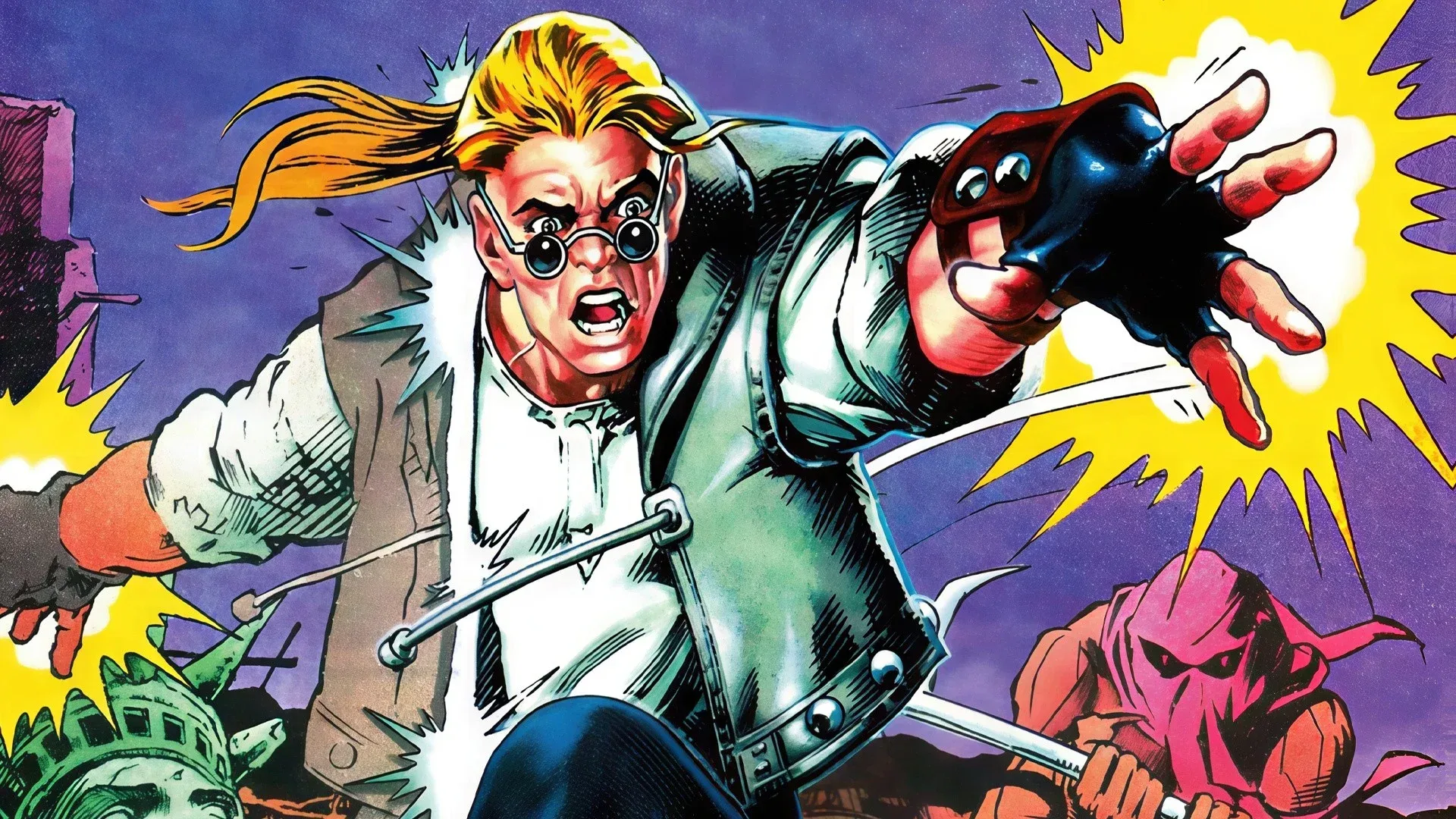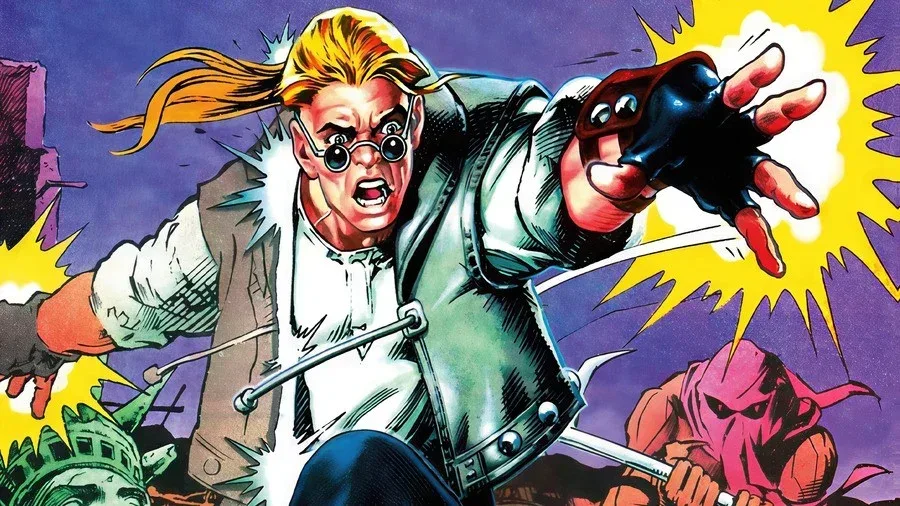
The console war has finally produced the crossover it always seemed least likely to allow: Comix Zone on Nintendo 64. Homebrew developer Frogbull has revealed Comix Zone 64, a playable reinterpretation of Sega’s 1995 Mega Drive/Genesis side-scrolling beat ’em up for Nintendo’s 64-bit machine.
It is deliberately presented as a relic from a universe that never existed. In the project’s invented backstory, Sega’s bizarre arcade misfortunes leave the company unable to pursue its own hardware ambitions, so its games turn up on rival systems instead. That puts the comic-book brawler on the Nintendo 64, rather than on the Sega Neptune or any of the platforms Sega actually supported during that era.
The joke lands because the real-world timing makes the premise so wonderfully impossible. Comix Zone arrived for the Mega Drive/Genesis in 1995, when Sega and Nintendo were still defined as fierce hardware competitors. Nintendo 64 would follow later, and Sega’s next major console direction would be the Saturn, then the Dreamcast—not a cartridge bearing a Nintendo logo and Sega’s ink-and-panel aesthetic.
A Sega game in the wrong cartridge slot
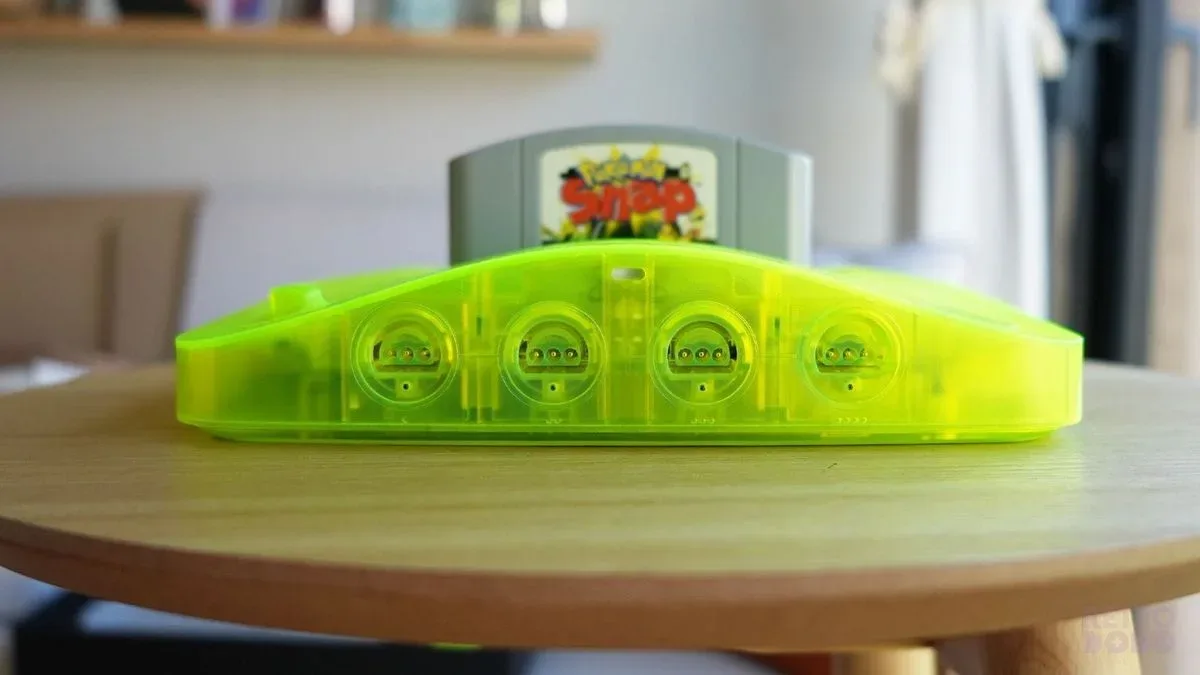
Frogbull’s project is more than a mock box-art premise or a rendered what-if. The developer has released a playable version that runs on real Nintendo 64 hardware. That detail gives the experiment its proper retro-homebrew appeal: it is not merely imagining how the game might have looked on the system, but making a version built to operate on the hardware itself.
The Nintendo 64 is an especially amusing destination for Comix Zone. Sega’s original game is a 2D beat ’em up with an unusually direct comic-book framing device. Its hero, Sketch Turner, is an artist pulled into the pages of his own creation, battling through illustrated stages where panels, enemies and page-themed obstacles define the action. Its identity is closely tied to the Mega Drive/Genesis era: striking artwork, a side-on perspective, and a presentation designed around the character of Sega’s 16-bit platform.
Moving that idea to Nintendo 64 turns the port into a tiny piece of fictional game history. It asks players to picture an industry where platform allegiance became negotiable much earlier—and where a Sega-developed game could have joined the N64 library rather than being remembered as one of the more distinctive late Mega Drive/Genesis releases.
That hypothetical history is the point, but the project also highlights the enduring fascination of homebrew work. A commercially impossible release can still become technically possible decades later, once a developer has the knowledge, tools and determination to create it. Retro hardware is no longer only a sealed chapter of history; it remains a place where hobbyists can pursue strange alternate paths.
Why Comix Zone remains such a fitting choice
Developed by Sega Technical Institute, Comix Zone has long had a reputation as a game with a concept strong enough to outlive its original platform. Its comic-book world was not simply a decorative wrapper around punching through waves of enemies. The panels, drawings and artist-versus-creation setup supplied the game’s central personality, making each screen feel as though the player was moving through a hostile illustrated page.
It has also remained accessible beyond its first Mega Drive/Genesis release through several later console compilations. That reissue history matters: the game has not been locked permanently to one original cartridge. Even so, Nintendo 64 was never among its actual destinations. A genuine 1990s N64 edition would have required a degree of Sega-and-Nintendo cooperation that the marketplace simply did not offer at the time.
Comix Zone 64 therefore has a clear appeal whether someone knows the original intimately or only recognizes the name from compilation menus. For veterans, it is the novelty of seeing a familiar Sega property cross an old platform divide. For retro-curious players, it is a compact demonstration of how a homebrew project can use an established game identity to make an alternative-hardware exercise immediately legible.
It is also refreshingly specific. Rather than treating “a Sega game on N64” as a broad novelty, Frogbull has selected a title whose presentation invites the alternate-reality framing. The original already plays with boundaries between real life, art and fictional spaces. A version that supposedly escaped into a rival console’s library feels like another panel torn from that same comic.
Part of a growing catalogue of impossible ports
Frogbull has become associated with precisely this sort of hardware mischief. Previous work has included playable Sega Saturn versions of PlayStation-era games such as Metal Gear Solid, Final Fantasy VII and Crash Bandicoot, as well as a Nintendo 64 edition of Spyro the Dragon. Each project gets its attention from the same tantalizing question: what would it mean if a game strongly associated with one machine had appeared on another?
That is not the same thing as claiming these are lost official ports. They are homebrew creations and experiments, and their appeal rests in the developer making the impossible feel briefly tangible. The fun is in recognizing the boundaries that once separated platforms, then watching those boundaries bend under modern enthusiast development.
The developer has also been sharing progress on reverse engineering the original Panzer Dragoon. A possible Dreamcast port of Sega’s Saturn classic has been teased as part of that work. Taken together with Comix Zone 64, the projects show an interest in revisiting the technical and cultural dividing lines of the 1990s—not to rewrite actual history, but to build playful versions of the history that might have been.
There is a useful distinction there. Reverse engineering an older game and creating a homebrew port are substantial undertakings, but the available information does not establish every technical choice, feature set or development milestone behind Comix Zone 64. What is clear is the headline fact: a playable version exists, it is intended for genuine N64 hardware, and it uses that accomplishment to stage a very Sega-versus-Nintendo joke.
The appeal of an alternate console timeline
Retro gaming is full of cancelled systems, planned peripherals, prototype software and mergers that might have changed entire libraries. The Sega Neptune reference in the project’s fictional setup taps directly into that fascination. Hardware history is crowded with branches that never fully grew, which makes fans unusually receptive to playful counterfactuals.
In this case, the imaginary timeline is knowingly absurd. The scenario includes an exaggerated arcade disaster involving Daytona USA R360 Turbo Edition, followed by Sega’s retreat from console hardware and an unlikely migration of its games to competitors. It is not meant as a serious reconstruction of the fifth generation. It is a frame for the far more important trick: getting a piece of Sega’s 16-bit legacy running from an N64 cartridge environment.
That oddness is part of why it works. An unofficial Nintendo 64 conversion of a Sega game would already be niche news. Calling it Comix Zone 64 and furnishing it with a ridiculous parallel-universe origin gives it the texture of a playground rumor from a timeline where magazine ads were stranger and corporate rivalries had taken a left turn.
It also serves as a reminder that retro hardware communities are not driven only by preservation in the strict archival sense. Preservation matters, but there is room for creative technical play as well: new games, demakes, ports, conversions and experiments that keep aging machines active. For anyone putting together an older setup to explore projects like this, it is worth remembering that the physical signal chain can matter just as much as the cartridge or console; our guide to planning a retro console HDMI adapter connection covers the checks to make before buying an adapter.
Where Comix Zone 64 stands now
Frogbull has made the project available through Patreon. Interested players should consult the developer’s Patreon directly for the current access details and any instructions accompanying the release. The project’s stated real-hardware compatibility is central to its premise, but prospective users should follow the developer’s own guidance for the version and equipment they plan to use.
For now, Comix Zone 64 is a wonderfully pointed piece of retro-homebrew theatre: a Sega Technical Institute game from 1995 crossing onto Nintendo hardware it never could have reached in its original commercial life. It does not need to pretend that history happened. The entire charm comes from making the impossible scenario playable anyway.