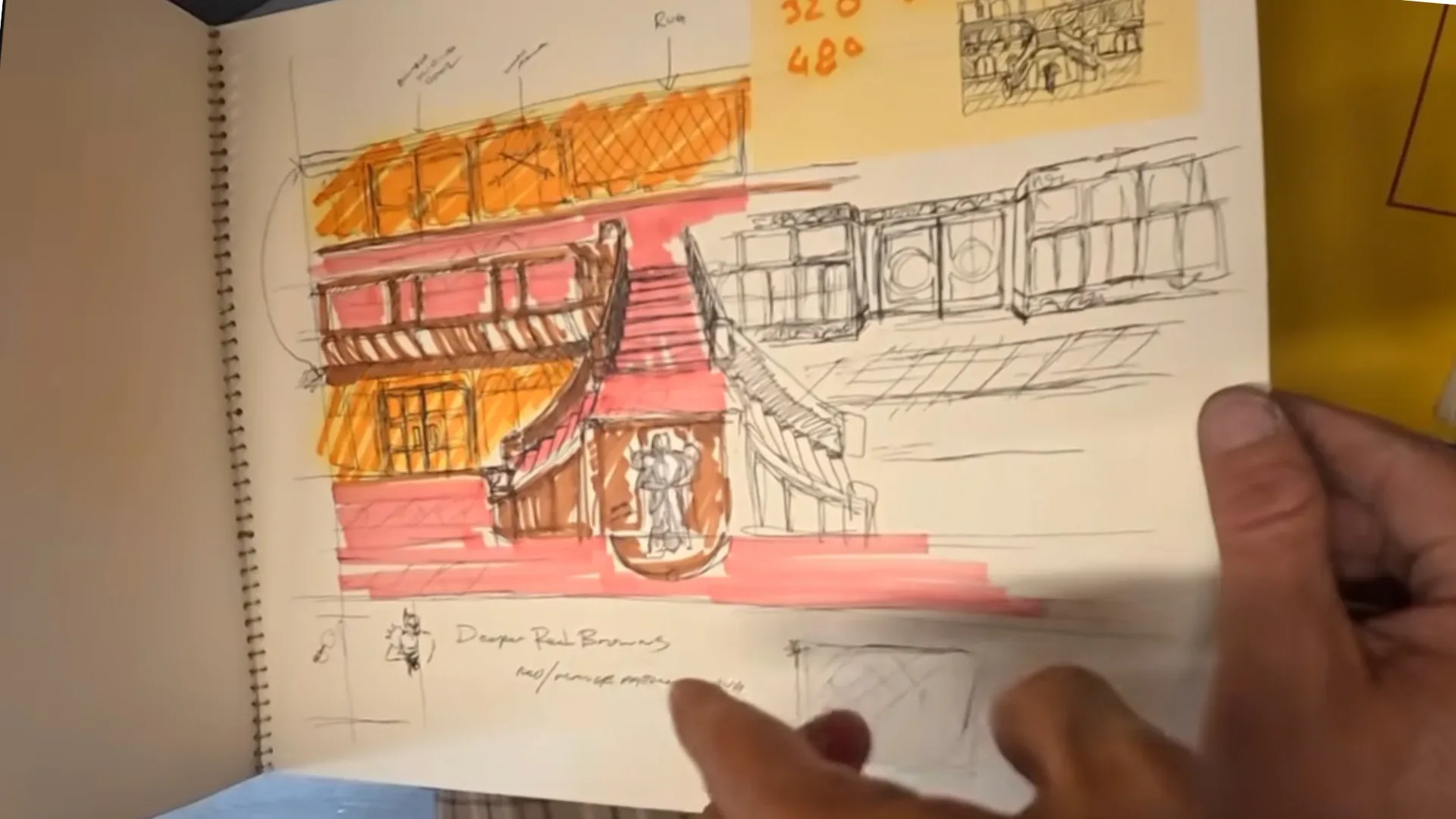
A storage-unit auction has turned into a difficult conversation about what happens when video-game history is discovered as property rather than deliberately donated as an archive. The contents shown from the unit included vintage games and hardware, but also materials that appear far more consequential: design paperwork, concept art, production layouts, and computer chips believed to hold game prototypes.
Some of those materials have reportedly already gone to multiple private collectors. That outcome has prompted concern not simply because the items may be rare, but because their research value could be much greater than their display value. A prototype chip can preserve an unfinished build. A marked-up level layout can show how a team planned, revised, or cut a portion of a game. A document folder can connect that work to a studio, a project, and the people who made it.
There is a further, sobering complication. Materials in the unit carry the name Tom Tanaka, leading to an unconfirmed belief that the unit may have belonged to the developer. Tanaka is credited as a level designer on The Terminator for Sega CD and as an animator on Double Dragon for Sega Game Gear. A person claiming to have been a former colleague said they had lost touch with Tanaka around 2020 and were trying to learn what happened to him. That identity has not been confirmed, and neither has the condition or circumstances of the person who owned the unit.
The episode therefore sits at an uncomfortable intersection: the items may now legally be in new hands, while their potential historical importance and deeply personal origins remain impossible to ignore.
What reportedly emerged from the unit
The storage space contained the sort of broad mixed collection often associated with a life spent around games: old software and hardware, artwork, anime box sets, strategy guides, films, and toys. Among that general assortment were materials linked to game development.
The reported finds include computer chips thought to contain several game prototypes, including one for Contra III: The Alien Wars. Other visible material included artbooks with Double Dragon level designs, a Virgin Interactive folio containing documents related to a Terminator game, and level-design layouts for the Super Nintendo title B.O.B.
That wording matters. The chips are believed to contain prototypes; the available information does not establish their contents, whether they still function, how complete any build might be, or whether the contents match labels or assumptions made from the video. Likewise, papers associated with a project can be invaluable context without necessarily representing a final game plan or a complete record of development.
Still, even partial and uncertain material can be significant. Game production routinely generates documents that were useful only for the immediate task: a layout made to guide an artist, notes used in a meeting, a revision circulated between disciplines, or an internal pitch. Once a project ships, those working materials may be discarded, misplaced, or retained privately by staff. Their survival decades later is not guaranteed.
Why a prototype is more than an expensive cartridge
In this context, a prototype means a pre-release version of a game or a piece of development software. It may be earlier than a retail build, different from the shipped version, incomplete, unstable, or limited to a particular level or technical feature. It is not automatically a lost finished game, and it is not automatically ready to run on modern equipment.
The chip itself may be only one part of the historical object. Preservation can require identifying its hardware format, carefully reading its data, creating secure copies, documenting labels and physical condition, and recording what is known—and not known—about its origin. If it can be run, footage and technical notes can help researchers distinguish between a meaningful version of a game and an unverified assumption based on a handwritten label.
Provenance is the term for that ownership and origin trail. It is especially useful here because it helps future researchers answer basic questions: Who likely created or possessed the item? Which studio or game does it connect to? Did it come directly from a developer’s materials, or is the association more speculative? The possibility that this archive was Tanaka’s makes provenance potentially rich, but the uncertainty makes careful documentation even more important.
Design documents bring a different kind of value. They may show alternatives that never made it into a shipped game, the vocabulary a team used for its work, and the iterative process behind familiar screens. They can also correct simplistic stories about authorship. A released game is often treated as a finished object with a clean list of credits; production artifacts can reveal the collaborative, messy, and constantly revised work underneath.
Collecting and preservation are not identical jobs
Private collectors are not inherently opposed to preservation. A collector may take excellent care of an item, discover it when no institution knew it existed, or choose to share scans, photographs, data dumps, and documentation with a wider community. In many cases, private ownership is the reason fragile material survives at all.
But ownership alone does not ensure access. In an archival sense, access means that researchers, historians, and sometimes the public have a way to examine or learn from material. That can range from an institution holding the original, to publicly available scans, to preserved digital copies accompanied by useful descriptions. A one-of-one item kept privately can be physically safe while remaining effectively unavailable to everyone else.
That is the heart of the criticism surrounding the dispersed contents. If the documents and chips are divided among collectors, no single party may have the full context of the archive. A level layout separated from its supporting notes, or a prototype separated from the paperwork that helps identify it, becomes harder to interpret. Dispersal can turn a connected working record into isolated curiosities.
There is also a practical distinction between protecting an original and making it usable for scholarship. Paper can be scanned; a prototype’s data can potentially be copied; metadata can describe the object without disclosing every private detail. None of those steps erases the need to treat the original carefully, and none automatically resolves ownership concerns. But they demonstrate why preservation is not simply another word for collecting.
The privacy question cannot be separated from the artifact question
Public fascination with recovered game history can make a storage locker look like a treasure chest. Yet if this was a former developer’s personal archive, it was also a collection of personal belongings. The uncertainty around Tanaka’s circumstances heightens the discomfort. A sale can transfer an item; it cannot answer whether its prior owner wanted career papers, artwork, and other possessions displayed publicly or broken apart for resale.
The debate has included calls for a museum or preservation organization to become involved, with the Video Game History Foundation specifically mentioned by commenters. Its director, Frank Cifaldi, expressed sadness about the prospect of someone missing a storage payment and having a career’s materials exposed and divided up. The point is not a proven accusation of wrongdoing against the auction buyer. It is that a lawful process can still produce a result that feels invasive, especially when a person’s fate and wishes are unknown.
That distinction is worth maintaining. It is possible to recognize the historical importance of the objects, appreciate the excitement of identifying them, and still object to treating a potentially private archive as content or inventory first. The ethical question is larger than who gets to keep a cartridge or sell a folder. It is whether the people connected to development history are being remembered as workers and individuals, rather than merely as a route to rare merchandise.
What responsible next steps could look like
The materials have reportedly reached many collectors, so a single clean solution may no longer be possible. Even so, the public interest created by the discovery points to constructive options.
- Document before separating further. Photographs of folders, labels, chips, and visible relationships between materials can preserve crucial context, even when originals remain in private hands.
- Describe uncertainty clearly. A chip believed to hold a prototype should remain described as believed to hold one until its contents and format are responsibly verified.
- Seek archival expertise. Institutions and specialists can advise on handling fragile documents and aging electronic media, as well as cataloguing what has been found.
- Preserve information as well as objects. Scans, data copies, descriptions, and provenance notes can serve researchers without requiring every original item to be publicly displayed.
- Respect personal boundaries. Production records may contain names, contact details, private correspondence, or material unrelated to a game’s public history. Historical interest does not automatically justify publishing everything.
Those steps would not settle every question about ownership, copyright, or access. They would, however, make it less likely that the historical record disappears into a set of disconnected shelves. They would also recognize that preservation involves care for context and people, not only the recovery of rare objects.
A reminder that game history is labor history
When old games are discussed, attention often gravitates toward platforms, publishers, famous characters, and prices. This discovery shifts focus toward the people who drew, animated, mapped, tested, and revised the work. Materials from development can be one of the few surviving traces of that everyday labor.
That human dimension remains relevant in current industry conversations, including efforts by game workers to organize and protect their collective interests, such as the push to expand the United Wizards of the Coast Union. The circumstances differ, but both subjects challenge the habit of treating games as products detached from the people who make them.
The storage-unit finds may yet provide useful historical evidence, if their new holders document and share what can responsibly be shared. For now, the strongest lesson is less glamorous than a rare-prototype headline: video-game preservation depends on more than locating artifacts. It depends on keeping their context intact, acknowledging uncertainty, and treating the human lives around them with the same care as the objects themselves.