Control Resonant appears to understand something many action games still resist: failing a fight does not always mean a player needs to be sent back to a menu labeled “Easy.” Sometimes the issue is one narrow pressure point—a hostile mob that attacks too quickly, projectiles that are hard to read, a recovery loop that leaves no breathing room, or an enemy health bar that outlasts the fun.
Its Assist Mode is built around that distinction. Rather than offering only a traditional ladder of fixed difficulty selections, the game provides presets and individual sliders that affect the relationship between Dylan, his powers and the opposition. That is an important design choice, particularly for a game that reportedly has slow early chapters, lengthy side activities and action-RPG encounters capable of becoming extended wars of attrition.
The result is not necessarily a system that preserves every intended ounce of challenge. It plainly can make Dylan exceptionally powerful. But it gives players a way to decide which part of the challenge they want to retain. That is a much more useful question than whether someone is entitled to see a game’s later content.
A preset is a starting point, not a verdict
Resonant’s Assist Mode includes three presets: one broadly comparable to an easier setup, one described as high-risk, and one as low-risk. The high-risk option raises damage for both Dylan and enemies, while low-risk reduces damage on both sides. Even at this level, the approach is more nuanced than the usual assumption that accessibility must mean the player simply deals more damage and takes less.
High-risk settings can shorten encounters, but they also make mistakes costly. Low-risk settings can create more room to react, though reducing damage across the board may mean battles still take time. Those are distinct moods. One makes combat volatile; the other makes it more forgiving. Neither is automatically the “correct” way to play.
More significantly, players can go beyond presets. The game allows adjustments to Dylan’s outgoing damage, incoming damage and falter damage, alongside projectile speed and enemy aggression. Falter damage, in this context, is the damage contribution that helps put enemies into a vulnerable state for Dylan’s execution-style attacks. Power recovery refers to how quickly abilities become ready to use again. These are practical levers because they target specific sources of friction rather than changing every system in the same direction.
A player who enjoys the danger of being hit but thinks basic enemies take too long to defeat can increase outgoing damage without reducing incoming damage. Someone comfortable with enemy durability but overwhelmed when many foes pile in can lower aggression instead. A person who likes the game’s action but finds fast shots difficult to track can reduce projectile speed. Each choice changes the experience, certainly, but it does so openly and in a way that is intelligible.
Why this matters in an action RPG
Action RPGs often tie challenge to several systems at once: character build, enemy numbers, attack patterns, environmental hazards, cooldowns, equipment or ability availability, and level expectations. When a game offers only a single global difficulty option, it assumes all of those systems are creating the wrong experience in equal measure. That is rarely true.
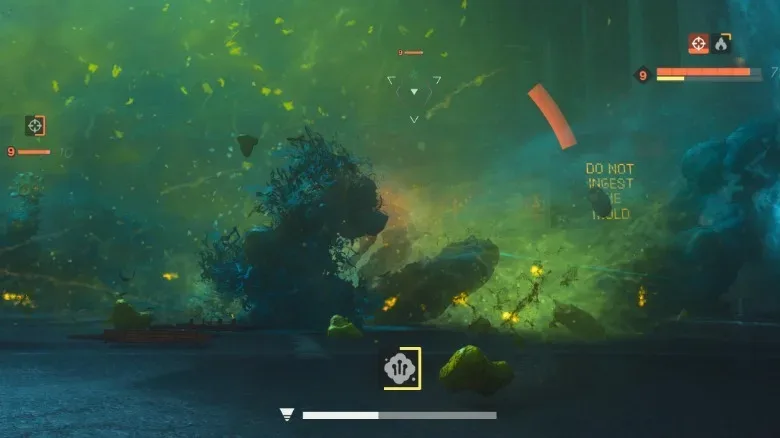
Resonant’s reported trouble spots make the case. One Manhattan area is overrun with moss, mold and creatures that spread it. Poisonous terrain and attacks continually wear away health, while larger targets can initially seem resistant to blunt attacks. The eventual answer is elemental: fire-based paranatural powers are particularly effective against mold foes, but they are gated behind the defeat of a resonant boss.
That is the kind of progression puzzle that can be satisfying in retrospect and aggravating in the moment. The player may be at the supposed appropriate level and still lack the particular tool that makes the encounter click. They may understand the basic combat loop yet face persistent damage from the environment. Or they may be unable to overcome a crowd long enough to learn what is actually needed.
For players working through that stretch, Assist Mode can relieve one layer of pressure without deleting the rest of the game. Less enemy aggression could make room to assess the terrain. Improved falter damage could help create needed openings. Reduced incoming damage could soften repeated poison chip damage while leaving enemy behavior and health intact. None of those changes replaces the eventual value of acquiring fire powers; they simply make the road to that answer less punishing.
Players looking specifically for the New Growth route, its Doctor Underhill decision and rewards can use this Control Resonant New Growth walkthrough. The broader point is that knowing a solution exists and having a reasonable opportunity to reach it are different things.
Difficulty curves should not confuse endurance with mastery
The game reportedly received a Day 1 patch that flattened its difficulty curve, with the early game singled out as a place where players may now have fewer problems. That adjustment matters because an uneven opening can determine whether players stay long enough to encounter a game’s better ideas.
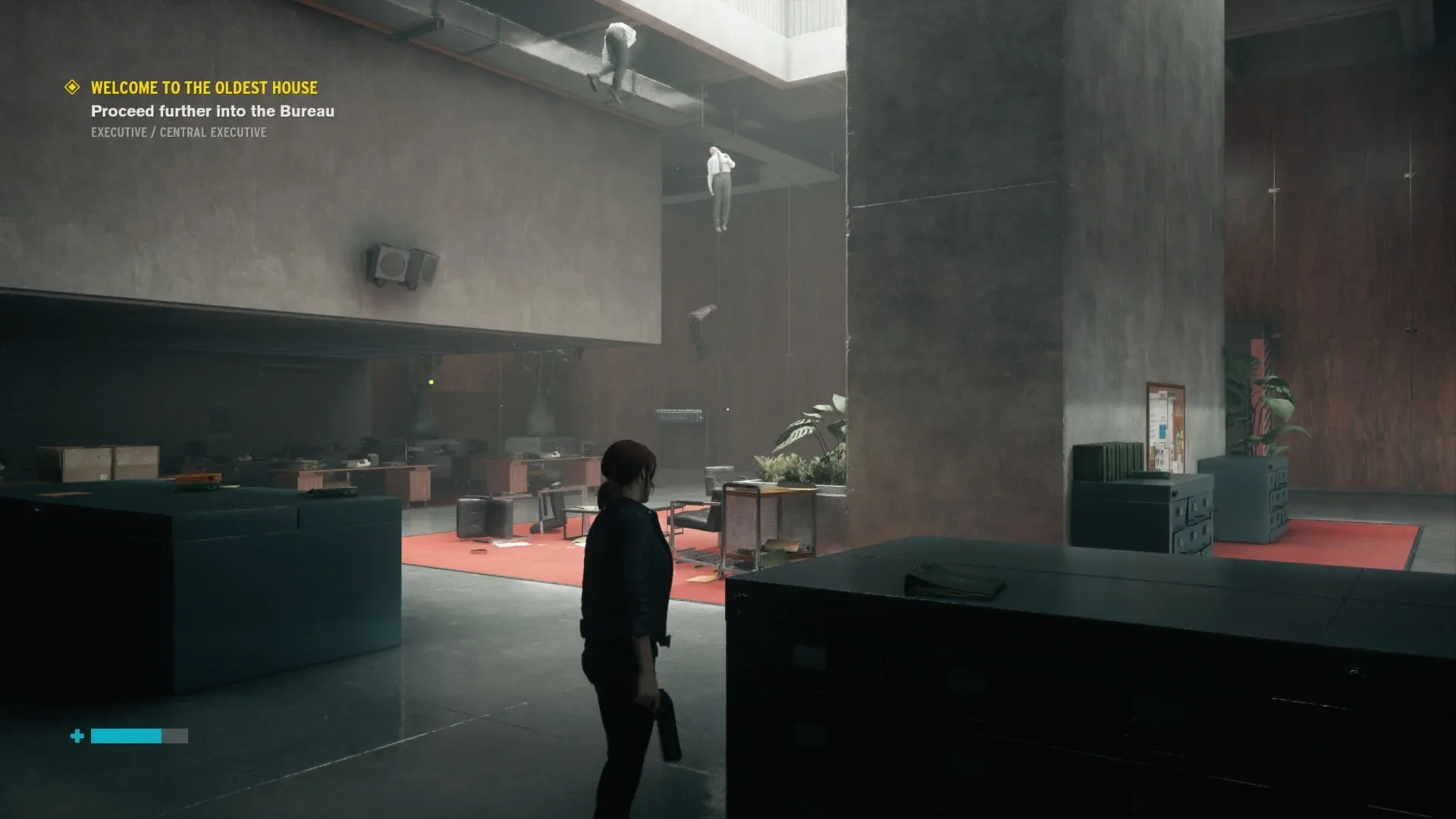
Resonant has more to offer than combat escalation. Its world includes the lore surrounding Dylan, Jesse and the FBC, as well as spot-the-difference taxi puzzles, logic puzzles in laundromats and diners, and other science-fiction detours. Those activities are part of what an Assist Mode protects. If a player’s enthusiasm is repeatedly drained by an early combat bottleneck, they may never get to the stranger, more bespoke material that distinguishes the game from a straightforward sequence of arenas.
That does not mean difficulty has no artistic value. The game itself warns players to begin with its default settings, and that recommendation makes sense. Default balance is the closest expression of how its designers initially want pacing, danger and power progression to feel. A boss finally falling after the player understands its patterns can be a genuine payoff.
But a default should be an invitation, not a gatekeeper. A well-designed assistant menu acknowledges that balance is a broad estimate applied to people with different reactions, schedules, abilities and tolerance for repetition. An encounter can be tuned for a theoretical player who enjoys learning the same sequence over many attempts. Another player can understand that sequence and still decide they would rather spend less time executing it.
The damage-sponge problem remains a design question
Assist tools do not absolve an action game of the responsibility to make its normal combat satisfying. The later portions of Resonant reportedly feature some bosses with familiar damage-sponge tendencies: once the player has recognized the attack pattern and environmental elements, the remaining task can become repeating favored combinations until an enormous health pool is depleted.
A damage sponge is an enemy whose resilience feels excessive relative to the decisions required to defeat it. High health alone is not the problem. A long fight can work when it continually changes the player’s priorities, asks for new positioning, adds meaningful phases or demands thoughtful resource use. It becomes a sponge when the central tactical question has already been answered and the battle continues mainly because the target has more health to drain.
Assist Mode offers a player-side escape hatch: increase damage, strengthen falter potential or accelerate power recovery. Those changes can improve pacing for someone who has learned what the encounter is teaching. Yet they also reveal where a fixed default system is limited. If many players only enjoy a boss once its duration is shortened, that may be feedback about encounter construction as much as it is a preference for lower difficulty.
The answer is not that every boss should collapse quickly. Resonant’s major enemy designs, including a puppet-dancer amalgam encountered partway through the game, sound like they are meant to be memorable spectacles. But spectacle and stamina should not be confused. An enemy can look horrific, behave unpredictably and demand focus without requiring a player to perform the same successful routine for longer than its ideas can support.
Power can be part of the fantasy too
There is an understandable concern that granular settings make accomplishments harder to compare. If one player reduced aggression, another raised outgoing damage and a third used the default setup, a bare completion claim says little about what each person experienced. This is especially relevant for streams, challenge runs and communities that enjoy demonstrating precision under shared constraints.
But those communities do not disappear because options exist. They can define their rules: default settings, particular presets, no-assist runs, speed-oriented setups, or other clearly stated conditions. The meaningful standard becomes transparency, not the assumption that every person must use the same configuration.
For everyone else, powerful settings have a legitimate place in a game about paranatural abilities. During post-game play, even modest tweaks to falter damage and power recovery can reportedly make Dylan feel formidable against rare Apex monsters, which offer build materials and in-game currency. That is not merely “skipping” a game. It can be a different, deliberately chosen power fantasy: the player has already faced the threats and now wants their growing command of the toolkit to be felt.
There is also a useful philosophical difference between making a game easier and making it more accessible to a particular player. They may overlap, but they are not identical. Reducing projectile speed, for example, alters timing and readability. Lowering enemy aggression changes crowd pressure. Those options do not prescribe why someone needs them, and players should not have to justify the choice.
A model worth taking seriously
Control Resonant’s Assist Mode is compelling because it treats difficulty as a collection of interacting variables rather than a moral test. It recognizes that a player may want the story, the puzzles, the bizarre FBC setting and the enemy design while wanting less of a particular combat strain. It also lets players retain danger where they enjoy it, instead of making an all-or-nothing concession.
That flexibility has limits. It can reduce tension, undermine a finely balanced encounter and make a character feel overpowered earlier than intended. Those are real trade-offs, not imaginary ones. Yet the menu makes them choices in the player’s hands, and the default configuration remains available for anyone who wants the originally calibrated experience.
For a game with environmental hazards, elemental counters, swarms of enemies, post-game Apex targets and bosses that can test patience as much as skill, that is a stronger solution than a single broad difficulty switch. Start with the default if that appeals. Adjust only when a specific obstacle stops being interesting. And if Manhattan’s mold-infested corners are the obstacle, securing a paranatural fire power remains the more elegant answer—even when the sliders are there to help.