Warning: This article discusses major narrative developments from the latter half of Control Resonant, as well as key events in Control.
The Oldest House is one of the great video-game settings: an impossible, windowless Manhattan monolith where a government bureau conducts paranormal work amid brutalist corridors, shifting spaces and rules that do not resemble ordinary physics. It is understandable that players would want another extended stay in that maze. But Control Resonant taking Dylan Faden outside is more than a change of scenery. It is a decision grounded in whose story this is, and in what the Oldest House has meant to him.
The first Control makes the building feel like revelation. Jesse Faden enters it searching for her brother and encounters the Federal Bureau of Control, or FBC, the secretive agency that contains supernatural events. The Oldest House is threatening, absurd and frequently hostile, but it is also a place Jesse comes to understand. By the end, she is the FBC’s Director, wielding growing supernatural abilities and earning the staff’s confidence through the crisis.
Dylan’s history cannot support the same relationship. He was captured by the bureau as a child after the siblings encountered a catastrophic supernatural event. Jesse escaped. Dylan did not. He was held, studied and abused by the institution for roughly 17 years, then remained within its walls far longer still. When Resonant begins after his seven-year coma, the Oldest House is not a marvelous mystery waiting to be explored. It is the place that took his childhood, his family and his chance to live normally.
The same building means two entirely different things
Environmental storytelling is the use of a game’s locations, objects and spatial design to communicate character, mood or history rather than relying only on dialogue. The Oldest House does that especially clearly across these two games. The setting remains the same physical and supernatural institution, yet its emotional function changes based on which Faden sibling is at the center.
For Jesse, the building is initially alien. She arrives as an outsider, with no lived relationship to the bureau’s procedures, personnel or strange architecture. The player learns the FBC and the Oldest House alongside her. Her movement through its offices and altered spaces maps onto her rise from intruder to Director. She is not simply handed authority: she demonstrates that she can confront the forces loose inside the building, and she gradually claims a place in its hierarchy.
That does not make the FBC harmless or uncomplicated. The bureau had known where Jesse was and allowed her to remain outside as a comparison point to Dylan. Still, Jesse’s connection to the Oldest House becomes one of recognition. Amid its horror, she identifies a kind of belonging. The place is bizarre, but it fits her understanding of the world once she has seen what lies beneath its surface.
Dylan’s connection is the opposite. The building is not a threshold to power or discovery. It is confinement. Its endless rooms are not inviting because he has already spent most of his life unable to leave them. Its mystery cannot be separated from the people who used him as a research subject. A sequel that kept Dylan entirely inside the Oldest House risked returning him to the same condition the story needs him to confront: being defined by a system built around him, rather than allowed to become someone beyond it.
Related coverage includes Why Control Resonant’s Move Beyond the Oldest House Fits Dylan Faden.
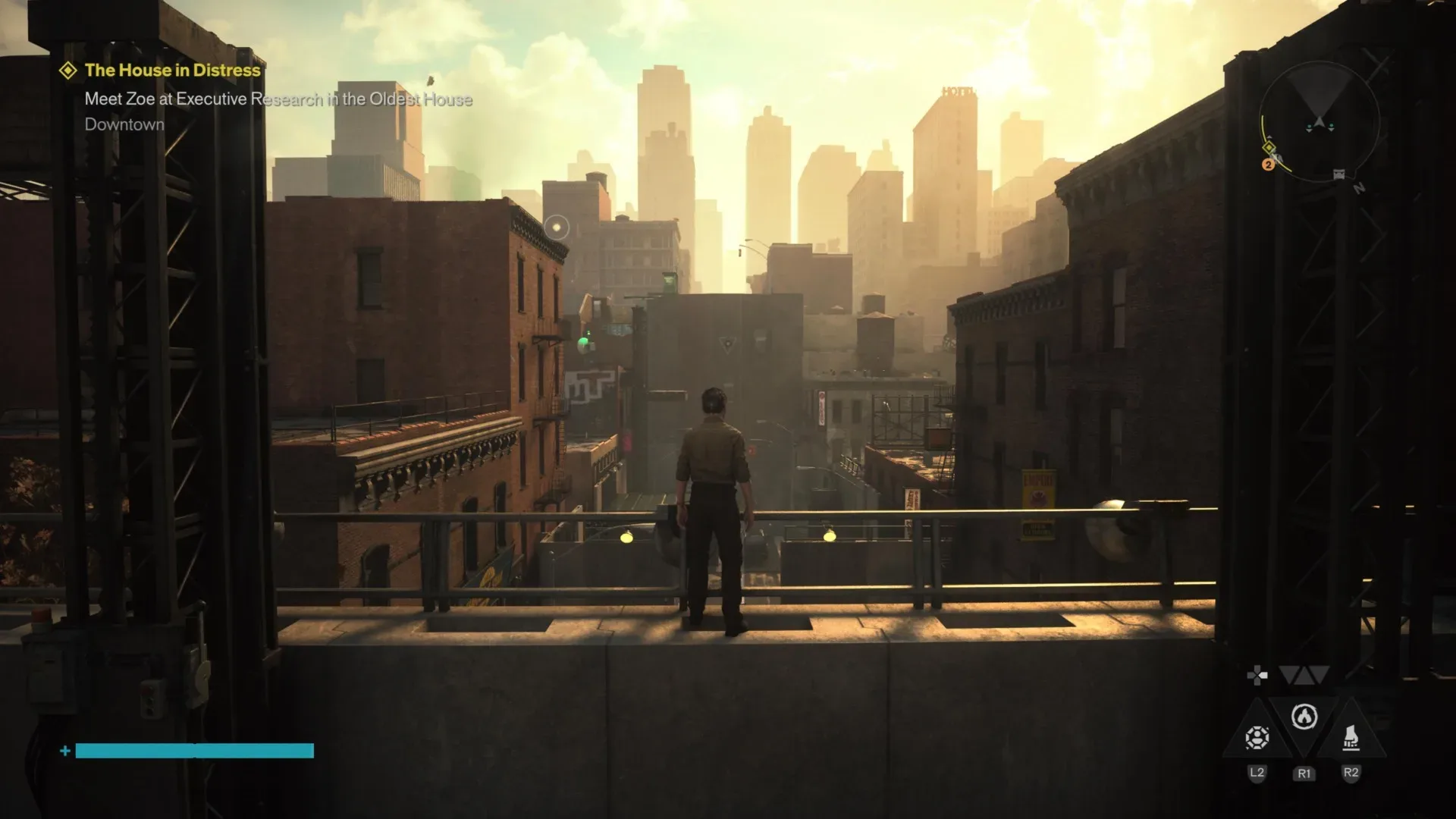
That distinction matters because Control Resonant is not merely substituting one memorable backdrop for another. It is using an exterior world to give Dylan an experience Jesse had all along: a life outside the FBC’s containment logic. When Dylan follows the escaped Hiss out of the Oldest House after waking in 2026, he steps into a world he has been denied for 24 years. He arrived at the bureau at age 10 and leaves at 34.
Freedom is not clean or immediate
Dylan is not presented as an uncomplicated victim, nor does the story erase the damage caused when he accepted the Hiss as a possible escape route. The Hiss is a hostile parasitical entity that takes over and uses people to spread. Dylan let it into himself while imprisoned, hoping for a way out; it instead exploited his power and helped drive the catastrophe at the heart of Control. Hundreds of FBC employees died in those events.
That history gives the FBC staff a reason to fear Dylan and, in some cases, to blame him. It also explains Dylan’s guilt. He recognizes that possession constrained him, but he does not simply dismiss his own decision to yield to the Hiss. In Resonant, he is apologetic and deferential toward the very organization that harmed him. The combination is unsettling: a survivor who still feels responsible to the institution that imprisoned him, and an institution that can regard its former subject as both injured person and potential threat.
This is where the move outside develops practical dramatic value. Dylan leaving the Oldest House does not magically resolve his trauma, absolve him or prove that the FBC has changed. Rather, it creates the possibility of choice. If he remains in the bureau’s facility, its leaders can continue to frame him primarily as a danger to contain. Outside, he can follow the Hiss trail while also existing beyond the architecture of his captivity.
The physical journey therefore carries a clear psychological meaning without needing to turn Dylan’s past into a simple metaphor. He has an urgent supernatural problem to pursue, but the journey is also his first encounter with an ordinary world that kept moving while he was trapped. The external setting lets the player share that disorientation. Jesse introduced players to an impossible building; Dylan introduces them to the reality he was excluded from.
Casper Darling looks different from Dylan’s side
The contrast between the siblings also reshapes the FBC itself. Casper Darling, the bureau’s head of research, is absent in person by the time Jesse reaches the Oldest House in Control, having vanished into another dimension. Jesse encounters him through recordings. From that distance, he can appear energetic, funny and brilliant: a scientist responsible for technology that protects lives, and someone who even sends Jesse a rock song from wherever he has gone.
Those tapes offer a partial portrait. They are the version of Darling available to an outsider who is trying to solve a crisis after the fact. Dylan’s material in Resonant supplies a more personal and disturbing account. Recordings involving the younger Dylan show Darling dismissing his requests for freedom, play and family. They depict a researcher who ignores abuse by a guard and subjects Dylan to further coercion in the pursuit of measurements and demonstrations of his latent abilities.
One such recording has Darling punish Dylan by making him run 100 laps after he fails to display his powers to Darling’s satisfaction. The detail is not there merely to make a previously charming character seem darker. It establishes the fundamental difference between knowledge about a person and power over a person. Jesse knows Darling through archival fragments and bureau history. Dylan knows him as the adult who had authority over his body, time and childhood.
That shift in perspective is a key reason the sequel cannot simply recreate the first game’s relationship with the Oldest House. A return to its corridors might reproduce the atmosphere players associate with Control, but atmosphere is not neutral. For Dylan, the same fluorescent bureaucracy and hidden laboratories are evidence of a system that treated him as an instrument. The new setting makes room for the player to see the bureau’s abuses not as lore tucked away in files, but as the formative reality of its protagonist.
Why a location change can preserve, rather than dilute, a series identity
A distinctive setting can feel inseparable from a series. That is especially true of the Oldest House, whose strange internal logic gave the original Control a visual and narrative identity. Yet a sequel does not have to duplicate the first game’s central space to remain faithful to what made it work. In this case, the important continuity is the conflict between people and systems of containment: the FBC’s effort to classify, study and manage the supernatural, and the human cost of doing so.
Resonant carries that conflict outward through Dylan. The Hiss escaping the building means the bureau’s problem is no longer sealed within its supernatural headquarters. More importantly, Dylan’s departure means the FBC cannot be the only frame through which his life is interpreted. He is still tied to the disaster, still accountable for choices he regrets, and still vulnerable to the bureau’s suspicion. But he is no longer only the prisoner or the face of the enemy from Jesse’s story.
This approach also protects Jesse and Dylan from becoming interchangeable protagonists. Jesse’s story is about coming into authority within a bizarre institution and finding a strange kind of home there. Dylan’s is about trying to become a person after the institution stole the conditions in which personhood normally develops. Giving them different spaces clarifies those different arcs.
Games often ask players to cross a map because a mission marker demands it. Here, the movement away from the Oldest House has a stronger narrative charge: Dylan must go because staying would mean remaining within the world that reduced him to a subject. The first game’s setting remains vital precisely because it casts such a long shadow over the sequel. Dylan’s freedom has meaning because the Oldest House was so defining, so confining and so difficult to leave behind.
For another example of how a game’s environment can turn travel into part of its meaning, see how WoW: Forever’s Night Watchman’s Torch makes Azeroth’s long roads matter. The circumstances are very different, but the broader design idea applies: location can be more than backdrop when the route changes how a player understands a character’s circumstances.
The Oldest House has not been abandoned
Taking Dylan outside does not invalidate affection for the Oldest House or deny what it achieved in Control. The desire to revisit its impossible halls is understandable. Its offices, labs and thresholds supplied a rare mixture of institutional banality and cosmic weirdness. But returning there in exactly the same way would center the place over the person whose story is being told.
Dylan cannot reasonably experience the Oldest House as Jesse did. He has already seen the building’s worst meaning. His statement that he does not want to return is not an incidental preference; it is the consequence of decades of captivity. Letting the game follow him beyond its walls honors that fact. It makes the setting change feel less like a departure from Control and more like an extension of its most difficult question: what does an organization do to people when its pursuit of control becomes more important than their humanity?
The answer is not settled simply by walking outdoors. Dylan’s past, the escaped Hiss and the FBC’s distrust all travel with him. Yet the act of leaving creates the necessary ground for a story about recovery, responsibility and self-determination. The Oldest House gave Jesse a place to become Director. The world beyond it gives Dylan his first real chance to become himself.