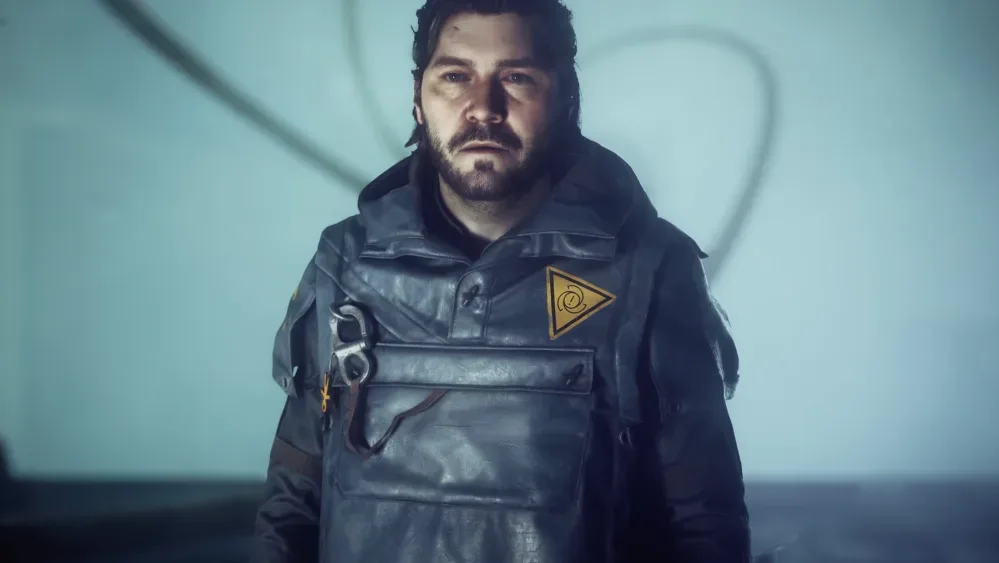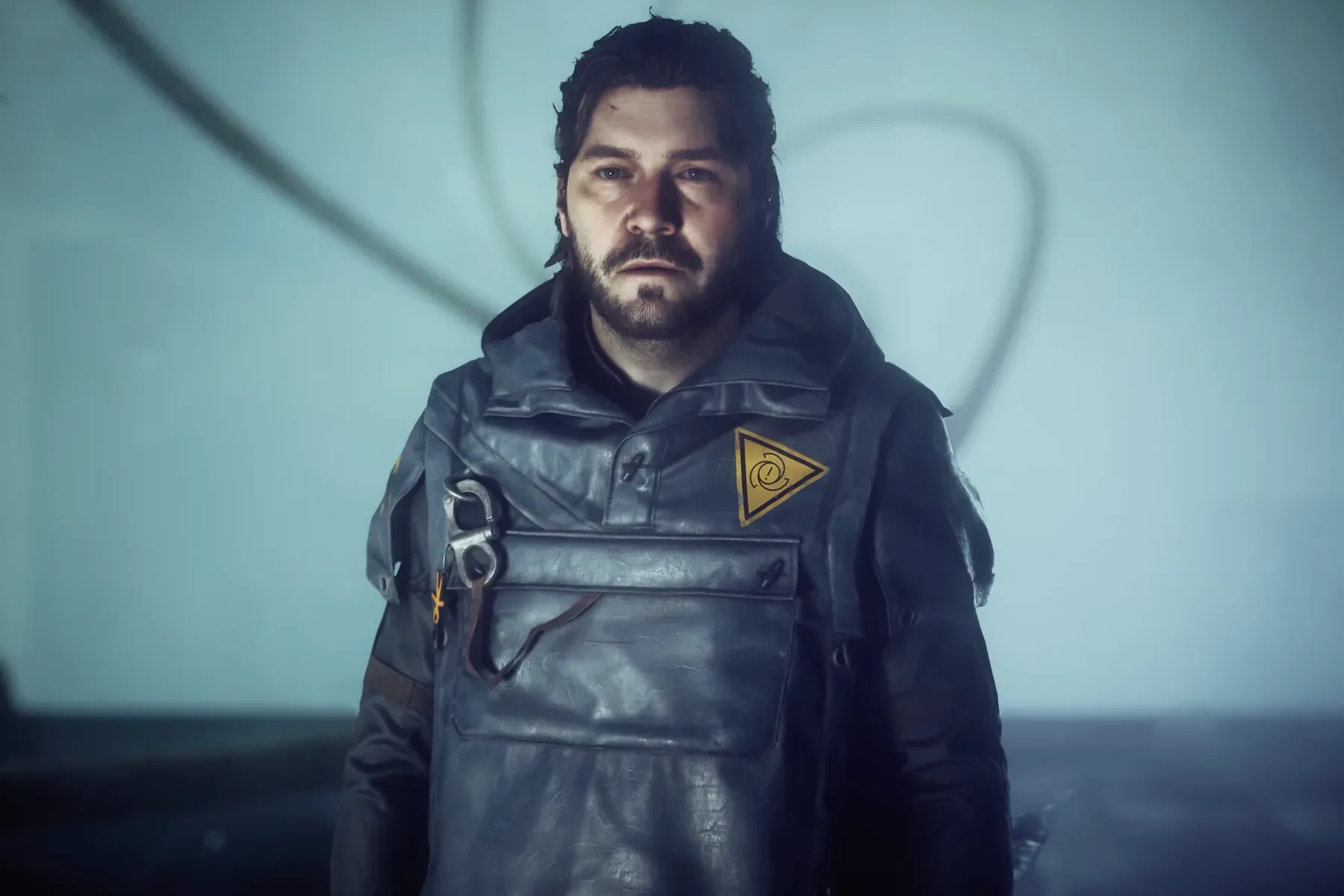
Control Resonant changes the center of gravity for Remedy Entertainment’s paranormal action series. Jesse Faden, the protagonist of 2019’s Control, is missing following the events at the Oldest House. Her younger brother Dylan, previously a deeply troubled figure at the edge of the first game’s story, now takes the playable lead.
Released Thursday on Steam, the Epic Games Store, PlayStation 5, and Xbox Series X|S, the sequel places Dylan in a Manhattan distorted by a preternatural crisis. His immediate mission is both personal and larger than himself: find Jesse, make sense of a world in upheaval, and confront the threats overtaking it.
That premise makes Control Resonant more than a straight continuation. It deliberately inverts the structure of the first game. In Control, Jesse entered the Oldest House searching for Dylan and ultimately became director of the Bureau of Control. In the follow-up, Dylan wakes into uncertainty and begins searching for Jesse. The siblings remain central to the narrative, but the player is now seeing the world from the other side of their relationship.
A sequel built around a reversed search
Franchise creative director and co-creative director Mikael Kasurinen has described the two games as having a reverse symmetry. Jesse’s earlier search for her brother was also a search for her own place in a strange institution and an even stranger world. Dylan’s story, by contrast, is framed around connections, belonging, and rediscovering himself while he attempts to locate the sister who once looked for him.
The setup also leaves room for Jesse to remain important without making her the active player character. As Dylan advances, the story reveals more about what Jesse has been doing and the choices she made near the beginning of this new conflict. Precisely where those choices lead is being kept under wraps, so players expecting a simple handoff between protagonists should prepare for the Fadens’ two stories to remain intertwined.
This is a meaningful change for a sequel because Dylan cannot simply inherit Jesse’s role without baggage. His history is a major part of the character. In the original game, Dylan was under the influence of the Hiss, the hostile force at the heart of that story. Sean Durrie, who plays Dylan, has said the new performance draws from the character’s victimization, his guilt over letting the Hiss in, and his need to atone and reclaim his humanity.
That distinction matters. Dylan’s past actions happened while he was not fully in control, but the emotional consequences did not disappear when that influence did. His story is therefore not presented merely as a rescue mission. It is also an attempt to determine who he is beyond confinement, manipulation, memory, and guilt.
What Dylan’s history brings to the lead role
Durrie was told during the original game’s casting process that Dylan was not dead and was in a coma, signaling that the character had a future in the franchise even if the eventual sequel’s details were not laid out. That earlier groundwork gives Control Resonant a character arc to explore rather than a newly introduced protagonist with no connection to the prior game.
Related coverage includes Control Resonant Puts Dylan Faden at the Center of a Reality-Warped Manhattan.
Dylan’s circumstances before the sequel are especially stark. His backstory includes living in the Oldest House from the age of 10 and, at one point, being put in a cell and forgotten. The version of him players encountered in Control was shaped by Hiss infection, so the performance in Resonant is not meant to be a direct continuation of that behavior. Instead, the continuity lies in his recollection of the experience and in the lingering responsibility he feels for its consequences.
In practical story terms, this gives the game a protagonist who may understand parts of the world but cannot be assumed to be emotionally settled within it. He is familiar with the damage surrounding the Bureau and the Hiss, yet he is also trying to form a stable sense of self. That is a different foundation from Jesse’s arc in the first game, where discovering the Bureau and taking responsibility within it became central.
The sibling switch also creates a useful question for returning players: what does Jesse look like when viewed through Dylan’s search, rather than through Jesse’s own internal narration and decisions? The sequel’s premise suggests that her absence is not simply a plot device. It is an opportunity to examine her actions from a new perspective while making Dylan’s choices the immediate focus.
The Aberrant replaces the familiar gun-led approach
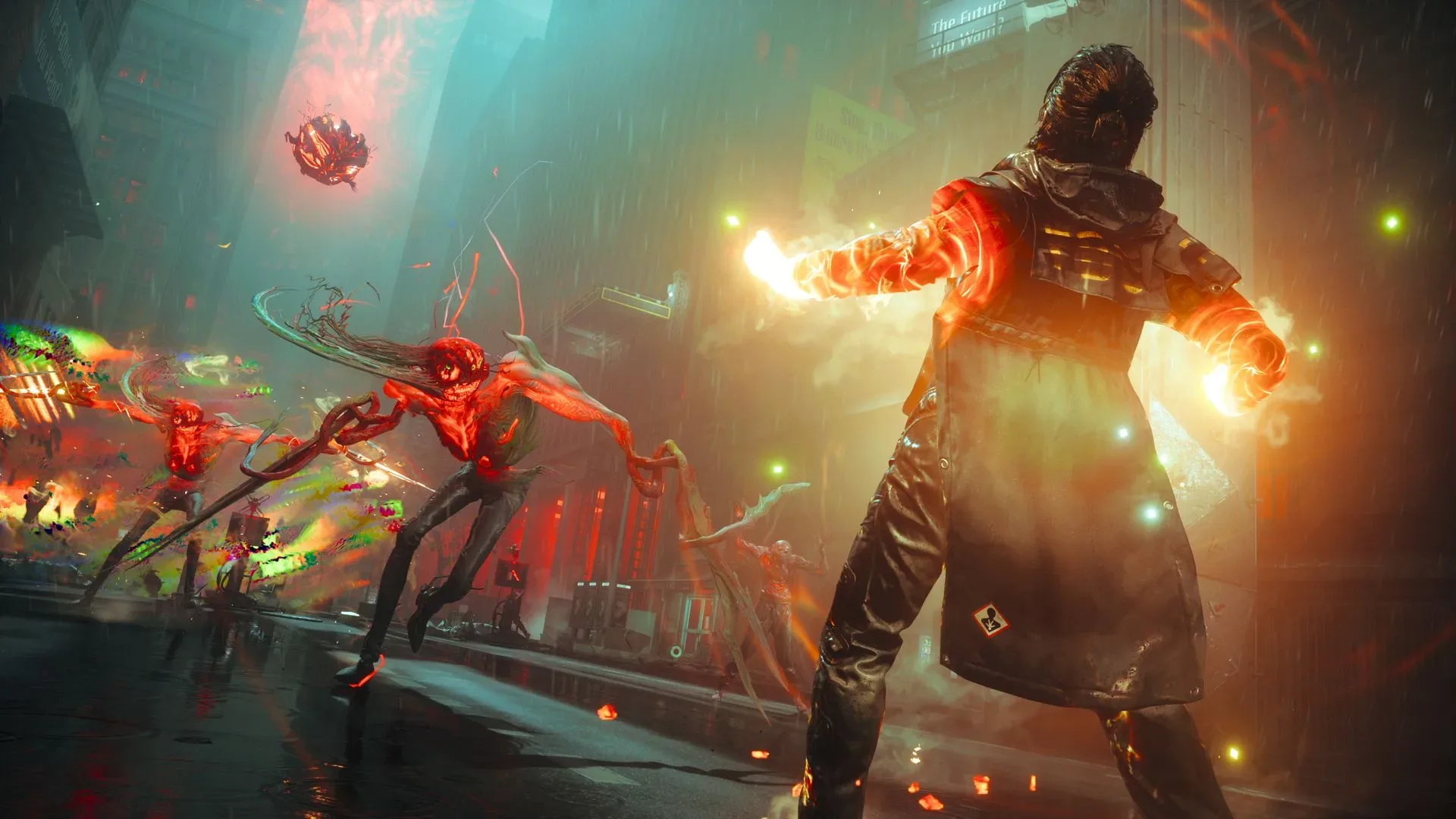
The narrative handoff comes with a substantial mechanical one. Dylan uses the Aberrant, a shape-shifting melee weapon, rather than a gun. A melee weapon is built around close-range engagement: positioning, distance, movement, and the timing of attacks become more immediate concerns than they are in a primarily ranged loadout.
Kasurinen has said the first game’s broader recipe remains intact: fast-paced first-person action combining a weapon with preternatural abilities. “Preternatural” here means beyond ordinary natural explanation, a fitting term for the series’ reality-bending powers and phenomena. The difference is that Control Resonant channels that formula through Dylan and the Aberrant, making a close-quarters tool the centerpiece of combat.
The Aberrant’s ability to take different forms suggests that it is intended to offer variety rather than operate as a single fixed melee option. The available details do not specify every form or its functions, but the design goal is clear: Dylan is expected to master the weapon across dangerous encounters and major boss battles.
That does not mean the sequel is abandoning powers. Dylan can use his abilities alongside the weapon, maintaining the series’ mix of supernatural action and direct combat. The change instead alters the rhythm. A weapon-focused power fantasy can feel very different when the player must move into a threat’s space rather than address it largely from afar.
Gravity anomalies expand traversal
Movement and space appear to be another major area of expansion. Dylan can use gravity anomalies through a “shift” ability and attach himself to different surfaces. A gravity anomaly, in this context, is an area where normal gravitational rules are disrupted. Rather than treating the environment as a flat route between fights, the sequel is designed to let Dylan navigate spaces through altered physical relationships.
This has implications beyond spectacle. Surface attachment and gravity-based traversal can make verticality, alternate paths, and approach angles important parts of play. The stated aim is to make environments more versatile and to offer many ways for Dylan to move through them. The Manhattan setting is therefore not described as an ordinary city backdrop; it is reality-warped terrain meant to support the game’s shifting traversal rules.
Kasurinen has characterized those areas as a colorful sandbox. In game-design terms, a sandbox does not necessarily mean a completely unrestricted open world. It generally points to a space with multiple systems and possible approaches, giving players room to experiment with movement, abilities, and combat choices. Based on the details available, Control Resonant is pursuing that versatility in its environments rather than simply placing fights in a series of isolated arenas.
Combat is about enemy combinations, not a single threat
The sequel is also designed around varied enemy compositions. An enemy composition is the mix of opponent types deployed together in an encounter. Instead of repeatedly facing one kind of foe, players may need to manage combinations whose behaviors create distinct tactical pressures.
That approach follows a principle from the first game, but the team says it has been pushed further here. Dylan will fight enemies, but he will also sometimes avoid them. This distinction is important: not every hostile encounter is framed as a straightforward demand to clear the room. Movement, route selection, and judging whether to engage may all matter alongside mastering the Aberrant’s forms and supernatural abilities.
For players, the likely appeal is in the interaction between systems. A gravity-altered route may change how Dylan reaches or escapes an enemy group; a melee-centered weapon may change which positions feel safe; and a varied enemy mix may make powers useful for creating space rather than only dealing damage. Those are analytical implications of the stated design direction, not a full breakdown of the game’s yet-undetailed combat systems.
Zoe is the entry point for newcomers
Sequels with dense supernatural lore face an obvious onboarding problem. Returning players may want the story to acknowledge past events, while newcomers need enough explanation to understand why the Hiss, Jesse, Dylan, and the Bureau matter. Control Resonant addresses that tension through Zoe, a major new character who is crucial both to Dylan and to the story.
Zoe functions as a player-facing perspective inside the fiction. She asks the questions someone new to Control may reasonably have: What is the Hiss? Who is Jesse? Who is Dylan? That makes her role more than exposition for its own sake. Her unfamiliarity provides a natural way for the game to introduce its concepts without assuming every player has already absorbed the original’s lore.
There is a deliberate parallel here, too. Dylan encounters Zoe in a way that echoes Jesse meeting Pope early in Control. The symmetry supports the sequel’s larger reversal: each Faden sibling’s journey includes a key connection that helps them orient themselves amid an incomprehensible crisis.
For people who have played the first game, Zoe’s questions can potentially clarify the changed situation without erasing what they know. For first-time players, her position offers a route into the series’ vocabulary and stakes. The creative team’s message is that established fans should be able to enter immediately, while newcomers are not expected to arrive with all the prior context already memorized.
Where Control Resonant is available
- Steam
- Epic Games Store
- PlayStation 5
- Xbox Series X|S
The PlayStation 5 version arrives at a time when questions around physical versus digital game access remain a live subject for console players; for related context, see the discussion around PlayStation’s PS5 survey and physical discs. No edition-specific differences are detailed here.
What is clear is that Control Resonant is not positioning Dylan as a simple substitute for Jesse. It makes his unresolved past, his search for his sister, a new ally in Zoe, a transformation-focused melee weapon, and gravity-bending exploration parts of the same proposition. The sequel preserves the series’ mix of otherworldly abilities and high-speed action while shifting the emotional and mechanical perspective in a very literal direction.