PlayStation has opened a public survey for adults, asking for feedback on the PlayStation 5 experience. The questionnaire is broad: it covers satisfaction with the console’s exclusive games, its wider library, user interface, performance, online play and the DualSense controller. But for a vocal segment of players, its most important feature is not one of its multiple-choice topics. It is the opportunity to type an answer.
Players are using the survey’s written-response fields to object to Sony’s stated plan to end production of physical game discs beginning in January 2028. Physical media is not presented as a dedicated question in the public survey, but open-ended prompts give respondents a direct route to raise it alongside more conventional PS5 feedback.
The reaction illustrates a simple but consequential divide: a customer-satisfaction questionnaire can ask about features of today’s console, while players may use it to register concerns about what tomorrow’s PlayStation ecosystem will allow them to buy and own in physical form.
What the public survey actually asks about
Published on September 25, the survey asks respondents to assess core parts of the PS5 proposition. That includes PlayStation-exclusive games, the overall game selection, the console interface, performance, online multiplayer functionality and the DualSense controller.
It also asks participants what other hardware they own, including systems outside Sony’s platform, such as Nintendo Switch consoles, gaming PCs and VR headsets. That is useful context for a company trying to understand how people divide their time and purchases across platforms. A player who owns a PS5 alongside a PC or another console may have different priorities from someone whose gaming is centered entirely on PlayStation.
For respondents concerned about discs, the survey’s free-response areas matter more than the survey’s preset categories. A preset category tells a company exactly what it is measuring. An open text field is less structured, but it lets players introduce an issue the questionnaire did not explicitly name. In this case, people have treated those fields as a place to make physical media part of the feedback record.
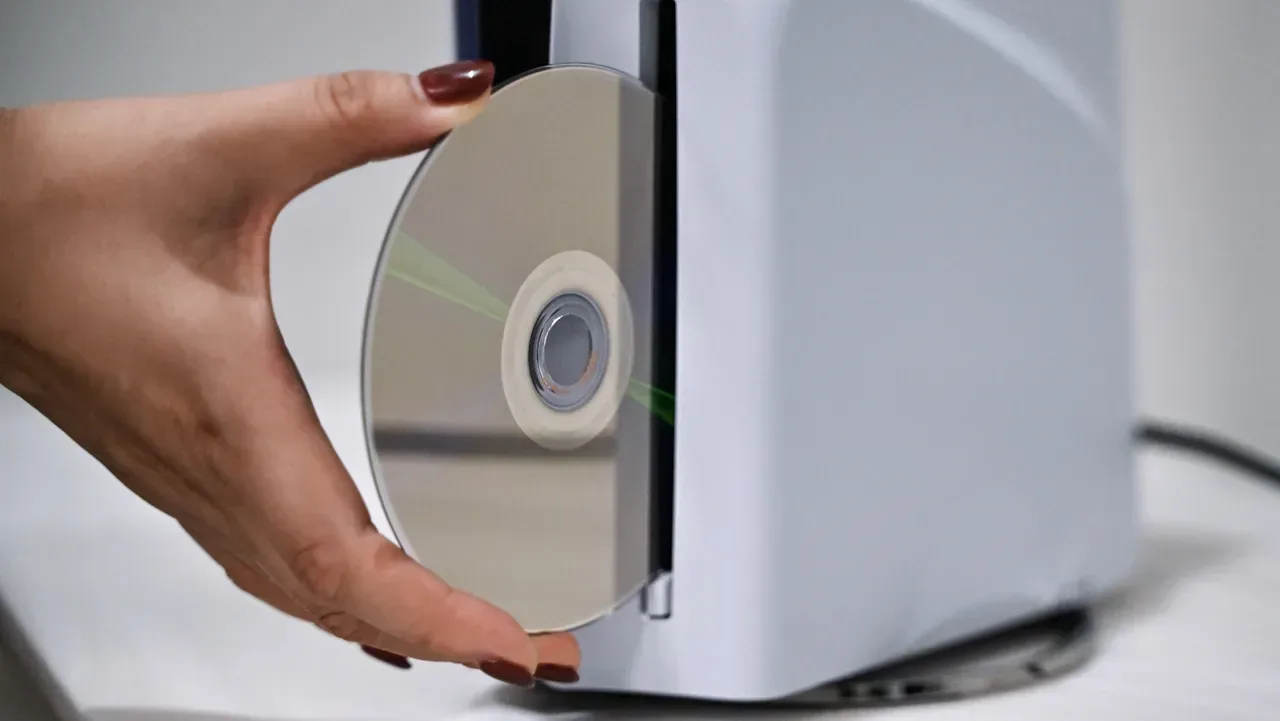
The tone online has ranged from serious criticism to pointed jokes. One shared response framed the player’s opinion as a disc that needed to be inserted into a drive before its contents could be accessed online. The gag is doing real argumentative work: it turns the company’s planned move away from discs into the format required to hear a complaint about that move.
Why physical discs are dominating the conversation
Sony’s plan to stop making physical game discs from January 2028 has attracted widespread pushback since it was announced in July. The new survey has not, by itself, changed that policy. Nor does the survey directly ask whether PlayStation should retain discs. What it has done is provide an official, public-facing channel at a moment when the subject is already a major point of friction between the company and part of its audience.
Related coverage includes PlayStation Survey Draws Fresh Calls to Protect Physical Game Discs.
That distinction is important. A survey is evidence that a company is collecting feedback; it is not evidence that it has committed to following every preference expressed in that feedback. Players hoping the questionnaire signals a reversal are interpreting the timing and the availability of written answers, rather than a stated change in policy.
There is some reason for caution in reading too much into it. PlayStation chief financial officer Lin Tao said during a July investor question-and-answer session that the company would “cautiously move this forward,” while acknowledging the public holds “strong views” on the matter. The position conveyed there was awareness of opposition, not abandonment of the plan.
For now, the clearest reading is that the public survey offers a way to document dissatisfaction, but not a promise that physical media will become a formal survey priority or that the 2028 timetable will shift.
The developer-survey context adds to the speculation
The consumer survey arrived only days after reports of a separate PlayStation questionnaire sent to game developers. Commentary about that developer outreach described it as unusually extensive and likewise raised the possibility that PlayStation is reassessing, or at least closely examining, the consequences of its disc decision.
That sequence has fueled community optimism, but it remains an inference. The available details establish that there were two surveys aimed at different groups—one public and focused on PS5 satisfaction, another reportedly sent to developers. They do not establish their full questions, their internal purpose, or a decision to revise the company’s physical-media strategy.
Still, the two audiences are significant. Consumers can describe what they value when buying and using games. Developers can offer a different perspective shaped by building, publishing and supporting games for the platform. If PlayStation is gathering information from both groups around the same time, it may receive a more complete picture of sentiment and practical concerns. Whether that information alters the stated plan remains unknown.
What “physical media” means in this debate
In this context, physical media means games distributed on a disc rather than obtained solely through a digital download. The central dispute is not a complaint about the PS5 survey itself. It is about whether future PlayStation games will continue to be made available in a disc format.
That format question lands differently for different players. Some may primarily care about how a purchase is delivered and managed. Others may see a disc as an important part of their relationship with the game library they build over time. The intensity of the response shows that format is not merely a packaging detail to everyone affected by the policy.
It also explains why a survey about interface design, controller satisfaction and online play can become a venue for a physical-media campaign. From the player perspective, all of those subjects sit under the same larger question: what kind of PlayStation platform is being built, and whether it will accommodate the ways they want to access games.
The survey’s questions about devices beyond PlayStation add another layer. Platform holders do not operate in isolation; players compare where and how they play. A respondent who games on PS5, PC, Switch or VR hardware can assess PlayStation against alternatives in their own setup. For broader context on how PC gaming has been growing in one major market, see this report on Japan’s reported PC gaming revenue growth since 2021.
Practical value of a focused response
For adults choosing to complete the questionnaire, the most useful feedback is likely to be clear and specific. The survey already asks about distinct parts of the PS5 experience, so separating views on those topics from concerns about discs can make the response easier to understand.
- Answer the stated questions: Feedback on performance, UI, the game catalog, online play and DualSense can give the survey its intended product-level context.
- Use open fields directly: If physical games are the priority, respondents can state that plainly rather than assuming it is implied by a low satisfaction score.
- Explain the priority: A concise explanation of why disc availability matters to the respondent is more informative than a slogan alone.
- Distinguish policy from present experience: A player can be satisfied or dissatisfied with the current PS5 while separately objecting to the planned 2028 end of disc production.
This is not a campaign strategy guaranteed to produce a particular result. It is simply the practical consequence of the survey design: written fields create room for nuance that fixed-answer questions cannot capture. They can also help prevent an issue as broad as “physical media” from being reduced to a vague impression of discontent.
What to watch next
The immediate development is the survey itself, not a confirmed change in Sony’s direction. The key questions are whether PlayStation makes any further statement about physical discs, whether future surveys address the subject more directly, and whether the company’s public stance moves beyond the July commitment to proceed cautiously despite strong views.
Until then, the public questionnaire is best understood as a newly available feedback channel that has been rapidly repurposed by players. It asks about the PS5 of the present, while many respondents are using it to argue for a PlayStation future in which game discs still have a place.