PC gaming appears to be making a far larger mark in Japan than it did only a few years ago. Preliminary market figures presented around Tokyo Game Show put Japanese PC-game revenue at roughly 132.1 billion yen in 2021, rising by an indicated 134% by 2025.
That is a striking shift in a market closely associated with home consoles from Sony and Nintendo. It does not mean consoles have suddenly disappeared, nor does it establish that every kind of PC game is thriving equally. What it does suggest is that the PC has become a significantly more consequential route into games for Japanese players—and that the games gaining traction are frequently global, online, and built to keep communities playing for a long time.
There is one important reporting caveat. The preliminary figures describe 2025 revenue as 300 million yen, a number that does not align mathematically with either the stated 132.1 billion yen 2021 baseline or the stated 134% increase. The full report is expected in December, so the precise 2025 revenue total should be treated as unsettled until the complete data is available. The reported growth rate, however, is the core signal: Japan’s PC sector has expanded sharply over the four-year period.
What the revenue data does—and does not—say
Revenue is money generated by the market; it is not a direct count of players, PCs, downloads, or hours played. A rise in revenue can reflect more people buying games, greater spending by existing players, spending within free-to-play titles, or some combination of those factors. It is therefore best read as evidence of commercial growth rather than a simple census of PC gamers.
The reported 134% rise is particularly notable against the wider comparison offered by the preliminary figures. Mobile gaming reportedly increased by around 4.5%, while consoles beyond Switch 2 were described as uneven. Those comparisons make PC gaming stand out as a growth area, even without enough information here to establish why each individual platform moved as it did.
Japan’s games business has long had powerful console associations, and the current data should not be treated as a declaration that those associations are over. Instead, it points to a more plural market. A player can participate in major competitive games, social games, survival games, shooters, simulators, indie releases, and older favorites through PC storefronts without those choices needing to mirror the traditional console chart.
That breadth matters because the PC is not one genre or one business model. The games cited in the reported rankings range from free-to-play competitive titles to paid games with exceptionally long playtime. Revenue leadership and time-spent leadership are separate measures, and Japan’s list makes that distinction unusually clear.
Steam’s leading revenue games point to global communities
Counter-Strike 2, Apex Legends, and PUBG: Battlegrounds are identified as Japan’s three biggest sellers on Steam. They are all games with massive international audiences and competitive or multiplayer-centered identities. Their presence supports an important interpretation of the PC growth story: Japanese players are participating in a global PC ecosystem, not only consuming locally made releases.
Related coverage includes PC Gaming Revenue in Japan Reportedly More Than Doubles Since 2021.
All three are also associated with free-to-play access. That term means the game can be started without an upfront purchase price, though it may still earn revenue through optional in-game purchases. Free-to-play is not synonymous with “free of spending”; it reduces the cost of entry while shifting the commercial relationship toward continuing engagement and optional transactions.
For a prospective player, the practical appeal is obvious. A free-to-play game lets someone check whether its controls, community, matchmaking, performance requirements, and overall pace suit them before committing money. For a market, the model can lower the barrier between interest and participation. A globally established title also offers another advantage: an existing community is already there, which can make the multiplayer proposition feel less risky than joining an unproven release.
That said, the rankings do not prove that free-to-play alone caused the reported PC-market growth. The evidence only establishes that these leading Steam revenue games share that model and that they have huge international communities. Hardware adoption, storefront access, player preferences, and the appeal of particular franchises could all matter, but the preliminary information does not separate those influences.
Hours played tell a different story than money earned
The games at the top of the time-played list tell a different tale. Left 4 Dead and Terraria reportedly occupy the top two positions for time spent playing in Japan, with Stardew Valley also appearing on the list.
These results are a useful reminder that the game creating the most revenue is not necessarily the one that occupies the most evenings. A time-played ranking measures sustained attention. Players can return to a familiar title for years, play in groups, experiment with user-driven possibilities, or simply make a favorite game part of a routine. None of that requires the title to sit at the summit of current revenue.
Left 4 Dead represents one kind of durable appeal: cooperative zombie action. Terraria and Stardew Valley point toward another: games where building, progression, exploration, and personal projects can support long-term play. The common thread is not a single genre. It is longevity.
That is an encouraging detail for anyone who reduces PC gaming to high-end hardware and new releases. The reported Japanese habits suggest that the platform’s value can also lie in a deep back catalogue and games that remain worth revisiting long after their original moment. PC culture has room for contemporary global competition and for older, repeatedly played staples.
It also helps explain why platform growth need not map neatly onto a list of brand-new releases. A player may arrive for a current multiplayer phenomenon, then spend much of their actual time in a cooperative classic or a game built around an ongoing personal world. Sales, revenue, active users, and hours played each capture a real but incomplete part of that behavior.
Monster Hunter Wilds stands out among the revenue leaders
Monster Hunter Wilds is described as the only Japan-made game to rank prominently on PC in revenue. That detail is notable precisely because Japan is home to so many major game companies and beloved series.
It would be wrong to turn that single observation into a broad judgment about Japanese development. A revenue ranking is a narrow snapshot, not a measure of creative output or a comprehensive list of domestic games played on PC. But it does reinforce the international character of the leading PC titles named in the preliminary findings. The biggest commercial performers on Steam are not presented as a primarily domestic group.
For publishers and developers, the possible implication is straightforward: PC storefronts can put locally made games into direct competition with global live-service hits and established catalog favorites. Visibility, community momentum, and a game’s ability to fit into players’ existing habits may be as important as national origin. That is analysis rather than a conclusion established by the figures, but it fits the composition of the rankings provided.
Why this matters beyond a single chart
A rapidly expanding PC segment can affect how the industry thinks about releases, communities, and platforms. If players are increasingly spending on PC, launching there is more than a secondary consideration. A game’s PC version becomes part of the main commercial conversation, especially when Steam charts are led by titles with active global populations.
For players, a stronger PC market can mean more attention to the platform from publishers and more reasons to look beyond a single device. It does not guarantee that every game will arrive everywhere or that a PC automatically offers the best experience for every person. But the preliminary data makes the PC harder to dismiss as peripheral in Japan.
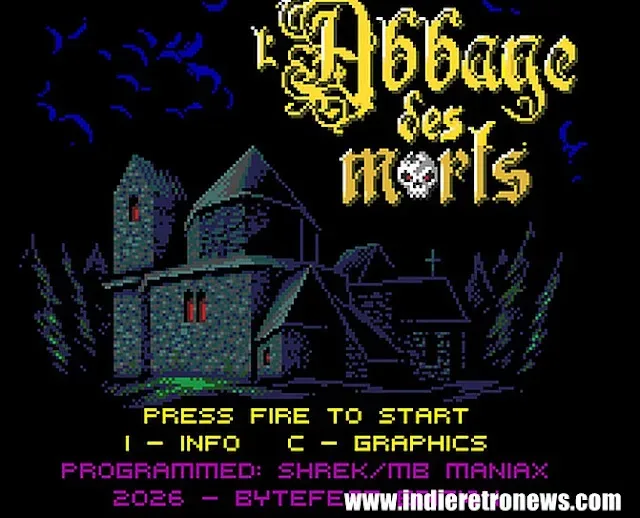
It is also worth keeping the platform’s range in view. Current growth can be discussed alongside the enduring interest in older computer-game communities and hardware scenes. For a very different slice of that world, see this report on L’Abbaye des Morts arriving on ZX Spectrum Next. The technical eras are worlds apart, yet both illustrate how computer gaming can accommodate new commercial momentum and dedicated niche audiences at the same time.
What to watch when the full figures arrive
The December report should be more useful than a preliminary headline because it may clarify the contradictory revenue total and provide methodology. Several details would help put the 134% figure in proper context:
- The exact 2025 PC revenue figure: This is necessary to reconcile the stated baseline and growth percentage.
- What revenue categories are included: The total could be shaped by full-game purchases, optional in-game spending, subscriptions, or other categories, but the preliminary summary does not specify.
- How PC compares with each console segment: “Up and down” provides a direction but not a full platform-by-platform picture.
- Whether the trend is broad or concentrated: A clearer breakdown could show whether growth is driven by a handful of major titles or a wider spread of games.
Until then, the most defensible takeaway is substantial but measured. Japan’s PC gaming business is reportedly growing quickly, global Steam games are central to the commercial picture, and players’ longest-running habits do not perfectly match the games generating the most revenue. That combination describes a PC market that is expanding not by replacing every other kind of gaming, but by becoming a more important destination in its own right.