Sony has delayed the launch of its Pulse Elevate wireless speakers just days before their planned November 12 release. The company says it found a production issue during ongoing quality testing and will use additional time to make sure the product meets its intended experience for players.
No replacement launch date was included with the delay notice. Sony also has not detailed the nature of the production problem, nor has it set out a specific policy for customers who had already placed pre-orders when the postponement was announced.
That leaves prospective buyers with a simple but important reality: Pulse Elevate is no longer expected on its original November date, and there is not enough official detail yet to estimate how long the delay may last.
What Sony has confirmed
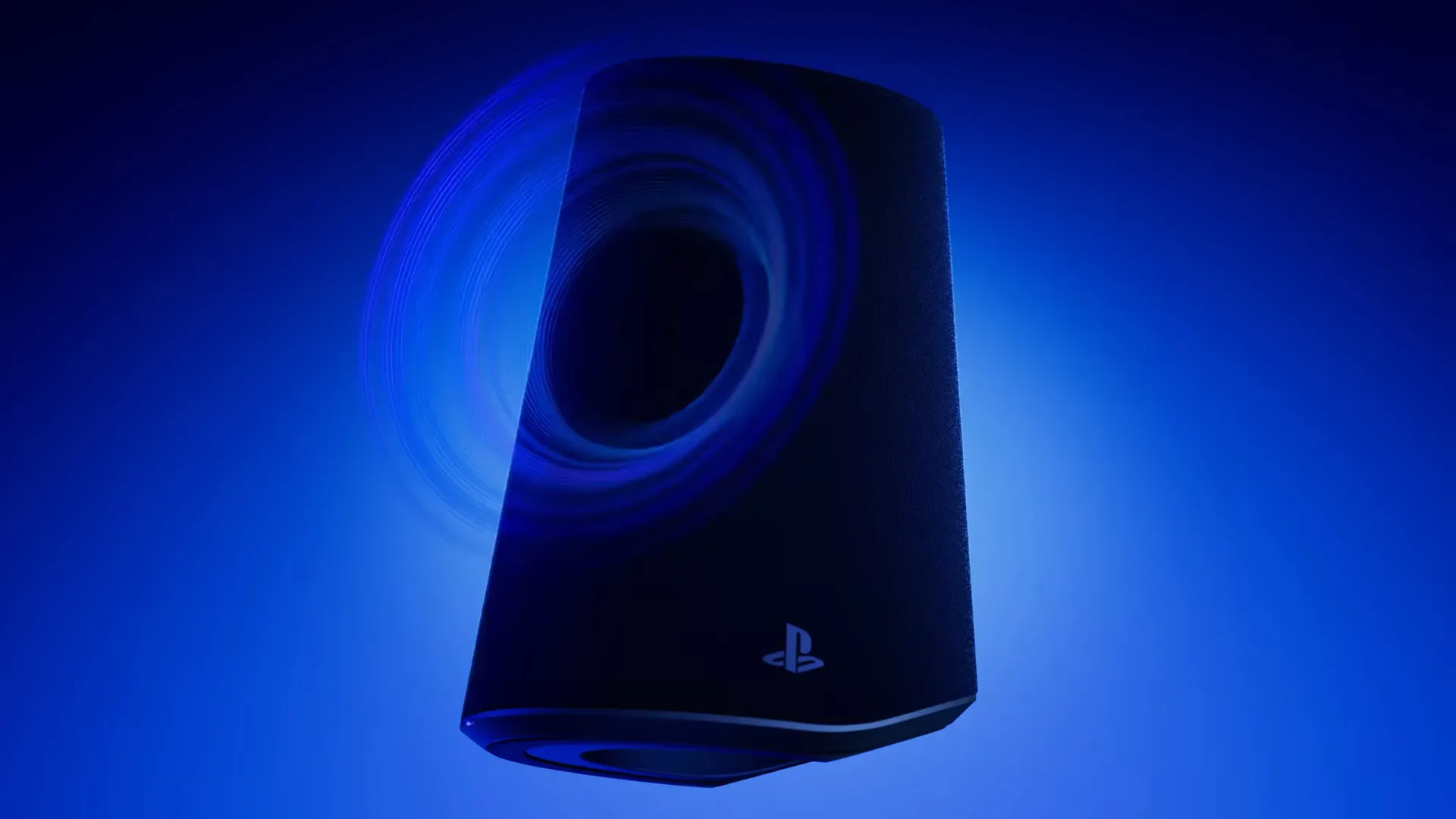
Pulse Elevate was revealed during PlayStation’s 2025 State of Play presentation as a two-speaker wireless audio product intended for console and desktop setups. Sony’s explanation for the delay is narrowly framed around a production issue discovered in quality testing. The company says the extra time is meant to ensure the speakers deliver the experience it planned.
That wording confirms a delay, but it does not establish whether the issue concerns speaker hardware, wireless performance, microphones, packaging, supply, software, or another part of production. It would be premature to treat the delay as evidence of a particular technical fault. Sony has not provided that information.
For a product designed around audio and wireless connectivity, quality testing matters beyond whether a unit turns on. A speaker set has to work consistently as a pair, maintain a stable connection, handle its microphone features reliably, and perform as expected across the devices it is advertised to support. Those are general reasons a manufacturer may test a product closely; they are not an explanation of the specific Pulse Elevate issue.
The promised PlayStation-focused feature set
Pulse Elevate is positioned as part of Sony’s Pulse audio lineup, alongside its existing earbuds. The speakers were designed with PlayStation 5 and PlayStation Portal use in mind, while also being presented as compatible with PC, Mac, and mobile gaming setups.
Its headline capabilities include 3D audio for compatible PlayStation games and a built-in microphone with AI-powered noise reduction. In practical terms, 3D audio is intended to convey the placement of sounds around the listener, rather than treating every effect as a flat left-or-right signal. The result depends on the game’s audio support, the system’s processing, the listening environment, and the device itself. The key qualifier is therefore Sony’s own one: the 3D-audio claim applies to compatible PlayStation games.
Related coverage includes Sony Delays Pulse Elevate Speakers Days Before Planned November Launch.
AI-powered noise reduction refers to microphone processing designed to reduce unwanted background sound during voice communication. It is not a guarantee that every environmental noise disappears, and Sony has not offered further technical specifics in its delay statement. Still, a microphone incorporated into a speaker system could be useful for players who do not want to switch to a headset every time they join a party or communicate in a multiplayer game.
The device range is notable because Pulse Elevate was not framed as a PS5-only accessory. A player who divides time between a console and a desktop could reasonably be interested in one speaker pair serving both settings. Likewise, Mac and mobile support widens the stated target beyond a conventional living-room console arrangement. The postponement affects that broader audience too, but the supplied details do not specify whether all platforms use the same connections, features, or audio modes.
What the delay means for pre-order customers
Pre-orders for Pulse Elevate opened in September, ahead of the intended November 12 arrival. With the original date now withdrawn, customers should not assume that a retail listing or an earlier expectation remains current. The only confirmed status is that launch has been delayed.
Sony has not announced a new timetable or a refund policy in connection with this notice. That means there is no source-supported basis to say whether existing pre-orders will be automatically maintained, canceled, refunded, or fulfilled on a revised date. Customers will need to watch for updates from the seller through which they ordered and from Sony itself.
- Do not plan around November 12: that was the original release date, not the current one.
- Keep order records: confirmation emails and order numbers make it easier to check any retailer-specific update later.
- Read the seller’s terms before making assumptions: refund, cancellation, and authorization practices can differ between retailers.
- Wait for a confirmed date: there is no announced schedule to extrapolate from at present.
This is especially relevant for anyone treating the speakers as a holiday purchase. A product delayed in the final days before release can still arrive relatively soon, but it can also require a longer correction period. Sony’s notice does not provide enough information to distinguish between those possibilities.
Why a quality-related delay is preferable to a rushed release
Delays are disappointing, particularly after pre-orders have opened and a launch window has been publicized. But Sony’s stated reason points to a decision to hold the product rather than send it out while a production concern remains unresolved. For an accessory expected to handle both game audio and player communication, that is a more consumer-friendly choice than treating a release date as immovable.
There is a practical distinction worth making here. A production issue is not automatically the same thing as a design failure. Production concerns can arise while turning an established design into large numbers of finished units and checking whether those units meet standards. Because Sony has not described the issue, the correct conclusion is limited: the company identified something significant enough to postpone launch.
It is also important not to infer a final retail experience from the delay. Pulse Elevate may eventually launch as intended, with changes, or with a different schedule; Sony has not said which. Likewise, reports that some hardware-focused creators appeared to have received units do not answer whether every retail unit was ready for release. Early access and full commercial rollout are separate stages.
A delay in a crowded PlayStation accessory landscape
Pulse Elevate’s planned arrival would have added a dedicated speaker option to PlayStation’s broader audio ecosystem. Its pitch differs from earbuds and headsets: instead of putting sound directly on the player, it is meant to provide wireless speakers for a home console or desktop setup while retaining a built-in option for voice capture.
That creates a particular set of expectations. A headset is often selected for privacy, isolation, and direct microphone placement. Speakers, by contrast, suit players who want room audio or who do not want to wear something over or in their ears. The trade-off is that open-room audio has more variables: the layout of a desk or entertainment center, the volume, other people nearby, and the acoustics of the room can all shape the experience. Sony’s noise-reduction claim is relevant to that use case, but the company has not explained how the feature behaves in different setups.
The PC, Mac, and mobile compatibility also makes Pulse Elevate more than a one-platform proposition on paper. For readers weighing gaming hardware across an entire setup rather than one device, our look at why PC bottleneck calculators are a shortcut rather than a final verdict similarly underscores a useful principle: compatibility claims and spec-sheet labels are starting points, while the full experience depends on how the equipment fits an individual system and use case.
What remains unknown
Several questions are open after Sony’s announcement:
- When Pulse Elevate will receive a new release date.
- What production issue was found during testing.
- Whether the issue affects every unit or a portion of production.
- Whether pre-orders will receive any specific update, cancellation option, or refund guidance from Sony.
- Whether the eventual release plan will differ by region or retailer.
None of those gaps should be filled with guesswork. The company’s current message is an acknowledgement of the delay and an assurance that it is working toward the intended player experience, not a technical postmortem or a revised sales plan.
For now, Pulse Elevate remains an announced wireless speaker pair with stated PS5, Portal, PC, Mac, and mobile ambitions—but without an active launch date. Customers interested in the product should treat future official information as the point at which its availability, order status, and remaining questions can be clarified.