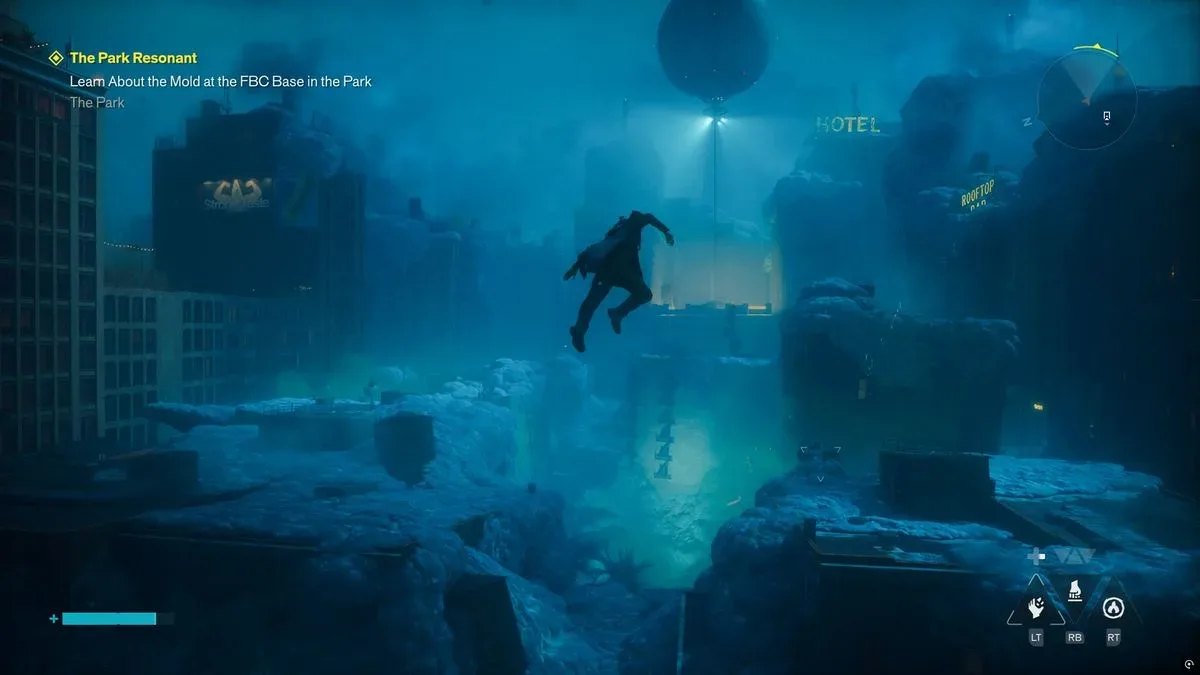
Control Resonant is now available on PC, PlayStation 5 and Xbox Series X/S, and the conversation around its launch has taken an unusual turn. Unauthorized cracked copies are already circulating, but some users in piracy-focused communities are openly encouraging one another to purchase the game instead.
The argument is not that piracy has suddenly become uncontroversial in those spaces. Far from it: responses range from wholehearted support for buying the game to blunt statements that people will download it illegally regardless. What stands out is the number of players framing a paid copy as a direct vote of confidence in Remedy, the studio behind Max Payne, Alan Wake, Control, and Quantum Break.
That response is rooted in a perception among fans that the developer’s creative reputation and its commercial position have not always moved in lockstep. Remedy has built a following for strange, atmospheric stories, dark humor, and games that take big swings with their worlds. Yet its recent releases have also faced difficult business realities. Alan Wake 2 took more than a year to turn a profit, while support for multiplayer project FBC: Firebreak ended in under a year.
For a segment of the audience, then, Control Resonant is being treated as more than just another release. It is being viewed as a chance to support the continued life of the studio’s games and the wider universe connecting Control and Alan Wake.
Why the purchase debate is getting so much attention
It is important not to overstate what social posts can prove. Messages from users in piracy forums or on Reddit do not establish how many people will actually buy the game, nor do they reveal the game’s sales performance. They do, however, show an uncommon kind of fan discussion: people who identify with communities built around obtaining games without paying are debating whether this particular release deserves an exception.
Several comments express the same basic sentiment: Remedy makes work these players consider distinctive, and that work is worth supporting financially if they can afford to do so. One poster described Control Resonant as among the rare games they intend to buy, while others said they had not planned a purchase but felt moved to reconsider because they value the studio and want it to keep making games.
Other replies push back, either on principle or because players say their own budgets do not allow for a new purchase. That distinction matters. A game’s retail price, an individual’s financial circumstances, platform availability, regional pricing, and access to payment methods can all shape buying decisions. Sympathy for a developer does not automatically become a transaction.
Still, the discussion illustrates something publishers pursue constantly but cannot simply manufacture: an audience that sees a purchase as support for a creative identity, rather than only payment for a product. Brand loyalty is often discussed in abstract terms. Here it is appearing in a very direct form—fans connecting the decision to buy one game with the possibility of more Remedy games in the future.
Related coverage includes Control Resonant Launches as Fans Urge Players to Support Remedy.
What is at stake for Remedy’s connected franchises
Remedy’s current strategy places major weight on franchises it owns. Control and Alan Wake are linked through the Remedy Connected Universe, a label for the shared fictional framework connecting the two series. In practical terms, a connected universe can make each individual release more valuable to a publisher: a successful game can introduce players to other entries, give familiar narrative elements new uses, and build longer-term recognition around a single creative world.
That does not mean Control Resonant must carry every aspect of Remedy’s future by itself. The company continues to list the Max Payne 1 & 2 remakes as in production. It has also said an unannounced new project has reached “production readiness,” without explaining what that project is. There is no confirmed basis to label it an Alan Wake 3, another Control game, or any other specific title.
But the company’s stated direction is clear: it intends to self-publish future games where it owns the intellectual property, or IP. Intellectual property here means the underlying creative property—the characters, worlds, names, and concepts—that a company can develop across multiple games. Self-publishing means Remedy would take on the publishing role for those projects rather than relying on another publisher for that side of the business.
That approach can offer more control over an owned franchise, but it also means the studio has a stronger direct interest in each launch finding an audience. Players responding to Control Resonant are therefore not only considering the game in isolation. Some are explicitly thinking about the future of Control, Alan Wake, and Remedy’s ability to keep expanding both.
Early interest offers a signal, not a final answer
Before launch, Remedy CEO Jean-Charles Gaudechon said Control Resonant had reached 1.5 million wishlists across PC and consoles. He also said it ranked among the top three pre-ordered PlayStation games in the United States, Germany, and Brazil.
A wishlist is a platform feature that lets a player mark a game for later attention, often receiving updates or sale notifications. It can signal interest, but it is not the same as a purchase. A pre-order is a purchase commitment made before release, and therefore represents a firmer indicator of demand. Neither number supplied here can determine the game’s eventual commercial outcome on its own; sales after launch, player reception, and the costs associated with development and publishing are all part of the bigger picture.
Gaudechon characterized Control Resonant as a day-one purchase positioned to establish Control as a durable franchise. He also pointed to availability on all major platforms from launch, an attractive AAA price, and a release period that had become somewhat less crowded than when the game was first revealed.
Those are conventional parts of a launch strategy, but they carry particular significance for a game seeking to broaden a franchise. Releasing across PC, PS5, and Xbox Series X/S gives the game access to audiences that may not overlap. A player who knows Control from one platform is not the only target; the goal is also to reach newcomers who may be encountering the series, or Remedy’s broader work, for the first time.
The broader autumn slate remains competitive. Players tracking what else is arriving on PC can also see how publishers are staking out their own audiences with projects such as Rogue Trader’s final story DLC. In that environment, visibility, word of mouth, and a clear identity can matter as much as raw awareness.
Reception focuses on the world as much as the action
Critical reception cited for Control Resonant includes an 8/10 assessment that calls it a strong addition to the Remedyverse. The review’s central point is a useful one for prospective players: while the story is said to follow a more familiar structure, the appeal lies heavily in its imaginative setting and the human details grounding its paranormal material.
The same assessment notes that the sharpness of the combat can fade over time. That is a meaningful caveat, especially for players whose primary interest is a combat system that stays fresh across an entire game. Conversely, players who come to Remedy for world-building, characters, unsettling mysteries, and unusual tone may find that the qualities praised most strongly are closer to what they want.
“Remedyverse” is informal shorthand for the shared creative continuity around Remedy’s interconnected franchises. It should not be read as a promise that every game will require encyclopedic knowledge of every earlier title. Rather, it conveys that the studio has been building relationships between its worlds, and that fans often enjoy spotting those links.
A practical way to decide whether to buy
The loudest part of the conversation is understandably emotional: fans want a studio they admire to survive and grow. But support and informed purchasing do not need to be opposing ideas. Players deciding whether Control Resonant is for them can separate the questions.
- Start with the platform: Control Resonant is available on PC, PS5, and Xbox Series X/S.
- Consider what you value most: available criticism highlights inventive world-building and grounded paranormal intrigue, while cautioning that combat may lose some impact later on.
- Recognize what a purchase means: buying through official channels supports the commercial performance of the release; it is not merely a symbolic gesture.
- Keep claims proportionate: online posts can reflect genuine enthusiasm, but they cannot tell us the final sales result or prove a company’s financial outcome.
The calls to buy Control Resonant are notable precisely because they come from a setting where that conclusion is not normally assumed. Whether the enthusiasm translates into sales remains unknown. What is already clear is that Remedy has a community willing to articulate why its work matters to them—and, for some of those fans, why this is a release they do not want to leave unsupported.