Warhammer 40,000: Rogue Trader is preparing to make its final procession into the Warp. Developer Owlcat plans to release Processional of the Damned, the cRPG’s final DLC, this December. The expansion is intended to bring the game’s story to a close roughly three years after the base game launched in December 2023.
The name is suitably restrained for the 41st millennium, a setting in which a “procession” is rarely a polite march with banners and nearly always an appointment with cosmic horror. More importantly, the announced additions suggest this is not simply a farewell pack of equipment. Processional of the Damned will add a new story, recruitable companion, playable archetype, enemies, gear and systems that are designed to enter the main campaign rather than sit in a self-contained side pocket.
A final chapter integrated into the campaign
Owlcat says the DLC will follow the model of the previous three expansions by being fully integrated with the main game. In practical terms, that means its quests will appear throughout the existing story. Players beginning a new run and players returning to an ongoing campaign should therefore think of the DLC as additional narrative material interwoven with the Rogue Trader’s wider journey, not merely an epilogue selected after the credits.
That approach matters for a character-driven cRPG. A cRPG, or computer role-playing game, is a broad label generally associated with role-playing choices, party members, dialogue and progression systems. Here, building the expansion into the campaign means its companion and new mechanics can have room to intersect with decisions and battles across the story, rather than being confined to a brief bonus chapter.
It also fits the stated purpose of the release. Owlcat is calling this the game’s final DLC, so Processional of the Damned appears positioned as a capstone: one more major thread for players to encounter while moving through the campaign, before the studio turns its attention toward its next projects.
Stella brings psychic power—and obvious reasons for concern
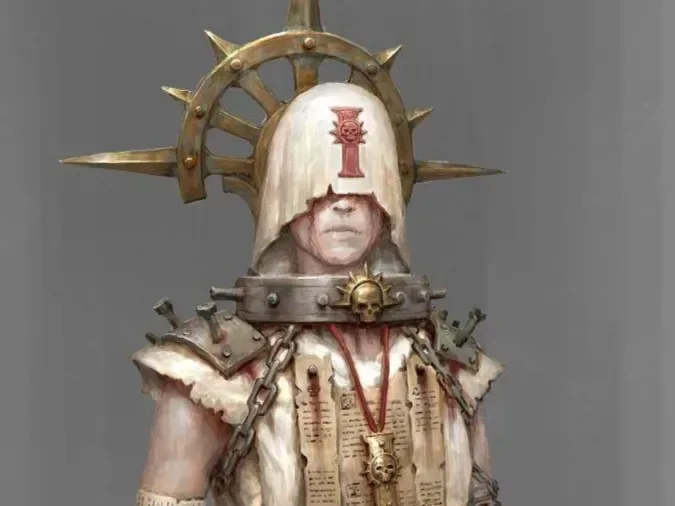
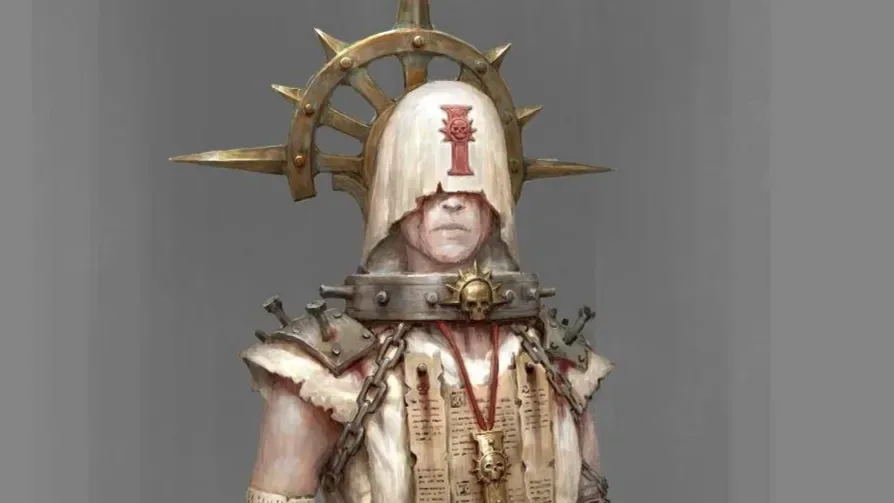
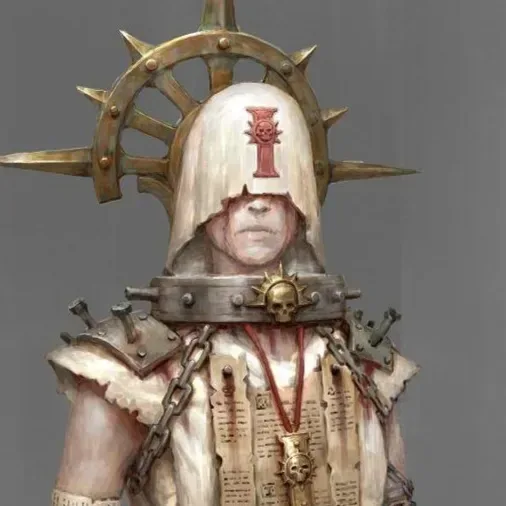
The centerpiece is Stella, a recruitable companion described as a miraculist raised by the Ecclesiarchy. She is an unsanctioned psyker with formidable psychic abilities, though her religious order regards her as a miracle of the God Emperor rather than simply a person whose powers require an alarming amount of careful handling.
In Warhammer 40,000 terms, a psyker is an individual who uses psychic power connected to the Warp. The Warp is the setting’s dangerous otherworldly realm, and the source material presents psychic ability as a power with substantial personal and wider risks. Stella’s description keeps that tension front and center: she sheds tears of blood, her porcelain-like skin cracks, and her instability is not framed as a problem that can be neatly erased.
Her combat role is clearer. Stella can emit a wave of psychic flares that damages enemies around her, giving her an area-of-effect option. Area-of-effect damage means an attack affects multiple targets within a defined space instead of only one enemy. That can be useful when opponents group together, though the provided details do not establish her exact abilities, progression options or party placement requirements.
Related coverage includes Warhammer 40,000: Rogue Trader's Final DLC Will Conclude Its Story This December.
Her story is intended to give players meaningful direction as well. Players may shape Stella into a weapon, support her as a friend and ally, or pursue her descent into madness with her. The announcement does not spell out how those paths are tracked or how far their consequences reach, but it establishes that Stella is more than a combat roster addition. Her unstable power and her order’s interpretation of it are core to the DLC’s narrative premise.
The Zealot is built for the direct approach
Processional of the Damned also adds a new playable Archetype: the Zealot. An archetype is a gameplay progression role or class identity, defining a character’s broad tactical focus. The Zealot is described as melee-focused and specializes in bludgeoning enemies to death.
There is a refreshing lack of ambiguity there. Where Stella’s introduction emphasizes volatile psychic ability, the Zealot points toward close-range physical violence. The announcement does not identify particular weapons, skills or build interactions, so players should be careful not to read a full character-build spreadsheet into that simple description. Still, its stated role provides a clear new direction for anyone who would rather solve a hostile encounter by standing close enough to make the encounter regret its life choices.
New gear and gameplay features are also planned, but Owlcat has not detailed them yet. The same caution applies to the new enemy groups: the DLC will include foes from the Arch Enemy and the Aeldari, without further specifics on units, encounters or bosses.
Madness will affect every companion
The other major system announced is Madness, which will affect all companions. That wording makes it potentially more consequential than a mechanic tied solely to Stella. A companion-wide feature could alter how players assess their entire party, especially in a game already centered on assembling characters with distinct stories and battlefield roles.
Exactly what Madness does has not been explained. It may be connected thematically to psychic peril, Warp exposure or the broader tone of the expansion, but the announcement does not define its rules, penalties, triggers, player controls or long-term consequences. For now, the most accurate reading is simple: it is a new system that applies across the companion roster, and further details are needed before anyone can judge its tactical impact.
That restraint is worth keeping. “Madness” is a loaded word in Warhammer 40,000, but a name alone does not tell players whether it is a narrative state, a combat modifier, a progression mechanic, or several of those things at once. The specific implementation will determine whether it changes routine party management or becomes an occasional story complication.
What the finale means for Owlcat’s next projects
Rogue Trader helped raise Owlcat’s profile through its writing, characters and narrative, and its commercial success has led to another Warhammer 40,000 cRPG from the studio: Dark Heresy. Owlcat is also working on The Expanse: Osiris Reborn, a project described as a departure for the developer.
That makes December’s DLC notable beyond one last set of quests. It closes the active expansion story for a game that has become a significant part of Owlcat’s recent output, while the studio’s future slate moves into both another Warhammer 40,000 role-playing game and a different science-fiction universe.
For players, the immediate takeaway is more grounded: there is one remaining official expansion chapter to watch, and it is built around a new companion whose power is inseparable from danger, a blunt-force Zealot archetype, and a Madness feature with implications for the whole party. The Imperium may dislike surprises, but at least this one has the decency to announce itself before arriving with psychic flares.
For another look at a game expanding its systems and player options, see Everwind’s Winds of Creation update.