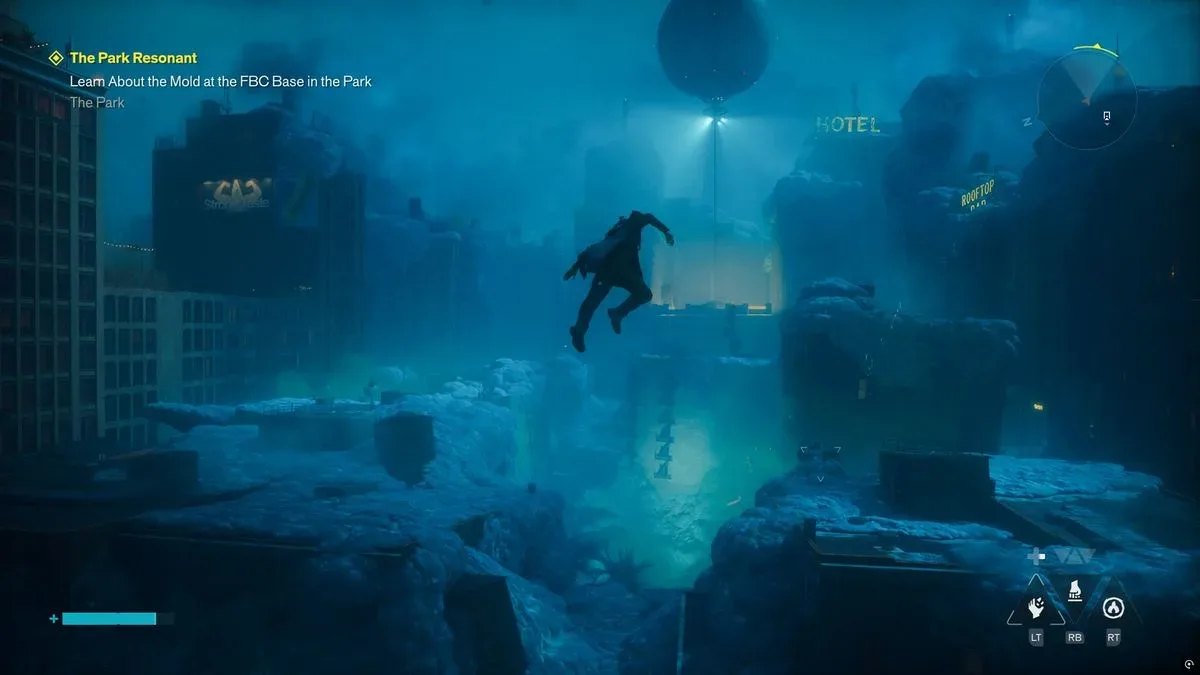
Control Resonant arrives as the next major step for Remedy Entertainment’s paranormal universe, but it takes a notably different route from its predecessor. Rather than returning to a tightly contained, shifting headquarters with Jesse Faden’s reactive shooting toolkit, it follows Dylan Faden across a Manhattan distorted by supernatural forces. The result is often visually extraordinary and occasionally inspired, yet its lengthy open-ended structure and melee-first action repeatedly blunt the impact.
It is due to launch on September 24, 2026 for PC, PlayStation 5, and Xbox Series X. The game was played on PC through to its credits in roughly 25 hours, with side content still remaining afterward. That scale is important: Control Resonant has plenty of ideas, powers, missions, upgrades, and environments, but the central combat routine reportedly changes very little over that time.
A city bent out of shape
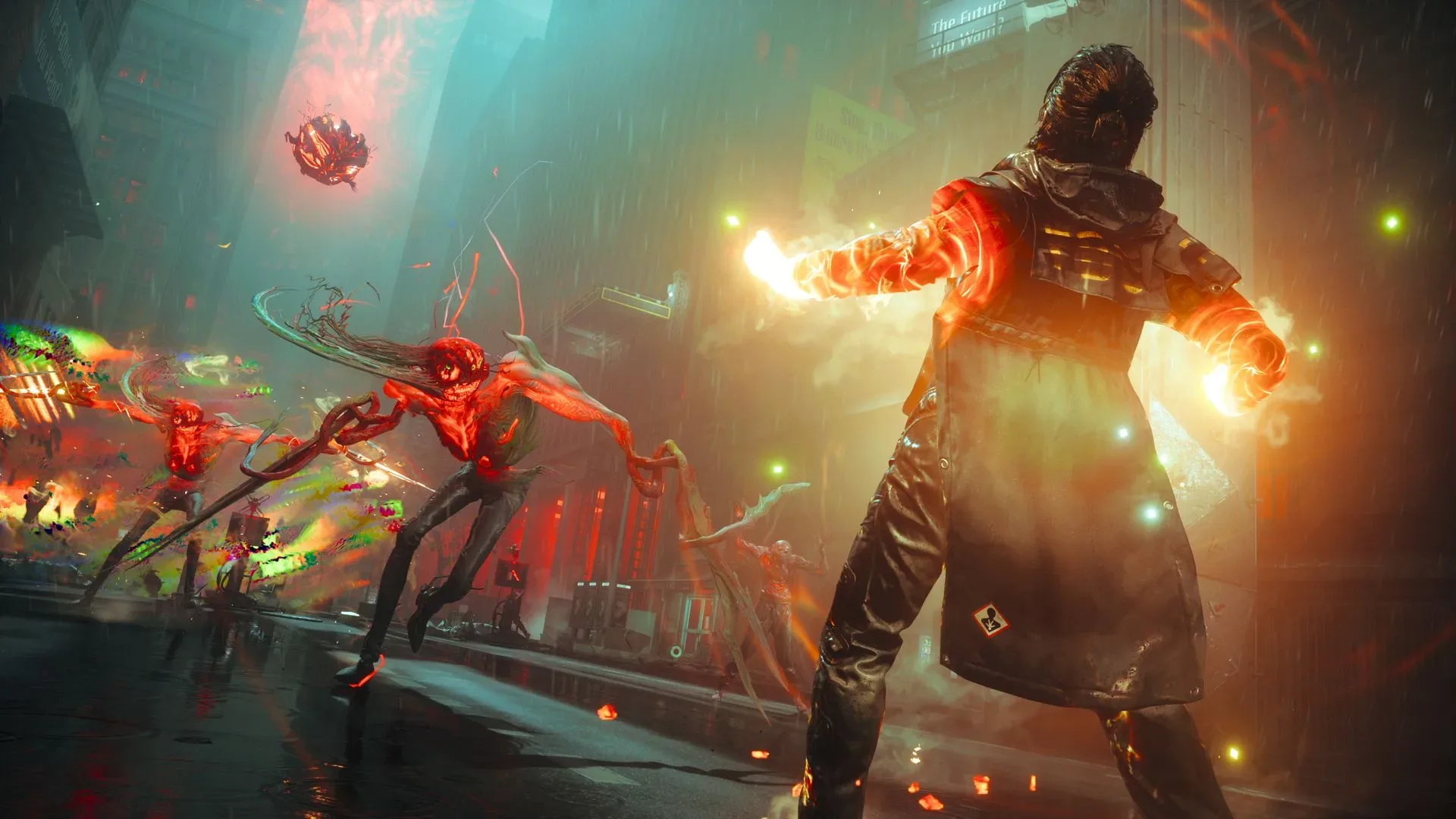
Manhattan is not presented as an ordinary open-world city with paranormal decorations pasted over it. The Patterning, the game’s primary threat, refracts its spaces into surreal formations. The West Incursion Zone has inverted-gravity streets, the Evacuation Zone shifts the action to rain-soaked rooftops, and the Park is consumed by mold. At their best, these locations create spectacular distant views and dramatic boss entrances, turning the city into a kaleidoscopic disaster zone rather than a recognizable tourist map.
The Federal Bureau of Control remains the backbone of the fiction. Players can again uncover partially redacted documentation around the agency’s attempts to understand phenomena beyond conventional explanation. That archival texture is one of the series’ most distinctive strengths: a strange event feels bigger when it is accompanied by an official-looking report that has carefully blacked out the part everyone actually wants to read.
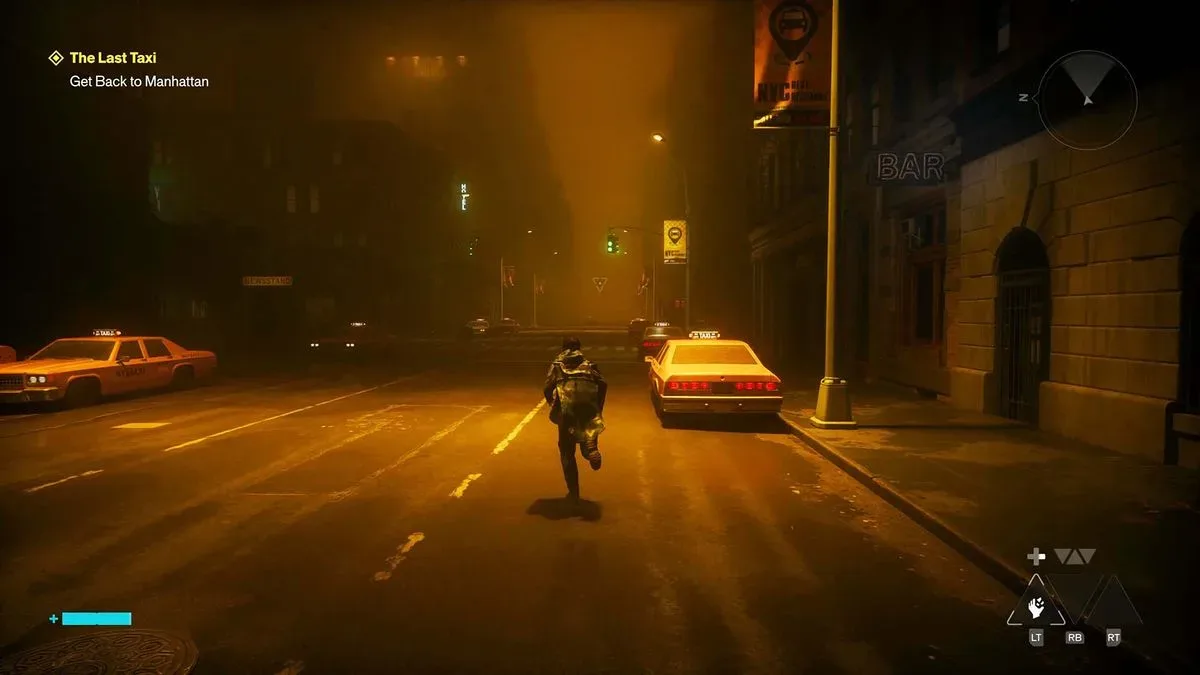
Control Resonant also adds Altered World Events, or AWEs. In this context, they are unusual incidents integrated into the wider city, rather than simply being background lore. The game’s strongest exploratory moments come from leaning into that mystery. Unmarked environmental puzzles ask players to read spaces, identify odd details, and follow logic that is intentionally stranger than a standard map-marker checklist. A seemingly abandoned laundromat can conceal a washing-machine code; elsewhere, progress involves identifying the one taxi that does not belong in an interdimensional limbo.
Those details matter because they provide an alternative rhythm to fighting. They reward observation and curiosity, and they make the city feel like a place where a mundane object may be a clue, a hazard, or something substantially less explainable. Players who enjoyed Control primarily for supernatural atmosphere, environmental deduction, and FBC paperwork may find much to appreciate in this side of Resonant.
Open-ended does not always mean varied
Dylan gains mobility powers early. His arsenal includes a sprint, a hovering double jump, and chained air dashes, while Dimensional Faults associated with his missing sister grant further traversal abilities, including the power to run across inverted walls and ceilings. It is a generous setup: multiple core zones can be investigated in a flexible order, and optional excursions provide abilities that help on the main path.
That freedom has a cost. Objectives, resource caches, and encounters are spread widely apart, so moving from one activity to another can mean extended running despite the enhanced movement. The setting changes in broad visual terms, but the immediate exploration pattern often does not. Streets, rooftops, cafes, restaurants, laundromats, subway areas, warehouses, and factories can begin to blur together. Later bottomless pits bring some variation, but they do not fully solve the sense of repeatedly crossing similar urban spaces.
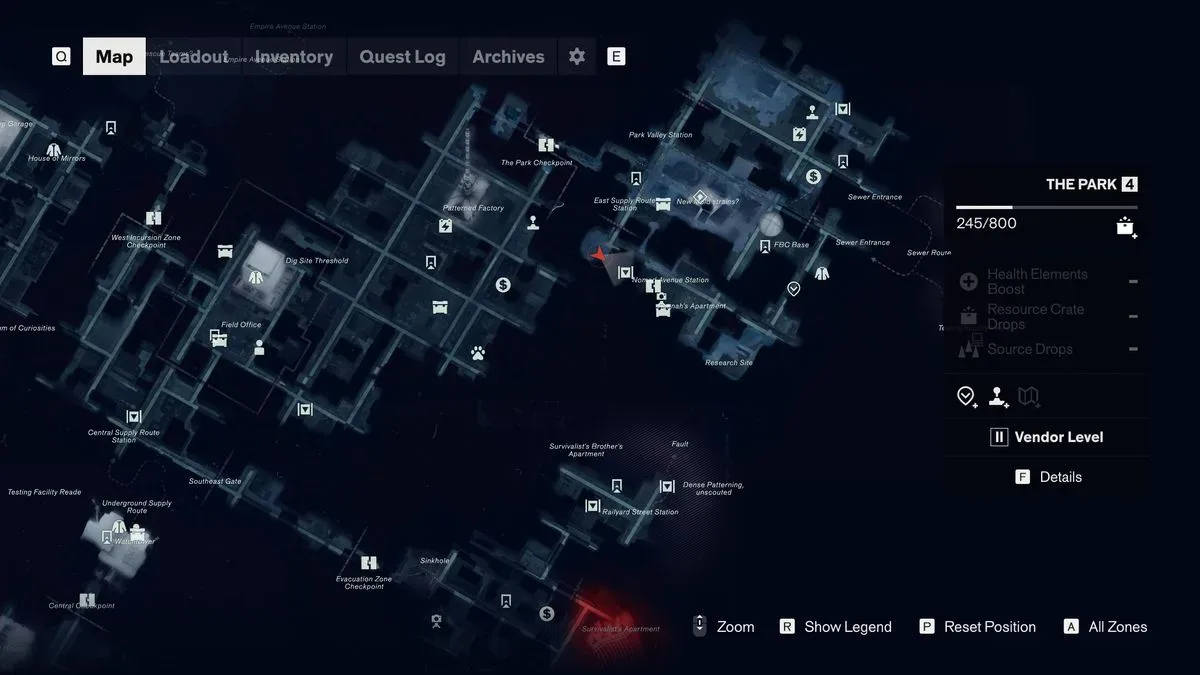
The map creates another practical complication. A conventional top-down layout has trouble communicating elevation, especially when gravity shifts place surfaces above, below, or directly against one another. That does not mean such a map is unusable, but it is a particularly awkward fit for an adventure built around verticality and altered orientation. When a game invites players to navigate ceilings and walls, clarity about where “here” is becomes more important, not less.
This is where Resonant’s best authored sequences stand apart. A late-game format change begins playfully before becoming one of the more emotionally effective stretches, while a journey through the interior depths of a high-rise develops into a striking set piece and an inversion of the original game’s Ashtray Maze. These more focused moments suggest that the game’s imagination is not the problem. Rather, the strongest material seems to emerge when the experience stops stretching itself across large distances and gives a bizarre situation time, pace, and a distinctive identity.
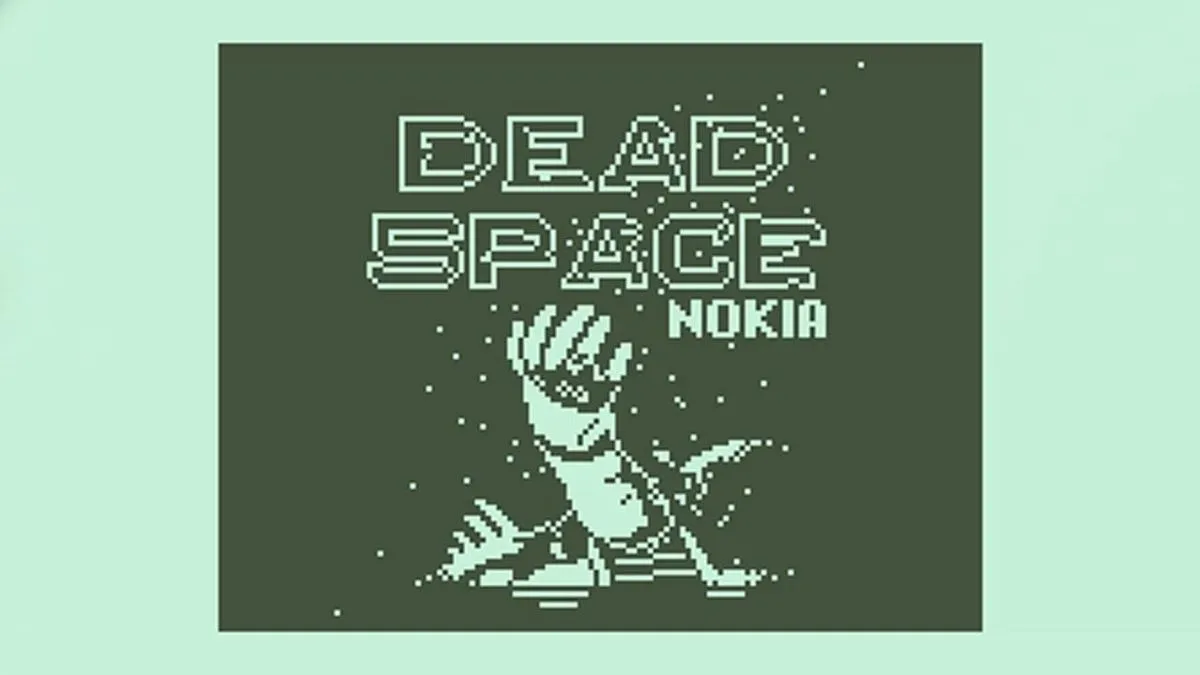
Players looking for another unusual PC game built around a radically altered version of a familiar horror setting may also want to see Dead Space’s Nokia 3310-inspired Windows demake, though its retro reinterpretation is obviously a very different proposition from Resonant’s large-scale 3D action.
Dylan’s powers sound deeper than the fights demand
Resonant frames itself as an action RPG, meaning an action game with character upgrades, skill trees, resources, and potential build choices layered on top of real-time combat. Dylan wields the Aberrant, a transformable melee weapon comparable in broad concept to Jesse’s shifting Service Weapon. Two principal forms can be equipped at a time, one generally used for lighter attacks and another for heavier blows, alongside a combo-finisher form.
The forms offer different characteristics. Some sweep across a wider area, some attack quickly, some push enemies back, and others can build stagger damage. Stagger is a temporary state where an enemy is interrupted or opened up, enabling a stronger follow-up such as a finisher. On paper, this creates reasons to consider the tool set. In practice, an early commitment to a weapon form can be frustrating before players have properly experimented with it; the drill form, for example, leaves Dylan stationary while it rotates, a dangerous tradeoff against enemies throwing projectiles.
By the end, however, resources are plentiful enough to make many upgrades affordable. This softens the consequences of early choices, but it also weakens the need to form a defined build. Build crafting normally means committing to a deliberate combination of upgrades and abilities that reinforce a particular strategy. Resonant has gestures toward that idea rather than a demanding implementation of it. Command abilities that summon allies can be improved through related nodes, and poisoning an enemy with mold before igniting it can trigger an explosion. Those are real synergies, but most skills are useful and become available quickly enough that specialization does not appear essential on the default setting.
Accessibility options are broad once players move beyond the initial default setting. Damage, power regeneration, and even one-hit kills can be adjusted. That is genuinely practical for anyone who wants to prioritize the story, puzzles, and visual atmosphere, particularly given how frequently combat intrudes on exploration.
Close-range combat meets a city full of distant threats
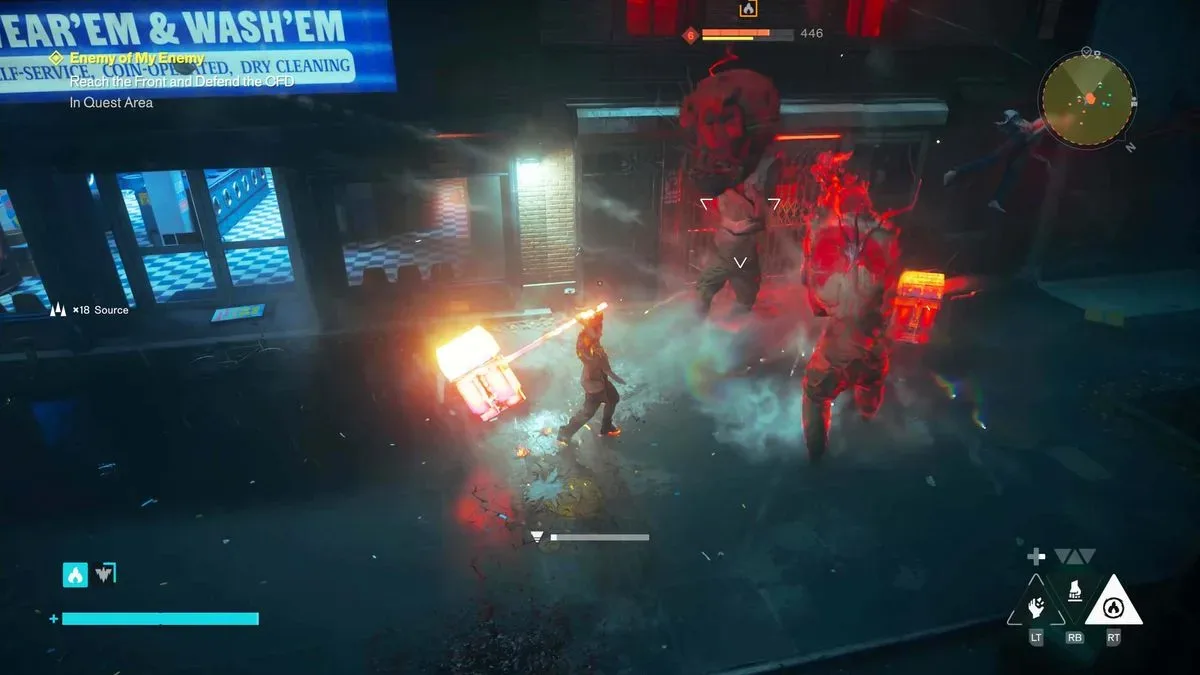
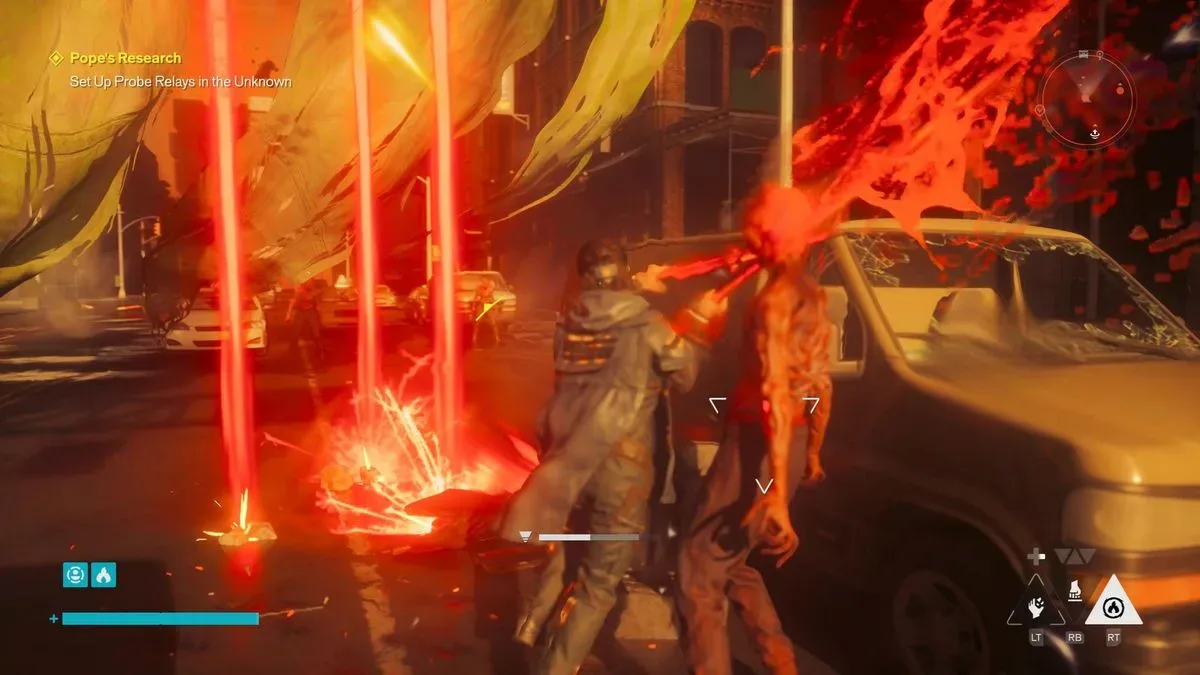
The core issue is not that Control Resonant uses melee. A paranormal hack-and-slash game could make excellent use of Dylan’s unusual situation and the Patterning’s bizarre spaces. The issue is that its fights apparently settle into a dominant answer: close the distance, attack repeatedly, use a perfect dodge, then spend powers once their meter has filled. The actions available around that loop do not consistently create meaningful tactical decisions.
Telekinetic throws offer range, but they are charged by melee, so Dylan is continually pushed back into close quarters. Powers such as turrets and weapon flame effects can help, yet more elaborate play often seems less efficient than simply continuing to strike. Combo loadouts can be changed only through The Gap rather than swapped during a fight, reducing the ability to adapt on the fly. That distinction is crucial. Having numerous tools is not the same as being asked to use different tools in response to changing threats.
Enemy design aggravates the problem. Many encounters contain projectile attackers capable of interrupting close-range combos, while Heavy enemies can endlessly respawn smaller foes. Fights also often arrive in several waves, making routine conflicts feel longer. Flying enemies can fire powerful lasers from far across the street; although a hefty hammer can stagger them out of the move, later armored health bars prevent stagger until the armor is depleted.
There is a tension in that design: the game encourages contact-range attacks while regularly surrounding Dylan with enemies that punish commitment. In a more reactive combat system, that pressure might push players toward distinct counters, weapon changes, positioning options, or enemy-priority decisions. Here it can instead become a matter of enduring projectile pressure and returning to the same attack-dodge cadence.
Gravity inversion adds visual drama but does not consistently transform combat. Once Dylan is attached to a new surface, battles can remain static. Knocking enemies off rooftops provides a satisfying exception, but it is not enough to make every altered space play differently. The larger areas can consequently make combat feel thinner rather than broader, with players crossing significant distances between groups that often resemble previous groups.
Beautiful bosses, limited payoff
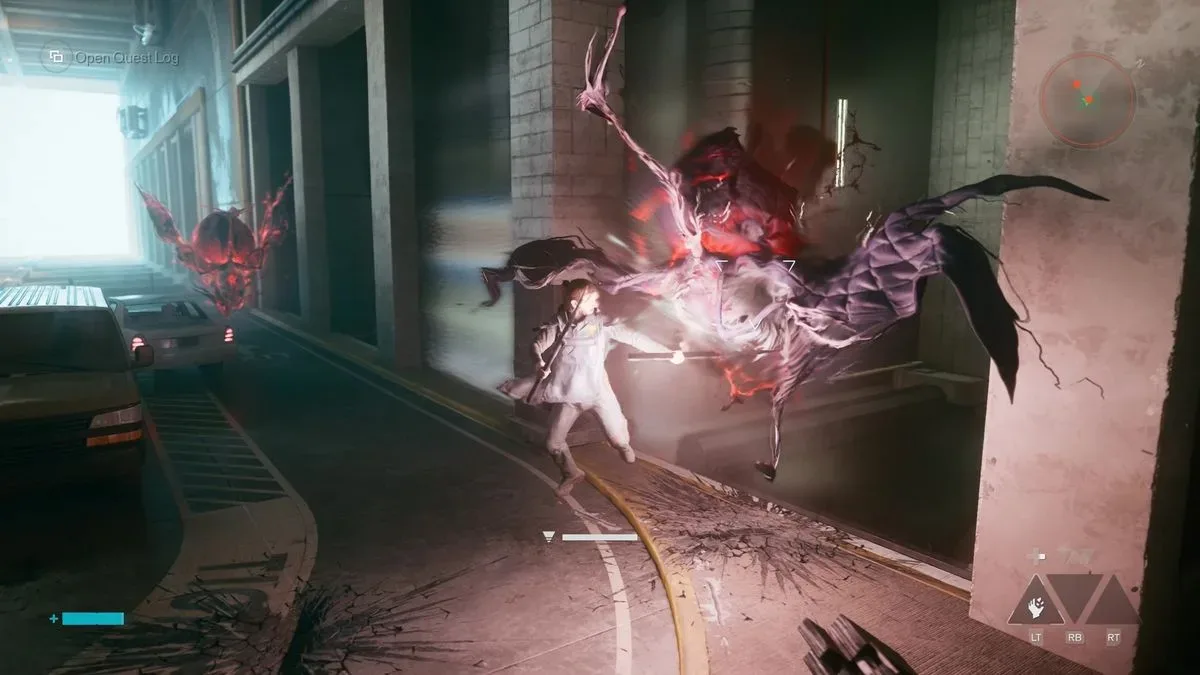
The Resonants are among the game’s most impressive visual concepts. They are humans transformed by the Patterning, and defeating them earns more overt abilities, such as telekinetically hurling debris or summoning molded poison-spitting turrets. The Dancer, who takes over a theater, is especially memorable in motion, with interpretive, drummer-like animation that makes the introduction feel theatrical and uncanny.
Yet these boss encounters do not always support their presentation. Their move sets are limited, their battles are mostly one-on-one, and the same attack-dodge rhythm can carry through to the end. In a curious reversal, ordinary groups of enemies may feel more threatening because they overwhelm Dylan in numbers. A boss should ideally test the player’s accumulated understanding of systems or reveal a new wrinkle in them; if it is simpler to ignore the interesting tools, the spectacle can fade quickly.
Narratively, the Resonants also appear underdeveloped. Their fates hint at tragedy, but the game gives little room to explore their personal stories before launching into their fights. The theater is cited as an example of a location that leads almost immediately to its confrontation. The broader plot fares somewhat better, but it struggles between following unanswered threads from the earlier game and developing self-contained paranormal stories of its own.
Dylan Faden changes the tone
The switch from Jesse to Dylan is more than a protagonist swap. Dylan was formerly confined and experimented on by the FBC, and he begins this adventure with a shock device in his skull because the agency considers him dangerously paranatural. That premise gives the story a clear opportunity to confront the organization’s abuse and moral hypocrisy.
Instead, the treatment is said to feel incomplete. Allied FBC agents largely dislike Dylan despite the institution’s history with him, giving the adventure a harsher, less welcoming tone. Dylan’s character does not always receive the material needed to make inhabiting him as compelling as his earlier, more ambiguous role while affected by the Hiss. Sean Durrie’s performance has difficult ground to cover when the writing makes Dylan more passive than enigmatic.
Control Resonant therefore looks like a game caught between two compelling versions of itself. One is a concentrated paranormal adventure filled with unnerving bureaucratic documents, inventive environmental puzzles, and meticulously staged surreal sequences. The other is a sizeable action RPG with melee combat, upgrades, roaming enemies, and broad city zones. The supplied details point to the first version being more successful than the second.
For existing Control fans, the prospect of more FBC mysteries, warped architecture, and a few unforgettable set pieces may be enough reason to investigate Manhattan. Players who need an action system that continually asks for adaptation, or an open-ended world whose activities remain sharply varied over dozens of hours, should approach with more caution. Control Resonant’s imagination remains vivid; its structure and combat just do not always give that imagination the control it deserves.