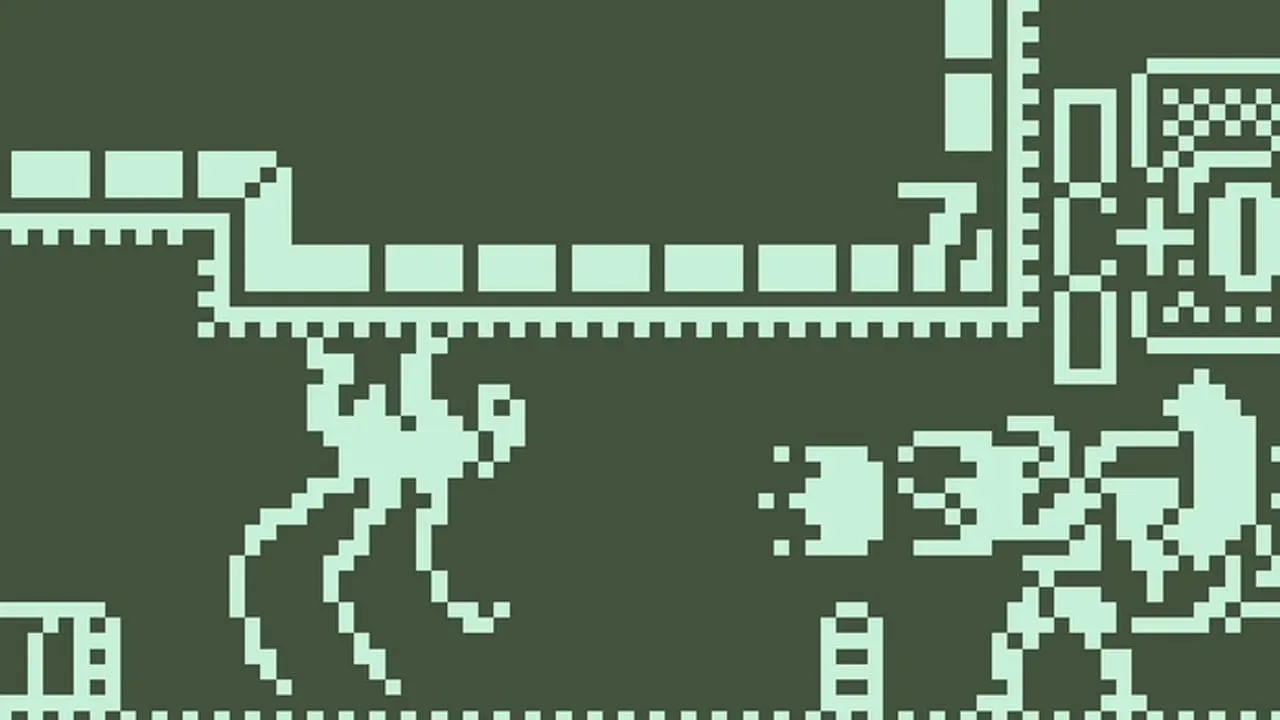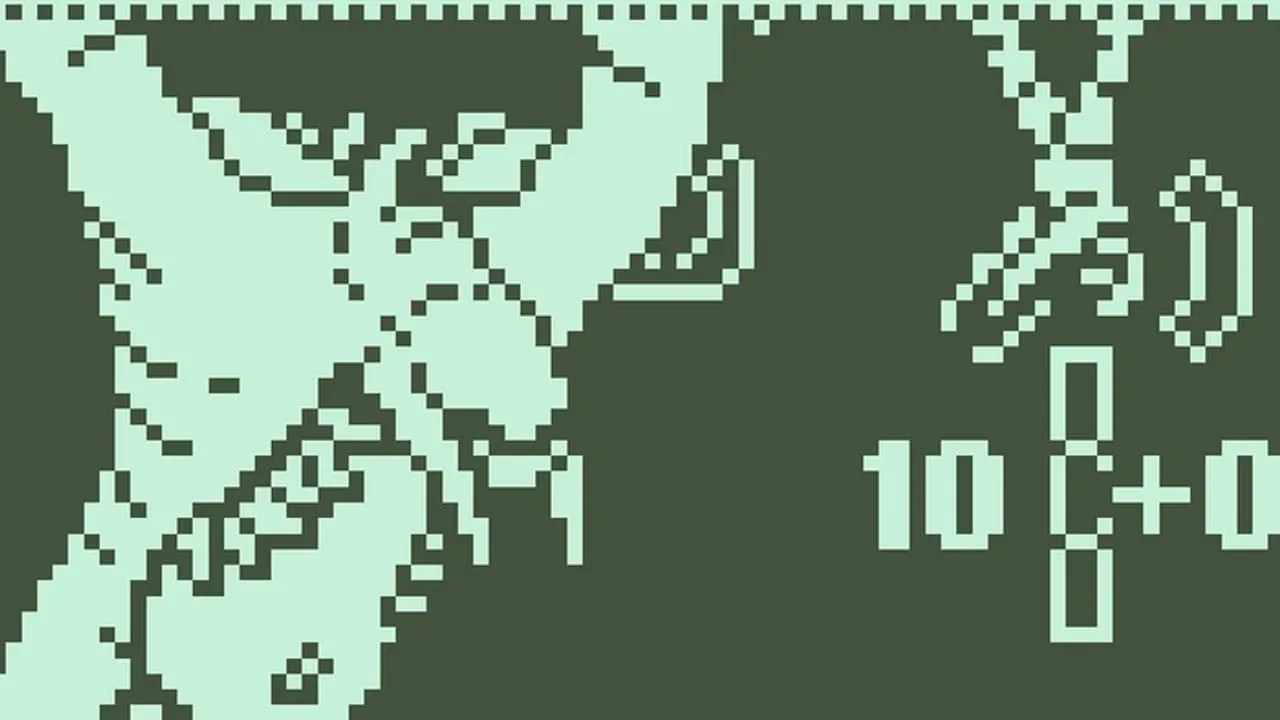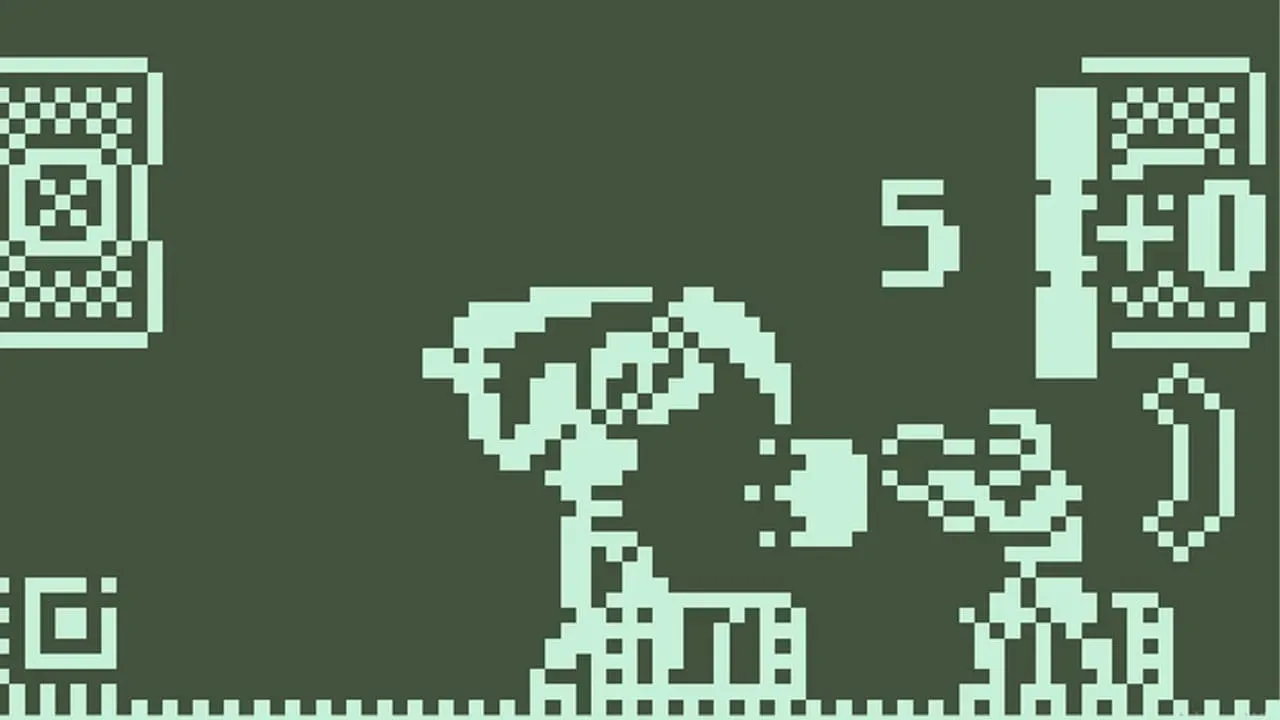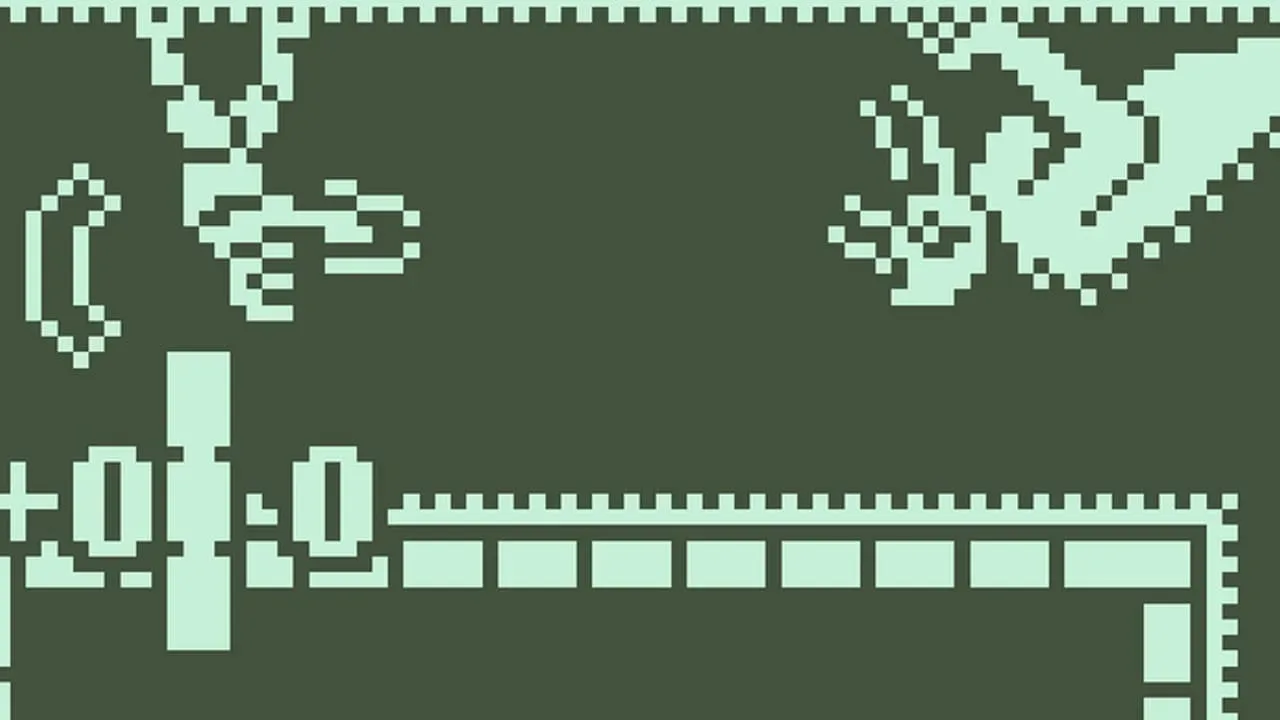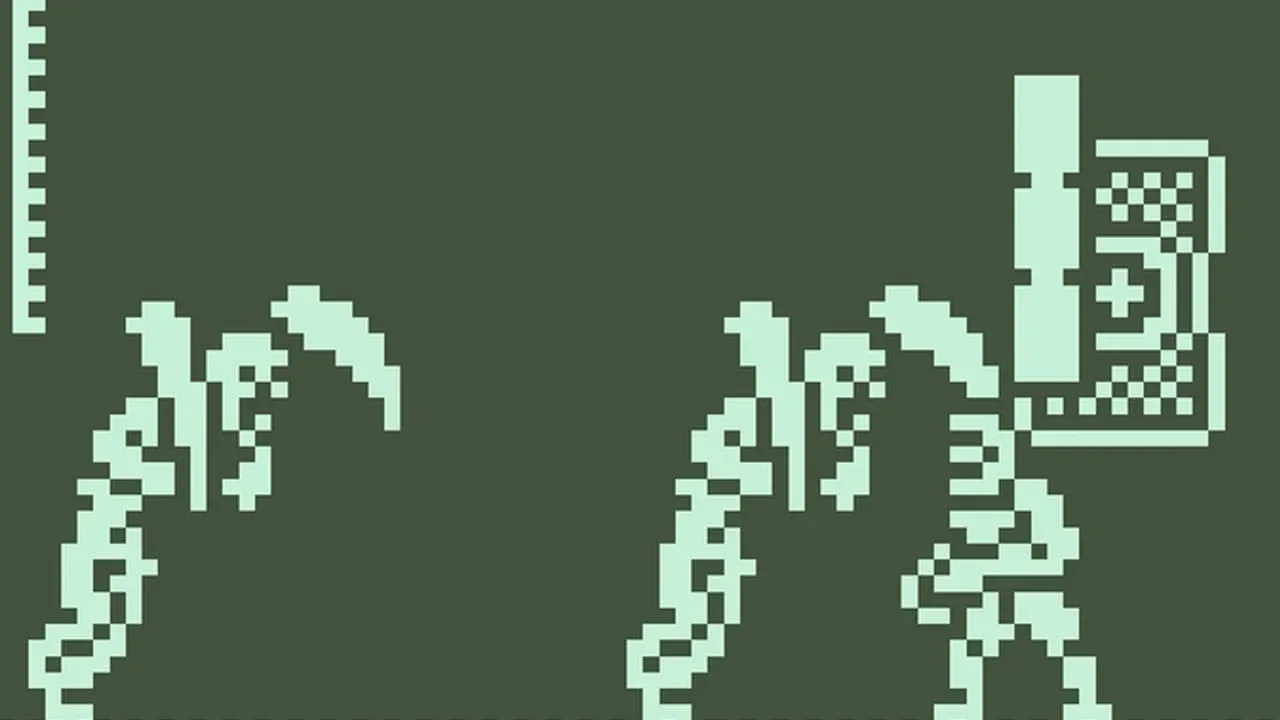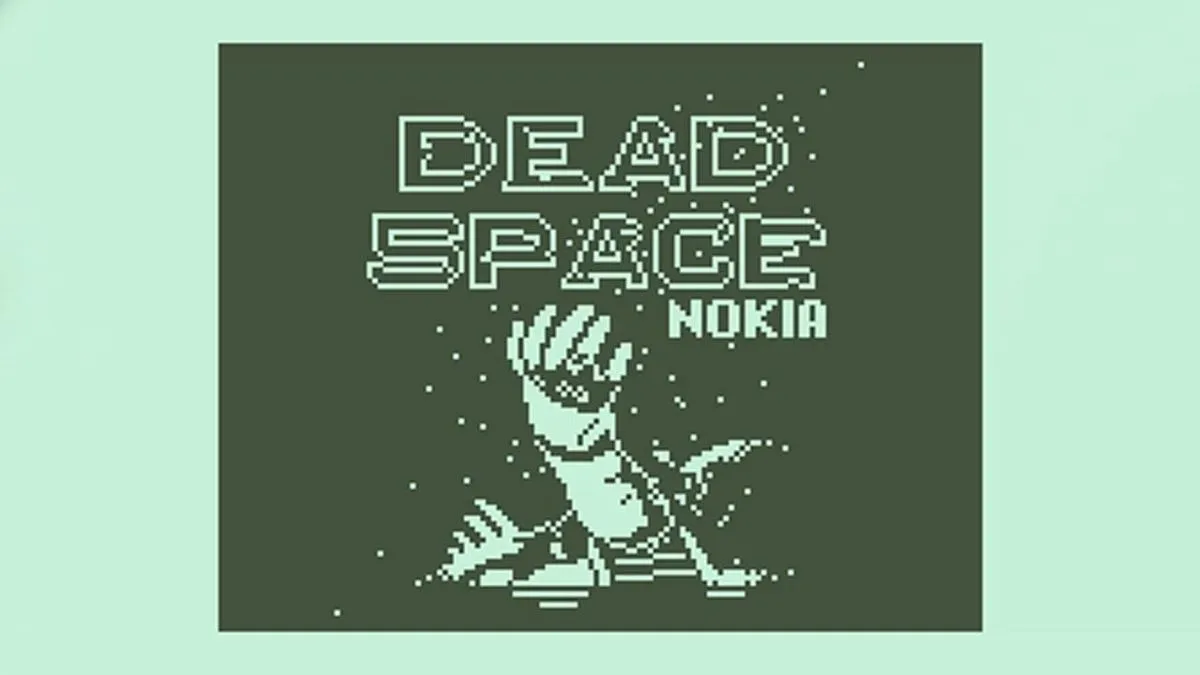
Dead Space has been reimagined for a screen and control scheme that could hardly be further from a modern survival-horror production. Developer Davide Puato has created a Nokia 3310-inspired demake of the sci-fi horror game, and an updated version is now playable on Windows.
The premise is neatly captured by the project’s own description: classic action survival horror compressed into a tiny two-colour display with mono audio. That is not simply an aesthetic filter placed over a familiar game. It is a conversion of Dead Space’s basic language—movement through hostile spaces, aiming, shooting, stomping, healing and stasis—into a deliberately limited side-scrolling format.
It is also a reminder that a demake can be more than a nostalgia gag. The best examples ask what remains identifiable when a game’s technology, perspective and interface are stripped back. In this case, Puato’s version keeps a number of mechanics closely associated with Dead Space while presenting them through an imaginary old-phone framework rather than a high-end cinematic one.
A survival-horror game through a tiny-phone lens
Dead Space is known as a survival-horror game, a genre built around vulnerability, tension and managing danger rather than pure power fantasy. A Nokia 3310-style adaptation naturally changes how those ideas are conveyed. There is no suggestion here of reproducing the original game’s audiovisual scale on old hardware. The point is the opposite: the demake embraces the constraints suggested by a tiny, two-colour screen and mono sound.
Mono audio means sound is delivered through a single channel rather than a stereo arrangement with separate left and right channels. Two-colour describes an intentionally restricted visual palette. Those limitations matter because horror games frequently use rich lighting, detailed environments and directional audio to shape player awareness. Reducing those tools forces the presentation to communicate through much simpler visual silhouettes, motion and immediate player actions.
The result is a side-scroller, a format where play unfolds across a horizontal plane rather than through the fully 3D spaces associated with the original Dead Space. That shift is substantial. Perspective affects what players can see, how they judge distance and how a threat approaches. A side-scroller places enemies and hazards into a flatter visual relationship with the player character, making the act of reading the screen more direct while still leaving room for pressure and uncertainty.
Rather than treating that difference as a flaw, the project makes it the premise. It imagines a version of Dead Space that could have belonged to the era of simple mobile games, keypad messaging and custom ringtone composition—an era frequently associated with the Nokia 3310. The Windows release makes the idea accessible without requiring an actual handset from that period.
The controls preserve the important verbs
Puato’s updated release uses a keyboard control layout. Players move with the arrow keys and interact using the Up key. Z is used for aiming, X handles both shooting and stomping, and C is assigned to healing and stasis.
- Arrow keys: movement
- Up: interaction
- Z: aiming
- X: shooting and stomping
- C: healing and stasis
That list is important because it shows the demake is not only borrowing Dead Space’s name and horror imagery. It carries over a compact set of gameplay actions. Shooting is an obvious inclusion for an action survival-horror adaptation, but stomping is especially telling: it is a specific, forceful close-range action that remains part of the game’s identity even when translated into a much smaller format.
Healing is equally central to the survival-horror side of the equation. In genre terms, healing is not merely a convenience button; it represents a limited recovery tool that can become meaningful when danger accumulates. The inclusion of stasis also preserves a science-fiction utility mechanic. Stasis, in this context, is a special ability separate from ordinary movement and weapon use. Its presence signals an effort to retain a recognizable piece of Dead Space’s mechanical DNA despite the drastic reduction in presentation.
The controls are also an example of sensible adaptation. A Nokia 3310-inspired game needs an input model that feels concise and legible. Assigning movement, interaction, aim, attack, recovery and stasis across a small cluster of keys gives the player a direct translation of the core actions without pretending this is a one-to-one reproduction of the original control scheme.
What “demake” means here
A demake is a reinterpretation of a game as though it had been created for earlier or less capable technology. It differs from a remake, which generally rebuilds a game with contemporary technology and may add fidelity or features. A demake moves in the other direction: it reduces technical complexity on purpose, often adopting the visual conventions, control limitations or genre conventions of an older system.
That does not mean a demake is automatically simple to make. Cutting away detail creates design questions. Which mechanics are essential? Which visual cues can communicate danger with only a few colours? How should a 3D action game be structured when viewed from the side? Which pieces of the source game’s atmosphere survive after the technical spectacle is removed?
The Dead Space project answers at least some of those questions by retaining its action vocabulary and turning it into a side-scrolling experience. The small-screen concept is not trying to compete with a modern horror game on graphical detail. Its appeal is in seeing an established game identity expressed under artificial constraints.
That is why the Nokia 3310 framing works. The phone is a cultural shorthand for durable, basic mobile technology and an era before smartphones became the default portable gaming device. A contemporary PC game translated into that imagined environment creates an immediate contrast: industrial sci-fi horror becomes something that appears at home beside much simpler handset entertainment.
From game jam concept to updated Windows build
The game was originally made for the Nokia 3310 Jam and has since received an updated playable version. Game jams are time-bounded creative events or competitions in which participants build work around a shared theme, platform idea or set of restrictions. In this case, the Nokia 3310 concept provides the obvious design constraint: make something that evokes the visual and technical character of the famous phone.
Constraints are often productive in small game projects because they give developers a clear target. A tiny display, limited colour treatment and simple sound are not just obstacles; they establish a coherent creative rule set. Every art decision and interaction can be evaluated against the same question: does this feel like it belongs in the chosen format?
The jam’s rules also prohibit AI use. That detail is relevant to the project’s identity because game-jam work is often valued for showing how a creator responds directly to a specific prompt and set of limitations. Here, the appeal lies in the hand-shaped transformation of a well-known horror concept into an intentionally primitive-looking game rather than in a claim of technological fidelity.
The playable build runs on Windows. This is a practical distinction worth making: the project is inspired by the Nokia 3310, but it is not presented as software that requires players to own or operate the original phone. The old mobile device is the design language; Windows is the platform used to play the current version.
Why the conversion is more interesting than a visual joke
Retro demakes can initially sound like novelty projects, especially when the contrast is as sharp as modern-style survival horror on a basic mobile phone. Yet this particular conversion has a more specific design appeal. Dead Space’s recognizable identity is not only attached to detailed spaces or sophisticated graphics. It is also built from a sequence of player verbs: explore, interact, aim, shoot, stomp, heal and activate a special ability.
Once those verbs are isolated, a different kind of adaptation becomes possible. The game can look radically unlike its inspiration while still referencing it through what the player does. That is a useful way to understand why the project can remain recognizable even as it abandons the original perspective for a side-scroller and adopts an aggressively reduced audiovisual style.
There is a practical lesson for players, too. Anyone downloading the Windows build should approach it as a compact reinterpretation, not a substitute for Dead Space or a technical port of it. The controls establish its own rhythm, and the small-screen presentation is part of the challenge and charm. A player expecting lavish 3D environments would be asking the project to do something it was never designed to do. A player interested in how a familiar horror-game concept survives radical compression is much closer to its intended audience.
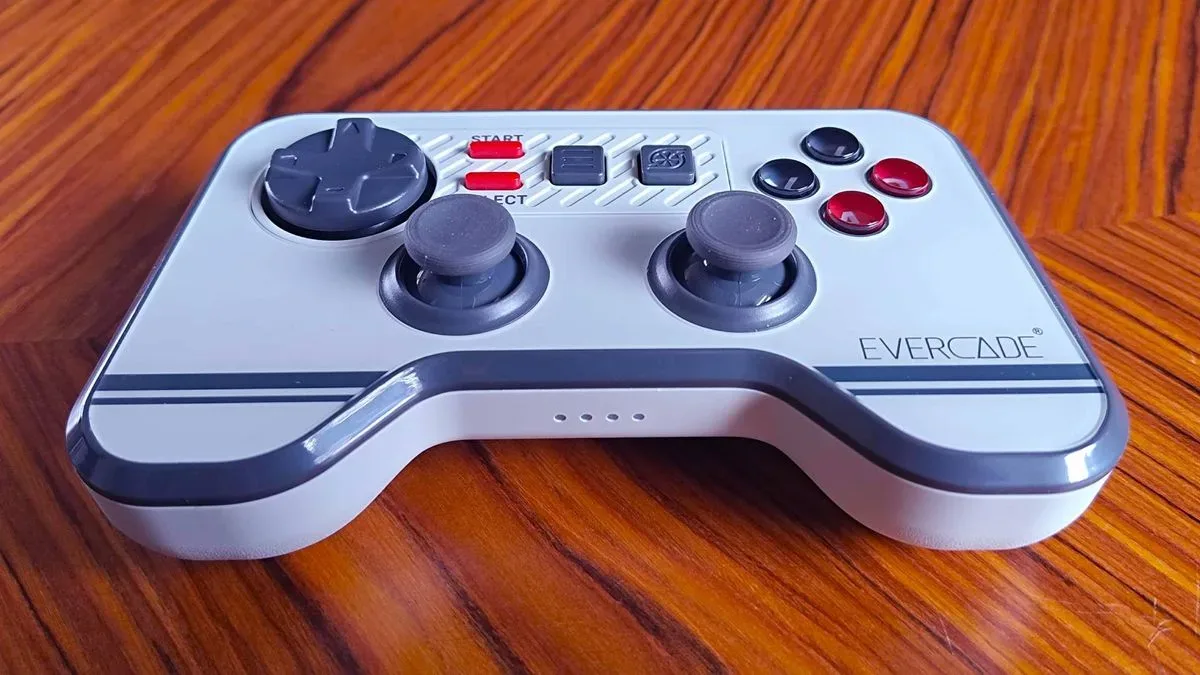
It also sits comfortably within a wider enthusiasm for retro-flavoured projects and hardware-inspired design. The appeal is not limited to collecting old devices or replaying unchanged classics. Creators continue to use the rules and visual shorthand of earlier technology as a framework for new work. For another recent example of retro-focused gaming hardware news, see Evercade’s purpose-built dual-thumbstick controller.
A compact tribute built around limitation
Puato’s Dead Space demake is an unusual fit on paper: survival horror recast as a two-colour, mono-audio game inspired by a famously basic phone. But the project’s control set demonstrates that the adaptation has a clear mechanical foundation. It keeps movement, interaction, aiming, shooting, stomping, healing and stasis in view, then rebuilds their presentation around a deliberately constrained side-scrolling format.
That makes the updated Windows version a small but focused example of demake design. It does not claim to recreate every part of Dead Space. Instead, it asks a narrower and more entertaining question: what would the game feel like if its essentials had to fit into the visual and audio language of a Nokia 3310-era mobile game?