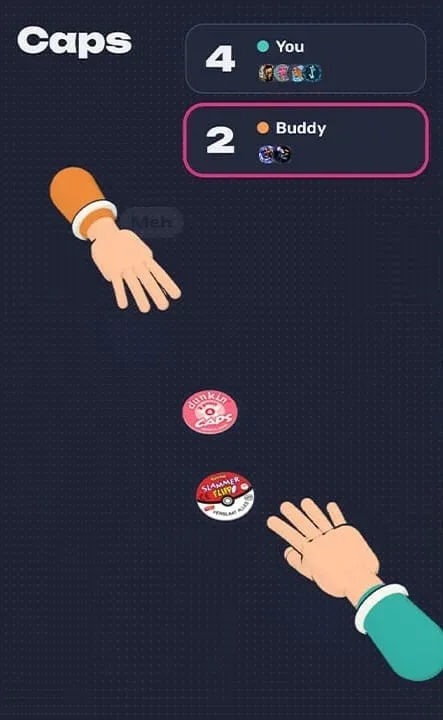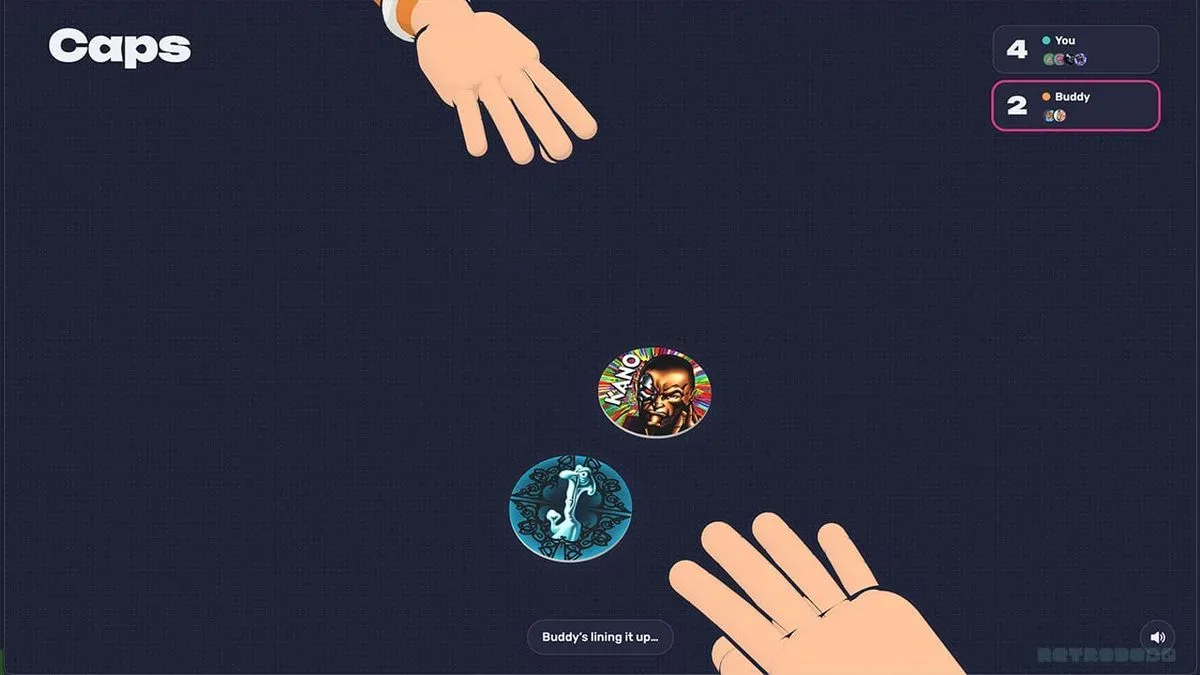
A small browser game called Caps is putting a digital spin on the Pogs-style cap-flipping pastime associated with 1990s playgrounds, snack promotions and stacks of vividly printed cardboard discs. Created by tjaydesign, the free game focuses on one central action: slam a cap down, try to turn it face-up, and claim the caps at stake when the flip goes your way.
That intentionally compact premise is the point. Caps is not presented as a sprawling collection game or a simulation loaded with menus and systems. It is a quick, repeatable contest against a CPU opponent, built around a familiar risk-and-reward loop. The cap designs add the nostalgic layer, with reported themes including Casper, Chupa Chups, Dunkin’ Donuts, Pokémon and Pogs-style artwork.
How Caps works
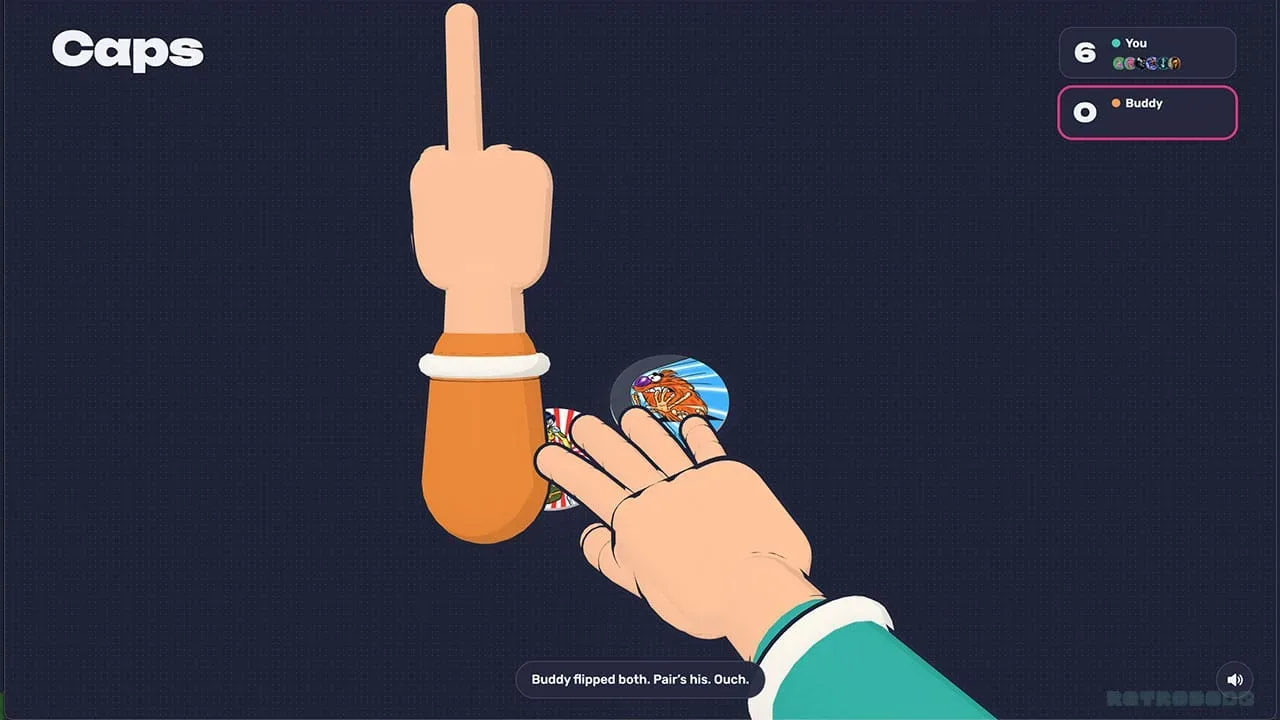
Each round begins with a cap-flipping attempt. The aim is to land a cap face-up. If the player succeeds while the CPU opponent does not, the game moves into a higher-stakes throw involving both caps. The same basic outcome determines ownership: if both caps land face-up after that combined throw, they go to either the player or the CPU opponent, depending on whose result wins.
The interaction relies on a power meter. In practical terms, that is a timing gauge: players try to stop or activate it when the indicator reaches a highlighted green section. Landing in that area improves the chance of a successful flip. It is an immediately understandable mechanic for anyone who has played games where swing strength, shot power or launch force is set by a moving bar.
The meter matters because it gives a physical-feeling action a simple digital equivalent. Throwing a real cap involved variables a browser cannot easily reproduce, from the angle of a slammer to the surface underneath it. Caps narrows that down to timing. The result is accessible: a round can be understood within moments, but a failed attempt creates the urge to take one more shot.
What “Pogs-style” means here
Pogs, often also called milk caps, were circular discs used in a game where players attempted to flip a stack. They also became collectibles because the artwork varied widely. That combination is central to Caps: the rules provide the immediate contest, while the different cap designs provide the visual novelty.
The game’s designs draw on the sort of licensed and branded imagery that made physical caps memorable to many players. Pokémon and Casper are among the recognizable examples, while Chupa Chups and Dunkin’ Donuts point to the snack and retail branding that often accompanied cap promotions. In other words, the digital version is not merely asking players to flip generic discs. It uses themed art to evoke the sense of seeing a new design turn up in a pack or a friend’s pile.
That is distinct from a traditional trading-card experience. There is no evidence here of rarity tiers, card condition, marketplace value or detailed catalogue management. The “collecting” appeal is visual and playful rather than a real-world hobby workflow. The caps are part of the game’s presentation and its moment-to-moment stakes.
Related coverage includes Caps Brings Pogs-Style 90s Collecting to Your Browser.
A deliberately low-friction browser game
The most practical feature of Caps is that it runs in a browser and is free to play. There is no stated requirement to download a client or set up a physical play space. That makes it well suited to short breaks: open the page, play a few flips, and leave when finished. Of course, simple timing games can also encourage much longer sessions than planned, especially when each loss feels close enough to reverse on the next attempt.
Browser availability also means the experience can vary across devices. During play, Pokémon-themed caps appeared on a phone but did not appear on a laptop, even after several browser windows were opened. That is an observation rather than a documented rule, so players should not assume a particular theme is guaranteed on a specific device. The reported cap selection appears to be part of the game’s rotation or presentation, but the available information does not establish how designs are selected or whether they are tied to platform.
That uncertainty is worth keeping in mind for anyone specifically hoping to encounter one franchise or brand. Caps has been seen serving several different themed designs, but there is no supplied indication of a search tool, a collection checklist, an unlock route or a way to force a particular cap set. The most reliable expectation is the core flipping game itself, not access to any individual design.
Why the format can be so absorbing
Caps’ appeal can be explained without overstating its scope. Its rounds are brief, its objective is visible, and its control scheme supplies a clear target: hit the green zone. Those are useful traits for a casual game because the player can instantly connect an input to an outcome. A near-miss does not require a long tutorial to interpret. It simply suggests better timing next round.
The ownership mechanic adds consequence without making the game complicated. Winning a cap changes the next moment from an isolated timing test into a tiny contest over a shared stake. The player is not only trying to flip successfully; they are trying to take both caps in play before the CPU does. That is enough structure to make the repeated throws feel purposeful while preserving the pick-up-and-play nature of the concept.
Nostalgia does additional work. The game does not need to recreate every detail of schoolyard play to trigger the association. A stack of printed caps, familiar 1990s branding and a flip mechanic can be enough to recall the physical versions that appeared in snack packs and were traded or played with. For players without that connection, the loop still stands on its own as a straightforward arcade-style timing challenge.
Caps is best understood as a small digital toy built around timing, chance and themed cap art—not as a comprehensive recreation of every rule or ritual associated with physical Pogs.
What players should expect—and what not to assume
- Expect a CPU opponent: the described format pits the player against an in-game buddy rather than establishing a multiplayer mode.
- Expect a timing challenge: success is aided by placing the power meter in its green zone.
- Expect changing themed artwork: Casper, Chupa Chups, Dunkin’ Donuts, Pokémon and Pogs-style caps have all been encountered.
- Do not assume every design will appear everywhere: Pokémon caps were observed on mobile but not on a laptop during one session.
- Do not expect a large, feature-heavy game from the available details: the focus is cap flipping and taking caps from the CPU.
For that reason, Caps occupies a different space from a guide-heavy multiplayer release or a game built around extensive unlock systems. If you are looking for a game that needs a detailed breakdown of an in-game economy, access windows and key limits, our Fortnite Pirate Shop Token guide covers a much more systems-driven example. Caps, by comparison, succeeds or fails on whether one more cap flip sounds appealing.
The practical appeal of a digital cap stack
There is a useful preservation angle to a browser-based interpretation of a physical pastime, even if Caps is primarily a casual diversion. It removes the need for a stack of discs, a slammer, a flat floor and a willing opponent. It also avoids treating physical memorabilia as something that must be handled, traded or won. The game captures a recognizable gesture—the satisfying possibility of a flipped cap—without reproducing the material collecting process.
At the same time, its themed caps retain the visual language that made the originals stand out. A plain timing meter could power almost any minigame. Cap art connected to Pokémon, Casper or a familiar food brand makes the format legible at a glance. It signals a particular era and gives each throw a bit more character, even when the underlying rule remains the same.
The result is modest by design: a free browser game with a short learning curve, a CPU rival, a green timing zone and a selection of 1990s-flavored cap designs. For players who remember cap stacks and snack-pack finds, that may be enough to make a quick round unexpectedly hard to put down. For everyone else, it is a compact demonstration of how much mileage a clean timing mechanic can get from a simple idea.