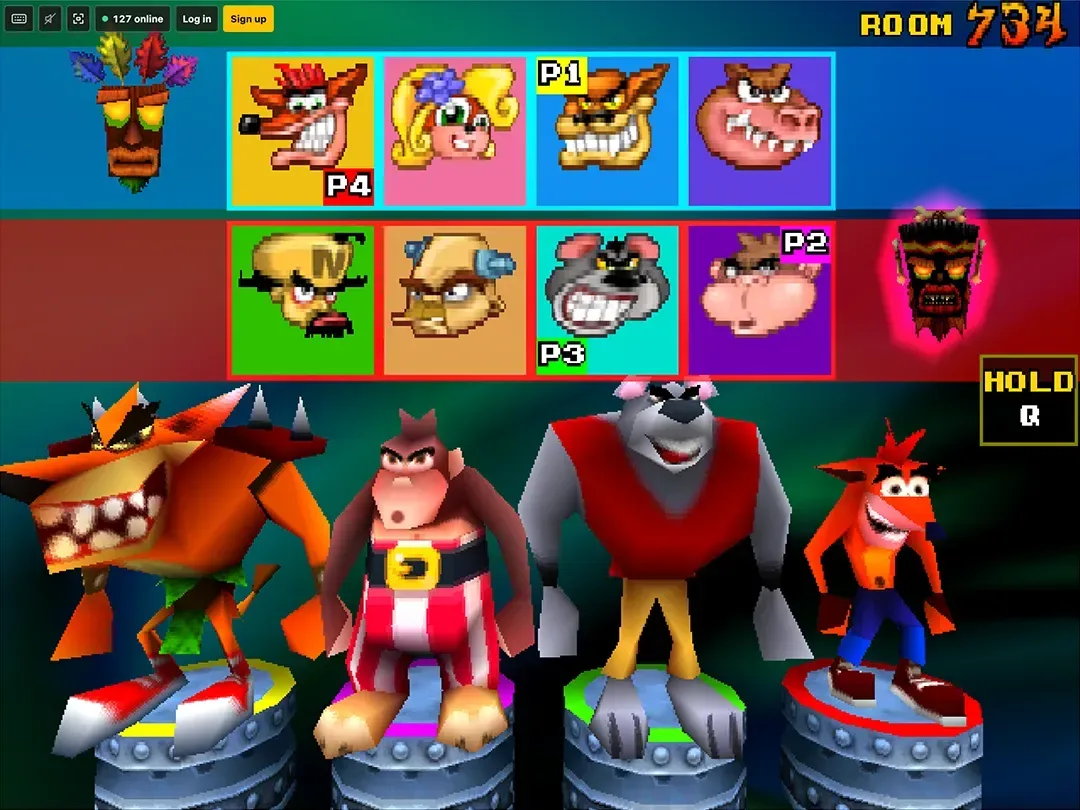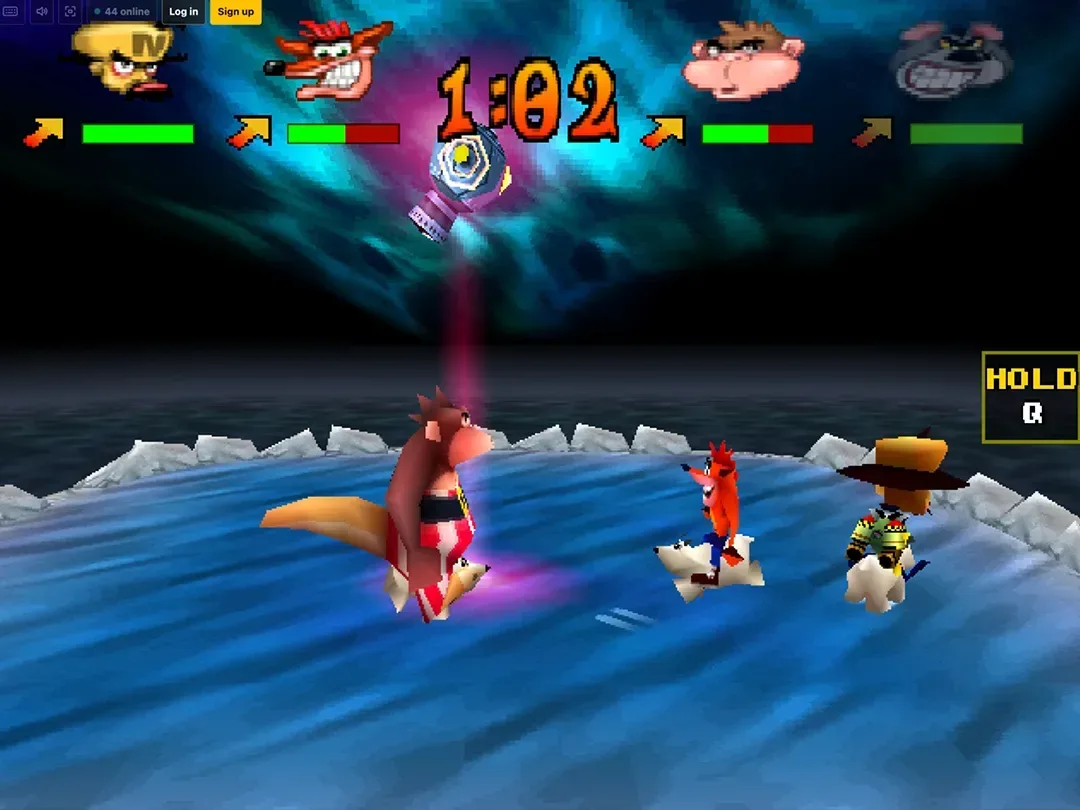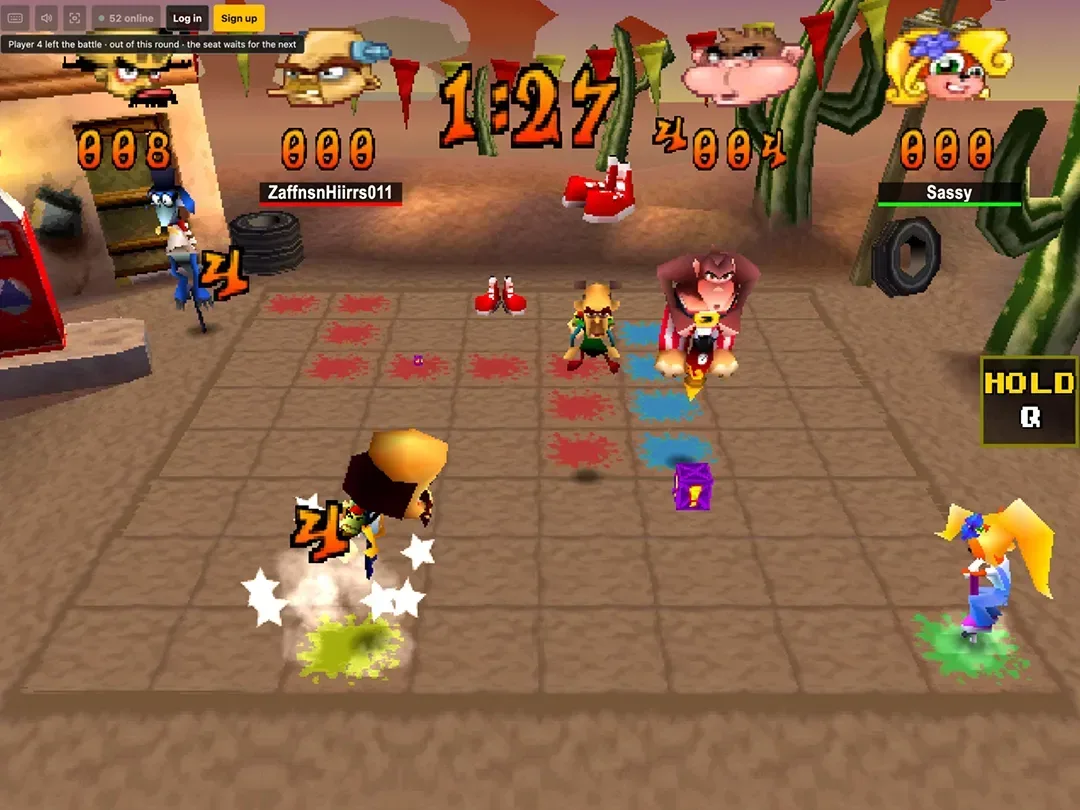
An unofficial browser project called Crash Bash Online is offering a remarkably direct pitch for fans of PlayStation-era party games: open a browser, join a room, and start competing in four-player versions of Crash Bash’s arena challenges. No download or installation is required, and players can enter public servers or invite friends into sessions.
That accessibility is the project’s most immediately appealing feature. Crash Bash was built around quick, chaotic multiplayer rounds in which players push rivals from platforms, race for objectives, or otherwise turn a small arena into a friendship stress test. A browser version lowers the barrier to revisiting those modes considerably, especially for groups that no longer have the original hardware connected and ready to go.
But there is an important caveat: this is an unofficial project based on copyrighted game material. The service is presently free to join, yet ads appear to be part of its model and its developer has described a forthcoming paid “Arena Pass.” That combination makes the project’s long-term availability uncertain.
What Crash Bash Online currently includes
Crash Bash Online supports four-player rooms and lists a substantial selection of recognizable modes. The available lineup includes:
- Jungle Bash
- Space Bash
- Snow Bash
- Polar Panic
- Tilt Panic
- Melt Panic
- Pogo Painter
- Pogo-a-Gogo
- El Pogo Loco
- Crashball
- Beach Ball
- N. Ballism
The project is also still being updated. Four new maps were reportedly added recently, and the developer has indicated that more content is planned. That ongoing work matters for an online party game: a mode list is only half the equation, while active rooms, fresh arenas, and a workable path into matches determine whether people stay around.
The planned Arena Pass is described as granting access to four arenas, private battles, and an ad-free experience. Joining and watching are expected to remain free. However, no pricing or release date was provided in the available details, so prospective users should not assume more than what has actually been outlined.
The practical reality: lobby luck is part of the game
Getting a match is not necessarily as instant as the browser setup suggests. Public rooms can contain players who are away from their keyboards or otherwise inactive. Since participants need to ready up before a game begins, one idle player can effectively hold a lobby in place.
For players jumping in alone, the practical answer may be to leave stalled rooms and try another server rather than wait indefinitely. Groups who want a more reliable session may find the friend-invite option more useful, assuming everyone can coordinate a room and ready up together.
Related coverage includes Crash Bash Online Brings PS1 Party Battles to Browsers.
The interface reportedly includes control guidance and a lobby chat function. Those are small but meaningful conveniences in a browser-based multiplayer project. Control prompts reduce the friction for someone returning to an old game after years away, while chat provides a way to ask whether a quiet player is present before everyone abandons the room.
Browser port versus emulation: why the distinction matters
The project has been characterized as a port rather than browser-based emulation. Those terms are often used loosely, but they describe different technical approaches.
Emulation generally means software recreates the behavior of an older console so that code designed for that hardware can run on a different device. A port, in contrast, is a version adapted to run on another platform. In broad practical terms, the latter can allow a project to tailor elements such as its interface, network features, or browser compatibility more directly, though the exact technical construction of Crash Bash Online has not been independently detailed here.
Reported impressions of the browser version point to acceptable latency and stable-looking visuals, without apparent graphical artifacts or severe frame-rate problems. Latency is the delay between a player’s input or connection data and the result being reflected in an online match. It is especially noticeable in competitive games involving tight movement, collisions, and split-second positioning. “Okay” latency does not mean every connection will perform identically, but it suggests the service can be viable when a room and connection cooperate.
The bigger achievement, if the project continues to operate, is not merely getting old modes on a modern screen. It is making the social structure of a couch multiplayer game work online: a room to join, people to invite, a way to communicate, and enough synchronization that an elimination or ball-game round still feels responsive rather than random.
The copyright and monetization problem
Unofficial fan projects frequently exist in a precarious space, particularly when they use recognizable names, characters, audiovisual material, or gameplay based on a commercial property. It is not possible to determine the legal status of this particular project from public-facing descriptions alone, and no legal finding is implied by its existence.
Still, monetization makes the situation more consequential. Ads and a proposed paid pass can create revenue connected to an unlicensed use of intellectual property. That may increase the likelihood of scrutiny or enforcement, but the timing and outcome of any such issue cannot be predicted from the available information.
For players, that uncertainty has a straightforward implication: access today does not guarantee a permanent service tomorrow. It is sensible to treat Crash Bash Online as an experimental, unofficial way to play rather than a stable replacement for an officially supported release. Players should also take normal care with any online service, particularly before sharing personal information or making purchases.
There is also no confirmed information on whether artificial intelligence tools were used in its development. That remains unverified, so it should not be assumed either way.
A promising convenience, not a guaranteed preservation solution
Crash Bash Online demonstrates why browser projects attract attention: they can put a multiplayer game in front of a group with almost no technical ceremony. The listed modes cover a broad chunk of the familiar party-game formula, four-player rooms preserve the core competitive format, and invites make planned sessions possible rather than relying solely on strangers in public lobbies.
At the same time, the experience has clear limitations. Finding an active public room may require patience, inactive users can block a start, and the project’s unofficial nature means its future is inherently less predictable than an authorized product. The paid Arena Pass proposal adds an additional unanswered question rather than a simple quality-of-life upgrade.
For now, it is an intriguing browser-based route back to a classic multiplayer format — provided players approach it with realistic expectations about server activity, online reliability, and the uncertain lifespan of an unlicensed project. For another example of an older-game-inspired project receiving continuing feature additions, see Pokémon Emerald Arena’s update with new capture and battle options.