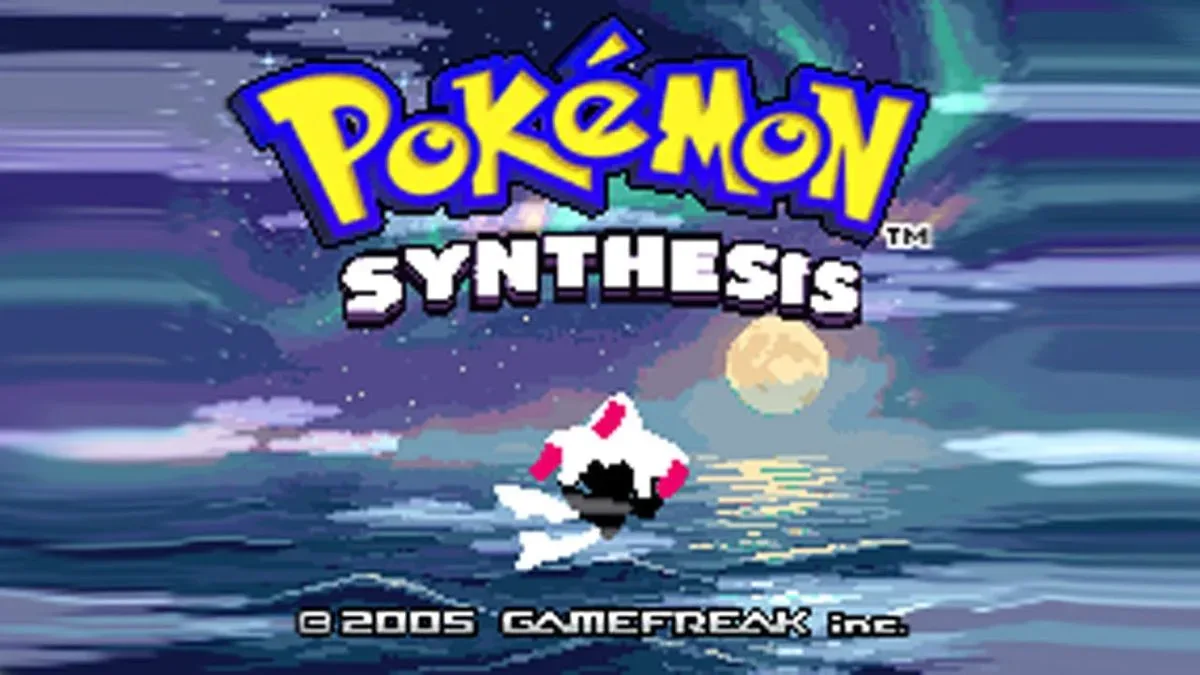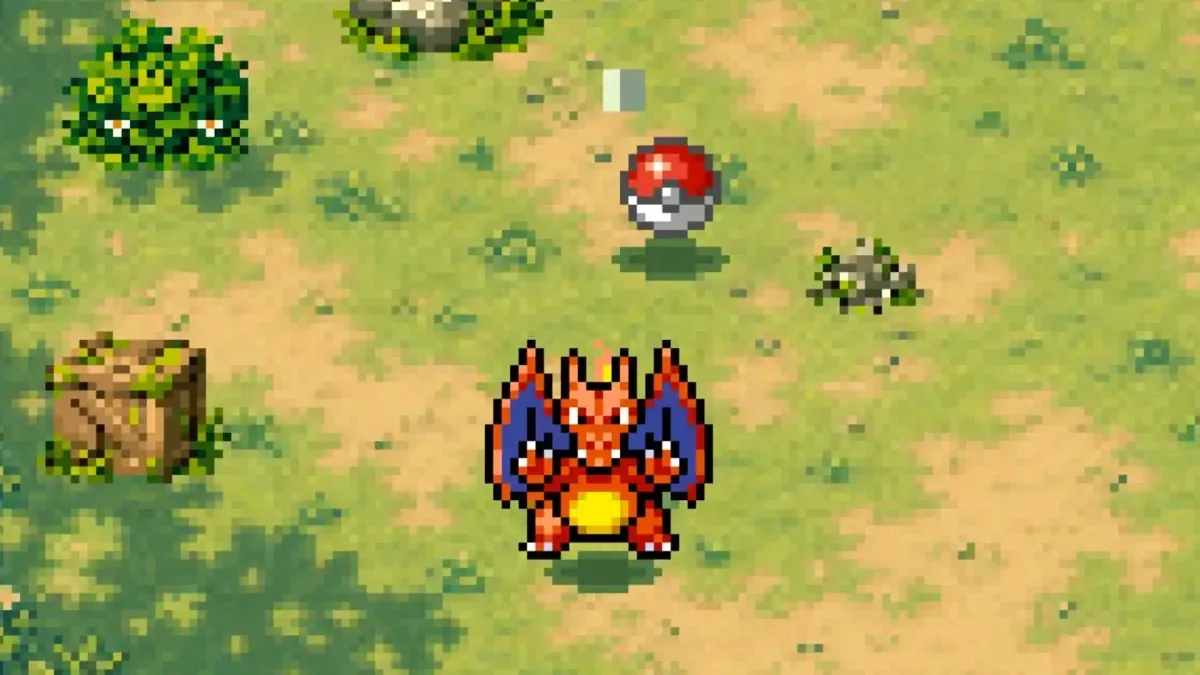
Pokémon Emerald Arena, a fan-made ROM hack that reworks parts of Pokémon Emerald around real-time arena fighting, has received another round of additions. The update introduces Poké Ball captures within the arena, allowing captured Pokémon to join the player’s team, while also adding a pause-menu method for changing the currently active move during a real-time battle.
The project remains a selective conversion rather than a complete replacement for Emerald’s usual battle system. More than 20 Pokémon are said to be supported by the arena mode at present, while unsupported Pokémon continue to use the traditional turn-based battle sequence. That split is important: Emerald Arena is not presenting every encounter as an action battle yet, but is gradually expanding a new combat layer inside the familiar Hoenn adventure.
Poké Ball captures connect arena fights to the wider adventure
The most meaningful addition is the ability to catch Pokémon in the arena with Poké Balls and then add them to the team. Before this change, real-time combat could have felt more like a self-contained demonstration of a different battle format. Linking captures to the party gives arena encounters a clearer role in the broader Pokémon loop: find a creature, battle it, catch it and build a team.
In Pokémon terms, a party is the active roster a player carries with them. Adding an arena-caught Pokémon to that roster means the result of an action-oriented encounter is intended to persist beyond that single fight. It also gives the feature practical weight. A capture system is not merely a visual flourish; it affects the choices available to the player afterward, including which Pokémon they can bring into later encounters.
How broadly the capture mechanic applies, including its exact restrictions and the full list of eligible arena opponents, has not been detailed. With the arena roster still limited, players should not assume that every species or every standard encounter in Pokémon Emerald now works through real-time capture rules.
Active-move switching adds a tactical pause to real-time combat
The update also lets players change which move is active during arena combat. Opening the relevant menu pauses the screen, allowing a move to be selected before play resumes. This is a small interface change with substantial implications for how the mode can be played.
Traditional Pokémon battles are turn-based: players select a move, actions resolve and then the next turn begins. A real-time system instead asks players to manage movement, timing and attacks while the fight continues. Without a way to alter an active move, a Pokémon’s options could be constrained to whichever attack was selected before an encounter. Pausing to swap moves creates room for adaptation without demanding instant menu navigation amid an ongoing fight.
That design choice effectively creates a middle ground. The action itself remains real-time, but move selection can be handled deliberately. For a work-in-progress ROM hack, it is also a sensible answer to a basic usability problem: a feature can be technically present yet awkward if players cannot access it quickly enough to make meaningful decisions.
Related coverage includes Pokémon Emerald Arena Update Adds Poké Ball Captures and More Real-Time Options.
The change responds to a request that has been raised by members of the project’s community. Its presence suggests the arena system is being refined not only by expanding the roster, but by addressing the controls and moment-to-moment decision-making that determine whether a combat concept is actually usable.
Hoenn’s starter lines are among the reported additions
The reported additions include the complete evolutionary families of Hoenn’s three starter Pokémon:
- Treecko, Grovyle and Sceptile
- Torchic, Combusken and Blaziken
- Mudkip, Marshtomp and Swampert
Including all three lines matters more than adding isolated species. Starters are central to a Pokémon Emerald playthrough, and their evolutions represent a natural progression through the game. A real-time system that supports Treecko but not Grovyle or Sceptile, for example, would leave an obvious gap for players who want to carry their initial partner forward. The same applies to Torchic and Mudkip’s evolutionary paths.
That said, the available information does not spell out the exact behavior, move sets or arena-specific differences for each of these Pokémon. The safest reading is simply that these species are part of the game’s expanding arena-capable selection. Players should not infer balance details, bespoke mechanics or full-game support from the roster list alone.
What a ROM hack changes—and what it does not
A ROM hack is a fan-made modification of an existing game’s data and code. In this case, the base reference point is Pokémon Emerald, with Emerald Arena adding a combat approach that departs from the original game’s standard menu-driven battles. The project is therefore an experiment in reshaping an established game rather than a new official Pokémon release.
Its hybrid structure is central to understanding the current state of the hack. Arena-compatible Pokémon can participate in real-time combat, while other Pokémon use the familiar battle sequence. That is a practical way to introduce a large systems change in stages, but it also means the experience may vary depending on the Pokémon a player uses and encounters.
For players interested in the wider future of the Hoenn-era games, it is worth keeping fan projects separate from official-platform speculation. Recent discussion around a possible modern return for Ruby and Sapphire is covered in this look at the Pokémon Ruby and Sapphire Switch port speculation. Emerald Arena is a distinct, unofficial modification built around a particular gameplay experiment.
Refinement remains part of the story
The earlier version of Emerald Arena was described as needing cleanup, with bugs and unusual presentation issues still apparent. The new capture and move-management features arrive alongside ongoing polishing work, rather than signaling that the project is finished. The partial roster itself reinforces that point: real-time support is being added piece by piece.
There is also an unresolved visual question. The battle arena uses generated AI imagery for many assets. The developer, credited as German Burgardt, has indicated a willingness to consider replacing those visuals with human-made art, but no confirmed replacement has been detailed. Until that changes, generated material remains part of the project’s presentation.
That issue is separate from the underlying combat work, but it matters to players who care about the provenance of a fan project’s art. It also illustrates why development updates should be assessed on more than a feature checklist. Poké Ball captures and move switching can make the arena loop more functional, while visual assets, polish and breadth of compatibility still shape whether the overall project appeals to an individual player.
A promising concept with clear limits
Emerald Arena’s newest changes make its real-time battle idea feel more connected to Pokémon’s core structure. Captures that feed into the player’s team turn arena encounters into something with longer-term value, and active-move switching gives players a better way to respond as a fight develops. Adding the Treecko, Torchic and Mudkip families also brings highly recognizable Emerald companions into the experimental system.
But the project’s limitations should remain front and center. The arena roster is still only a portion of the game’s wider Pokémon selection; conventional battles remain in use for unsupported combatants; refinement work is ongoing; and the AI-generated arena art has not been replaced. For now, Pokémon Emerald Arena is best understood as an evolving hybrid ROM hack: one that is steadily making its action-battle mode more practical without yet transforming all of Pokémon Emerald into a uniform real-time experience.