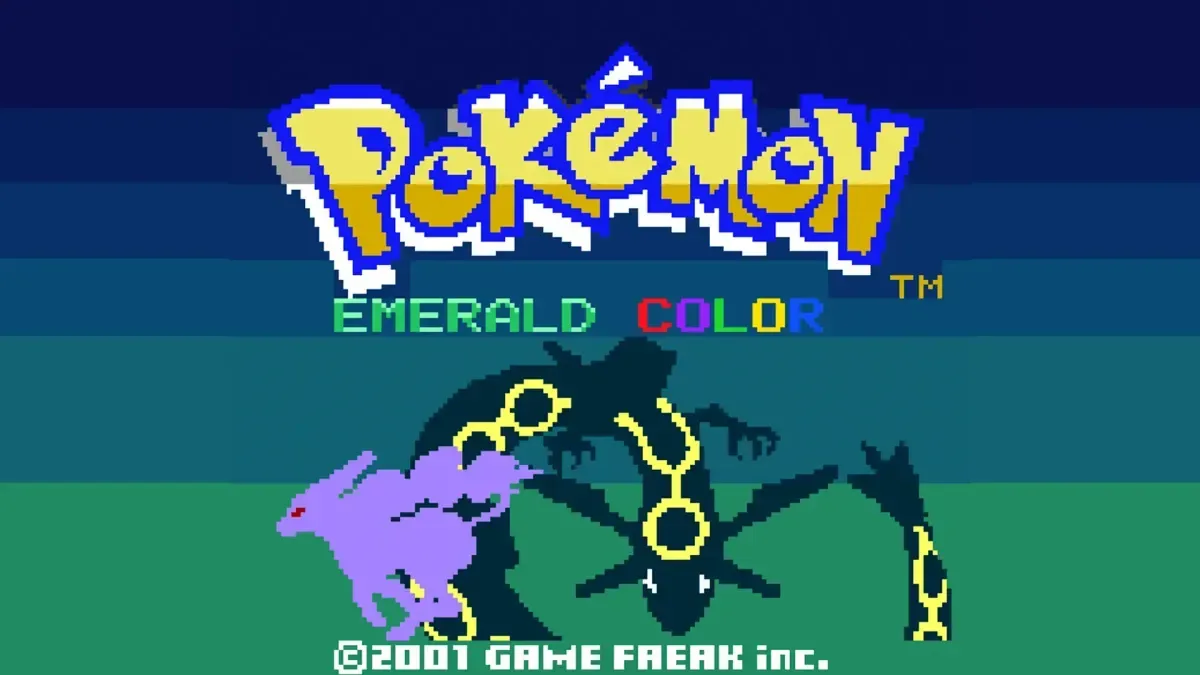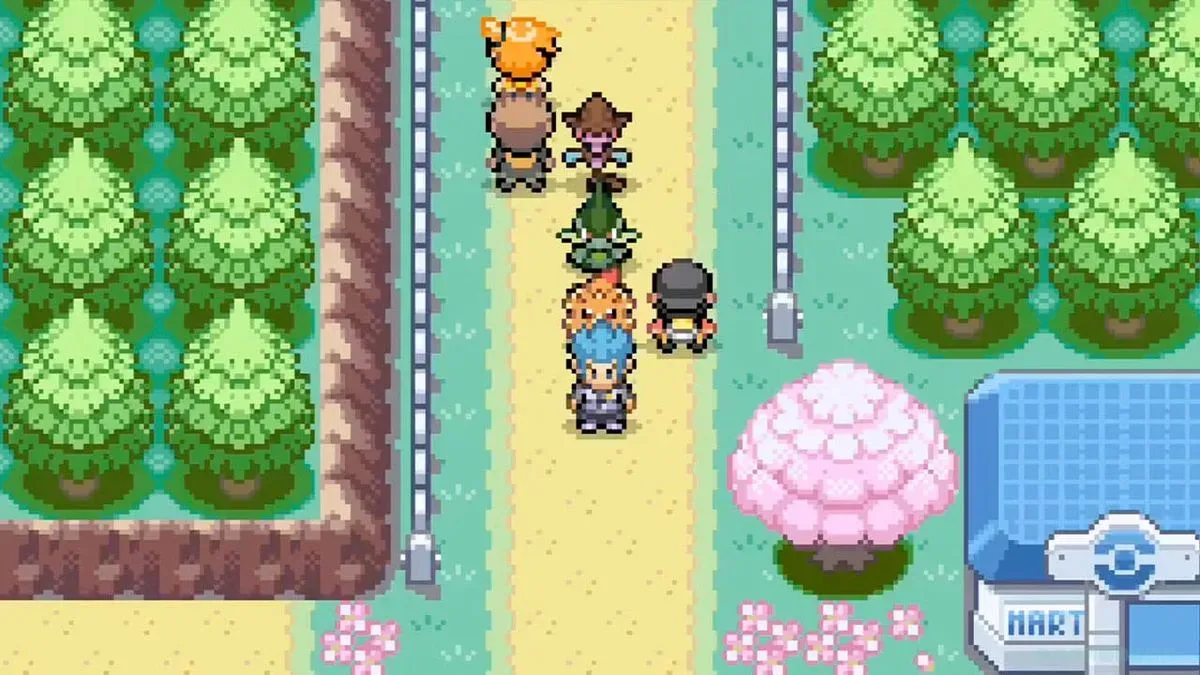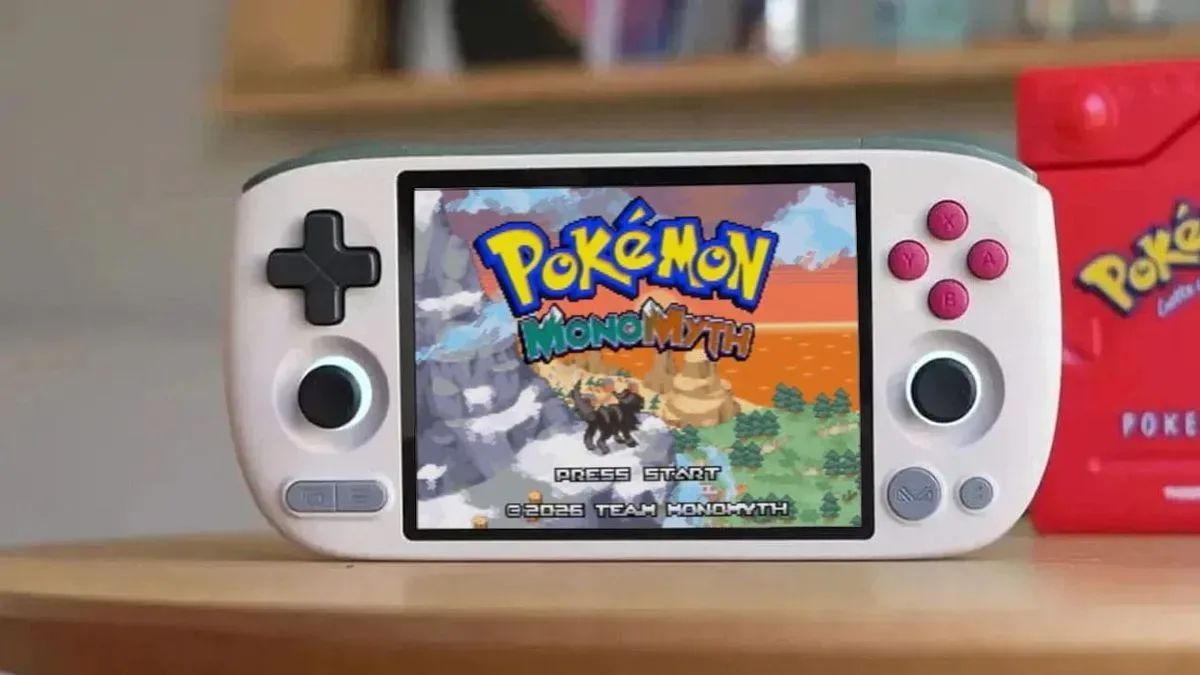
Pokémon Monomyth is now available, bringing a fresh journey to the new region of Athanto through a patch for Pokémon Emerald. The project has reportedly spent six years in development and presents its adventure in the familiar visual style associated with the Game Boy Advance era.
That setup matters. Monomyth is not being framed as a small adjustment to an existing Pokémon campaign: it is a ROM hack, meaning a fan-made modification designed to be applied to an existing game file. Players need their own legally acquired copy of Pokémon Emerald to patch and use the project. The appeal is a new story built around a foundation many players already recognize, rather than a conventional re-release of Emerald itself.
Its stated scope is substantial. Monomyth features more than 75 hours of gameplay, 360 new and returning Pokémon to encounter and catch, 200 new music tracks, and thousands of coat variations among wild Pokémon. Athanto also includes optional activities and dedicated competitive-style venues, with side quests, a Contest Hall, Trainer Hill and Battle Frontier all part of the package.
Athanto is the centre of a new Pokémon adventure
The clearest draw is Athanto, the new region created for Monomyth’s original storyline. A new region gives a Pokémon hack room to make discovery feel central: unfamiliar areas, a different narrative route and secrets that are not already mapped in players’ memories from the official game. Monomyth is described as putting hidden discoveries throughout its world, which should make exploration more than a straight line between major battles.
That distinction is important for a project based on Emerald. A patch can retain the baseline look and technical feel of the Game Boy Advance original while changing the actual adventure players undertake. Monomyth’s GBA-era presentation therefore signals its aesthetic and platform roots; Athanto and its story are what separate the experience from simply replaying Pokémon Emerald.
The reported playtime of 75-plus hours also suggests that the project’s ambitions extend past a compact fan campaign. Playtime always varies with team-building, exploration and optional objectives, so it should not be treated as a guarantee for every player. Still, paired with side quests and activity hubs, the figure indicates that there is intended to be a sizeable amount of material beyond the main narrative path.
360 Pokémon and a broader hunt for team options
Monomyth includes 360 Pokémon described as a mix of new and returning creatures. For players, that number chiefly means a wider pool for catching and assembling a party across the Athanto journey. It also gives the game’s exploration a practical purpose: finding a creature is not merely checking a collection box, but potentially discovering a useful teammate or a missing piece for a preferred strategy.
The project’s wild-Pokémon coat variations are another notable layer. A coat variation refers to an alternate visual appearance. Thousands of those variations are said to exist, making the wild-encounter system about more than the species that appears. The supplied details do not establish how those appearances are distributed, whether they affect battle mechanics, or how players obtain specific ones. What is clear is that the feature is intended to make repeated encounters visually less uniform.
Related coverage includes Pokémon Monomyth Arrives With Athanto, 75+ Hours of Adventure and Link Cable Trading.
Players should keep the distinction between confirmed scope and unanswered specifics in mind. The available details establish the total number of Pokémon and the existence of coat variations, but do not outline a full encounter list, the mechanics behind the variations, or every change made to battles. Those are details worth checking through the project’s own materials before planning a particular team around an assumed feature.
Side quests and battle venues give Athanto extra places to spend time
Optional content is a major part of Monomyth’s pitch. Side quests are tasks that sit outside the main storyline, allowing players to follow additional objectives rather than immediately advancing the central plot. Their inclusion can make a region feel more inhabited because a player has reasons to revisit places and pursue goals that are not simply the next mandatory checkpoint.
Monomyth also lists three named venues: Contest Hall, Trainer Hill and Battle Frontier. Their presence signals dedicated spaces for players who want a change from ordinary exploration and story progression. The project specifically positions these activities as places to work on battle techniques, teams and strategies.
That is particularly useful in a monster-collecting RPG. A long campaign gives players time to find favourites, but dedicated challenge spaces can give a reason to refine how those favourites function together. A strong team is not only about individual Pokémon; it can involve the overall mix of options and how a player approaches battles. Monomyth’s advertised venues appear designed to support that longer-term experimentation, though the supplied information does not detail their rules, rewards or challenge formats.
Link cable trading is a notable multiplayer touch
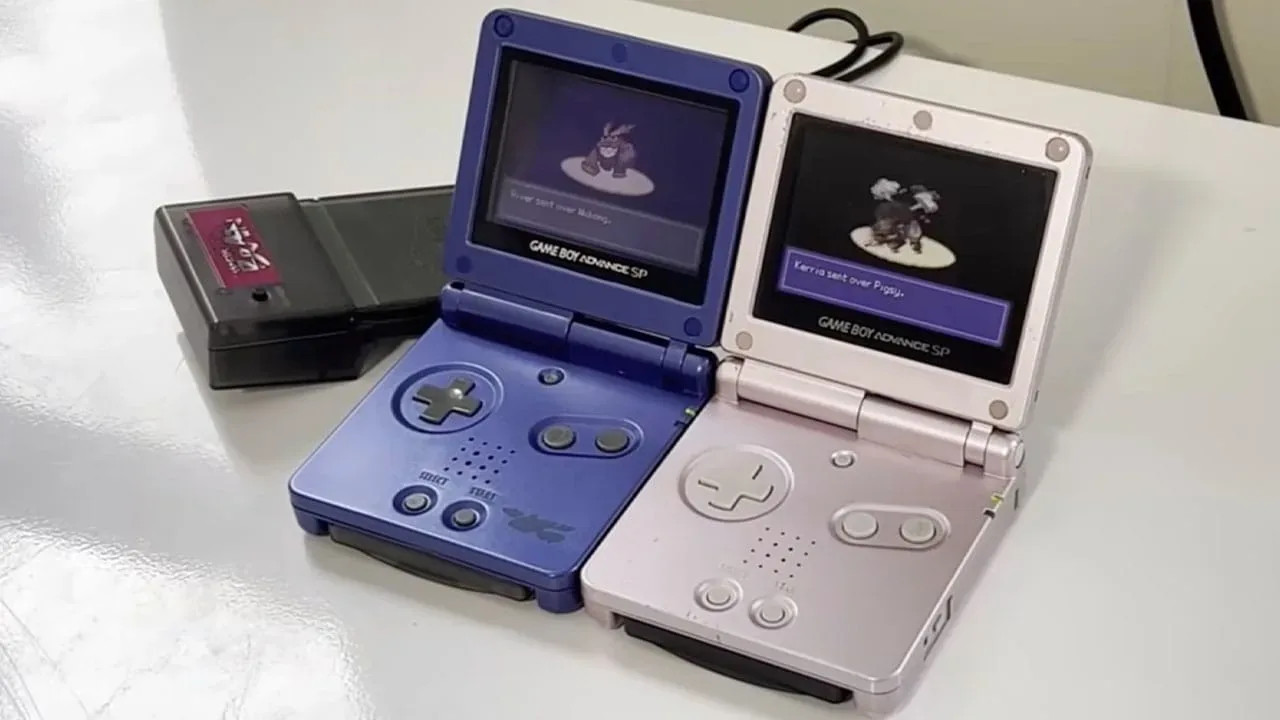
Monomyth also supports link cable trading. In Pokémon terms, trading lets one player exchange Pokémon with another, turning a personal adventure into a small social interaction. It is a feature especially associated with the handheld era, when a physical link cable connected compatible systems directly.
In practical terms, the feature gives players a reason to coordinate with a friend rather than treating every catch as entirely solitary. Trading can support collecting, swapping preferred partners and sharing the excitement of a rare find. It also fits the project’s Game Boy Advance-inspired identity: the technology and visual language are not only decorative references, but are reflected in a classic form of Pokémon multiplayer.
The available information confirms trading support but does not provide technical setup instructions, compatibility details or a full list of multiplayer functions. Players should therefore rely on the project’s official documentation for the exact patching and connection process, especially because ROM-hack setups can differ from one release to another.
What players need to begin
Monomyth is distributed as a patch rather than as a standalone official game. The stated requirement is a legally acquired version of Pokémon Emerald, which the player patches to create the Monomyth experience. That approach is common language in the ROM-hack space: the modification is separate from the original game material it changes.
For anyone interested, the sensible starting point is the project’s own site and instructions, then a careful check that the required Emerald version and patching method match the documentation provided. The announcement confirms the requirement for a legally acquired Emerald copy, but does not specify an app, device, emulator, file type or step-by-step installation method, so those details should not be assumed.
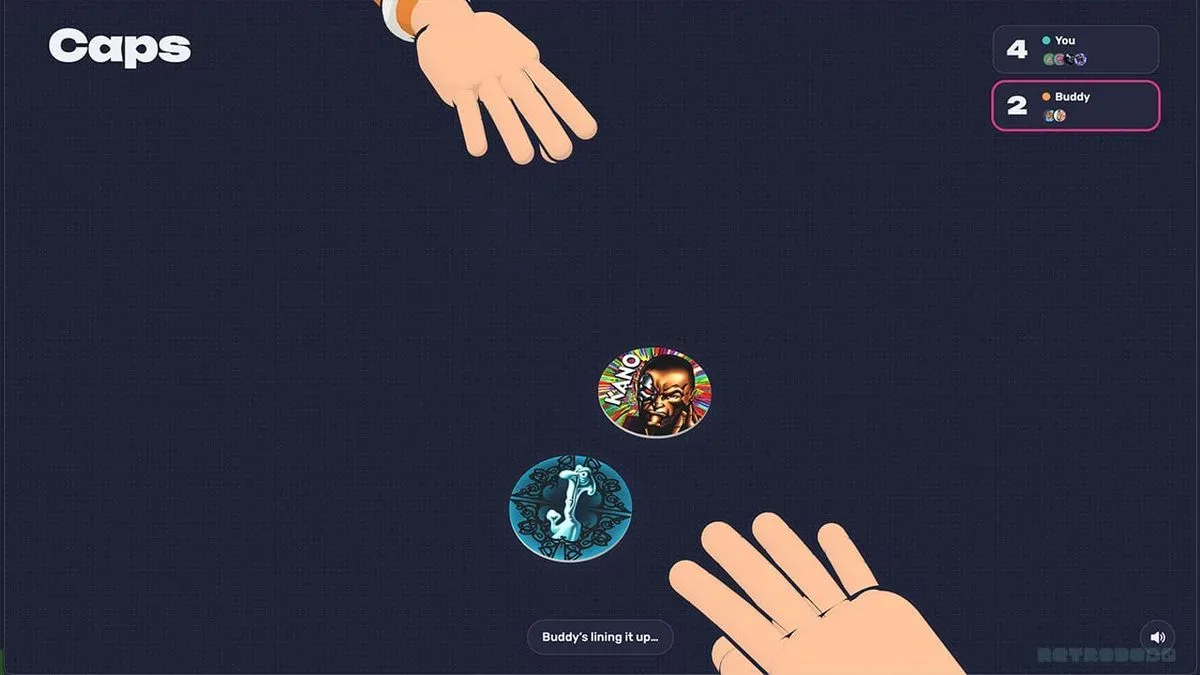
Monomyth arrives at a time when retro-inspired projects continue to find new ways to use old formats. That interest is not limited to cartridges and handheld aesthetics; even browser projects such as Caps’ Pogs-style cap flipping game show how familiar-era ideas can be reshaped for a modern audience. In Monomyth’s case, the hook is a much larger original adventure built around an Emerald-era framework.
For Pokémon fans who want an extended fan-made journey rather than another run through Hoenn, Athanto’s new story, large catch roster, optional quests, activity hubs and link cable trading form a clear proposition. The project’s most concrete promise is breadth: a new region to learn, plenty of Pokémon to seek out, and multiple reasons to keep experimenting after the main route is underway.