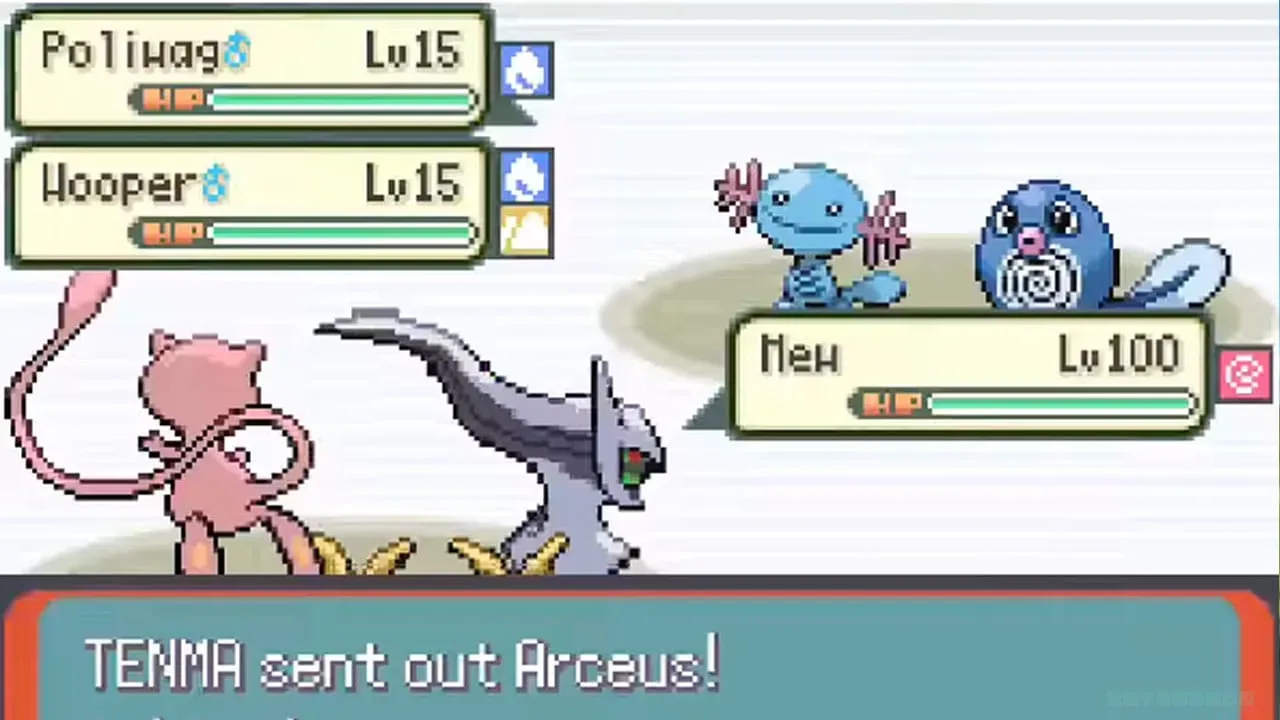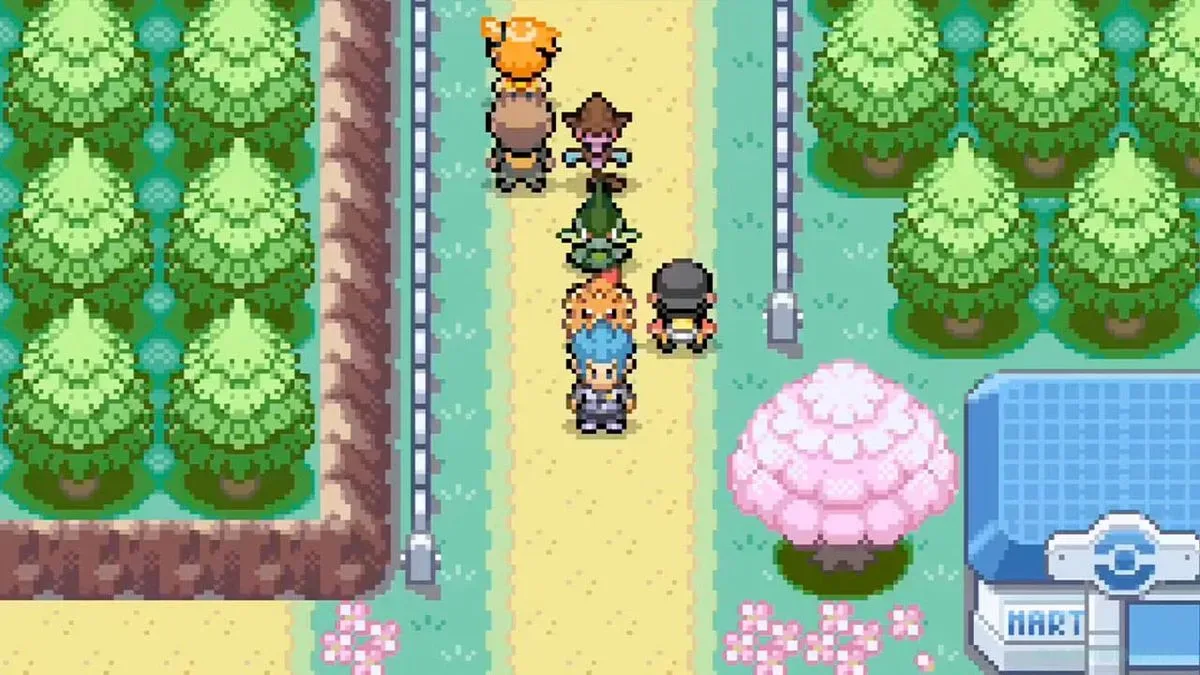
Pokémon Quetzal version 0.9.1 introduces a major structural change for the fan-made Pokémon Emerald modification: players can now switch between Kanto, Johto and Hoenn while their adventures are still in progress. Earlier versions required the Elite Four to be defeated before a region change became possible. The new approach instead supports parallel journeys across all three regions.
That is an unusually flexible proposition for a Pokémon-style campaign. Rather than treating a region as a single long commitment, Quetzal lets a player pause one adventure, enter another, and return later with their earlier progress retained. It is a feature with practical implications for team-building, item management and the way players pace a lengthy RPG.
Three regions, no Elite Four gate
Kanto, Johto and Hoenn are the three classic regions available in Pokémon Quetzal. In the previous structure, reaching another region meant first overcoming the Elite Four. Version 0.9.1 removes that progression gate for regional travel, allowing the three campaigns to run alongside one another.
“Parallel” is the useful word here. This does not simply mean selecting a region once at the beginning and later unlocking a second destination. A player can actively maintain progress in each region, moving between them when they choose. Someone who wants a break from a difficult stretch in Hoenn can work on Kanto or Johto instead, then revisit the earlier file state later.
The game handles a regional move by saving the player in a safe outdoor area before the swap occurs. That safeguard matters because region-changing systems can be complicated in a game built around maps, player location and persistent progress. In this case, the stated design is intended to ensure that progress is recorded before the next region loads.
What a safe outdoor-area save means
A safe outdoor area is, in simple terms, a location selected to avoid saving a character in an awkward or potentially incompatible state while changing regions. Indoor maps, scripted moments and special locations can carry conditions that do not neatly transfer to a different world map. Placing the save outdoors gives the transition a dependable checkpoint.
For players, the main takeaway is less technical: regional changes are designed around preserving the adventure already underway. You should not have to treat a trip from Hoenn to Johto as abandoning the former campaign.
Shared Pokémon and items change the shape of a playthrough
Quetzal also allows Pokémon and items to be managed between regions. Players can move resources around rather than treating each regional adventure as completely isolated. A Pokémon raised in one journey may therefore be part of the plan in another, while useful items can be shifted to where they are wanted.
This creates a considerably different rhythm from playing three separate games. In an ordinary standalone adventure, a newly started region generally means starting again with a new inventory, a new party and a new early-game routine. Quetzal’s shared management makes the regions parts of a wider play space.
That flexibility can suit several kinds of players:
- Players who like variety can rotate among regions instead of pushing through one storyline uninterrupted.
- Team experimenters can reconsider which Pokémon belong in a party as they move between adventures.
- Players focused on progression can distribute items and Pokémon where they believe they will be most useful.
- Groups of friends can play across different regions while participating in the same broader Quetzal framework.
There is also a strategic trade-off in a shared system. Easy access to a larger pool of Pokémon and items gives players more options, but it also asks them to make more decisions. A powerful partner moved to a new region is no longer helping the former team at that moment. Players seeking a more self-contained regional experience may choose to set their own limits on transfers, while those interested in an open-ended crossover adventure can fully embrace them.
Neither approach is presented as mandatory. The point of the update is choice: Quetzal offers an infrastructure that lets players decide how closely tied their three adventures should be.
An 84-Pokémon opening selection
The starter selection has also expanded. Players can now choose from 84 Pokémon at the beginning of the adventure. The latest additions named for that list are Marill, Axew, Pancham, Skrelp, Mareanie, Jangmo-o, Falinks and Dreepy.
That is more than a cosmetic menu expansion. The starting Pokémon traditionally influences the opening stretch of a Pokémon journey: it helps establish a team’s early strengths, types and potential direction. A wider selection means players can begin with a Pokémon that better matches a preferred play style or simply start with a favorite that would not usually be available at the outset.
The additions span a range of Pokémon and eras, which reinforces Quetzal’s broader remix mentality. Marill offers one kind of opening companion, while options such as Axew, Jangmo-o and Dreepy suggest very different possible directions for a team. Players do not need to begin with a familiar conventional choice merely because they are in a classic region.
For anyone unwilling to choose, the game can generate random starter options from the 84-Pokémon pool. This is a small but meaningful quality-of-life option. Quality of life, in game design, refers to features that reduce friction or give players more convenient ways to interact with a game without necessarily changing its core objectives. Randomizing choices can make repeat runs feel less predetermined and remove the pressure of settling on a single favorite before the adventure begins.
It also offers a lightweight self-imposed challenge. A random selection does not require a complicated new ruleset; it simply asks the player to adapt to the options presented. For a project designed around replayable, interchangeable regional journeys, that uncertainty fits neatly.
Yes, the bicycle is available immediately
Another change in version 0.9.1 is the option to ride a standard bicycle from the beginning of the game. It may sound modest beside cross-region progression, but early movement tools can make a substantial difference in a role-playing game built around repeated travel through towns and routes.
Early bicycle access means a player can travel more quickly from the start rather than waiting for the usual point at which that convenience becomes available. It is especially fitting in a game where players may decide to change regions frequently. Faster overland movement reduces the downtime between planning a trip and actually beginning it.
The bicycle option is also a clear example of the update’s design priorities. Quetzal is not only adding more places to go; it is reducing friction around moving through those places. The ability to move between three regions is more appealing when routine traversal within each one is less cumbersome.
What players need to use Pokémon Quetzal 0.9.1
Pokémon Quetzal is played by applying its patch to a legally acquired copy of Pokémon Emerald with the Pokémon Quetzal patcher. A patch is a file that modifies an existing game file rather than supplying the original game itself. In this case, the patcher is the tool used to apply Quetzal’s changes to Pokémon Emerald.
That distinction is important. Quetzal is a modification built around Pokémon Emerald, not a replacement for owning the original game. Players should ensure that their copy of the underlying game is legally obtained before using the patch.
There is also a Moemon Quetzal version available for those interested in that variation. Beyond its availability, no further features or differences are specified here, so prospective players should avoid assuming it behaves identically in every respect to the standard Quetzal release.
Why this update stands out
Fan modifications often attract attention through new Pokémon, altered difficulty or reworked maps. Pokémon Quetzal 0.9.1’s standout idea is more systemic: it changes the relationship between separate regional campaigns. Kanto, Johto and Hoenn are no longer destinations that must be consumed one after another behind an endgame requirement. They can be treated as concurrent adventures.
That makes Quetzal particularly suitable for players who prefer changing focus rather than adhering to one fixed route from beginning to end. The safe-save transition, transferable Pokémon and items, expanded starter choices and immediate bicycle option all support that central goal of flexibility.
It is also a reminder that updates do not need to add an entirely new region to meaningfully reshape an RPG. Sometimes the more consequential change is allowing players to approach the worlds already present in a new order. For a look at another game update built around changing how players navigate its world, see Sunset Summit’s grappling-gun update.
For Quetzal players, version 0.9.1’s promise is straightforward: choose a starting partner from a much broader pool, take the bicycle immediately if desired, and move among Kanto, Johto and Hoenn without waiting for the Elite Four. How much the three journeys overlap is ultimately up to the player.