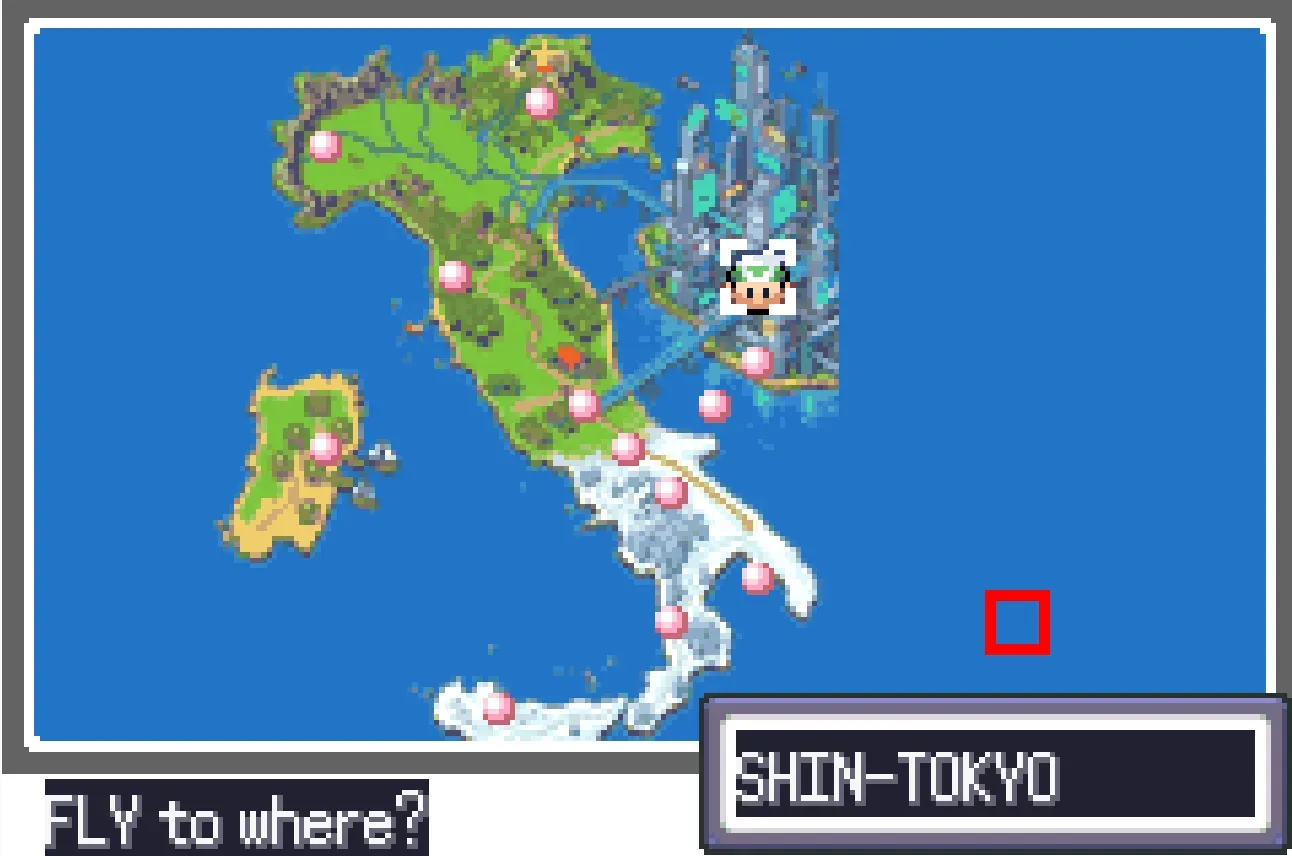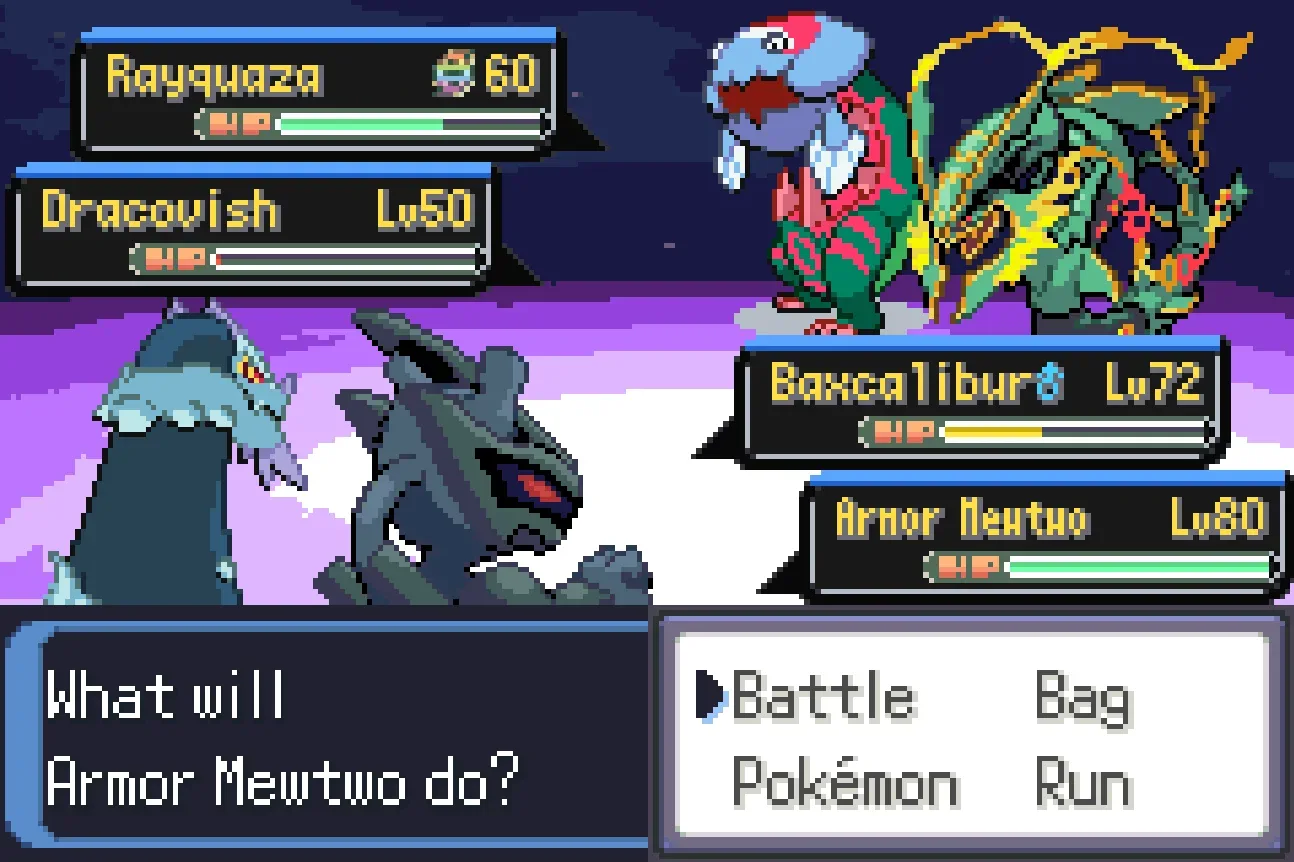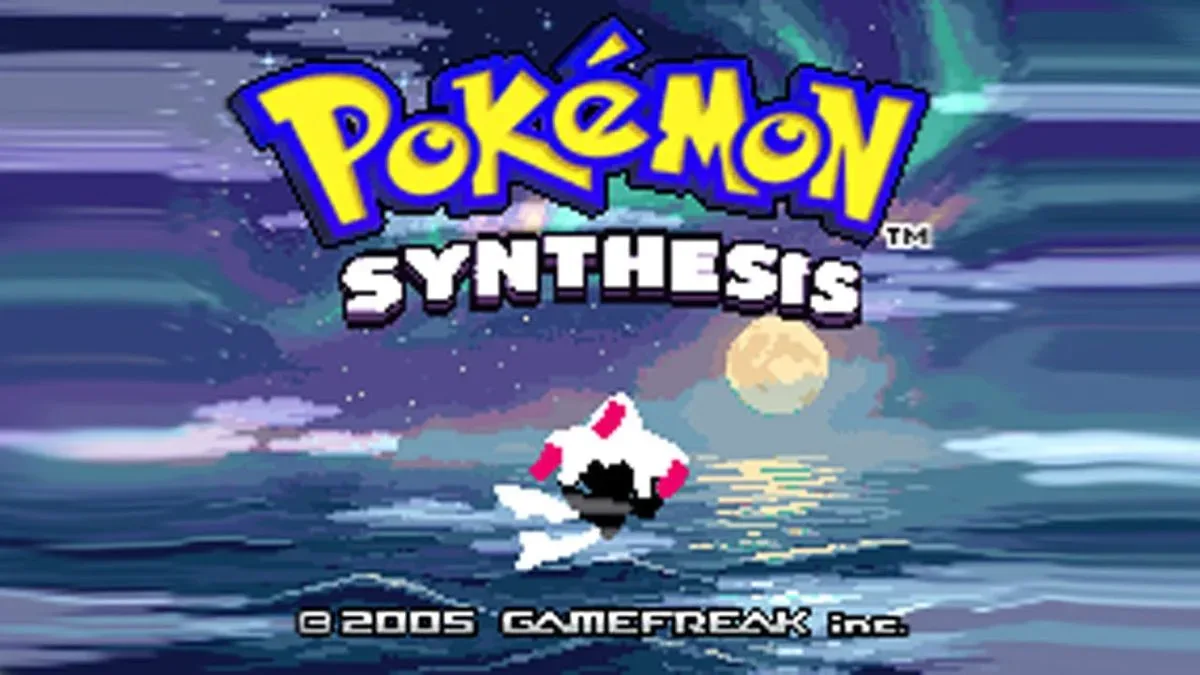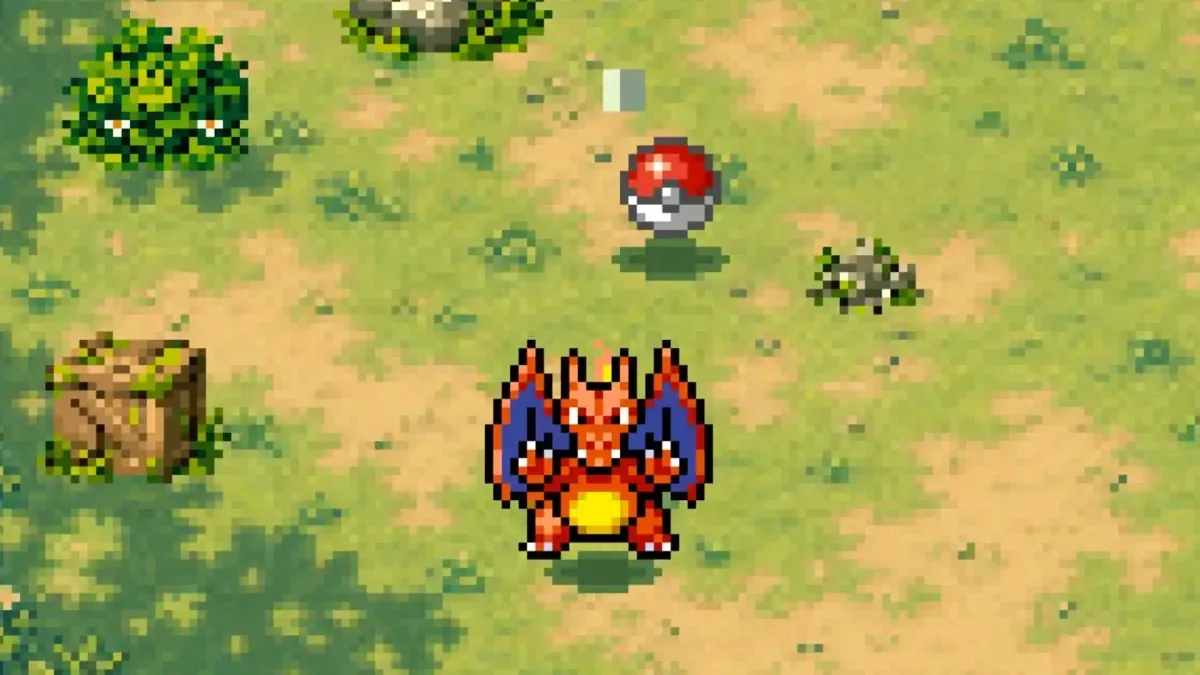
Pokémon Wishes of Tomorrow, an in-development ROM hack built from Pokémon Emerald, is setting its sights on a considerably darker adventure than its Game Boy Advance foundation suggests. Developer flatfootlabs has shown the project in a reveal trailer, outlining a story centred on Jirachi, a new region called Shin-Tokyo, a masked antagonist, Shadow Pokémon, Mega Evolution and Pokémon drawn from generations I through X.
There is an important caveat for anyone tempted to treat this as a finished replacement for Emerald: it is not. The project is still in development, and its postgame is specifically described as work in progress. But the disclosed feature set gives the hack a clear identity already. Rather than simply expanding a familiar map with additional monsters, Wishes of Tomorrow appears to be building its progression around a corrupted-Pokémon system, a more dramatic presentation layer and several convenience upgrades designed to reduce old friction in the original formula.
The developer also publicly details where AI-assisted work was used. That degree of disclosure matters, especially for a fan project whose visual assets, writing and technical work can involve many distinct creative decisions. The information supplied so far distinguishes AI-generated, hand-edited NPC caricatures and AI-drafted dialogue from human-made cover art, map art, sprite work, tile assets, menus and art direction.
A wish, a masked Oni and the road to Shin-Tokyo
Wishes of Tomorrow frames Jirachi as “the Undying Wish,” awakening after a thousand-year slumber to grant one wish. The player is not alone in pursuing that power. A mysterious faction led by a gold-masked Oni is likewise racing toward Jirachi, with ambitions portrayed as sinister.
“Witness Mega Power. Capture Darkness. Seek the promised land of Shin-Tokyo.”
That premise establishes the three major pillars the project is presenting: Mega Evolution as a battle mechanic, Shadow Pokémon as a capture-and-purification mechanic, and Shin-Tokyo as the destination and new regional setting. The trailer material and description point to a stormy tone, but the available details do not establish the full story, its cast, the faction’s name or how the journey through Shin-Tokyo is structured. Those are areas where it is worth letting the finished hack speak for itself rather than filling gaps with assumptions.
Jirachi is not merely a mascot in this setup. The promised wish is the central source of conflict, creating an understandable contest between the player and the masked group. It is a useful narrative fit for a ROM hack because it gives large gameplay additions—especially Shadow Pokémon and Mega Evolution—a place in the story’s stakes instead of making them seem like a disconnected checklist of popular mechanics.
Shadow Pokémon are designed as a risk-and-reward system
The standout mechanical addition is the presence of more than 60 Shadow Pokémon variants that can be captured and purified. In the terms outlined for Wishes of Tomorrow, these Pokémon hit especially hard but also take more damage. In other words, the Shadow state is intended to change both sides of a battle calculation: higher offensive potential is paired with lower durability.
Related coverage includes Pokémon Wishes of Tomorrow brings Shadow Pokémon to Emerald.
That is a meaningful design choice. A creature that deals extra damage but is also more vulnerable asks the player to consider turn order, matchup safety and whether it is better to press an advantage or switch out. It also helps avoid a common issue with powerful optional systems: if every altered Pokémon were simply stronger with no serious drawback, the choice would be automatic. Here, the trade-off is stated upfront.
Purification refers to restoring a Shadow Pokémon after it has been captured. The project says purification brings benefits, although the exact rewards and mechanics have not been specified. Players should therefore be careful not to assume a particular purification gauge, move set, stat change or story outcome. What is confirmed is the broader loop: find Shadow variants, capture them, manage their unusual battle profile and eventually purify them.
The number—over 60—also suggests this is not a one-off boss gimmick. Shadow Pokémon appear intended as a recurring part of the hack’s collecting and team-building experience. Whether they are concentrated in story encounters, spread across routes, tied to side quests or handled in another way has not been detailed.
Mega Evolution and a broad Pokémon roster
Mega Evolution is also included, and every Mega Stone is said to be obtainable either by finding it or purchasing it. A Mega Stone is the item associated with enabling a compatible Pokémon’s Mega Evolution in battle. Making all of them available through exploration or shops gives completion-minded players a stated path toward accessing the mechanic, rather than leaving stones as unexplained or inaccessible curiosities.
Wishes of Tomorrow further promises Pokémon from generations I through X. That is an enormous pool on paper, but it should not be read as confirmation of every individual species, form or battle mechanic from those generations. The confirmed claim is generational coverage, not a full published roster. Still, it signals an ambition to push Emerald’s original-era framework far beyond the creatures associated with that game alone.
For players, the practical effect is likely to be variety: more possible team combinations, more room for favourites from different eras and more interactions with the hack’s Shadow and Mega systems. It also creates a larger balancing task for the project. How a late-generation Pokémon performs beside a Shadow variant or Mega Evolution can heavily shape the difficulty curve, so that is one aspect best judged only once the in-development build and postgame have matured.
Quality-of-life changes target familiar Emerald friction
Alongside the headline features, flatfootlabs lists several quality-of-life additions. These do not necessarily sound as flashy as a new region or corrupted battlers, but they can have an outsized effect on a long role-playing game.
- Quest journal: A log for keeping track of objectives, which can reduce the need to remember every direction or return point across a large adventure.
- Character portraits: Visual character presentation beyond standard dialogue-box text alone.
- Animated boss intro cards: An added presentation flourish intended to make major encounters feel more distinct.
- Ability machines: A listed system whose exact implementation has not been explained.
- HM field-move menu fast-forward: A convenience feature for speeding up the process of using HM-related field actions.
- Mega Stones available through discovery or purchase: A clearer acquisition route for the hack’s Mega Evolution content.
The quest journal and faster field-move handling are particularly easy to understand in practical terms. Older Pokémon adventures often ask players to remember a small clue from several towns ago or repeatedly navigate menus for routine overworld actions. A journal can preserve the first kind of information, while a dedicated fast-forward option for field moves addresses the second. Neither changes the core turn-based battle structure, but both can make a replay-sized adventure more approachable.
The portrait option has an additional wrinkle because it connects to the project’s AI disclosure. The generated caricature portraits can be disabled in the options menu. That means players who prefer not to see them are not locked into the feature, while those who do use them get portraits that were subsequently edited in Aseprite.
What the developer says about AI assistance
AI use in fan-made games is often discussed as if it were one single practice. The details supplied for Wishes of Tomorrow are more specific than that, and the distinctions are important.
The developer says NPC portraits began as generated caricatures of friends and were then hand-edited in Aseprite, a pixel-art and sprite-editing application. Those portraits can be toggled off. Some dialogue was drafted with AI and edited by hand. Meanwhile, the cover art and region map are described as human-made artwork that was quantised—reduced in colour information—to fit a 16-colour hardware limit.
That final point is a technical one worth clarifying. Quantising artwork, in this context, means adapting it to a restricted palette. Rather than claiming the cover art or map was generated, the developer identifies it as human-created before it was converted for the colour constraints. The project also credits human contributors for sprite design, tile assets, quest menus, graphics and art direction.
Automated unit testing and source control are listed as well. These are development practices rather than visible game content. Automated unit tests are repeatable checks used to catch technical problems in defined parts of a project. Source control tracks changes to files over time, making it easier for a development team to manage revisions. Their inclusion does not tell players what a particular quest or battle will feel like, but it does indicate attention to the project’s workflow.
The useful takeaway is not that every player must reach the same verdict on AI assistance. It is that Wishes of Tomorrow provides discrete claims about where it was used, where hand editing occurred and which elements were human-made. For anyone assessing the project’s approach, that is more actionable than a vague label would be.
What is confirmed—and what remains in development
At this stage, the confirmed outline is substantial: a Pokémon Emerald-based ROM hack; Shin-Tokyo; a Jirachi-focused plot involving a gold-masked Oni; Mega Evolution; Pokémon spanning generations I-X; more than 60 capturable and purifiable Shadow Pokémon; several interface and presentation upgrades; and planned postgame content that is not finished yet.
Equally, many details remain unconfirmed. There is no supplied release timetable for a final version, no complete Pokédex, no exact postgame breakdown, and no full explanation of purification benefits or ability machines. Treating trailer footage as proof of every possible feature would get ahead of the project’s stated development status.
For broader Nintendo context while following fan projects built around older games, see Nintendo’s Customer Appreciation Sale and its Zelda recommendations.
Download and patching considerations
Wishes of Tomorrow is available through HackDex as a free download, with players required to patch it to a Pokémon Emerald ROM. Patching means applying the hack’s modified data to a compatible base-game ROM to create a playable altered version. The project’s instructions indicate that users need their own Pokémon Emerald ROM for that process.
As with any in-development ROM hack, prospective players should check the current project page and its documentation before beginning. That is the sensible place to confirm the newest build, installation steps, compatibility notes and whether a save from an earlier version will remain usable. It is also especially relevant here because more content, including postgame material, is still on the way.
For now, Wishes of Tomorrow’s strongest hook is its combination of a clearly defined story conflict and an in-battle trade-off system. Shadow Pokémon are not presented merely as alternate skins, while Mega Evolution, a large generational pool and modernised navigation tools give the project scope. The remaining question is execution, and that will depend on how the in-development content comes together around the compelling outline already revealed.