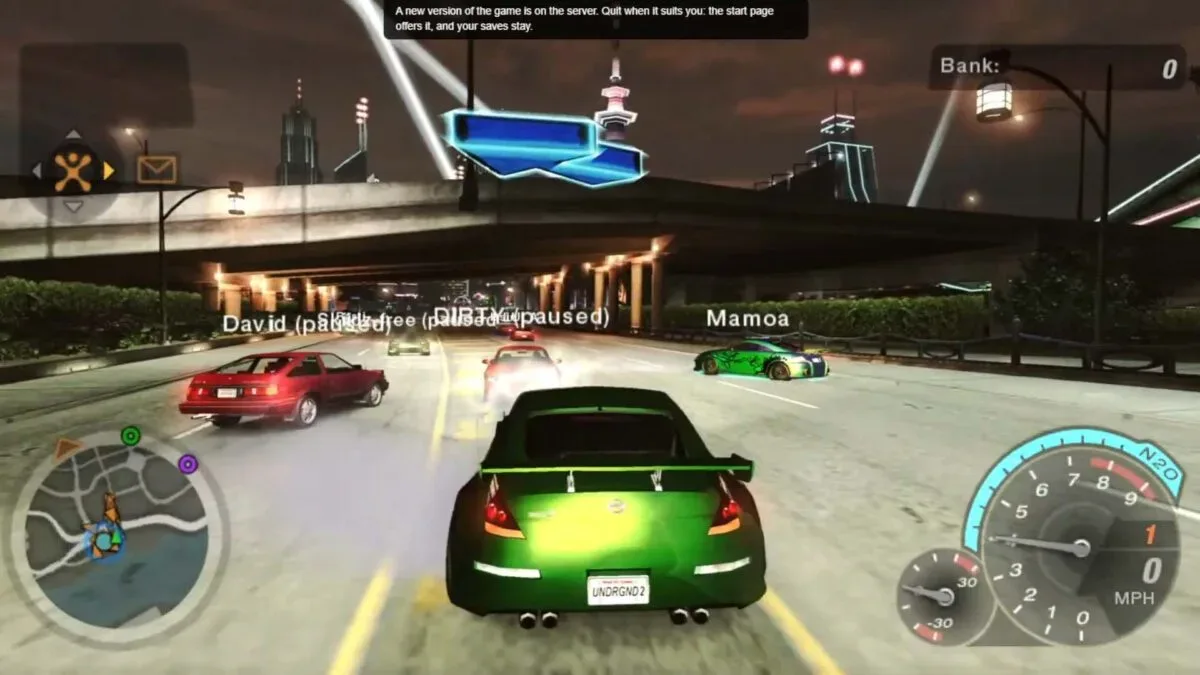
Need for Speed: Underground 2 has been given an unexpected second life in a browser-based project called NFSU2 Revived. The fan-made port makes the 2004 racing game playable on PC without a download or installation, and it layers an optional online mode over a city originally built for a single driver’s late-night cruise.
That last detail is the reason the project has drawn attention. Players can choose to enter the streets alongside dozens of other player-controlled cars, producing the sort of traffic pileups, drifting tangles and accidental collisions that the original game’s roads were never designed to manage. Viral clips of that disorder have helped the project spread following its release late last month.
For players who would rather revisit Underground 2 without a crowd of cars treating every junction as a demolition derby, the multiplayer component is opt-in. The original solo experience remains the point of entry. The added online activity is a separate way to use the port rather than a compulsory rewrite of the game’s familiar structure.
A familiar PS2 racer in a very different setting
Underground 2 arrived in 2004 and became one of that year’s most popular games. Its appeal came from an open-world city, nighttime street-racing atmosphere and a customization-heavy automotive style defined by visual flourishes such as underglow and nitrous oxide, commonly shortened to NOS. In racing-game terms, nitrous is generally presented as a temporary performance boost; in Underground 2’s broader identity, it also belongs to the game’s exaggerated tuner-car aesthetic.
A browser port does not merely change where a game launches. It changes the amount of friction between curiosity and play. Instead of finding a compatible setup, downloading files and installing software, someone can open the project in a browser and get to the game. That is especially meaningful for a title associated with the PlayStation 2 era: the original game is old enough to inspire nostalgia, but its original hardware context is no longer the default way many people play on a PC in 2026.
The project’s site reports that thousands of people are currently playing. That figure should be understood as site-provided data rather than an independently verified population count, but it helps explain why the streets can look so crowded in circulating footage. An open-world map intended for one player has very different rhythms when it becomes a common space for a large group.
Optional multiplayer changes the mood more than the map
The notable twist is not that Underground 2 has cars or an open city; those were already central to the 2004 game. It is that the port turns those existing roads into a shared environment. The result appears less like a conventional organized race lobby and more like a spontaneous gathering where driving skill, sightseeing and unplanned impacts coexist.
That distinction matters. A standard multiplayer race normally gives players a controlled course, a starting order and a defined objective. Here, the attraction described by the project’s sudden popularity is the opposite kind of spectacle: many drivers occupying streets that were not authored around that many simultaneous human decisions. Narrow passages, intersections and corners become potential collision points simply because each player is following their own route.
Related coverage includes Need for Speed: Underground 2 Browser Port Brings Optional Multiplayer Chaos.
It also makes the decision to keep multiplayer optional important. Nostalgia is not one uniform desire. One person may want the solitary nighttime drive they remember, while another may want to see how the same city behaves once it is packed with unpredictable players. NFSU2 Revived offers both approaches without requiring every returning player to accept the chaos.
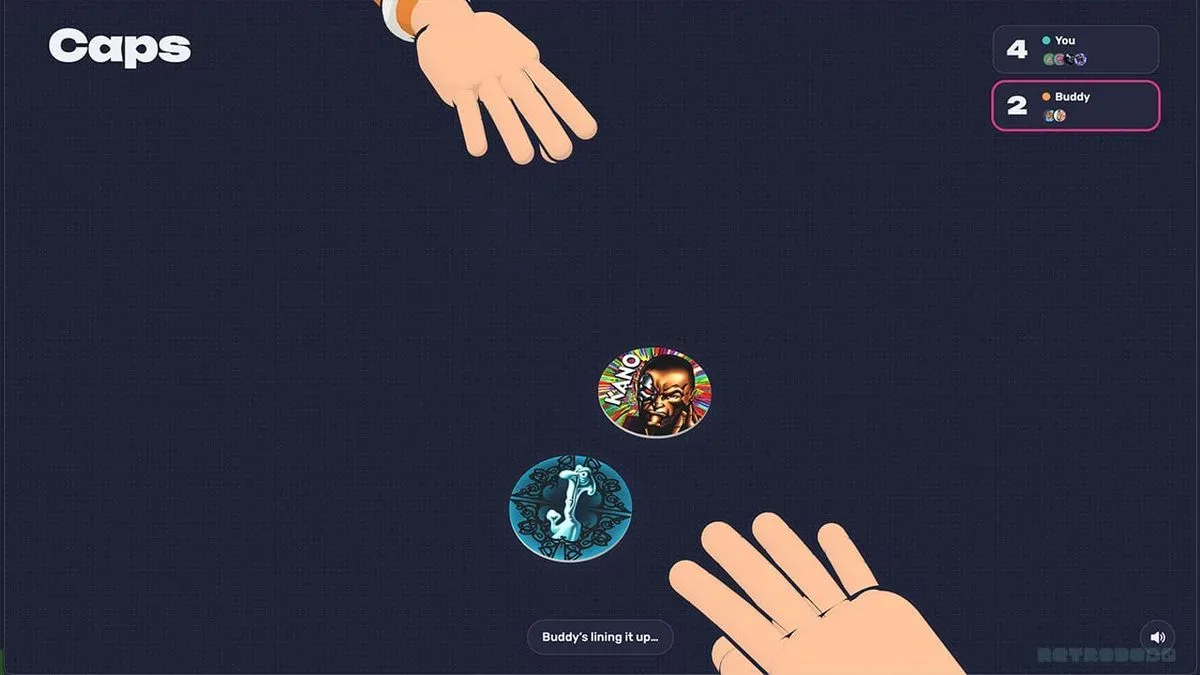
That browser-first accessibility also places the project in a small but increasingly visible category of retro-minded experiments: projects that bring an older style of game to the web and use that lower barrier to entry as part of the appeal. Browser play has supported other nostalgia-focused concepts too, including a browser game built around Pogs-style cap flipping. The common thread is not that these games are alike mechanically, but that the browser can make an older cultural or gaming touchstone easier to sample quickly.
What “port” means here
A port is a version of software adapted to run in a different environment than the one it was originally made for. In this case, the headline change is that a game associated with the PlayStation 2 era can run through a web browser on PC. NFSU2 Revived is also a fan project, meaning it was not presented as an official new release from the original publisher.
The term does not automatically tell players everything about accuracy, long-term support or legal status. It simply describes the practical outcome: the game has been made accessible in another technical setting. The supplied information does not establish a full compatibility list, performance expectations, account requirements or the exact design of the online systems. Those are useful questions for anyone considering the project, but they should not be answered with assumptions.
What is clear is the core proposition. The port removes the stated need to download or install a file, preserves the option to play alone, and offers an additional shared-space mode for players who want it. The combination is a meaningful departure from the original context even when the city, cars and nighttime atmosphere evoke the game people remember.
The creator’s goal, and the scale it reached
The developer behind the project has said they played Underground 2 when they were younger and made Revived so people could “play together again.” That motivation fits the port’s design: rather than treating the old game solely as a private memory, it makes room for an active public gathering around it.
“It worked surprisingly well, and it got a bit out of hand,” the creator said. “It’s great to see so many people playing it.”
“Out of hand” is an apt description for the multiplayer footage. It does not necessarily describe a competitive mode built around precision or carefully managed race conditions. Instead, the novelty is emergent: dozens of drivers produce moments no one person planned. The city becomes a social space as much as a track.
That is a useful reminder of why old games can become newly interesting without changing every underlying mechanic. A new access point and a new social context can alter how people approach the same digital streets. The solo player sees a classic open-world racer. The online player sees that racer as a place to meet, drift, collide and create clips.
AI-assisted coding is part of the project’s documented story
NFSU2 Revived was developed with help from AI tools, a detail documented on the project’s GitHub page. That phrase deserves some precision. AI-assisted coding refers to using AI-based tools within a software-development workflow, such as for generating, revising or helping work through code. It does not, by itself, tell the public exactly how much work a tool performed, what technical decisions the developer made, or whether the resulting project is stable over time.
In this case, the relevant fact is that the creator’s documentation acknowledges AI assistance. The project remains notable for its browser delivery and optional mass multiplayer, not because the supplied information provides a detailed technical postmortem of the tools. Treating AI use as a workflow detail rather than a magic explanation is the clearest way to read it.
For fan developers, assistance tools can reduce some barriers to experimentation, but they do not remove the need to make the project work in practice. A browser game with shared online activity still has to contend with the basic challenge revealed by the clips: getting many players into the same old city creates behavior the original streets were never planned around. That roughness is part of the appeal here, but it is also the most visible consequence of adding a new layer to a classic game.
The major uncertainty: what happens next
The original publisher of Underground 2 is EA, and it remains uncertain whether the company will take action against the fan-made project. The existence of a playable browser port and the project’s growing visibility do not guarantee that it will remain available. Fan revivals built around an established commercial game can face a different future from projects based on original work.
For now, NFSU2 Revived is an unusual meeting point between retro racing nostalgia, low-friction browser access and a multiplayer experiment that appears to have exceeded its creator’s expectations. Its most compelling idea may be its simplest: an open-world racing city designed for lonely nocturnal driving becomes far stranger once dozens of people arrive at once.