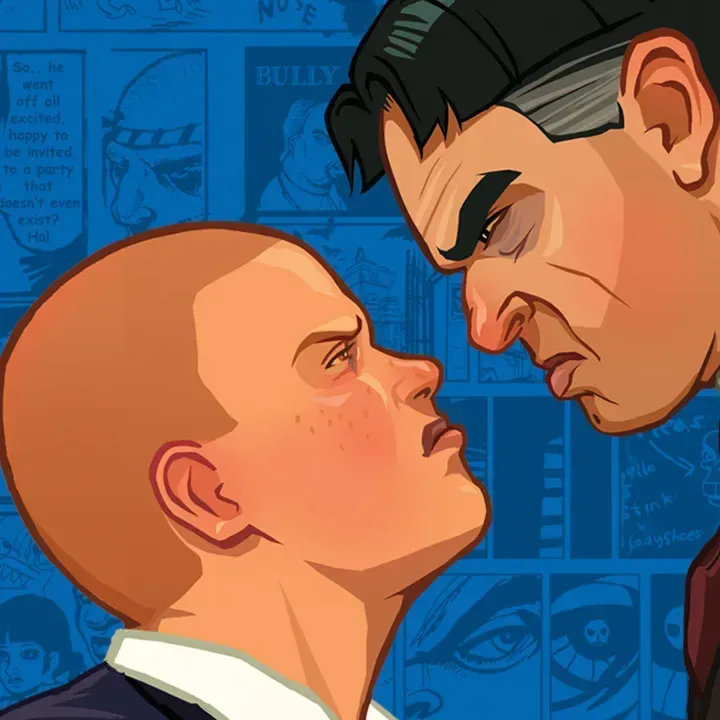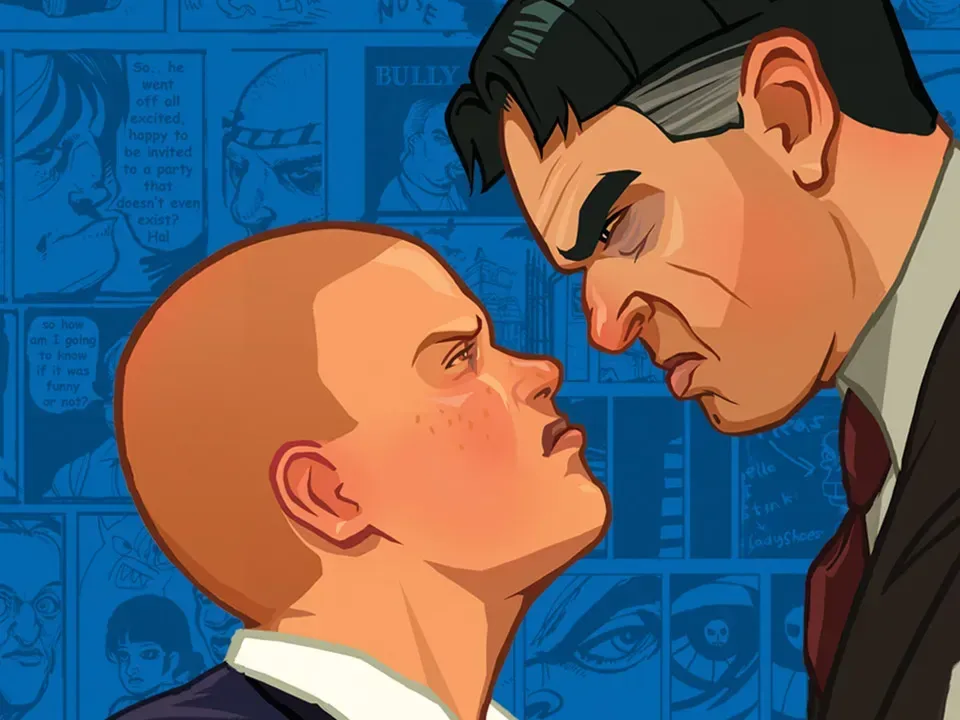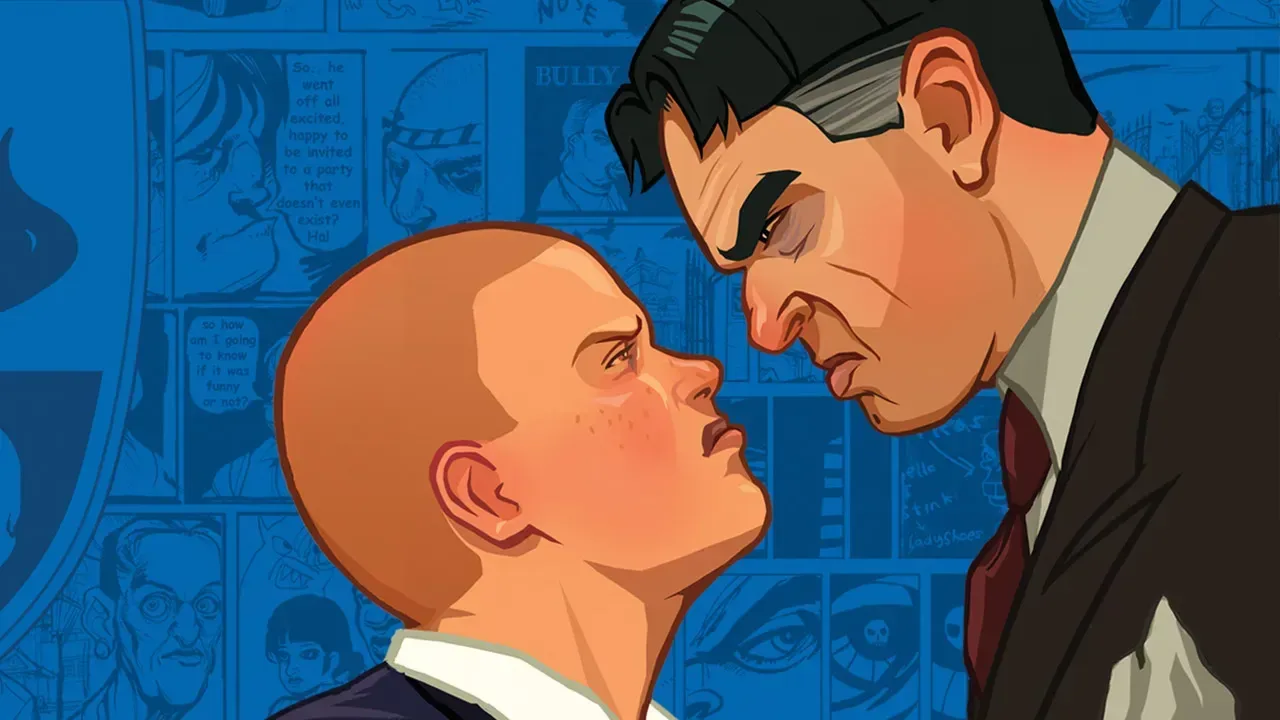
Bully is remembered as one of Rockstar’s most distinctive games: an open-world story about Jimmy Hopkins, a troublesome student navigating a year at Bullworth Academy. Yet former Rockstar vice president and Bully writer Dan Houser has described a far less tidy path to its 2006 release. In his telling, the team repeatedly struggled to establish what the game was, while public controversy consumed energy that might otherwise have gone toward presenting it on its own terms.
The central development problem was deceptively simple. Rockstar had experience making open-world games built around adult crime-fiction conventions, but Bully’s school setting could not simply inherit the usual Grand Theft Auto toolkit. Cars and guns, Houser said, were off the table. That forced the developers to answer a much more fundamental question: without those familiar mechanics, what does the player actually do?
The answer, it seems, emerged through specificity rather than scale. Lessons, a school-day schedule, social mischief, and the smaller concerns of a teenager gave the game an identity that would not have made sense in a conventional crime sandbox. Houser’s recollection of a small prank mechanic—a note placed on a character’s back that prompts another non-player character to react—captures the turning point. It was a minor interaction, but it made the world feel legible at the scale of a schoolchild’s life.
A new open world needed new rules
New IP, shorthand for a new intellectual property, is more than a new title or setting. It means a team has to establish the characters, tone, world, systems, and audience expectations without the design shortcuts that come from a proven series. Houser characterized that uncertainty as a major source of stress for Bully.
The challenge was heightened by proximity to Grand Theft Auto: San Andreas, which had arrived a little more than a year earlier. A studio can carry broad experience from one project to another, but it cannot assume the same verbs—driving, combat with firearms, large-scale criminal escalation—will fit a story focused on a pupil at a boarding school.
That distinction matters because an open world is not defined merely by having a map to roam. It needs a coherent set of activities and consequences that give players reasons to inhabit that map. In Bully’s case, the school timetable and classes helped supply that structure. Rather than treating the setting as a cosmetic swap for a familiar sandbox, the team began to organize play around institutions and routines that belonged to Bullworth Academy.
Houser said the project had been in difficulty for much of its development and that he was not convinced early on that it would be good. He nevertheless credited the team for bringing it together, while stressing that the convergence happened late. That is an important qualifier: a successful final game does not necessarily indicate an easy or linear production. Bully’s favorable reception at launch came after a period of uncertainty about its basic purpose.
The value of a small prank
The Post-it-note example is revealing because it is not a grand technical showcase. A player can place a “Kick me” note on a character, after which an NPC—meaning a non-player character controlled by the game—runs over and kicks that target. Mechanically, it is a short chain of player action, AI response, and social consequence.
Related coverage includes Dan Houser Reflects on Why Bully Was One of Rockstar's Hardest Games to Make.
But it expressed a key design idea. The game’s comedy and conflict could grow from childhood-scale behavior: teasing, embarrassment, cliques, rules, and retaliation. Houser recalled that seeing this interaction work made the potential clearer. The premise began to feel fun precisely because it was not trying to transpose an adult criminal fantasy into a schoolyard unchanged.
That is also why the removal of cars and guns should not be read only as a restriction. Constraints can make a project harder to define, but they can also expose whether the remaining ideas are distinctive enough to carry it. In this case, the developers had to find interactions that made sense for Jimmy Hopkins and Bullworth rather than relying on mechanics associated with another Rockstar series.
Controversy complicated the game’s public life
Internal design uncertainty was only one front. Houser said Bully faced a substantial public backlash before people had seen the game, with concerns tied in part to its title and the assumption that a game set in a school must endorse the behavior it depicts. He said the company spent much of 2006 trying to reduce that backlash rather than promoting the game positively in its customary fashion.
The concern did not emerge in isolation. Rockstar was operating in a mid-2000s climate in which its releases attracted scrutiny. Manhunt had become associated with extreme violence, while the Hot Coffee controversy around Grand Theft Auto: San Andreas involved a sex minigame modification discovered in the game’s code. Against that background, Bully’s premise was especially vulnerable to being judged by a name and a broad description instead of its actual play and tone.
Houser said the pressure extended to the basic question of whether stores would carry the game and whether protests could be averted before launch. That is a different kind of production challenge from making an AI interaction work or building a daily schedule. It affects marketing, retail, staffing, and the emotional climate around a team. Even when developers are not personally running public-response efforts, they still work in the atmosphere those efforts create.
The game’s difficulty was not just making a school-set sandbox; it was making that sandbox while a public argument about its premise was already underway.
The distinction is important because Bully was originally known in Europe as Canis Canem Edit. The alternate name itself underscores how much the title became part of the conversation surrounding the project. Houser’s account suggests that public misunderstanding did not merely produce unpleasant headlines; it limited the opportunity to explain the game as something more particular than its most provocative interpretation.
Why Bully’s setting remains unusual
Bully follows Jimmy Hopkins at Bullworth Academy and frames its world around a student’s year at school. That premise is smaller in apparent scope than the cities associated with Grand Theft Auto, but smaller scope can be a design advantage when the environment, activities, and character perspective reinforce each other.
In practical terms, a school has built-in rhythms. There are lessons, authority figures, peer groups, and recurring places that can make a compact world feel active without requiring the player to traverse an enormous city. Houser specifically identified the schedule and lessons as elements that helped the team get closer to the game’s eventual form.
For players, that helps explain why Bully occupies such a particular place in Rockstar’s catalogue. It was not simply a toned-down version of another open-world game. Its design problem was to make a different social world playable. The success of the final game, as Houser describes it, came from recognizing that a kid’s concerns and opportunities could be the foundation of the game rather than a substitute for more familiar action mechanics.
That creative tension also helps account for the game’s long-standing sequel requests. Fans who want another Bully are not necessarily asking for more of the same map structure with a different coat of paint; the original’s appeal is tied to how unusual its premise was. A sequel would face its own version of the original question: how to preserve the character of a school-based open world without simply repeating its old ideas.
Sequel ideas did not become a project
Houser has previously said that ideas for a Bully follow-up were discussed at Rockstar but did not get off the ground because of “bandwidth issues.” In studio terms, bandwidth is not just a technical measure. It commonly describes finite capacity: the people, time, leadership attention, and production resources available to turn an idea into a full game.
That wording is significant because it does not describe a sequel as impossible or dismiss the affection for the original. It describes a project that did not advance amid competing demands. There is no basis here to treat past ideas as evidence of a current sequel, a release plan, or an active production. The clearest supported takeaway is narrower: the possibility was considered, but it never became a completed follow-up.
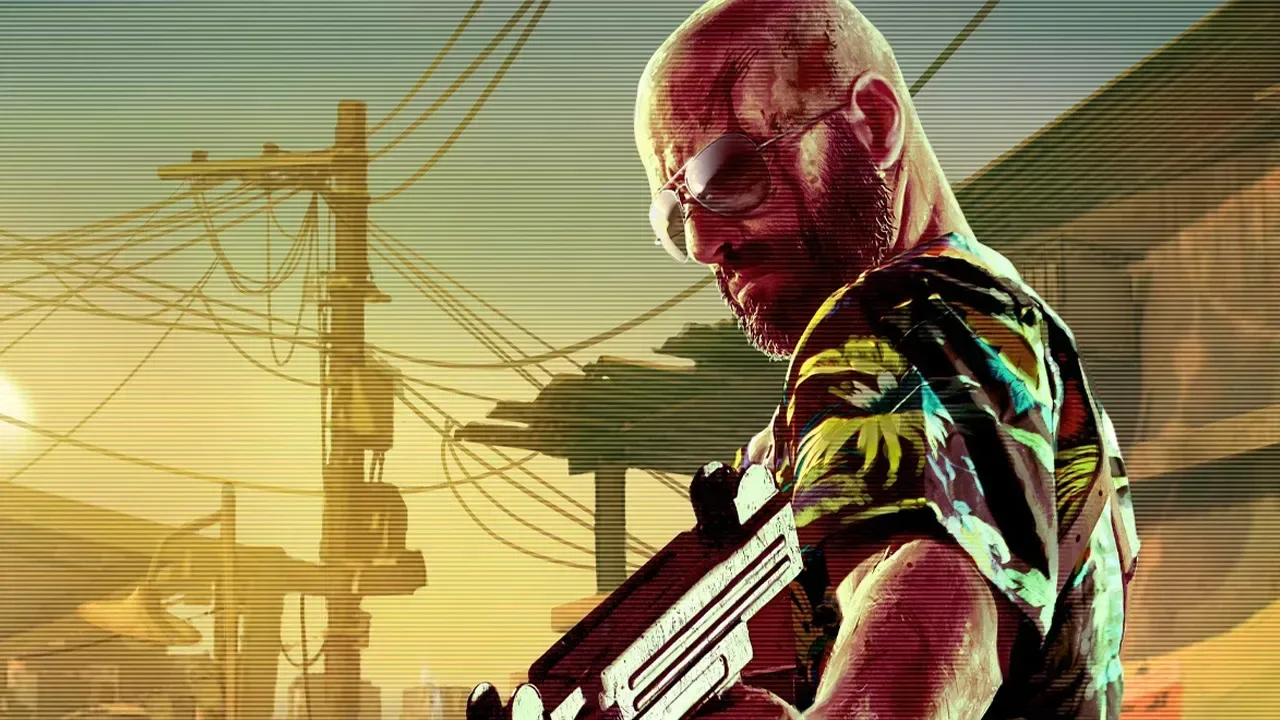
The renewed discussion around Bully also arrives as interest in Rockstar’s next Grand Theft Auto remains high. For broader context on Houser’s reflections on Rockstar projects and creative decisions, see his comments on Max Payne 3’s place in his own work.
What Houser’s account clarifies
It is tempting to look backward at an acclaimed game and assume its direction was obvious from the start. Houser’s comments counter that assumption. Bully had to overcome an unresolved mechanical identity, a new setting with few ready-made genre answers, and a public controversy that influenced how the game could be marketed and received before release.
Its eventual strengths were rooted in a design realization: the absence of cars and guns did not leave an empty shell, provided the developers could create a world where school routines and mischievous social interactions felt consequential. The late-arriving confidence Houser describes was not a matter of making Bully more like Grand Theft Auto. It was the recognition that it needed to work at a different scale, for a different kind of protagonist, with its own rules.