Spoilers for Red Dead Redemption and Red Dead Redemption 2 follow.
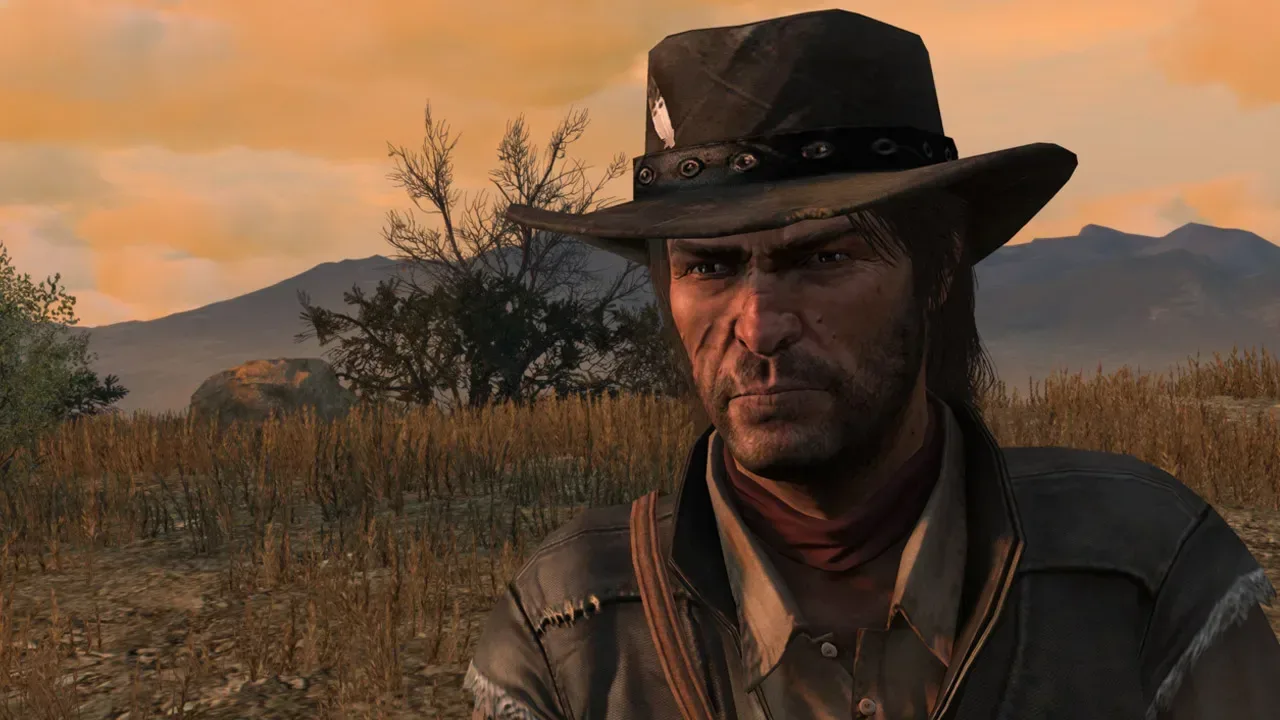
John Marston’s fate at the end of Red Dead Redemption remains one of gaming’s most discussed endings because it does something open-world games are usually built to avoid: it takes the player character away for good. Dan Houser, the game’s writer and a former Rockstar vice president, has explained that the decision was not simply a matter of choosing the most dramatic final scene. The team first had to determine whether the game could continue to function after John’s death.
That distinction matters. In a linear story, killing a protagonist can be a clean cut: the credits roll, the audience leaves, and the character’s journey is over. An open-world game, however, normally remains available after the main story. Players may still have side missions, conversations, activities, or unfinished exploration. If John dies but the player still needs a character to inhabit the world, the ending becomes a production, continuity, and technical-design problem all at once.
Houser said he and lead designer Christian Cantamessa were both drawn to the idea of killing John. But they were also cautious about what it would mean once the game needed to return players to its frontier after the climax. The eventual answer was Jack Marston, John’s son. Yet handing over control was not as easy as selecting a new playable model and calling it a day. The world’s dialogue, mission states, and remaining character arcs had to make sense with somebody else in the lead role.
Why John Marston’s death could not be the actual end
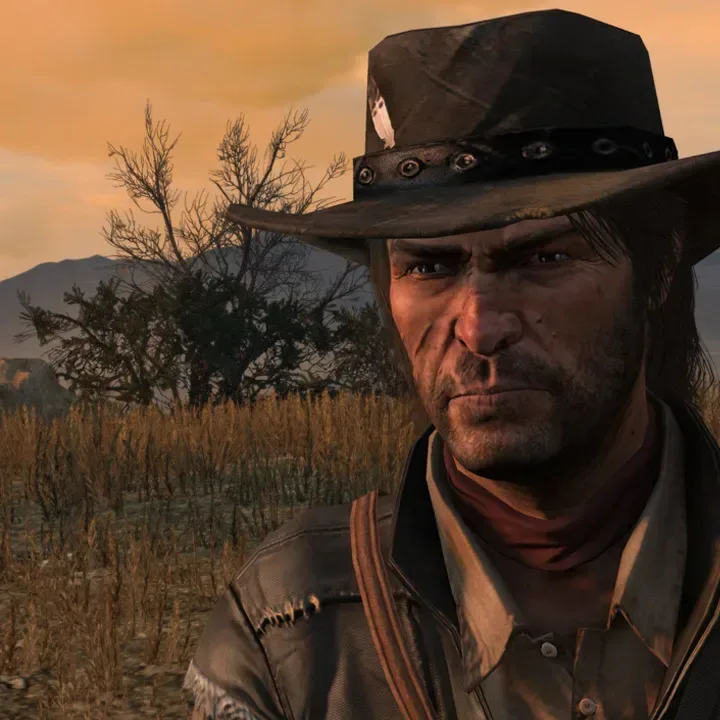
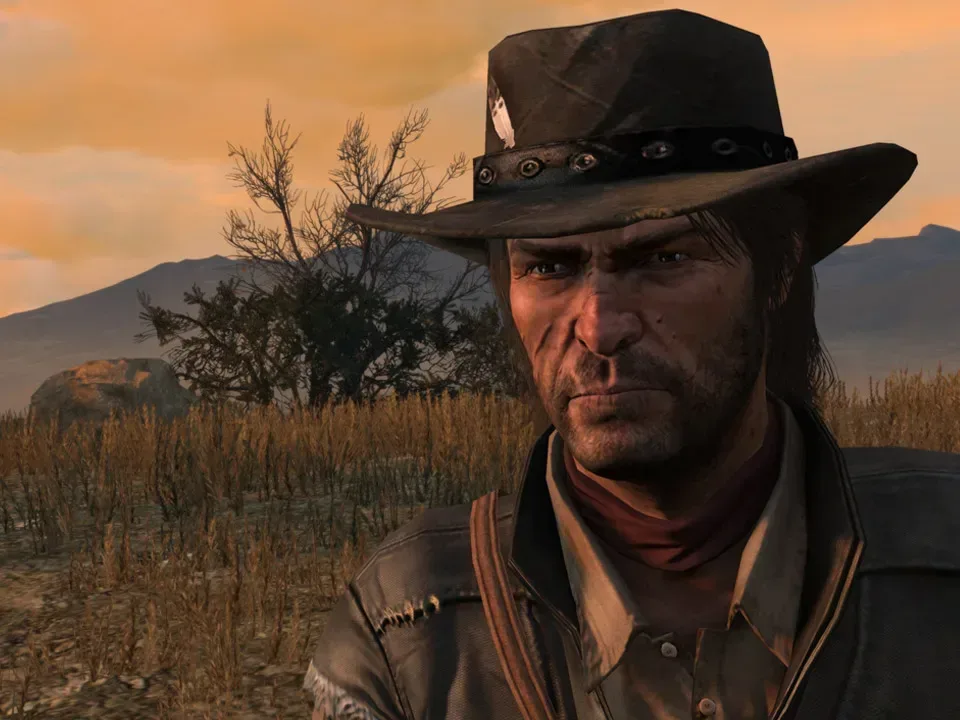
By the closing stretch of the 2010 game, John has completed the core task that drives much of the campaign: confronting Dutch van der Linde, his former gang leader, in a snowy final encounter. The story then denies him the comfortable retirement that victory might imply. At the family farm, soldiers kill John in the barn.
Houser’s description of the writing logic is direct: John needed to die for the story to carry the weight the team wanted. But interactive stories have an added obligation. A player is not only watching a protagonist reach an ending; they have spent hours directing that character, travelling with them, accepting missions as them, and deciding when to pursue the plot or roam elsewhere.
That is why a post-story free-roam structure is more than an epilogue. It is a promise that the game world will still recognize the player’s progress. Breaking that promise through an abrupt ending would have been one option, but it would have clashed with the broader structure of an open-world game. Keeping John alive, meanwhile, would have weakened the consequence that the writers felt the story demanded.
The compromise was bold because it refused to compromise emotionally. John dies; the game persists. The player assumes control of Jack only after a three-year jump to 1914, when he is 19. During most of the game Jack is 16, so the time jump is doing essential work rather than merely offering a historical flourish. It makes an adult playable protagonist plausible while creating enough distance for the game’s remaining world to accommodate the change.
Related coverage includes Dan Houser Explains Why Red Dead Redemption Had to Kill John Marston.
What “production realities” mean in this case
Houser framed the issue in terms of production realities, which is useful shorthand for the practical systems underneath a narrative decision. In this situation, those realities included audio, dialogue, side-content progress, and the logic governing interactions with non-player characters.
A side character with a multi-mission storyline cannot simply forget its previous chapter because the player character has changed. If a player completed the first mission in an arc as John and returned later as Jack, the game must understand that history and present a believable continuation. Dialogue must account for what the player has or has not done. The character taking part in the scene has changed. The game’s systems need to track both truths without turning the remaining content into nonsense.
This is the hidden engineering of a protagonist swap. It is not merely a narrative handoff. It involves preserving state—the record of what a player has completed or triggered—while changing the identity through which they experience that state. Houser said the team questioned whether it had the skills and bandwidth to make that transition work technically, even before settling the story details. “Bandwidth” here means development capacity: the people, time, and resources needed to address an unusually complex feature rather than assuming it can be absorbed into ordinary mission production.
The team ultimately believed it could make the handoff work, though Houser said they remained afraid of the risk. That uncertainty helps explain why the ending feels unusually deliberate. The shift to Jack was not an ornamental stinger added after John’s arc. It was the solution that allowed the game to preserve its open-world obligations while committing to its tragic ending.
Jack’s final duel gives the handoff a purpose
Allowing players to continue as Jack could have felt like an administrative necessity—a way to clean up remaining objectives after the real story had ended. Instead, the game gives him a concluding act of his own. In the final story mission, Jack kills the person responsible for John’s death in a duel.
That makes the character switch emotionally functional. John’s death changes the player’s relationship to the world, and Jack’s revenge turns that loss into a final playable action. Houser recalled strong internal feeling about this moment and said it helped validate the larger decision.
There is an important difference between saying an ending is sad and saying it has consequence. John’s death establishes consequence because it changes who the player is. Jack’s duel then gives the player a measure of agency after a moment where John’s fate is fixed. The game does not undo the loss, but it allows the new protagonist to answer it. That is a very different proposition from a passive closing scene.
The result also explains why some players reacted angrily. Houser said the team was surprised by just how furious some were. He regarded that anger as evidence of deep engagement with the characters and story, while also recognizing that players could feel personally let down by the decision.
His explanation gets at a central difference between games and non-interactive storytelling. A game cannot exist without a player’s participation, so players may feel a kind of ownership over the experience they are helping create moment by moment. They have guided John through the landscape and made choices about where to spend time, even if the final plot outcome is authored. When the game kills him, it can feel less like witnessing a character’s fate and more like losing access to someone the player has actively inhabited.
An ending that challenged the usual open-world contract
Red Dead Redemption initially divided opinion, but the ending has since become widely regarded as a landmark of game narrative. Houser’s comments show why it was such a gamble. It challenged an assumed contract: invest in a powerful avatar, finish the campaign, then keep using that avatar to explore and complete whatever remains.
Instead, the game makes the player accept that the world carries on without John. It does not ask players to forget their investment in him. It builds the final stretch around that investment, then transforms it into Jack’s motivation. This is precisely why the emotional response was not universally appreciative on release. The design asks the audience to accept loss in a medium where persistence and player control are often expected.
Houser noted that he had wanted similarly weighty outcomes in several Grand Theft Auto games, but that the technical issues around an open-world protagonist had prevented it. The John-to-Jack framework showed one route through that dilemma: use a new playable character and make the passage of time part of the narrative machinery.
That does not mean every game should treat a protagonist switch as a shortcut to seriousness. The device works here because the succession is tied to the game’s themes of family, violence, and revenge, while the three-year jump gives the transition a coherent place in the world. A change of playable character alone is not the point. Maintaining the player’s progress and giving the successor a meaningful role are what make it viable.
How Red Dead Redemption 2 used the idea differently
The later prequel, Red Dead Redemption 2, revisited the broad idea of changing the character through whom players experience the world. It first binds players to Arthur Morgan, then returns John Marston to a playable role. The structure carries extra resonance because players already know John’s eventual future from the first game.
That does not make the two games identical. The first game uses Jack’s adulthood and final revenge to complete John’s story after his death. The prequel instead positions John’s return within a story set before the original game. Still, both demonstrate a willingness to treat the open world as something that can outlast a single playable identity rather than as a space permanently attached to one hero.
For a wider look at Houser’s reflections on Rockstar’s creative process, see his account of how Bully came together after an uncertain start.
What the comments suggest for future Rockstar storytelling
Rockstar’s next major crime story, GTA 6, is set to put players in control of Jason and Lucia, a couple on the run. That premise already differs from a single-protagonist structure, but it does not confirm anything about how the story ends or who remains playable at any point. It would be speculation to draw conclusions from the Red Dead games alone.
What Houser’s account does establish is the standard such a decision would need to meet. A shock is not enough. For an open-world protagonist change to work, a developer must account for unfinished content, conditional mission history, dialogue, timing, character age, and the player’s attachment to the person being replaced. The best version of the idea must make those practical constraints reinforce the story rather than expose them.
John Marston’s ending endures because it faced that challenge head-on. The creative aim was ruthless, but the implementation required an answer to a surprisingly unromantic question: after the hero is gone, who is the player, and how does the world remember what they did?