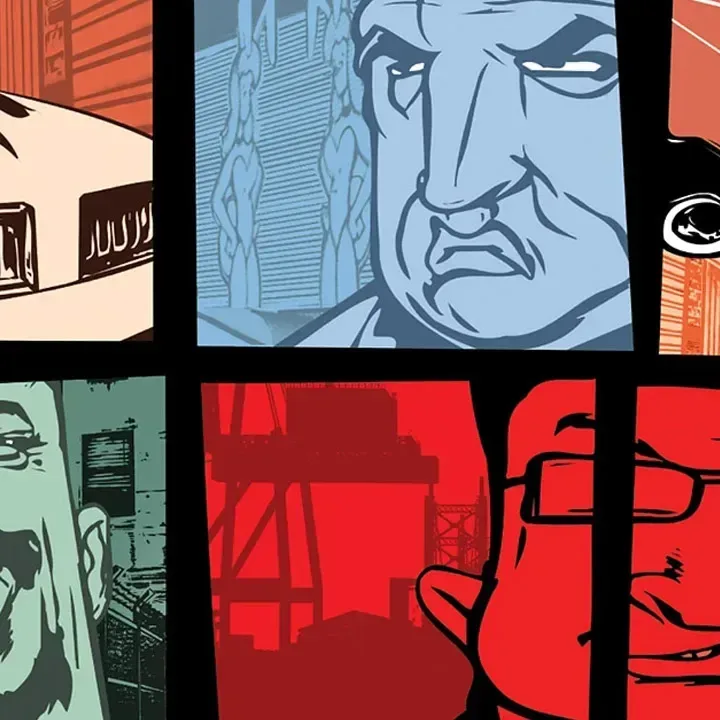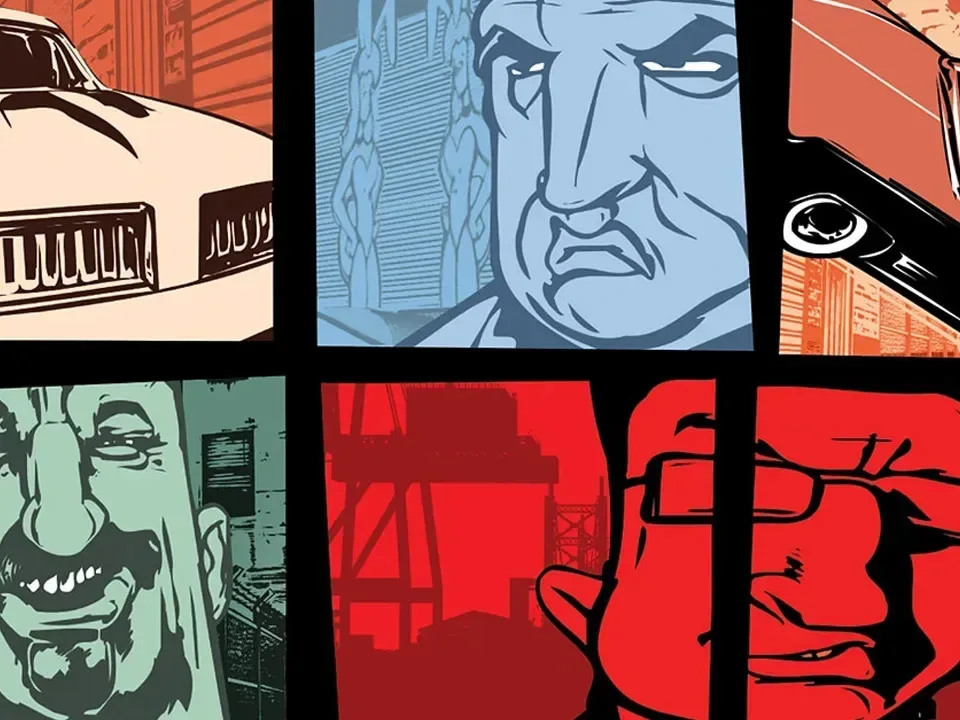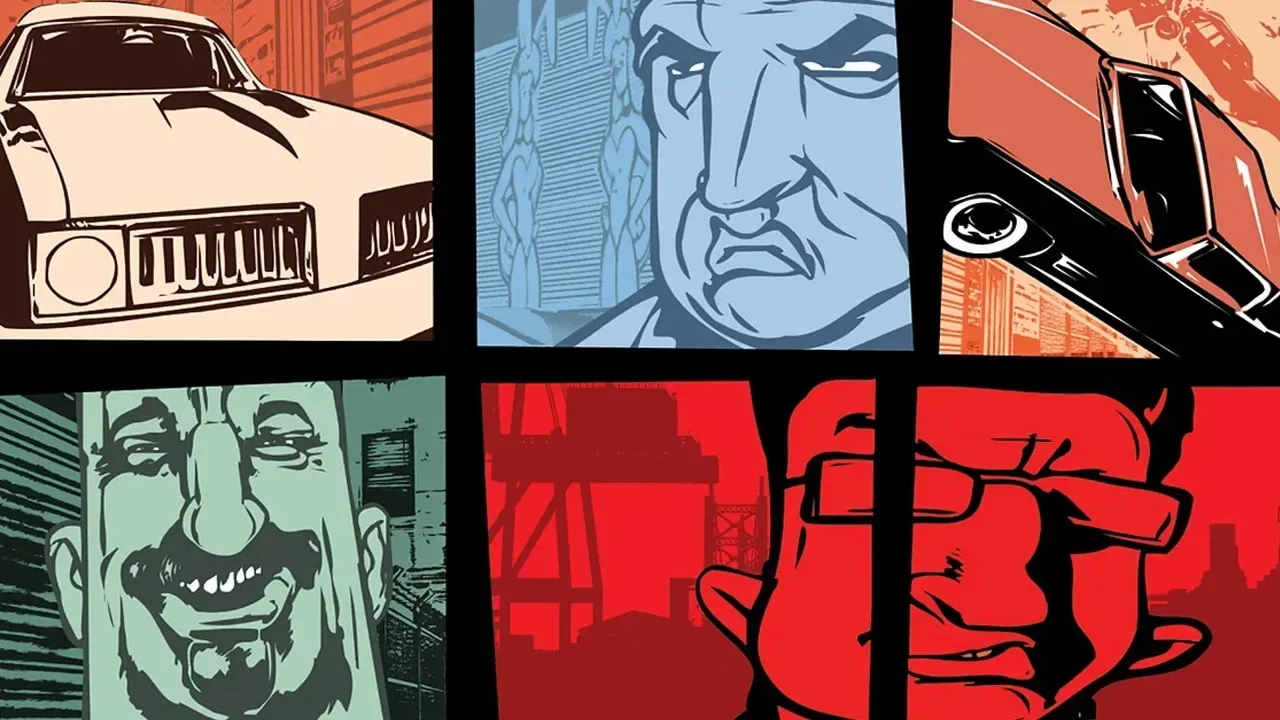
The grid of illustrated faces, cars, skylines and city-life snapshots on a Grand Theft Auto cover can feel as inseparable from the series as a wanted level. Yet Dan Houser says the visual formula was not the original plan for Grand Theft Auto III. It emerged under extraordinary circumstances: the team replaced earlier box art following the September 11, 2001 terrorist attacks, and Stephen Bliss produced the panel-based replacement in roughly two evenings.
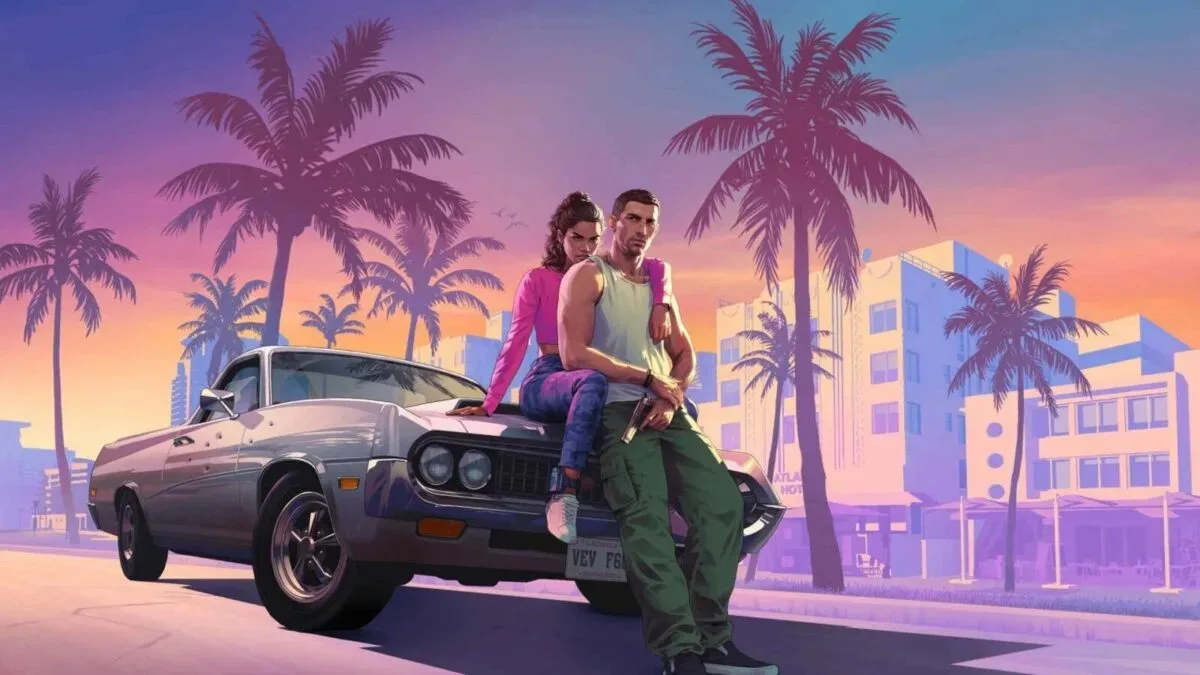
That makes the cover of GTA III more than a successful piece of branding. In Houser’s account, it was an urgent creative response to a changed real-world context—one that subsequently became the long-running visual template for the franchise, from the 2001 game through the art associated with the upcoming Grand Theft Auto VI.
An iconic design born from a last-minute rethink
Houser, a former Rockstar vice president and a writer on the studio’s games from 1999 through Red Dead Redemption 2, said the first GTA III cover had imagery of burning buildings. In another moment, he suggested, it may have been acceptable. Directly after the attacks, however, the imagery was considered too offensive to release.
The replacement is the design players now recognize immediately: separate rectangular or square panels, each presenting a stylized, colorful fragment of the game’s world. Rather than treating the cover as one dramatic scene, the layout creates a collage of characters, vehicles and locations. Houser described those panels as “shards” and “squares,” and said the look only arrived because the original art had to be changed.
That distinction matters. A visual identity is often talked about as though it were a carefully settled brand decision made years in advance. This account instead describes a fast solution to a serious and sensitive problem. The enduring result came from the artist’s ability to reduce a sprawling open world into a set of small, readable images on an extremely short timetable.
There is also an important practical advantage in the resulting format. Grand Theft Auto games feature multiple protagonists, a large supporting cast, numerous neighborhoods and an assortment of vehicles and activities. A panelled composition can suggest that scale without declaring any one image to be the whole game. That is analysis of why the approach has proven adaptable, not a claim that it was the original design brief. What Houser’s recollection establishes is the immediate reason the composition came into being.
Why Liberty City made the edits especially sensitive
Grand Theft Auto III is set in Liberty City, a fictional city modeled on New York City. That proximity made a reconsideration of the packaging and parts of the game especially understandable in the immediate aftermath of the attacks. Houser said there were elements that might otherwise have been acceptable but felt like too much at that specific time.
The changes went beyond the box. Houser had previously recalled several adjustments made to the game:
Related coverage includes Dan Houser Explains How 9/11 Shaped Grand Theft Auto's Iconic Cover Art.
- Police-car colors were changed so they did not match those of the NYPD.
- A plane’s flight path was altered so it would not appear to travel into or behind a skyscraper.
- One mission involving a reference to terrorists was removed.
- A small number of dialogue lines were edited.
These are useful examples of what a late-stage content pass can involve. In game development, that term generally means a focused review of material already in or near the final build, intended to identify material requiring revision. It does not necessarily mean reconstructing the entire game. Houser described the team rallying to take out or change the relevant pieces, then assessing the result quickly.
None of the listed changes alters the central fact that GTA III remained a crime-focused open-world game set in a stylized urban environment. But the details show that tone can be affected by presentation as well as by major plot points. The color of police vehicles, the apparent trajectory of a background aircraft and one line of dialogue can take on a different meaning when audiences encounter them against a particular real-world event.
A modest delay amid major uncertainty
The revisions contributed to a short release shift. GTA III had been planned for October 3, 2001, then arrived on October 22. A delay of only a few weeks can sound small when viewed decades later, but it represented intense pressure for the team. Houser recalled that Take-Two was in a precarious economic position earlier in 2001 and that development was already a struggle.
He also recalled taking the game to E3 and finding that it did not draw much interest from people on the show floor. The experience was dispiriting, especially because the team believed it had made something exceptional. That recollection is a useful corrective to the idea that a landmark game’s success is always obvious before launch. The eventual cultural status of GTA III was not, in Houser’s telling, a foregone conclusion during its final months.
The game’s commercial momentum was gradual rather than centered on one explosive week. Houser said sales continued through Christmas 2001 and into early 2002, with the title steadily selling week after week. That slow-building trajectory helps explain why the series’ visual language became so broadly familiar: it was attached to a game that continued finding an audience, rather than disappearing after an initial release window.
The cover’s long afterlife
Houser has observed that Grand Theft Auto has moved beyond game boxes and into wider popular culture. He pointed to HUD-styled imagery in online clips, frequent use of the logo and cover-art-inspired T-shirts at tourist destinations. A HUD, or heads-up display, is the information layer shown while playing, such as health, maps or other status indicators. When its look gets reused outside the game, it signals that players recognize the interface itself as part of the series’ identity.
The same is true of the covers. The panel arrangement does more than advertise a single release; it acts as visual shorthand for the kind of fictional city and social satire audiences associate with Grand Theft Auto. That recognition is why the 2001 redesign still matters while attention turns to the next entry. For readers following current release reporting, Joking Joystick has also covered the reported timing of a GTA 6 PC release.
Crucially, the template’s endurance should not erase the circumstances of its creation. Its bright graphic confidence can obscure the fact that it was shaped by a decision to pull back from imagery that would have landed painfully in the immediate wake of a tragedy. The design became recognizable because it was effective, but it began as an act of adjustment.
Part of a broader period of media revisions
GTA III was not alone in undergoing changes after September 11. Other games and entertainment projects were also altered. Command & Conquer: Red Alert 2 had its packaging redesigned. Parts of Metal Gear Solid 2: Sons of Liberty involving damage to Manhattan and the Statue of Liberty were removed.
Similar reconsiderations extended beyond games. A trailer for Sam Raimi’s Spider-Man was recut to remove footage in which a helicopter is trapped in a web suspended between the World Trade Center towers. Men in Black 2 underwent major reshoots. Planned follow-ups to True Lies and Forrest Gump were cancelled.
The shared lesson is not that every work with urban destruction, aviation or emergency imagery must be interpreted identically. Rather, release context matters. Material created before an event can acquire an immediate, unintended resonance afterward. In the cases described here, creators and publishers made different decisions—changing packaging, deleting sequences, reshooting or abandoning planned projects—based on the form and proximity of that resonance.
What Houser’s account clarifies about GTA III
It is easy to remember GTA III chiefly as the first 3D entry in the series and as a game that helped establish an enormously influential open-world model. Houser’s recollections add another layer: its final presentation was shaped by rapid, targeted judgment during a difficult historical moment.
The box art is therefore not simply a familiar franchise asset. It reflects a compressed production decision, an artist’s quick response and a developer’s effort to distinguish a fictionalized New York-like setting from real trauma. The game’s October 22, 2001 release followed those changes, and its momentum then built consistently into 2002.
Twenty-five years later, the familiar panels remain. Their survival as the series’ visual signature is perhaps the most surprising part of the story. An emergency replacement designed in roughly two evenings became the framework through which multiple generations would recognize Grand Theft Auto.