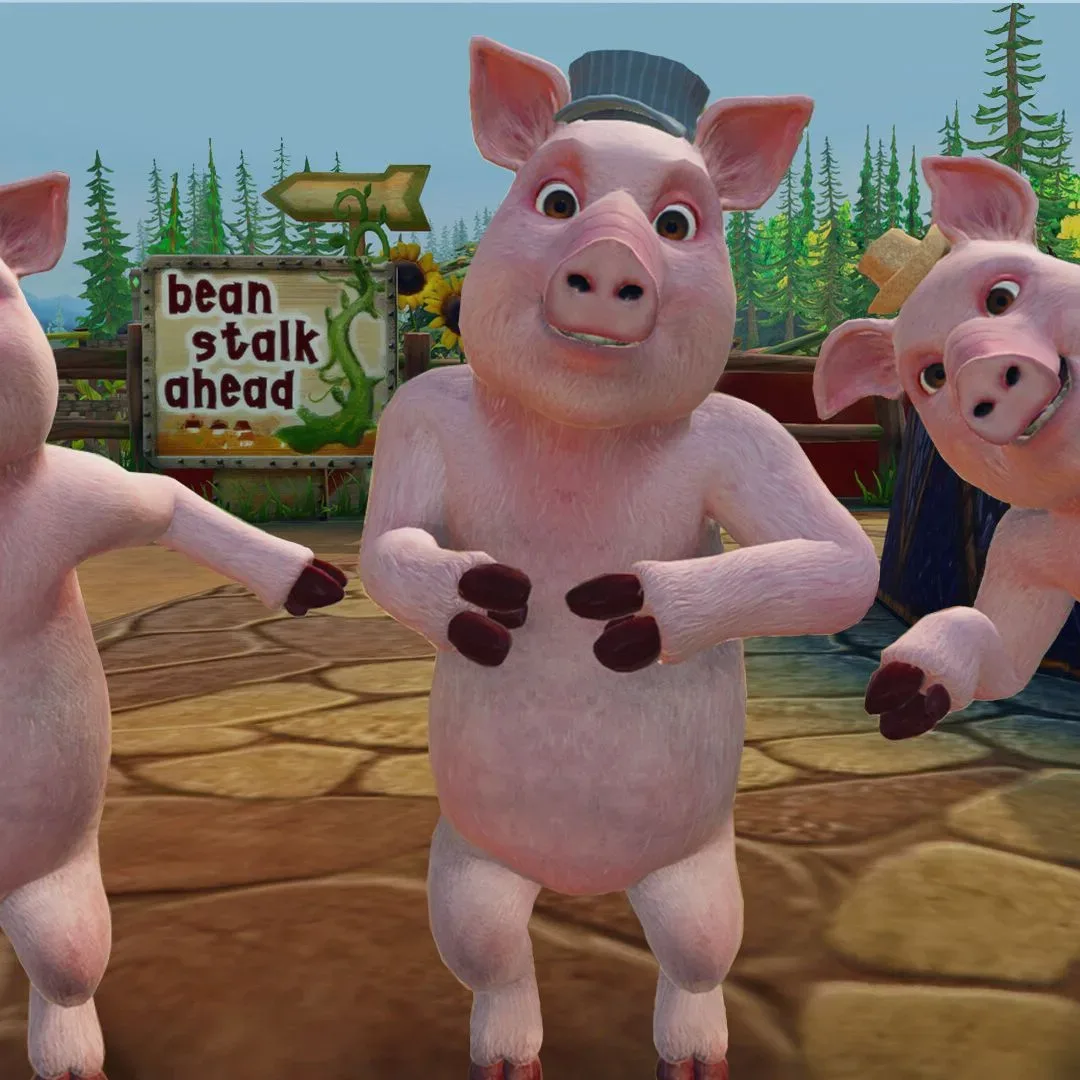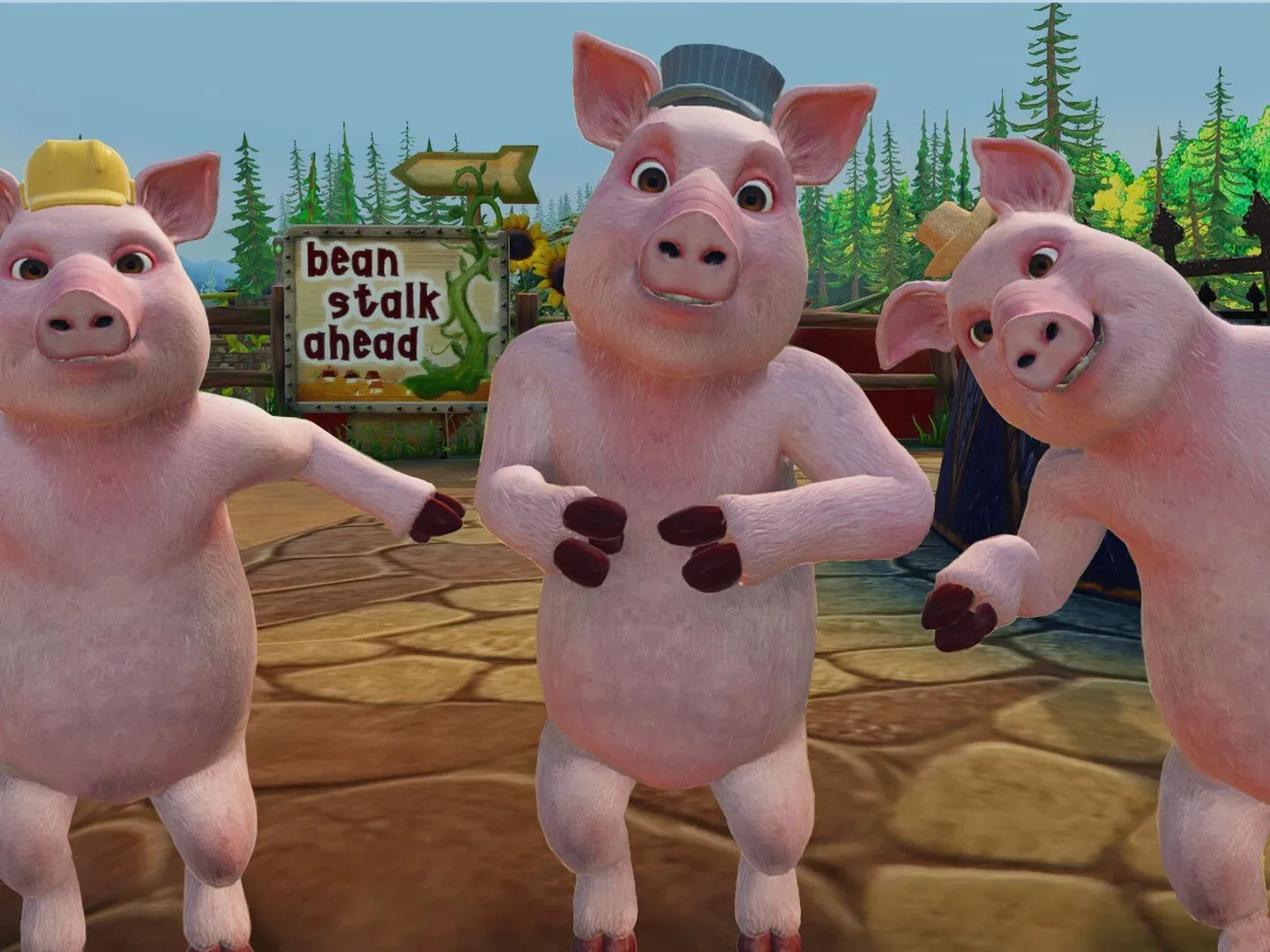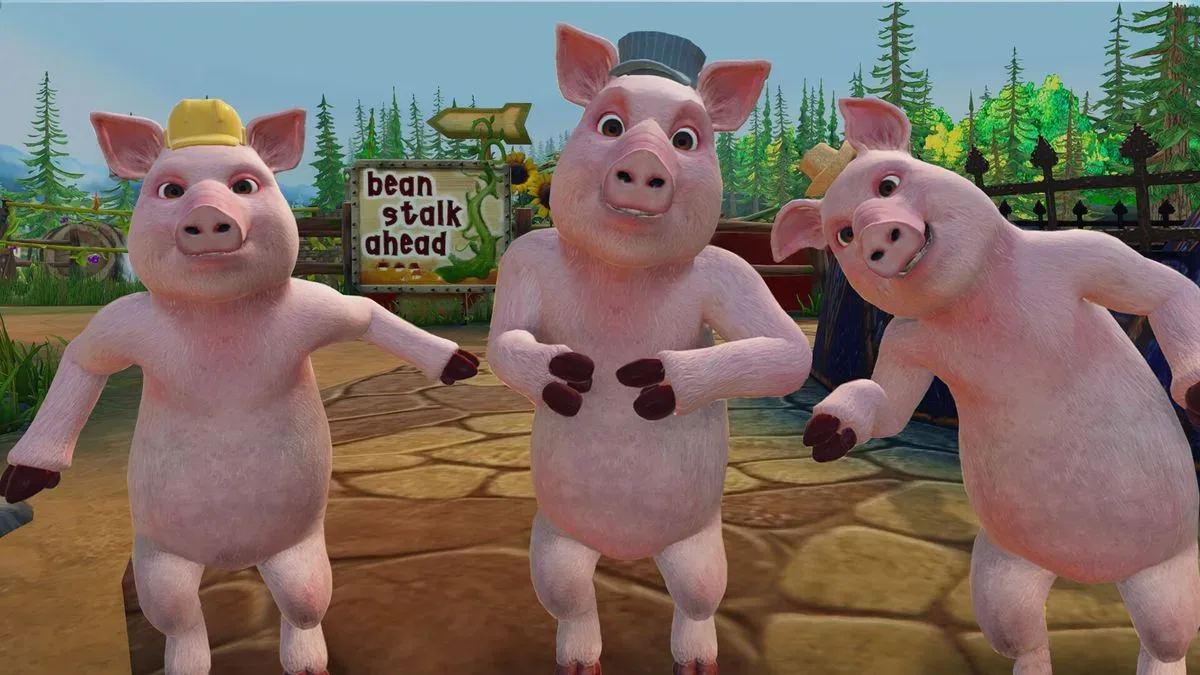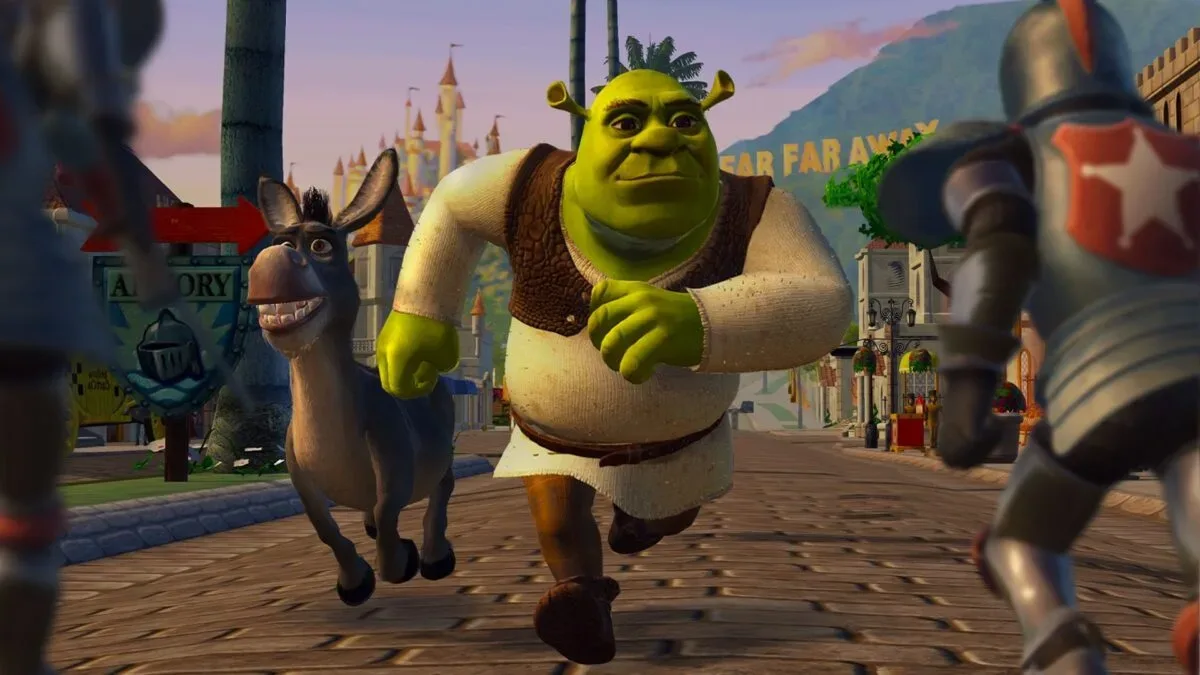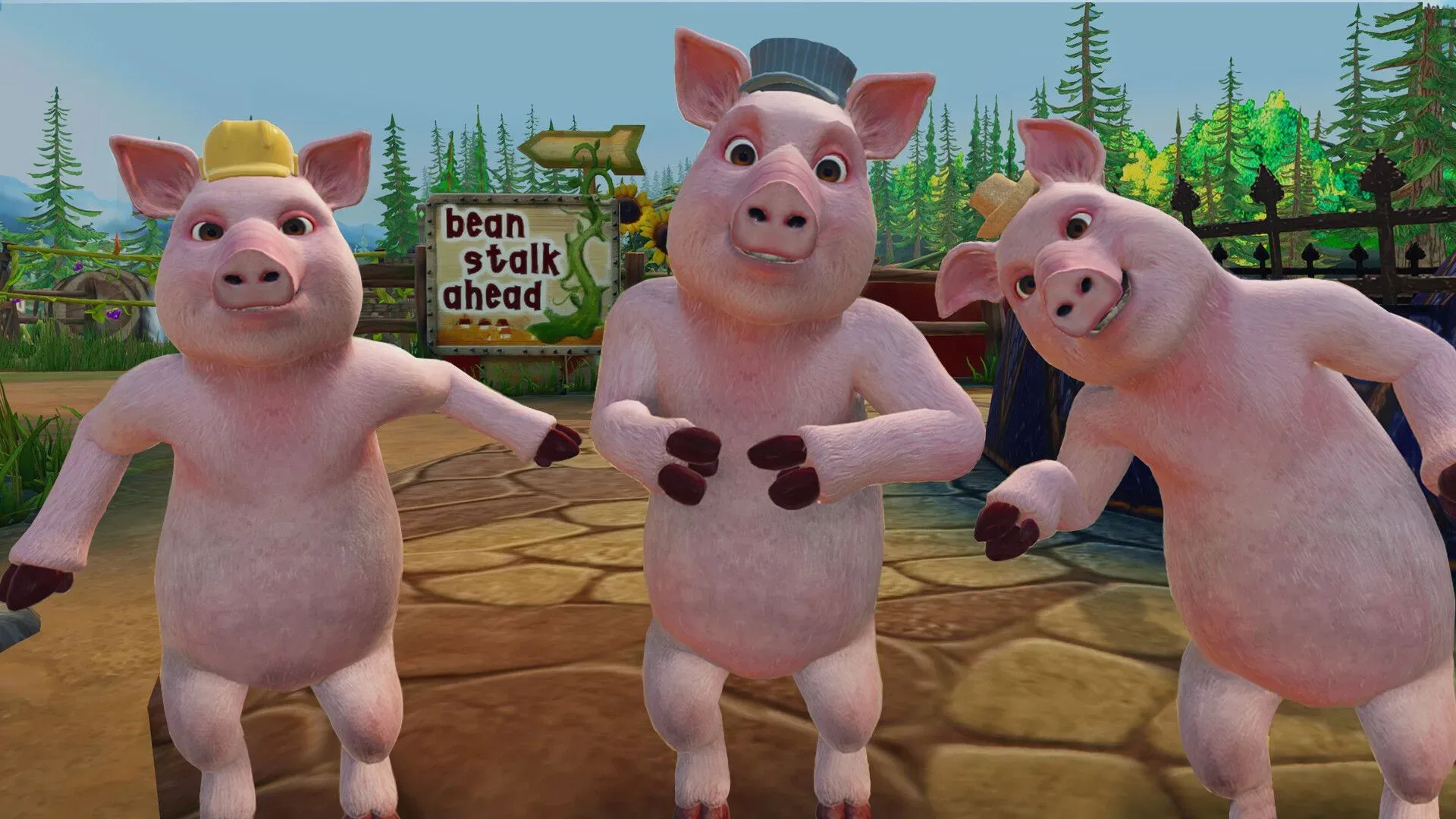
Shrek 2 Remastered is scheduled to arrive on November 10 for PlayStation 5, Xbox Series X/S, Switch 2, Switch, and PC. Aspyr’s new version of the 2004 movie tie-in carries a $30 price tag and promises improved graphics, a photo mode, cheats, and support for up to four players in both local and online co-op.
On the plainest level, that is a practical re-release of an old licensed game. On a less plain level, it is a fascinating marker of how far game preservation, platform turnover, and nostalgia have moved. The industry has long revived universally celebrated series. Now it is willing to revisit a PlayStation 2-era adaptation that sits closer to the fondly remembered middle of the library than to its untouchable canon.
That distinction is not an insult. Plenty of players remember games not because every system was exceptional, but because the game was available at the right time, attached to a movie they loved, and built for an evening of shared play. Shrek 2 has exactly that sort of cultural footprint. A modern rerelease gives that memory a legal and convenient route back onto current hardware, rather than leaving it to aging consoles, used copies, or unofficial emulation.
What the remaster is promising
The announced feature list is concise but meaningful. Improved graphics are the visual component, while photo mode and cheats add optional ways to play with and document the game. The largest functional change for many prospective players may be four-player co-op across both online and local play.
Local co-op means players can share one system and play in the same room. Online co-op allows players to participate over the internet from separate locations. Offering both matters because they serve different versions of the same appeal: the couch-session chaos that made many licensed games memorable, and the ability to reconnect with friends who no longer live nearby.
The fact that this is a remaster, rather than a remake, is important. A remaster generally updates an existing game for newer hardware and expectations, frequently through improved presentation, compatibility work, and modern features. A remake typically reconstructs a game more extensively, potentially revising its systems, assets, design, or structure. The announced details point to the former approach. Players should read the project as an updated route to the original game, not assume it is a ground-up reinterpretation.
That framing also makes the extras easier to understand. A photo mode is not a foundational design change, but it suits a property whose characters, environments, and jokes are immediately recognizable. Cheats, meanwhile, are an unusually on-theme addition for a throwback release: they invite experimentation and reduce friction for players returning for a specific character, level, or co-op session rather than a demanding completionist run.
A licensed game does not need to be sacred to be worth revisiting
There is a temptation to treat every remaster as a referendum on whether the selected game is a “classic.” Shrek 2 was a movie tie-in from an era overflowing with them, and its critical standing was modest rather than universally revered; aggregate scores were in the low 70s. That is exactly why the choice has prompted some disbelief. There are many famous games that remain absent from modern storefronts, and a remaster slot is inevitably a slot not being used for something else.
Related coverage includes Shrek 2 Remastered Brings the 2004 Co-Op Movie Game to Modern Platforms This November.
But “not unanimously acclaimed” is not the same as “not worth preserving.” The PlayStation 2 generation was enormous, and its most valuable historical record cannot only be the handful of releases that repeatedly appear on all-time lists. Licensed games reflect how publishers used recognizable film properties, how developers designed accessible multiplayer experiences, and what families and friends actually played together. Their uneven quality is part of that history, not a reason to erase it.
There is also a difference between prestige and utility. A landmark work can merit restoration because of its influence. A less exalted game can merit restoration because a large enough group of people remembers it warmly and wants a straightforward way to play it again. Shrek 2 Remastered appears to be operating in the second category. Its value proposition is not that it must replace the era’s giants. It is that the original’s particular kind of co-op, movie-adjacent familiarity, and broad comic energy could still have an audience.
Why the platform list changes the conversation
The release is coming to two current PlayStation and Xbox ecosystems, PC, and both Switch generations named in the announcement. That breadth is more consequential than it may first appear. The original belongs to a period when platform access was often tied to keeping compatible hardware and physical media in working order. A contemporary multi-platform release turns a game that may have been remembered as “the one at a friend’s house” into something players can purchase and play on hardware they already use.
Switch and Switch 2 are particularly natural homes for a title emphasizing local multiplayer, while PC and the console releases create options for online groups. None of that guarantees the remaster will become a major modern multiplayer fixture. It does, however, give the game a chance to meet players in the ways they currently organize casual sessions.
For anyone deciding whether this is more than a joke purchase, the best question is not whether Shrek 2 is among the most historically acclaimed PlayStation 2 games. It is whether four-person cooperative play, a familiar film world, and a lower-stakes retro game sound appealing to the group that will actually be on the controllers. That is a more useful test than nostalgia alone.
What prospective players should keep in mind
- It is a remaster: expect presentation and feature upgrades based on the announced description, not an assumed reinvention of the original game.
- Co-op is central to the pitch: the new version supports up to four players locally and online, so its appeal may be strongest with a ready-made group.
- The price is $30: that makes expectations especially important. Buyers should weigh their interest in a revived movie tie-in and its multiplayer options against their own tolerance for older game design.
- Availability is broad: PS5, Xbox Series X/S, Switch 2, Switch, and PC are all listed for November 10.
Aspyr’s past work supplies a reason for cautious interest
Aspyr has prior remaster experience with Tomb Raider and Star Wars: Knights of the Old Republic, two names with considerably more established status in game history. The studio was also once attached to lead a Knights of the Old Republic remake before those plans changed. That background does not tell us precisely how Shrek 2 Remastered will feel, and it should not be used as a substitute for details that have not been announced. It does establish that this is not a random one-off from a team unfamiliar with the complications of returning older games to contemporary platforms.
The selection also suggests that remaster specialists can work across very different kinds of back catalog. Tomb Raider and Knights of the Old Republic carry the burden of major franchises and intense expectations. Shrek 2 carries a different burden: persuading people that a broadly remembered licensed game is worth treating with genuine care rather than as disposable novelty. In some ways, that could be the more revealing task. Players are likely to judge the release on how comfortably it supports a co-op get-together and how faithfully it restores a distinctive early-2000s artifact, not on whether it competes with modern blockbuster production values.
There is a reasonable skepticism here. Announcements of remasters can turn every old box-art memory into a sales pitch, and the word “classic” has become elastic enough to cover games people love, games people merely recall, and games they remember because they were always in a bargain bin. Still, the answer is not necessarily to reserve modern access for only the most decorated releases. A catalog built only from consensus masterpieces would be cleaner, but far less representative.
The real test is whether the revival respects the original audience
For Shrek 2 Remastered, the announced upgrades point toward a sensible goal: keep the old game recognizable, make it easier to play now, and make its social side more accessible. Online co-op is especially significant in that respect. It acknowledges that the audience which played this kind of game in the early 2000s may now be separated by distance, schedules, and hardware generations.
It also creates an interesting divide in who this release is for. Some will approach it with sincere childhood affection. Others will arrive for the novelty of playing a Shrek game with friends. A third group may simply be curious about an overlooked corner of PlayStation 2-era licensed development. Those are all valid audiences, and none requires pretending the game was an undisputed masterpiece.
Modern party games still benefit from a clear invitation to play together; for a separate take on how that formula can succeed and occasionally wear thin, read our Nintendo Switch Sports Resort review. Shrek 2 Remastered will have its own very different identity, but its revived co-op focus is likely to be the feature that determines whether it becomes a fleeting punchline or a regular group-game option.
For now, the essential facts are straightforward: Shrek 2 is returning on November 10, it costs $30, and it brings enhanced visuals, photo mode, cheats, and four-player online and local co-op to PS5, Xbox Series X/S, Switch 2, Switch, and PC. Whether that constitutes nostalgia gone too far or a welcome rescue of a beloved deep cut depends largely on whether players think the PlayStation 2 era deserves to be remembered beyond its safest choices.