The PlayStation 2 has picked up an unusual new job: standing in for a Game Boy Advance. A homebrew project called TempGBA-PS2, created by GitHub user andymcca, enables Game Boy Advance emulation on a modded PS2. With the accompanying Ipatix Audio Patcher and a compatible way to launch homebrew software, owners can load legally acquired GBA ROM files on Sony’s classic console.
It is the sort of retro crossover that sounds wrong until it is sitting on a television: Nintendo’s 32-bit handheld software running from a sixth-generation home console made by its competitor. GBA titles including Pokémon Emerald, Kao the Kangaroo, and Sonic Advance are among the examples associated with the setup. The result is not a replacement for inserting an original cartridge into original hardware, and it is not a plug-and-play PS2 retail feature. But it is another example of how much utility enthusiasts can find in decades-old consoles.
What TempGBA-PS2 does
TempGBA-PS2 is a homebrew application: independently made software intended to run on hardware outside that hardware’s original commercial software library. In this case, the application emulates the Game Boy Advance, meaning it recreates enough of the handheld’s behavior for GBA software to run on a PS2.
The practical requirement is important. This is for a modded PS2, not an untouched console. It also requires a means of running the program, with LaunchElf cited as one possible option. That changes the audience considerably. People looking for the convenience of a GameCube Game Boy Player-style accessory will not find it here; TempGBA-PS2 is a project for users already comfortable with PS2 homebrew and its setup process.
It also uses ROM files rather than Game Boy Advance cartridges. A ROM is a digital copy of game data. Anyone using an emulator should supply legally acquired copies of games they own and remain mindful of the laws that apply where they live. The project does not make the original games part of the PS2 library, nor does it turn a PS2 disc drive into a GBA cartridge slot.
Storage choice may matter more than the novelty
The most practical detail attached to the release concerns where games are stored. Andymcca recommends using an installed hard drive for the strongest experience, particularly with larger ROM files. USB storage can be used in some setups, but larger files are said to run more smoothly from the internal drive.
That distinction is worth emphasizing because “it launches” and “it plays smoothly” are not always the same thing in retro homebrew. A storage method affects how readily the console can retrieve game data while the emulator is working. The available information does not provide a title-by-title compatibility list, measured performance data, or a promise that every GBA game behaves identically on every PS2 configuration. The hard-drive guidance should therefore be treated as a useful baseline rather than a blanket guarantee.
For prospective users, the sensible expectation is straightforward:
Related coverage includes PlayStation 2 Homebrew Opens the Door to Game Boy Advance Emulation.
- A modded PlayStation 2 and a homebrew launcher are required.
- TempGBA-PS2 is the emulator used to run GBA software.
- The Ipatix Audio Patcher is part of the referenced setup.
- Legally acquired GBA ROM files must be supplied by the user.
- An installed hard drive is the recommended storage path, especially for larger files.
That list may sound less magical than simply putting a cartridge in a machine, but it also explains why the project is appealing. A PS2 that has already become a homebrew machine can gain another role without adding a dedicated Game Boy Advance console to the television setup.
A different route to the living-room GBA
Nintendo itself had already demonstrated the appeal of putting GBA games on a television. The GameCube Game Boy Player was designed for that purpose, while the Super Game Boy had earlier brought compatible Game Boy software to the Super Nintendo. TempGBA-PS2 belongs in the same broad tradition of playing handheld games through a home-console setup, but its method is fundamentally different.
Those Nintendo accessories were purpose-built hardware products tied to Nintendo ecosystems. TempGBA-PS2 is community-made emulation software running on modified Sony hardware. The former is about intended compatibility and physical cartridges; the latter is about software preservation, experimentation, and giving an existing console another capability.
That contrast helps set reasonable expectations. The appeal here is not that the PS2 has suddenly become the most direct or original way to play GBA games. The appeal is that it can do it at all. A DualShock controller, a TV, and a console usually associated with its own enormous disc-based catalog can now be used for games built for a portable Nintendo system.
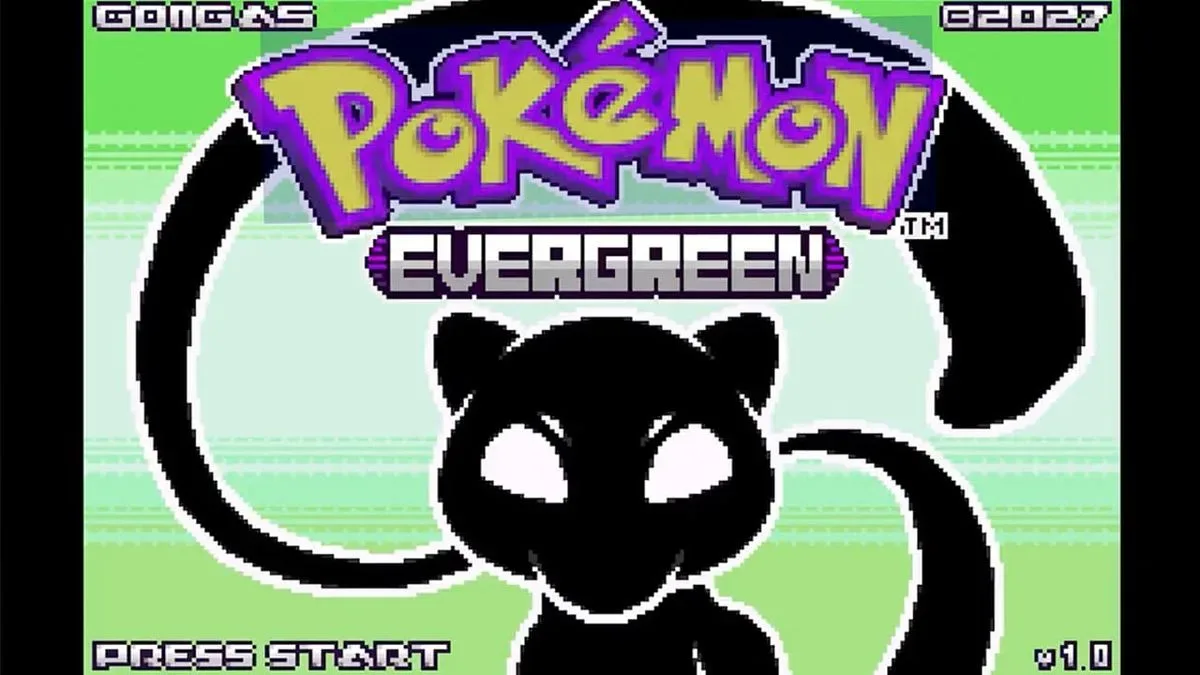
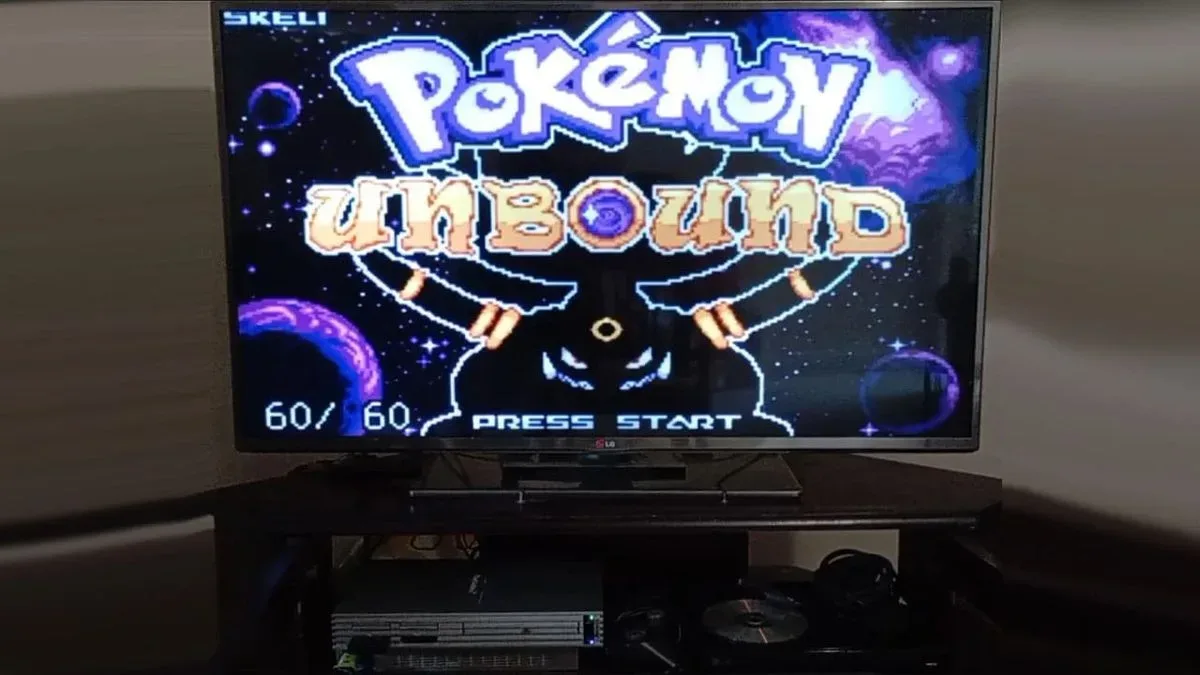
There is an unavoidable novelty to seeing Pokémon Emerald on a PS2. The game’s original identity is inseparable from the Game Boy Advance, yet the homebrew route offers a fresh way to revisit it. For players interested in fan-made Pokémon projects, the same setup is also shown running Pokémon Unbound, a ROM hack. That makes the release relevant to a branch of retro play that centers on user-created alterations and new experiences built from older technical foundations. Readers tracking another Pokémon fan project can also see how Pokémon EVERGREEN is approaching its rebuilt Kanto premise.
Why controller mapping is part of the charm
The Game Boy Advance was designed around a compact handheld control layout. The PS2’s DualShock is a much larger controller with additional shoulder buttons, analog sticks, and a second face-button cluster. For an emulator, that surplus of inputs is not necessarily a problem; the essential task is mapping the GBA’s controls to a layout that feels comfortable.
There are no supplied details here on TempGBA-PS2’s specific configuration options or default mappings, so users should not assume that every preference has a dedicated setting. Still, the basic proposition is easy to understand. Traditional GBA games were made to be played with directional input, face buttons, and shoulder buttons, all of which have obvious equivalents on a DualShock. For players who prefer a full-size controller to a handheld’s smaller buttons, that can be an attractive alternative.
It is also a reminder that emulation is not only a question of whether a game displays. It changes the context of play: the screen is larger, the controller is different, the storage route is different, and the console beneath it is from a different platform holder. None of that makes the original hardware obsolete. It gives enthusiasts another way to engage with software they have legally preserved.
What the project does not establish
As exciting as the demonstration is, the currently available details leave several questions unanswered. There is no provided comprehensive compatibility database, no confirmed list of unsupported games, and no detailed technical breakdown of audio behavior beyond the presence of an audio patcher. There is likewise no indication that an external USB device will offer equivalent results to an installed hard drive with larger ROMs.
That uncertainty is normal for a community emulator release. Emulation projects can develop over time, and individual hardware arrangements can differ. The responsible takeaway is not “every GBA game is now perfect on every PS2.” It is that a working GBA-emulation option now exists for appropriately modified PS2 consoles, with hard-drive storage recommended for better performance with larger files.
For retro hardware fans, that is plenty interesting on its own. The PS2 remains an iconic machine because of the games it was built to play, but homebrew keeps finding ways to extend the conversation beyond that original catalog. TempGBA-PS2 does not erase the divide between PlayStation and Game Boy Advance history. It gleefully hops across it.