Pokémon EVERGREEN is shaping up to be an unusually extensive reworking of Kanto. Developed by Gongas, the Gen 3-style ROM hack is currently targeting a January 10 release, with the project promising a custom story, every Kanto map rebuilt, more than 250 new battles, and over 100 custom events.
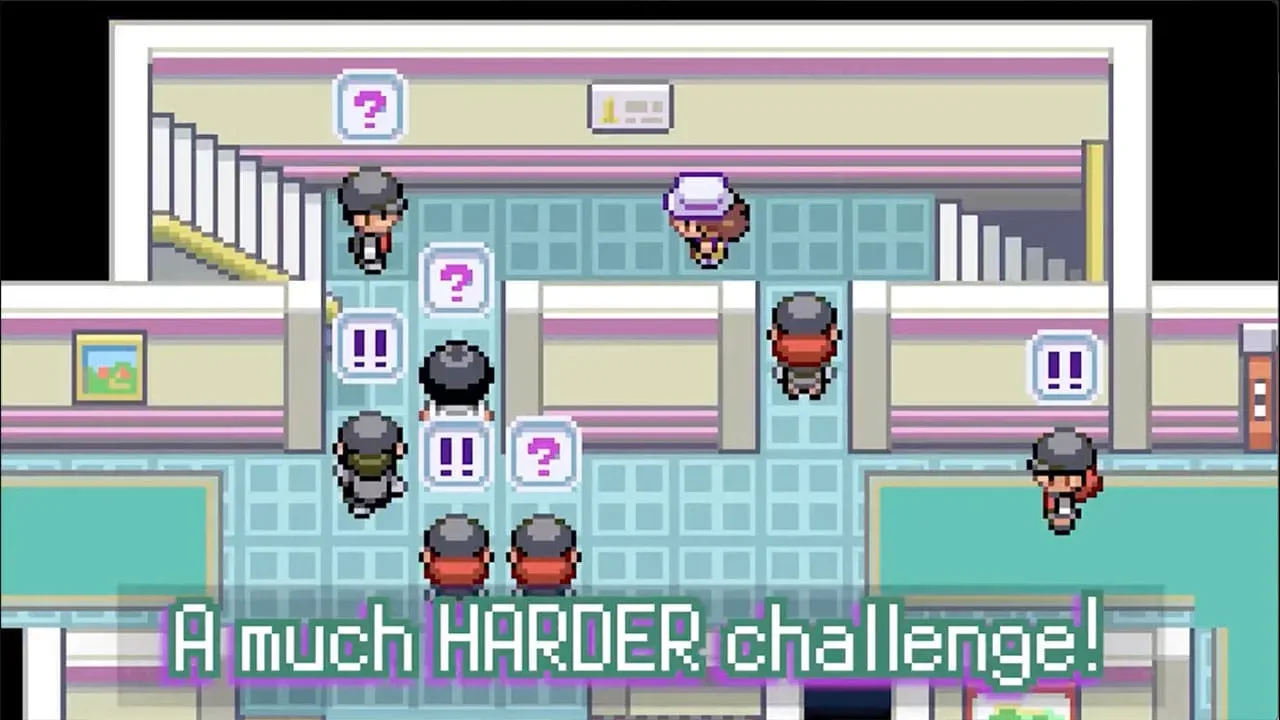
Those headline numbers matter because this does not sound like a lightly adjusted trip through the familiar towns and routes of Pokémon Red and Blue. EVERGREEN is built around a version of Kanto intended to feel newly explorable, while still using the visual language associated with the Game Boy Advance-era Pokémon games. Footage shared by Gongas shows a game firmly rooted in that Gen 3 presentation, even as its environments move beyond the original region’s usual look.
Snowy locations and desert areas are among the newly shown settings. Alongside the revised geography, the game is planned to include more than 386 Pokémon to catch, regional variants, custom-made learnsets, tougher overall difficulty, and quality-of-life changes designed to make progression smoother. One particularly direct change: the usual tutorial is being removed.
A Kanto remake in more than name
Kanto is one of Pokémon’s most recognizable regions, which makes rebuilding every map a consequential choice. The original adventure’s geography is inseparable from its identity: players remember its routes, caves, cities and the practical rhythm of traveling between them. Reworking the full map set means EVERGREEN is not merely inserting a few new encounters or a side quest into a familiar layout. It suggests that movement, discovery and the route between major story moments can all be materially different.
The reported snowy and desert environments are especially notable in that context. They point to visual and thematic variety beyond a straight recreation of the original region. Whether individual locations retain recognizable landmarks, connections or narrative echoes has not been detailed. For longtime Kanto players, that uncertainty may be part of the appeal: the project can preserve the premise of returning to a known region without making every turn predictable.
That is a meaningful distinction between a map refresh and a rebuilt adventure. A refreshed map may change décor or add a few detours; a rebuilt region can change how players read the world, choose paths and prepare their teams. EVERGREEN’s final execution will determine where it falls on that spectrum, but the scope described by Gongas clearly aims toward the latter.
What “Gen 3 ROM hack” means here
A ROM hack is a fan-made modification of an existing game’s data and structure. In Pokémon terms, projects in this space can range from modest balance edits to far larger works with original events, maps, encounters and story material. EVERGREEN is described as a Gen 3 hack, referring to the era and aesthetic associated with games such as Pokémon FireRed, LeafGreen and Emerald.
That label is useful because it sets expectations for the visual foundation. The project is using the pixel-art, top-down style that many players associate with Game Boy Advance Pokémon, rather than attempting to resemble a newer mainline generation. Yet a Gen 3-style presentation does not automatically mean a small design ambition. The stated work on every Kanto map, the custom plot, hundreds of battles and more than 100 events is precisely the kind of scope that can turn a familiar visual framework into a substantially different campaign.
Related coverage includes Pokémon EVERGREEN Promises a Vastly Reworked Kanto Adventure.
It also explains why the project’s feature list focuses on fundamentals rather than spectacle alone. Maps determine exploration. Battles determine the campaign’s cadence and difficulty. Learnsets shape how individual Pokémon develop. Events deliver the scripted moments that make a story feel authored rather than simply assembled around gym progression. Those elements collectively tell players much more about a hack’s identity than a single new area would.
More battles could mean a much denser campaign
EVERGREEN is said to contain upward of 250 new fights. “New fights” is a broad description, so it does not by itself establish exactly how those battles are distributed among trainers, bosses, optional encounters or story sequences. Still, it signals a large amount of combat content, particularly when paired with a new storyline and a region-wide map overhaul.
For players, a higher battle count can affect more than total playtime. It can alter the pressure placed on a team, how frequently the player needs to rethink moves and party composition, and how quickly the level curve rises. If the game’s difficulty is indeed elevated, battle placement and enemy-team design will likely be central to whether the experience feels demanding in a satisfying way or simply restrictive.
The comparison point raised around the project is Pokémon Unbound, another ambitious Gen 3 ROM hack known in fan circles for adding extensively beyond the baseline structure of the original GBA titles. That comparison should be treated as an indication of intended challenge and scale, not proof that EVERGREEN will play exactly the same way. The two projects have different stories and designs, and EVERGREEN’s balance will only be clear when players can experience its final version.
Still, the claim that difficulty has been substantially increased is useful advance notice. Players expecting the comparatively forgiving feel of an older standard Pokémon journey may need to approach EVERGREEN with more attention to type coverage, moves, team roles and encounter choices. A difficult Pokémon campaign does not necessarily demand one specific team, but it generally rewards preparation more consistently than simply leveling a handful of favorites.
Custom learnsets are a major mechanical promise
EVERGREEN’s custom learnsets may be one of its most important features, even though it is less flashy than a new biome. A learnset is the selection of moves a Pokémon can obtain, often including the levels at which it learns them. Changing learnsets can substantially reshape a Pokémon’s usefulness at different points in a playthrough.
For example, a Pokémon that gains a useful move earlier may become a viable choice for a much larger stretch of the campaign. Conversely, access to stronger coverage moves can alter the value of matchups that players take for granted. Custom learnsets therefore give a designer a powerful way to support a more difficult game, diversify potential teams and reduce situations where a Pokémon feels ineffective for too long.
That does not automatically make the balance better; balance depends on how the moves, opponents, Pokémon availability and progression all fit together. But it shows that EVERGREEN’s changes are planned to reach beneath the map layer. The project is not only asking players to walk through a different Kanto. It is also proposing a different set of decisions once battles begin.
More than 386 Pokémon, plus regional variants
The planned catchable roster exceeds 386 Pokémon and includes regional variants. That gives EVERGREEN a much wider pool than an adventure limited to an original Kanto-era selection. In practical terms, a larger roster can produce more varied teams and give players alternatives when a difficult opponent exposes a weakness in their current lineup.
Regional variants are alternate forms of existing Pokémon. Their inclusion can make a familiar species feel fresh, whether through a different appearance, typing or battle role. The available information does not specify which variants are included or how they will be obtained, so those details remain open. Their presence nevertheless fits the broader design pitch: recognizable Pokémon and an iconic region, changed enough that returning players cannot rely only on memory.
It is worth separating the confirmed broad feature from assumptions about collection goals. More than 386 catchable Pokémon does not by itself confirm a complete Pokédex objective, the locations of particular monsters, or which creatures will be obtainable at what point. Players interested in specific team members should wait for more concrete availability details rather than treating the roster total as a guarantee for any one Pokémon.
For fans whose interest in Pokémon extends across games and cards, the appeal of revisiting familiar species in altered forms overlaps with the enduring pull of older Pokémon releases and their reprints. Five late-2000s Pokémon TCG reprints offer a separate example of how recognizable material can gain a different context without replacing the original.
Quality-of-life changes, including no tutorial
The project also promises unspecified quality-of-life features. That term generally refers to adjustments that reduce routine friction without necessarily making a game easier: clearer information, faster access to common functions, or fewer repetitive interruptions are typical examples. Specific quality-of-life systems have not been listed, so it would be premature to assume the presence of any particular convenience feature.
One confirmed example is the removal of the tutorial. In a series with longstanding core mechanics, skipping introductory instruction can improve the opening pace for experienced players. It allows the campaign to establish its own setting and stakes sooner, instead of delaying the first meaningful decisions to explain concepts many of its intended players already know.
That small choice also aligns with EVERGREEN’s apparent audience. A more difficult ROM hack with custom learnsets and a large revised roster is likely to attract people already comfortable with Pokémon’s basic turn-based systems. Eliminating the tutorial is not a substitute for good onboarding, but it can respect returning players’ familiarity while leaving the game more room to introduce what is actually new about its Kanto.
What remains to be seen before release
The January 10 target gives Pokémon EVERGREEN a clear date to watch, but several details have yet to be defined publicly in the available information. The exact story, the structure of the custom events, the makeup of the battle roster, the individual regional variants and the full list of quality-of-life changes have not been laid out here. Nor is there enough detail to judge the final difficulty curve or how the reworked maps connect.
Those unanswered questions do not diminish the project’s stated scope. Instead, they frame what will matter most once the game is available: whether the rebuilt Kanto supports satisfying exploration, whether custom learnsets make team-building more interesting, and whether the large number of battles serves the story and pacing rather than merely extending them.
For now, the central pitch is unusually clear. Gongas is building a Gen 3-style Pokémon adventure that uses Kanto as a foundation rather than a fixed blueprint. With an original narrative, altered environments, a broad Pokémon roster and systems designed around a stiffer challenge, EVERGREEN is positioning itself as a return trip for players who want the region to surprise them again.