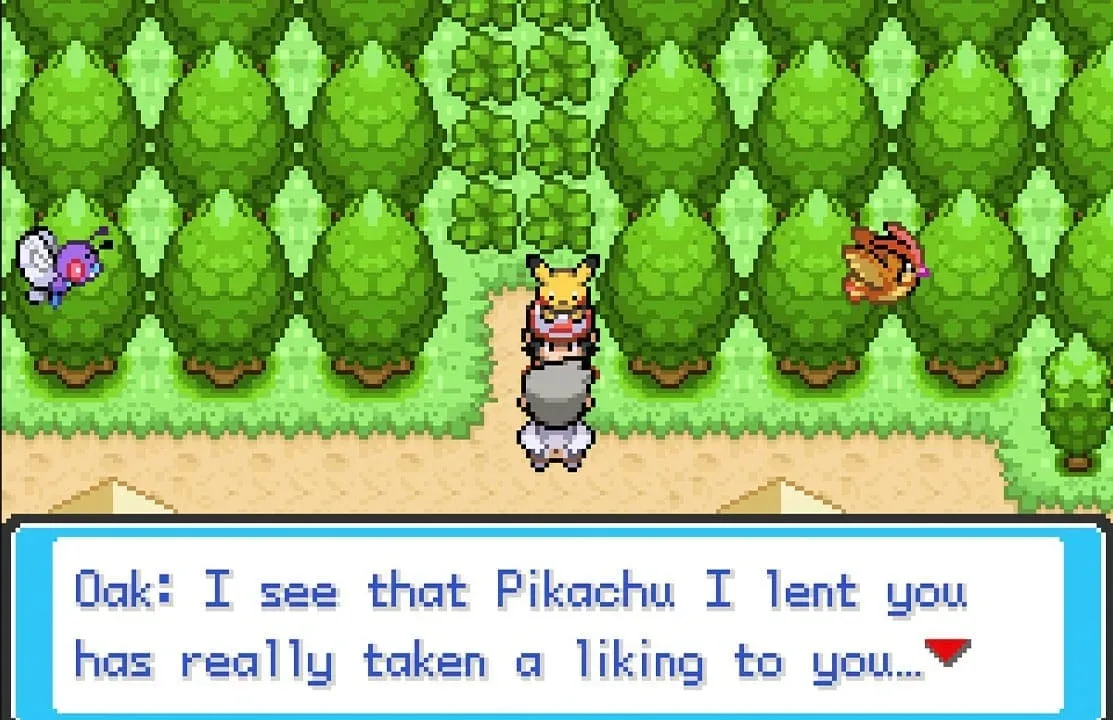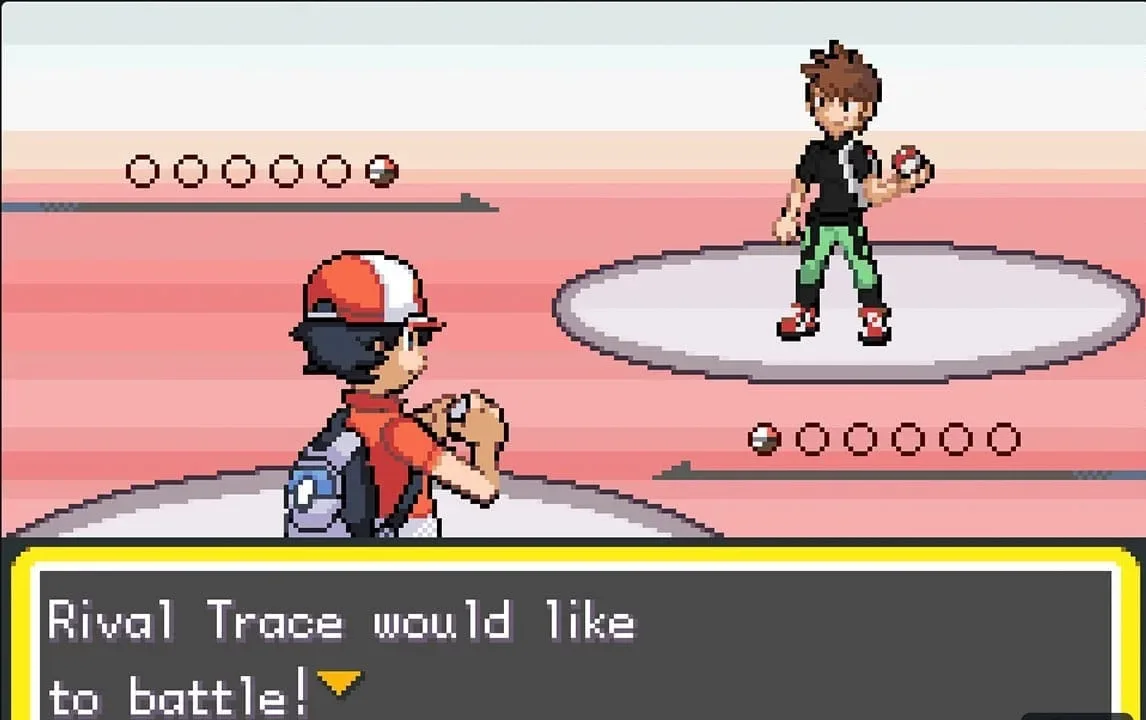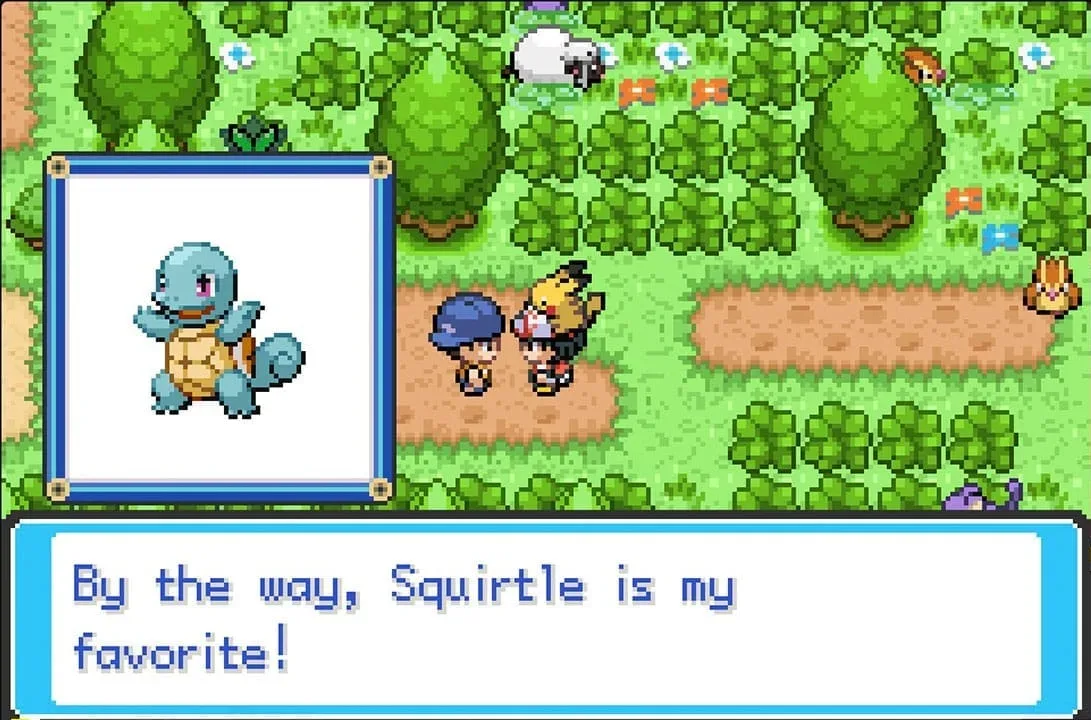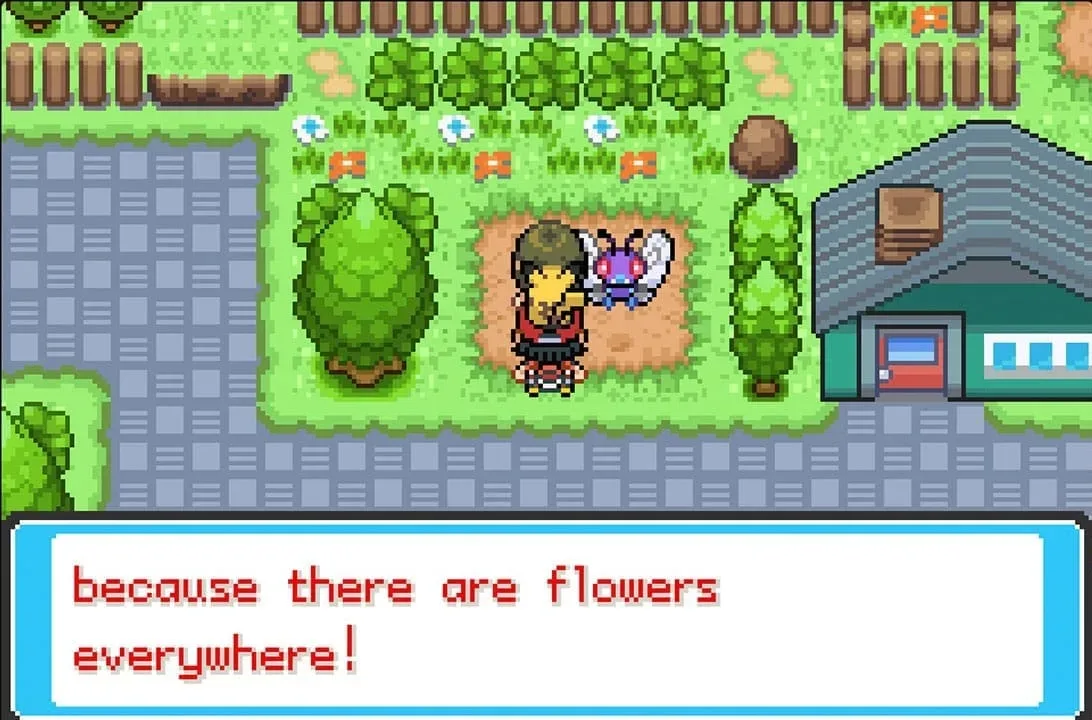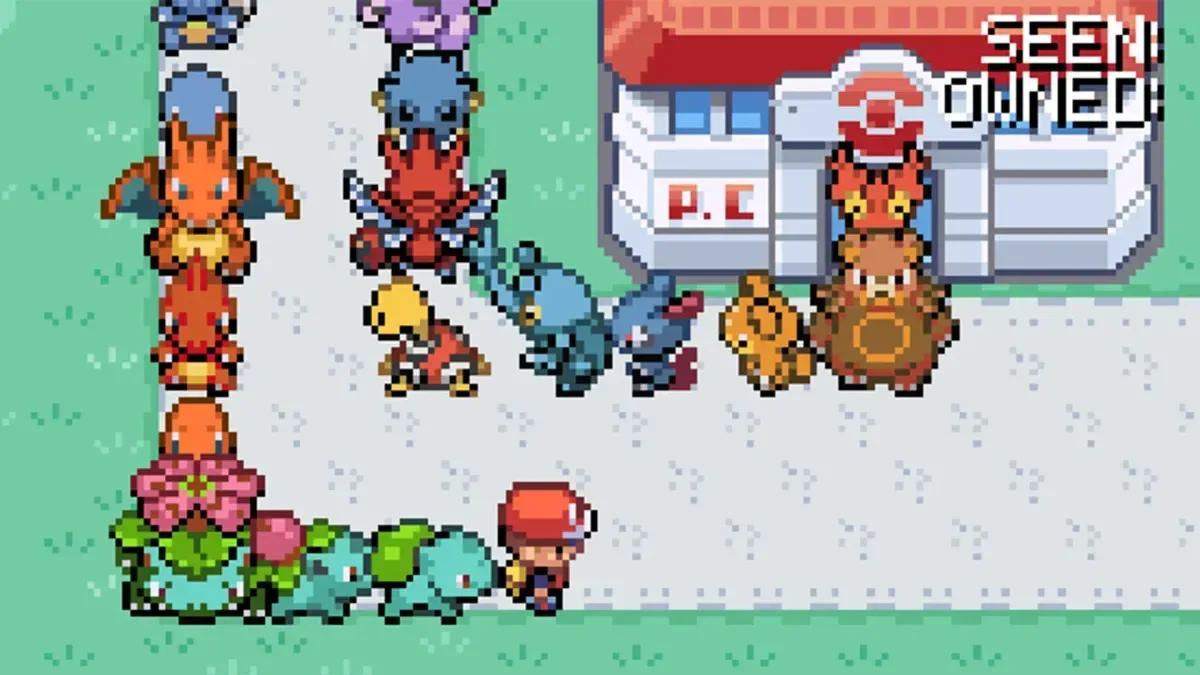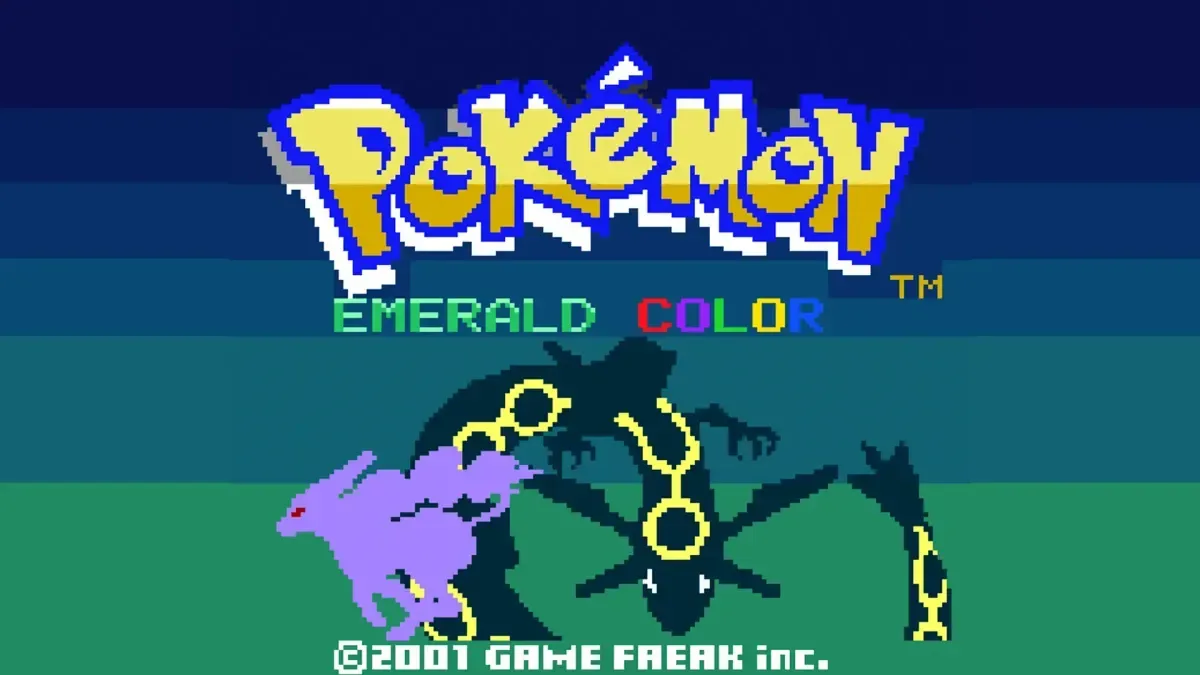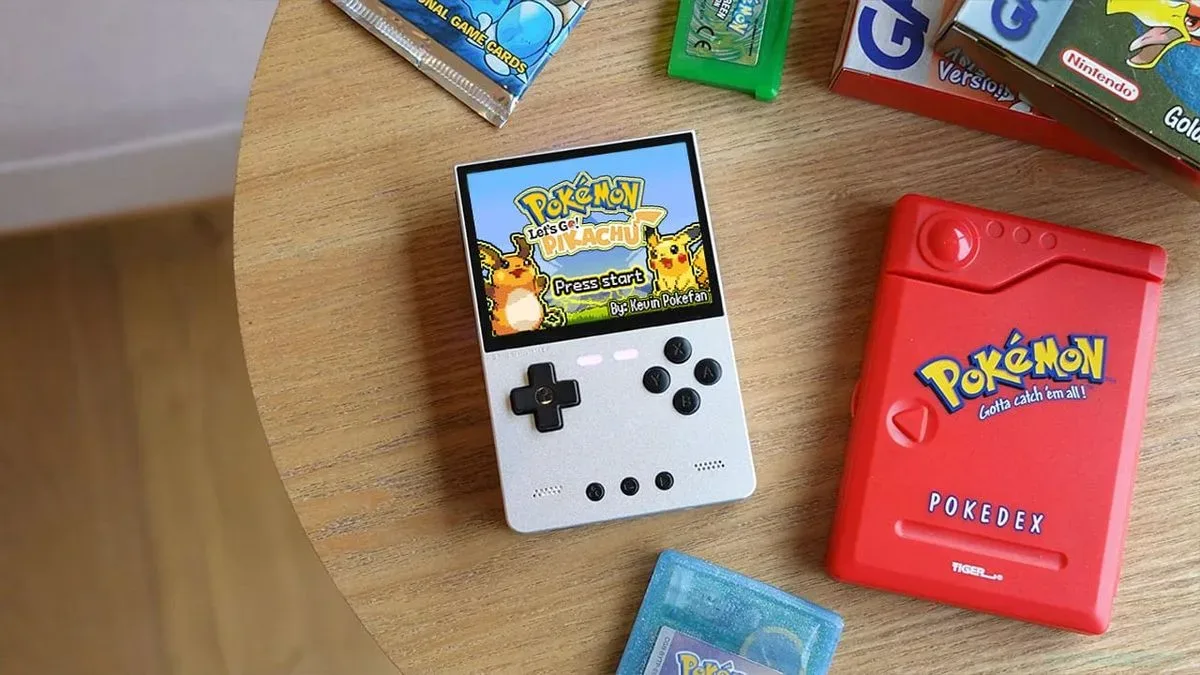
An unofficial English translation has been completed for a Game Boy Advance demake inspired by Pokémon: Let’s Go, Pikachu! and Let’s Go, Eevee!. The underlying fan project, created by Kevin PokeFan, reimagines the Switch-era return to the Pokémon Red story on GBA hardware and was originally released in Spanish.
The translation was made by a user known as logicalpuddings and is presented as a way for English-speaking players to experience the existing hack rather than as a replacement or wholesale revision of it. That distinction matters: the translator says Kevin PokeFan’s Spanish artwork has been retained, and the project’s original bugs and glitches are still present in the standard translated version.
There is an important caveat around authorship and permission. The translation is unofficial. Logicalpuddings says multiple attempts were made to contact the original creator through the hack’s Discord, but no response arrived; the server was described as inactive. The English release has therefore been shared without explicit permission from Kevin PokeFan.
“Contact attempts were made several times via hack’s Discord for translation permission, unfortunately I wasn’t able to get any response from them, as they seem to have been inactive for months, and their hack’s Discord server is completely ghost town atm. I’m sharing this simply wanting more people have the opportunity to experience this hack.”
What has been translated
The scope is substantial. Logicalpuddings reports that roughly 99% of the game’s written material has been rendered in English. That includes dialogue, signs, battle text, Pokédex entries, and the names and descriptions associated with Pokémon, moves, items and abilities.
For a role-playing game, that breadth goes beyond simply making the main story readable. Battle messages and move descriptions tell players what game systems are doing; item and ability text helps them make choices; Pokédex entries and town signs provide the surrounding flavor and navigation context. Translating all of those layers makes a fan game much more approachable than translating only its central dialogue.
The work is also described as having been done without AI. The project listing required contributors to disclose AI use, and logicalpuddings identified the translation as non-AI work. That is a notable disclosure in a fan-translation context, where a game’s large volume of strings can create pressure to automate text conversion.
At the same time, players should not read “English translation” as a claim that the demake is now a pristine or definitive edition. The translation preserves the original project’s visual work in Spanish where Kevin PokeFan created it, and it does not purport to repair every pre-existing issue. It is best understood as a language-access version of an existing fan-made GBA project.
Related coverage includes Pokémon: Let's Go Pikachu/Eevee GBA Demake Receives Unofficial English Translation.
An optional patch adds a handful of mechanical fixes
Alongside the translation, players can choose an alternative patch that includes very small fixes, described as changes of one to three bytes. A byte is a basic unit of data; in this context, the small size points to targeted edits rather than a broad rebalance or redesign. The translator says the option can be avoided by anyone who wants the translated game to otherwise remain as it was.
The listed changes are specific:
- Bug Buzz can now lower Special Defense, an effect that reportedly did not trigger before.
- Moonblast and Steamroller can trigger their listed secondary effects at about a 30% rate rather than about 1%.
- Brine correctly doubles in power against Pokémon with 256 HP or more.
- The battle box displays “Lv” correctly for a regular Eevee.
- Several minor text inconsistencies that could confuse players have been corrected.
These are not sweeping changes, but they are relevant to how a Pokémon battle system communicates and applies its rules. A secondary effect is an added outcome attached to a move beyond its direct damage, such as lowering a stat. Special Defense, often abbreviated as Sp. Def, is the stat that helps a Pokémon withstand special-category attacks. If a move is meant to apply an effect at a particular rate but effectively almost never does, it changes the move’s practical value.
Brine is a particularly clear example of why a tiny code correction can matter. The move is meant to gain extra power under a particular health condition. The listed fix addresses an error affecting Pokémon with 256 HP or more, meaning the intended doubled-power behavior can apply correctly at higher HP values. That is a narrowly defined correction, not a promise that every battle interaction has been reviewed.
The availability of two versions is a sensible preservation-minded choice. One patch prioritizes an English-language experience while leaving the original hack’s behavior intact; the other adds the translation plus a short, disclosed list of fixes. Players who value fidelity can select the former, while those who prefer a few corrected interactions can select the latter.
Why a GBA demake has appeal
A demake is a version of a game or concept reworked for older or more limited hardware. Here, the attraction is not that the GBA version can replicate every aspect of a Nintendo Switch title. It is the creative tension of translating a newer Pokémon interpretation of the Kanto story into the visual language and technical boundaries associated with the Game Boy Advance.
The project also sits in a particularly recognizable Pokémon lineage. Let’s Go, Pikachu! and Let’s Go, Eevee! revisit the story associated with Pokémon Red, while Pokémon FireRed is itself a GBA-era revisit of that material. A fan-made GBA take on Let’s Go therefore brings several generations of Pokémon design into conversation: the original Kanto journey, a Switch reinterpretation, and the GBA platform many players associate with FireRed.
That does not make this an official GBA release or a substitute for any of those games. It does explain why the format is compelling. The interest is in seeing how a familiar Pokémon premise has been adapted by a fan creator for a very different technical setting, then made legible to another audience through translation.
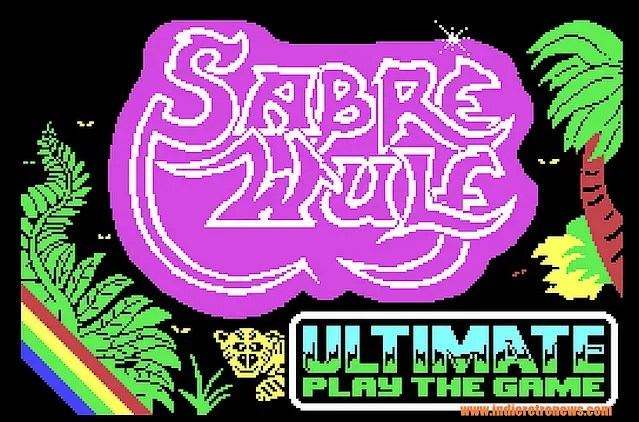
For broader retro-game context, Joking Joystick recently covered another project that brings an older game to a different platform in Sabre Wulf Remastered’s Commodore 64 return. The circumstances and games are different, but both illustrate the continued interest in revisiting familiar material through the constraints of older machines.
What players should know before patching
This release is distributed as a patching project rather than as a standalone commercial game. The stated requirement is a legally acquired Pokémon FireRed Revision 0 ROM, which is then patched with the demake. The patching process is available through Hackdex.
A ROM is a digital copy of game data used by compatible software or hardware setups. A ROM hack modifies that data to create a changed game experience, while a patch contains the changes needed to transform a compatible base file without directly distributing that base game file. In practical terms, version matching is important: the project specifically calls for FireRed Revision 0, not an unspecified FireRed file.
Players should also set expectations carefully. This is an unofficial translation of an unofficial fan project, released without confirmed authorization from the original hack creator. The translator’s optional fixes are disclosed, but they are not framed as an exhaustive bug-fix pass. And because original Spanish artwork is intentionally untouched, English coverage should not be mistaken for a complete visual localization.
Still, the release gives English-speaking Pokémon fans a clearer route into an ambitious GBA reinterpretation that had previously been limited by language. Its appeal is as much about preservation and accessibility as it is about novelty: the original creator’s work remains recognizable, while nearly all of the game’s text is now available to a much wider audience.