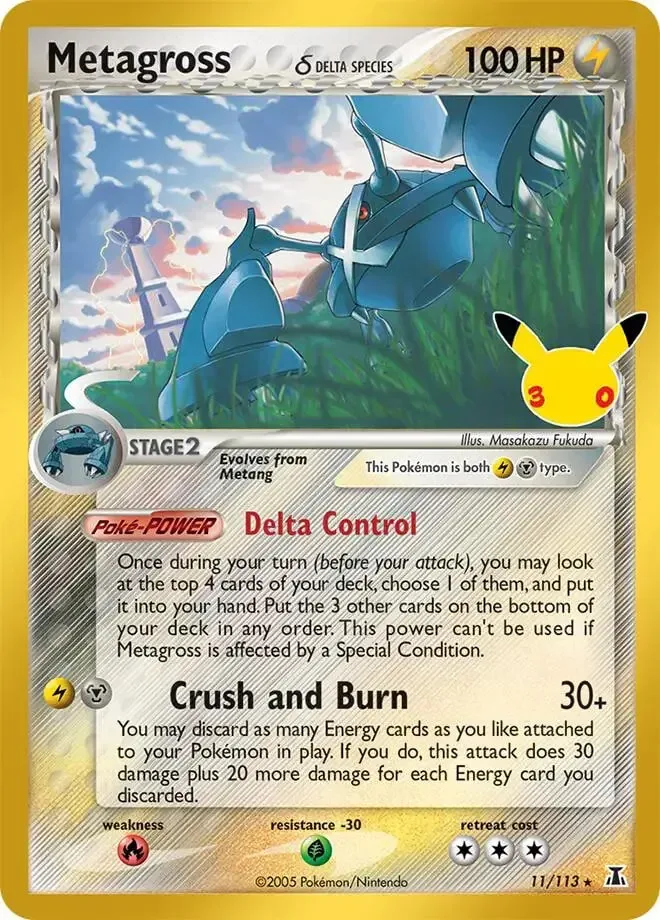
Reprints can preserve a memorable Pokémon TCG era without necessarily reproducing the market appeal of the cards that came first. Five late-2000s selections in the 30th Celebration Classic Collection make that point especially clearly: EX Delta Species Metagross, Great Encounters Palkia LV.X, Legends Awakened Uxie, Platinum Crobat G and HGSS Triumphant Gengar Prime.
They are not five versions of the same story. One is a nostalgia-led card whose originals remain considerably dearer. One is a visually striking LV.X whose original has a pronounced premium. Two owe much of their historical importance to useful Poké-POWERS rather than immediate visual spectacle. And one, Crobat G, flips the usual reprint-versus-original script in its standard version.
The listed figures below are useful snapshots, not permanent valuations. Condition, version and the particular market being measured matter enormously. Most importantly, “original” is not a single, interchangeable item here: holo, reverse holo and standard printings can have sharply different values. A collector comparing listings should identify the exact finish before drawing conclusions from a headline number.
The price snapshot: five reprints and their earlier counterparts
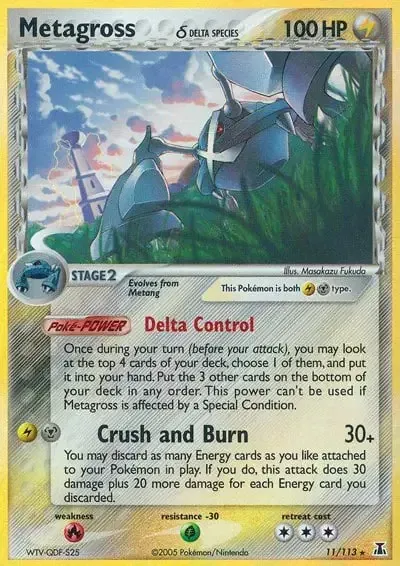
- EX Delta Species Metagross: 30th Celebration reprint around $13; original holo around $130; original reverse holo around $180.
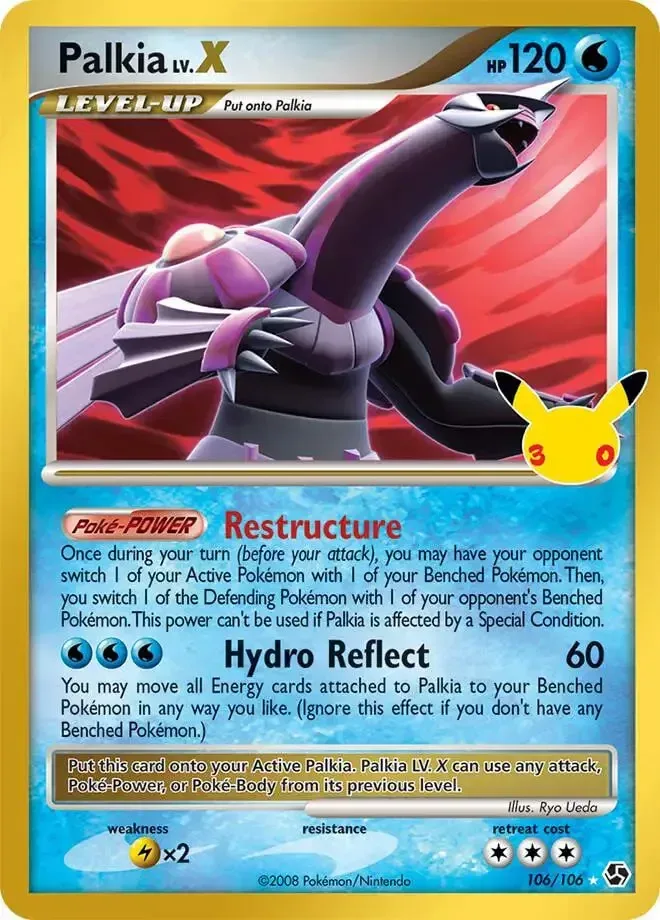
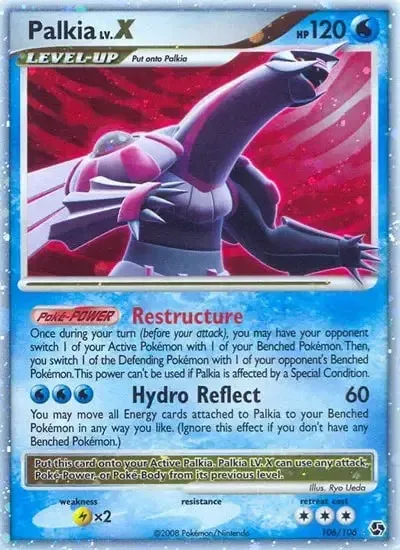
- Great Encounters Palkia LV.X: 30th Celebration reprint around $14; original around $215.
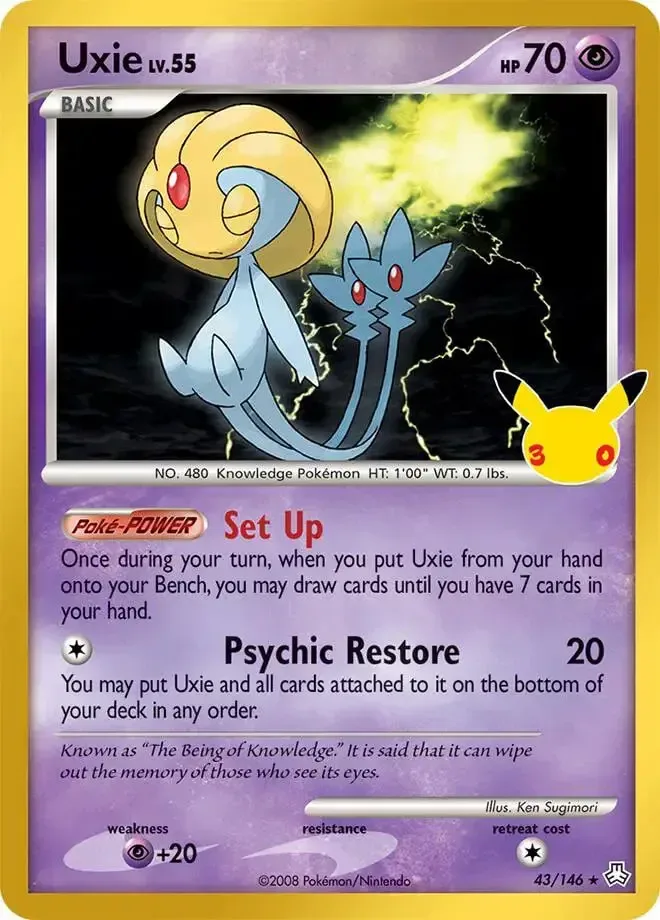
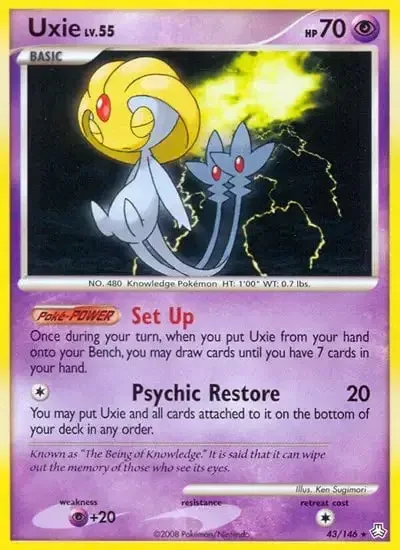
- Legends Awakened Uxie: 30th Celebration reprint around $8; original around $18; reverse holo roughly $23.
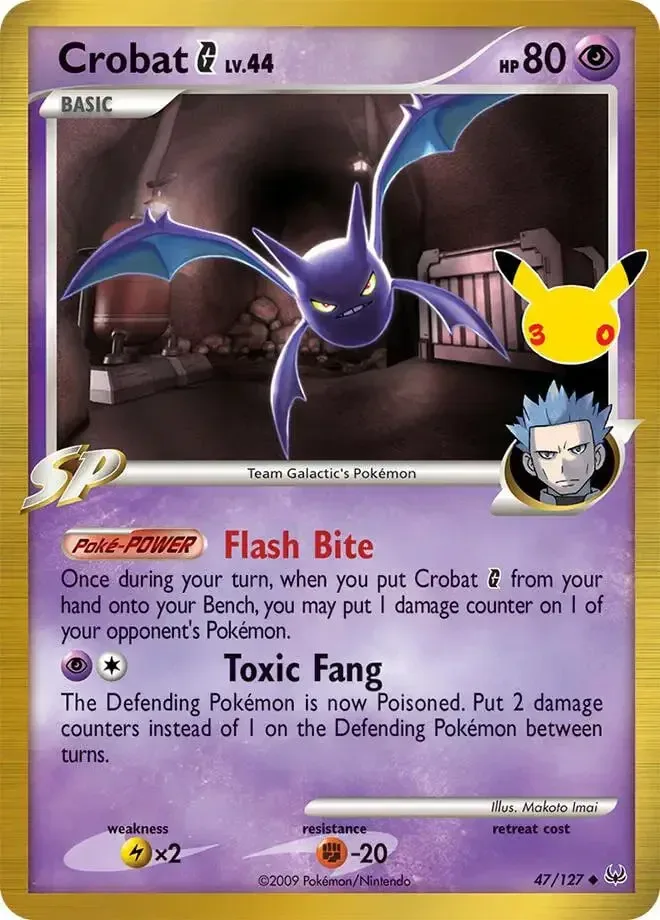
- Platinum Crobat G: 30th Celebration reprint around $8; original standard version around $3; original reverse holo close to $20.
- HGSS Triumphant Gengar Prime: 30th Celebration reprint around $80; original around $560 in ungraded near-mint condition.
Those figures do not create a rule that every original wins. Instead, they show how collectors can separate a card’s familiar character or gameplay legacy from its exact printing, design and scarcity appeal. The strongest premium among this group belongs to Gengar Prime, while Crobat G demonstrates that a reprint can exceed the standard original without surpassing every earlier variant.
EX Delta Species Metagross: a type-bending era in miniature
Delta Species is the most immediately distinctive historical concept represented in this group. The cards altered how Pokémon could be used through unusual type relationships, opening up fresh synergies for deck construction. In plain terms, a synergy is the added value created when cards work together: changing a Pokémon’s type can change which supporting cards, weaknesses or strategic interactions are relevant to it.
That made Delta Species more than a visual curiosity. The set’s Pokémon could support creative competitive deck building, and the concept was effective in tournament play. Yet historical context does not guarantee that every individual card becomes a high-cost reprint. Metagross is a well-liked Pokémon, but this particular 30th Celebration printing sits toward the affordable end of the Classic Collection at about $13.
The earlier EX Delta Species versions tell a different story. The holo is around $130, while the reverse holo is around $180. A reverse holo is a variant in which the foil treatment differs from the regular holo presentation; in this case, the reverse version also has the set logo on its frame. That combination of alternate finish and set-specific visual detail helps explain why it commands the higher figure of the two originals.
For collectors, Metagross is a reminder not to reduce the decision to “old card versus new card.” The original holo and reverse holo are themselves different collecting propositions, while the reprint offers an accessible representative of an inventive design period.
Related coverage includes Pokémon 30th Celebration Reprints vs. the Originals: 5 Late-2000s Cards Collectors Are Watching.
Great Encounters Palkia LV.X: the design premium is doing real work
Palkia LV.X illustrates the power of card identity. LV.X cards were major competitive pieces in their day, with the format’s top options capable of appearing at the highest levels of play, including the Pokémon World Championships. The designation also became a memorable visual marker for collectors.
Not every LV.X was equally dominant or equally valuable. Palkia LV.X was not positioned as one of the era’s defining competitive stars and was overshadowed by standouts such as Luxray GL LV.X. Still, its appearance is a central part of its attraction. A card need not be the best performer in a historical format to become a compelling collection piece; visual design can leave its own durable impression.
That distinction is evident in the comparison. The 30th Celebration Palkia LV.X is around $14, whereas the Great Encounters original is around $215 and described as climbing steadily. The difference should not be read as a simple verdict on one card’s gameplay strength. Both versions point back to the same Pokémon and broad LV.X legacy. The market separation instead underlines the collector pull of the earlier card’s overall presentation and original-era status.
Anyone cataloguing this pair should record the set name in full. “Palkia LV.X” alone is not enough to establish which printing is being discussed, what design it has, or what price comparison is meaningful.
Legends Awakened Uxie: historical play value is not always flashy
Uxie may be the clearest case here of a card remembered for function. It lacks the immediate visual drama of Palkia LV.X or the close-up impact associated with Prime cards. Its place in the Classic Collection instead comes from a Poké-POWER that made it dependable draw support.
A Poké-POWER is an ability printed on a Pokémon card rather than an attack. Draw support refers to effects that help a player access more cards from their deck, improving consistency and giving them a better chance of finding the pieces needed for a strategy. That sort of utility can make a modest-looking card a regular deck inclusion, even if it never becomes the binder centerpiece.
The values reflect a relatively tight gap by comparison with Metagross or Palkia: the reprint is around $8, the original about $18, and the reverse holo about $23. It is a useful example for collectors who want a physical reminder of how competitive priorities can differ from showcase aesthetics. Uxie’s legacy is rooted in what it enabled inside decks, while its design also captures a different stage in Pokémon card presentation.
It is worth treating the reverse holo as its own target, rather than an afterthought. The roughly $5 increase over the stated original price is not vast, but it confirms that finish still matters even when the card is primarily associated with utility.
Platinum Crobat G: the exception that proves version matters
Crobat G is the outlier in the straightforward reprint-versus-base-original comparison. The 30th Celebration version is around $8, exceeding the approximately $3 value of the standard Platinum card. But the comparison changes once the reverse holo enters the picture: that older variant is near $20.
The “G” identifies Crobat as part of the Team Galactic-themed group from the era, an element that gives the card a particular identity beyond an ordinary Crobat printing. Its gameplay reputation is also specific. Crobat G’s Poké-POWER, Flash Bite, helped it appear in numerous decks while it was legal in the Standard format.
This makes Crobat G a good antidote to overconfident assumptions. Saying “the reprint is worth more than the original” is accurate only if the original means the standard Platinum printing. It is not an accurate description of every earlier Crobat G variant. For buyers and sellers, that is a practical reason to verify card finish and set before comparing prices or deciding which copy belongs in a collection.
It also helps explain why the Classic Collection can be meaningful without displacing the originals wholesale. The reprint preserves a card associated with a notable Team Galactic label and a competitive ability, while the reverse holo maintains its own distinct desirability.
HGSS Triumphant Gengar Prime: the clearest original premium
Gengar Prime supplies the most dramatic spread of the five. The 30th Celebration reprint is around $80, an amount that is already far above the other reprints discussed here. The HGSS Triumphant original, however, is around $560 in ungraded near-mint condition and is the set’s most valuable card.
Prime cards are notable for their tightly framed, close-up presentation, a style that can make the Pokémon look as if it is pushing out of the card. Gengar Prime is a particularly strong example of that approach and stands as a collection highlight even though its competitive usefulness is open to debate. That distinction is important: a card does not need an uncontested tournament legacy to be a defining collectible from its era.
“Ungraded near-mint” describes a card that has not been professionally assigned a numerical grade but is regarded as being in near-mint condition. It should not be treated as interchangeable with every ungraded copy. Wear and condition can change the comparison substantially, so the $560 figure is specifically tied to that stated condition level.
For a collector choosing between the two, the reprint offers the Gengar Prime concept at a lower stated cost, while the original carries the much stronger connection to HGSS Triumphant and its status as that set’s leading value. Neither decision needs to invalidate the other; they serve different collection priorities.
What these five cards say about reprints
Across the group, the Classic Collection functions less like a one-for-one replacement for earlier printings and more like a compact reference point for several Pokémon TCG design eras. Delta Species represents unusual type interactions. LV.X recalls a highly competitive card class with a distinctive look. Uxie and Crobat G preserve ability-driven deck staples. Gengar Prime brings forward a dramatic Prime-era design.
That breadth is why collectors should compare the details rather than treating the word “reprint” as a complete description. Ask which set the card comes from, whether the earlier version is holo, reverse holo or standard, and whether its appeal is mostly visual, nostalgic, competitive or a mixture of all three. The answers can lead to very different value outcomes.
For more Pokémon coverage beyond the trading-card side of the franchise, see the latest on Pokémon Dark Rising 2 Remake.
The numbers here offer a strong snapshot of that principle: Metagross, Palkia LV.X and Gengar Prime favor the original by wide margins; Uxie remains comparatively close; and Crobat G changes depending on exactly which prior version is on the table. In a hobby built on small print differences, that level of precision is not nitpicking. It is the comparison.