Pokémon’s 30th Celebration Classic Collection is reaching into the early 2010s for four cards that represent very different reasons people remember the era: the two-piece spectacle of Darkrai & Cresselia LEGEND, the format-shaping Supporter N, the Dragon-type appeal of Rayquaza EX, and the tournament pedigree of Genesect EX.
Putting these cards beside their earlier versions does more than create a nostalgia checklist. It illustrates a core reality of the trading-card market: a reprint can make a beloved image or game text accessible without necessarily replacing the historical appeal of the original printing. Design, competitive legacy, supply, card condition and the premium attached to top third-party grades all matter—and not in identical proportions for every card.
For Pokémon fans following both cards and games, there is also plenty happening beyond the binder page: PokéSurvivor’s browser-based survival format is another example of the franchise finding new ways to bring its enormous roster into play.
Darkrai & Cresselia LEGEND: one picture, two cards
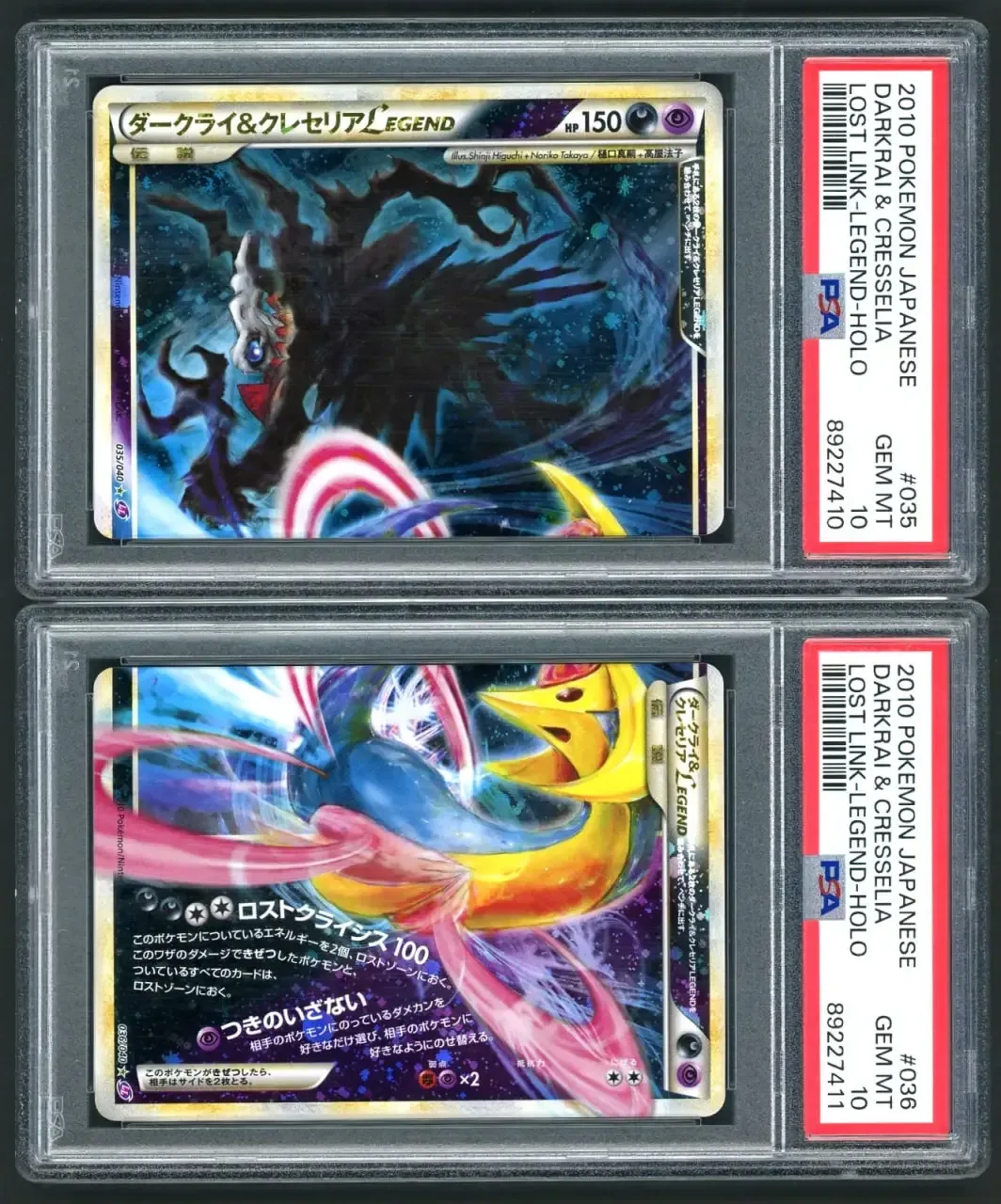
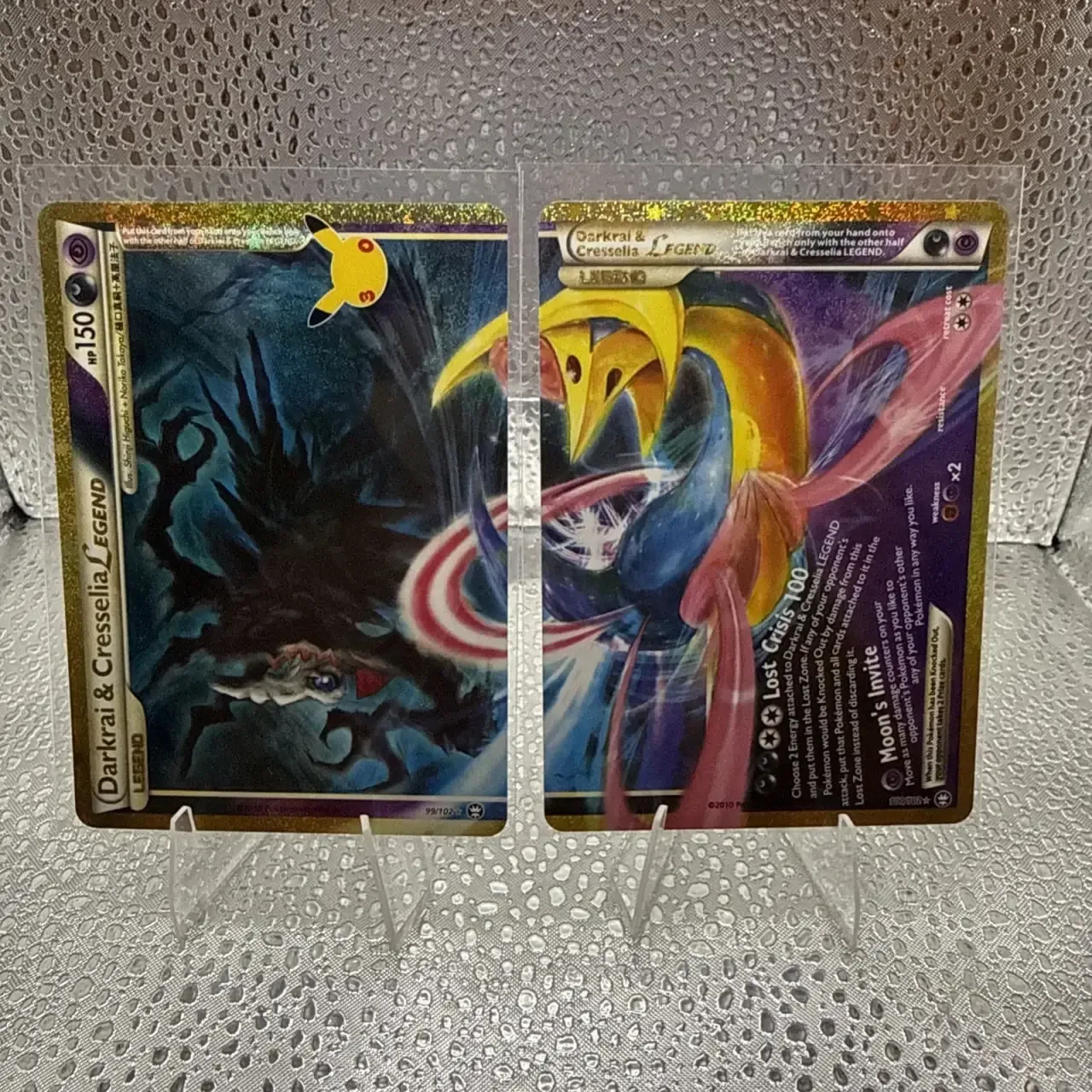
Darkrai & Cresselia LEGEND comes from the HeartGold & SoulSilver-era Triumphant release and uses one of the TCG’s most immediately recognizable presentation ideas: a card split into top and bottom halves. Both pieces were required for play, while the joined artwork created the full visual scene.
That construction is important to its collecting identity. Unlike a single-card chase, completing this card requires locating a matched pair in comparable condition. A collector can reasonably prize the assembled image even if the card did not establish the same competitive reputation as some of the other selections in this group.
The supplied market snapshots place each 30th Celebration half at about $21. Near-mint Triumphant copies are substantially higher: roughly $275 for the Darkrai half and $157 for the Cresselia half. Those figures should not be read as a permanent price guide; they are stated market values, and actual listings and completed sales can vary with condition, language, timing and presentation. Still, the difference makes the collecting point clear. The reprint offers the central art concept at a much lower stated entry cost, while the older printing carries the added appeal of its original era and split-card format.
What “near mint” means—and what it does not
Near mint, often abbreviated as NM, is a condition description rather than a universal guarantee of identical quality. A card called near mint can still differ from another NM copy in centering, surface marks, edge wear and corners. That is especially meaningful when buying two halves intended to display together. Collectors should examine the front and back of each card and decide whether the pair looks cohesive, rather than assuming that matching condition labels alone will deliver a matching display.
N: a Full Art landmark with gameplay history
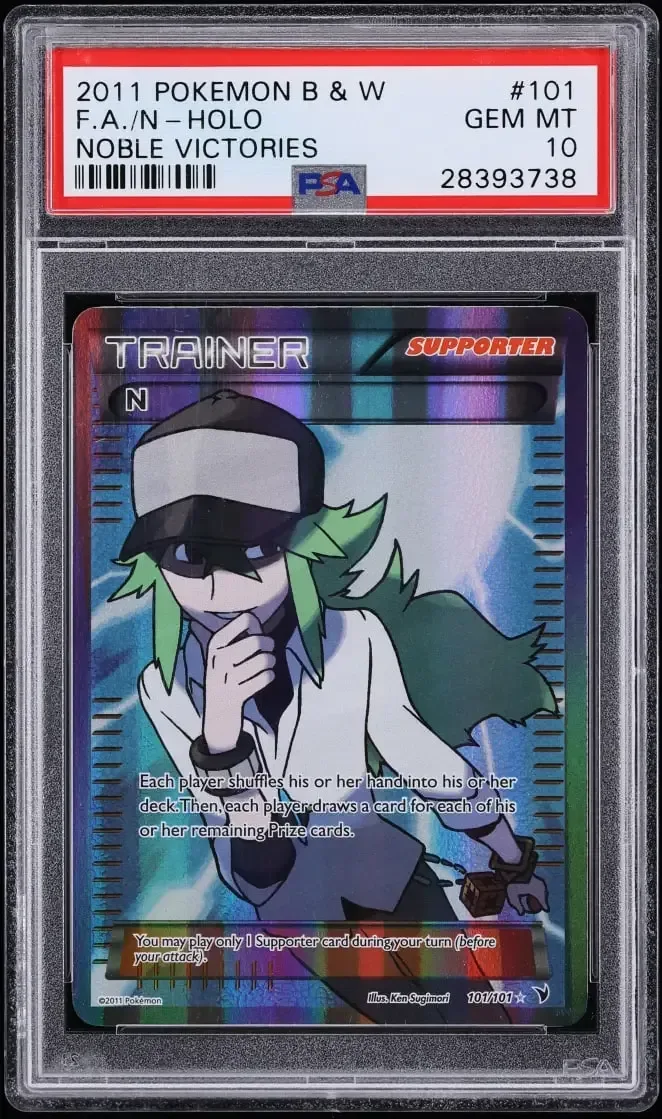
N from Noble Victories carries two kinds of significance. It is identified as the first Full Art Supporter card, marking it as a notable design milestone. In TCG terms, a Supporter is a Trainer category associated with powerful turn-by-turn options; this card also became known for the impact it had on competitive games.
Related coverage includes Pokémon 30th Celebration Reprints Put Early 2010s Icons Beside Their Originals.
That blend of visual importance and tournament-era memory helps explain why N has remained a centerpiece long after its Standard-format time. Standard is a rotating format, meaning eligible cards change over time. Rotation ends a card’s normal eligibility in that format, but it does not erase what the card represented to players or collectors. N is an especially useful reminder that a retired competitive card can retain collector interest when its role in the game and its appearance are both memorable.
The Classic Collection version is listed at around $15, while a near-mint Noble Victories Full Art N is placed at $233. The reprint therefore gives collectors a comparatively affordable way to own the character and Full Art treatment, but it is not the same object as the original release. For buyers focused on the earlier card, confirming the set, card version and condition is essential; for buyers seeking the artwork and a place in a modern collection, the Classic Collection version may satisfy a different goal at a lower stated cost.
Rayquaza EX: Dragon-type appeal meets a huge graded-card result
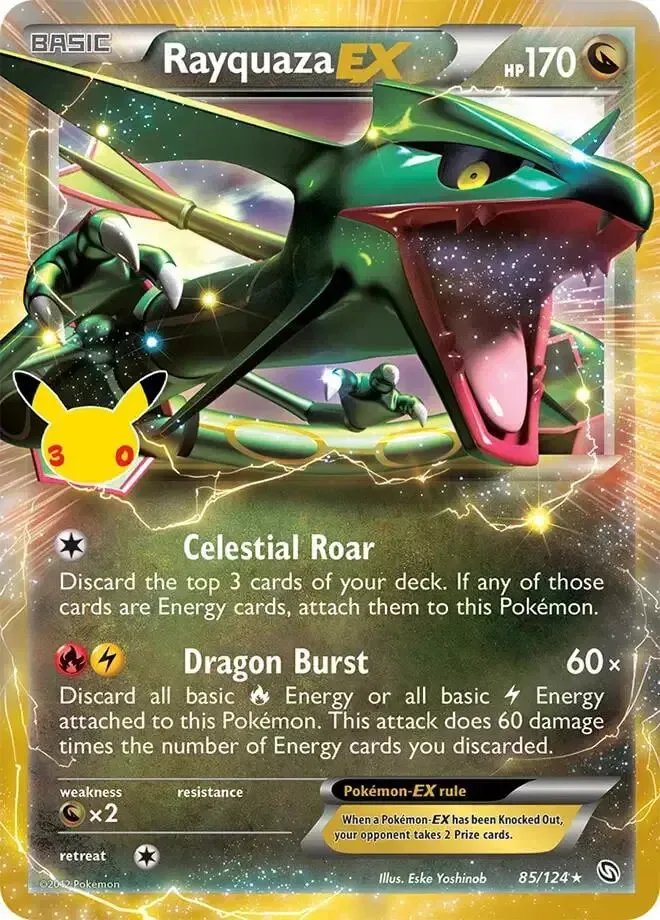
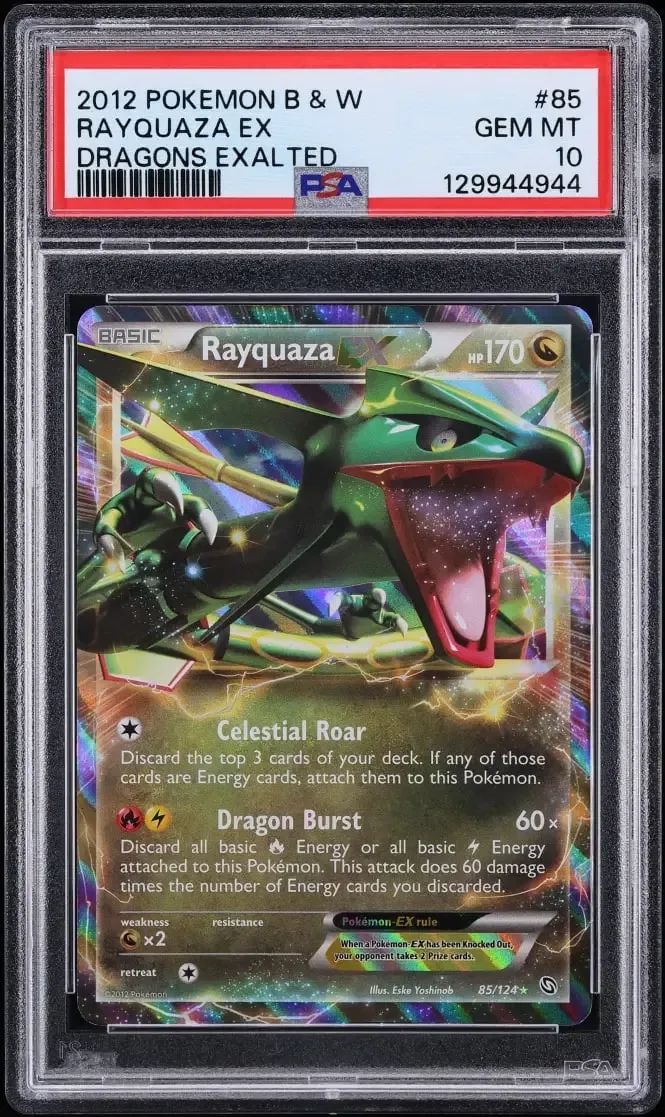
Rayquaza EX from Dragons Exalted is presented in the older half-art EX style and was among the early Dragon-type cards in the Pokémon TCG. It paired visual appeal with competitive use, with Celestial Roar and Dragon Burst cited as the tools that made it a notable presence during its Standard run.
“EX” here identifies the card’s era-specific Pokémon mechanic and naming convention; it should not be treated as a generic synonym for every powerful Pokémon card. Likewise, “half art” describes the card’s presentation style in this context, distinguishing it from the full-art look associated with cards such as N. These distinctions can be valuable when searching listings, because broad searches for Rayquaza EX can return many cards from different periods.
The 30th Celebration Rayquaza EX is valued at about $21 in the supplied snapshot, while the original Dragons Exalted version is around $47. At raw-card level, that is a relatively narrow gap compared with some of the other comparisons. The major caveat is grade: a PSA 10 copy of the original reportedly set a $4,920 record sale on October 5.
PSA 10 refers to a top grade assigned by Professional Sports Authenticator. A graded-card sale at that level is not evidence that every ungraded or lower-grade copy is worth anything similar. It demonstrates how dramatically condition and third-party grading can affect a scarce top-end example. For a collector, the practical lesson is not to treat a headline record as a baseline. Compare like with like: raw cards against raw cards, graded cards against the same grading company and grade, and exact printings against exact printings.
Genesect EX: competitive dominance, a lower raw-card entry point
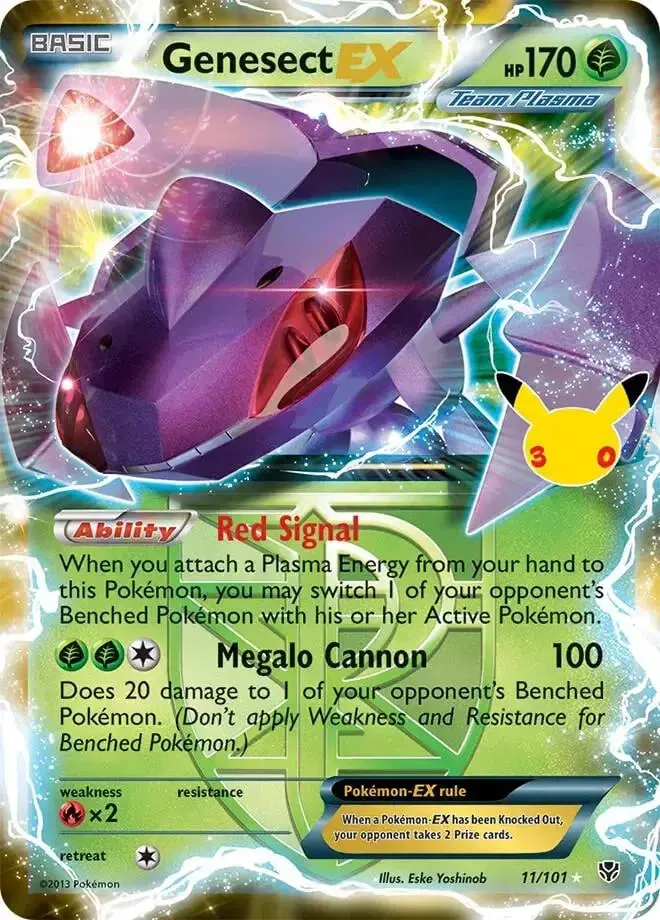
Genesect EX from Plasma Blast is the clearest competitive case of the four. It was described as not merely viable during its Standard tenure, but arguably the defining deck of its era, with World Championship results supporting that reputation. The Classic Collection selection consequently spotlights a card whose significance is rooted heavily in how it played.
Its artwork is characterized as having less collector pull than Rayquaza EX, and the supplied figures reflect a more approachable raw-card comparison. The 30th Celebration Genesect EX reprint is around $7, while the original half-art Plasma Blast version is about $20 more, putting that original near $27 by the same comparison.
Then comes the sharp reminder that raw price and top-grade value answer different questions: the reported record for a PSA 10 Genesect EX is $7,999.99, from a sale said to have occurred the previous week. That figure is striking, but it should be interpreted narrowly. It concerns a particular copy in a particular grade, not a promise about every Plasma Blast Genesect EX. The apparent gap between a comparatively accessible original raw card and an expensive gem-mint result is precisely why collectors should establish their target before shopping.
How to approach the four-card comparison
These reprints are not substitutes in every sense, nor do they need to be. They create separate lanes for collectors with different priorities.
- Artwork-first collecting: Darkrai & Cresselia LEGEND offers a distinctive two-card image, while the lower quoted reprint values can make the concept easier to pursue.
- Game-history collecting: N and Genesect EX have unusually strong competitive associations, though their appeals differ: N combines that history with a Full Art milestone, while Genesect EX is framed primarily around deck dominance.
- Character-driven collecting: Rayquaza EX benefits from the enduring popularity of Rayquaza as well as its competitive credentials.
- Condition-focused collecting: The Rayquaza and Genesect PSA 10 results show why a raw copy, a near-mint copy and a top graded copy should never be casually treated as the same market tier.
The early 2010s cards selected for the Classic Collection show that “iconic” has more than one meaning in the Pokémon TCG. It can mean a mechanically unusual card assembled from two pieces. It can mean a Supporter whose timing could swing a game. It can mean a Dragon-type attacker players built around, or a deck central to an era of high-level play.
The reprints put those memories back within reach at the stated prices of roughly $7 to $21, depending on the card. The originals remain distinct collectibles with their own prices, histories and condition-sensitive upside. For anyone deciding between them, the best first question is simple: are you collecting the image, the play legacy, the original printing, or the highest possible grade? The answer determines which version is actually the right card to chase.