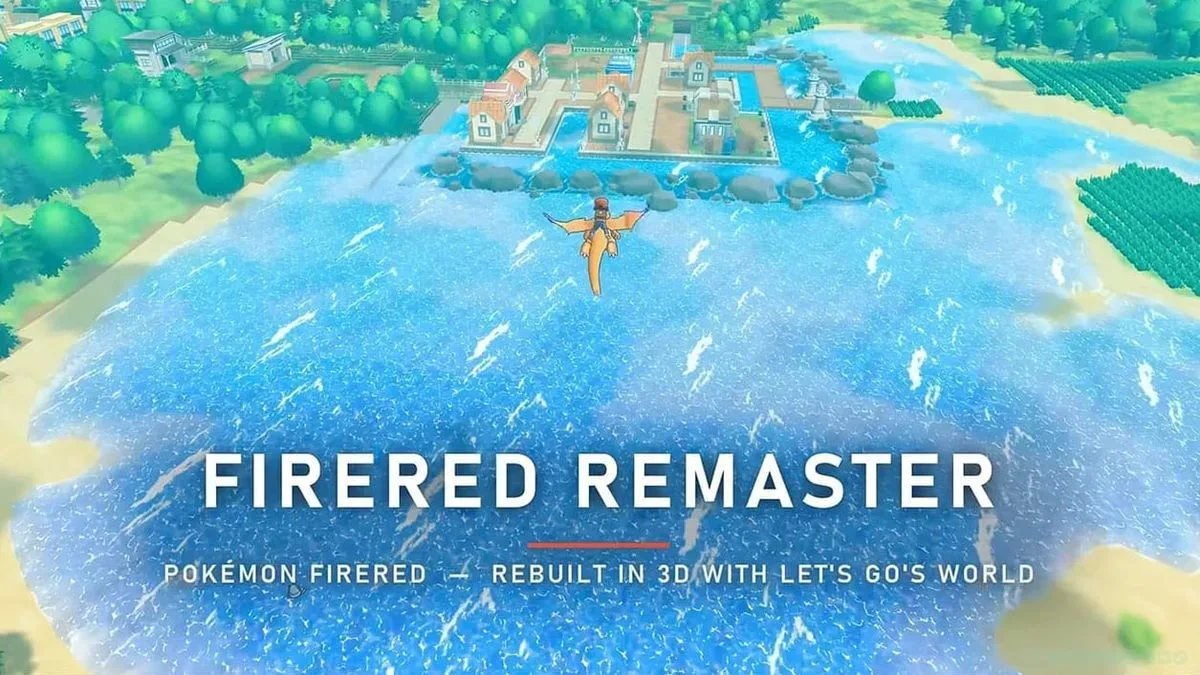
A fan-made Pokémon FireRed project is aiming at a particularly ambitious kind of remake: not simply putting familiar sprites into a three-dimensional space, but retaining the original Game Boy Advance game logic while presenting the adventure through a new 3D environment.
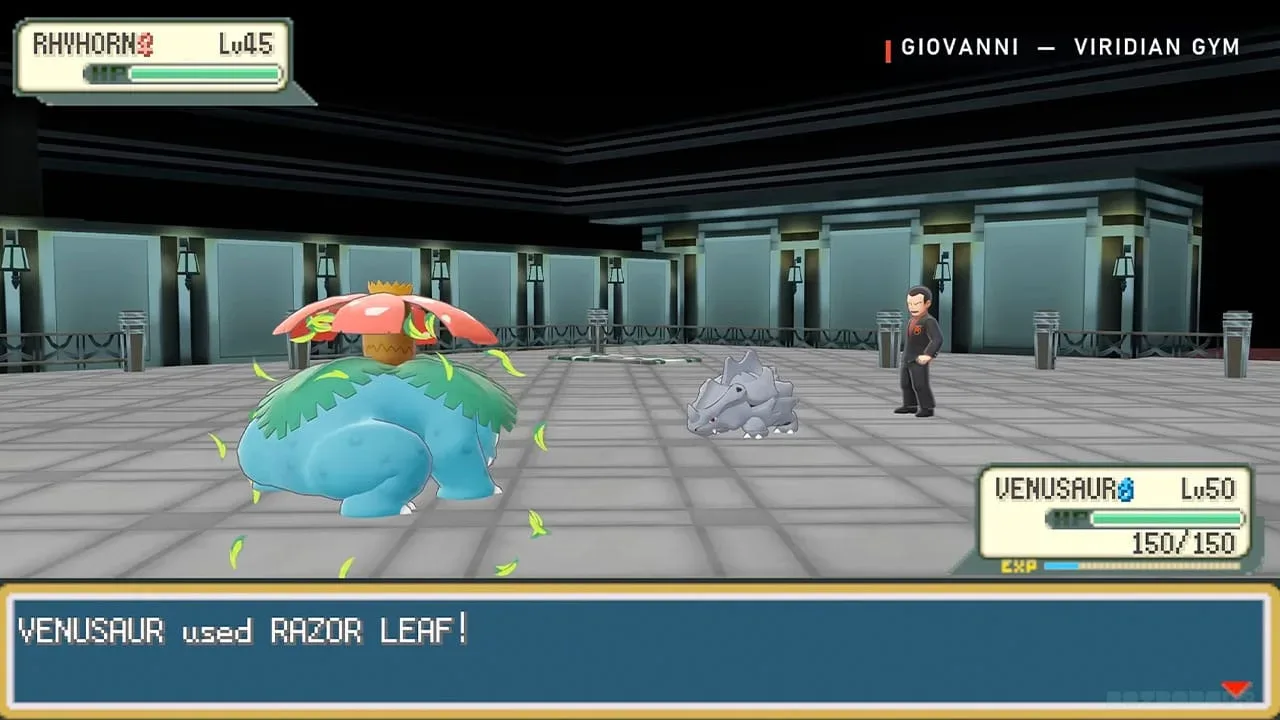
The work-in-progress project is being made by LIME6622. Its stated approach combines a static recompilation of Pokémon FireRed with a Rust-based rewrite, using that rewritten logic as the backend for a separate 3D world. The visual side uses 3D assets and animations from Pokémon Let’s Go Pikachu and Pokémon Let’s Go Eevee.
That division is the important detail. The project’s creator says the original FireRed code is still responsible for core behavior including interactions, battle AI and battles themselves, while the surrounding presentation can change substantially. The demonstrated concept includes an expanded world, freely controlled camera movement, riding Pokémon and flying on Charizard.
What “original game logic” means here
Game logic is the collection of rules and systems that determine how a game behaves. In this case, the claim is not merely that a new project is copying FireRed’s broad structure or recreating its locations. Rather, its underlying behavior is intended to come from FireRed’s code: how interactions trigger, how battle systems run and how computer-controlled opponents make decisions.
That could make the project distinctly different from a conventional visual remake. A typical remake can preserve story beats and mechanics while rebuilding every system anew. This work instead proposes a new technical layer around an existing gameplay foundation. The result, if the project reaches a finished state, would be a version of FireRed whose rules remain rooted in the GBA release while its camera and world presentation are no longer constrained by that platform’s original two-dimensional format.
Static recompilation is central to the effort. In broad terms, it is a process that converts an existing program into another form before it runs, rather than interpreting it live as the game is played. LIME6622 says FireRed was statically recompiled and then rewritten in Rust. Rust is a programming language; its role here is described as making modifications easier, including changes to world size and camera control.
“I used the static recompilation of Pokemon FireRed to then rewrite that into rust that is then used as the backend for a different 3d environment so all interactions battle ai everything is FirRed code.”
The phrasing “convergent mod,” used by the creator, reflects the way several pieces are being brought together: FireRed’s gameplay code, a Rust rewrite, and visual material associated with the Let’s Go games. It is a technical proposition with a simple player-facing goal—make FireRed feel like a 3D adventure without discarding the systems that define FireRed.
Related coverage includes Pokémon FireRed Fan Project Rebuilds Kanto in Full 3D Using Original Game Logic.
A 3D Kanto-style presentation, not a sprite layer on a 3D map
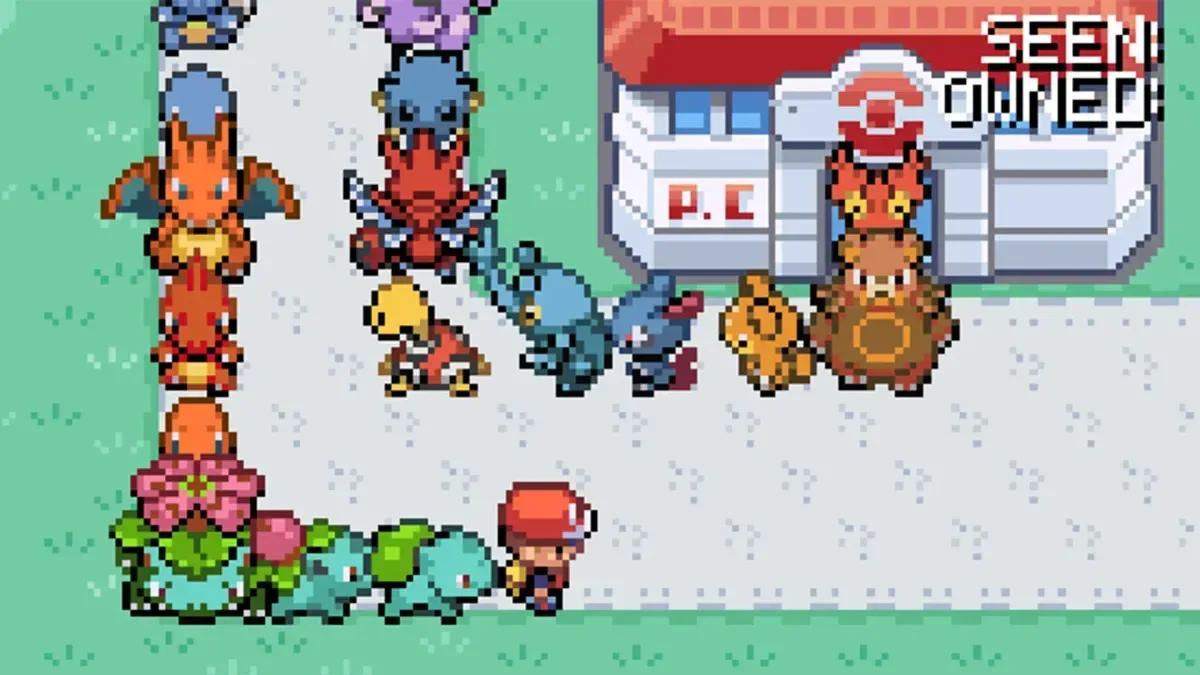
There is an important distinction between a game that places flat 2D sprites inside a three-dimensional scene and one that replaces the character and environment presentation with 3D assets and animations. This project is described as the latter. Its appearance has been compared to the Pokémon Let’s Go series because it uses that game’s visual material, rather than retaining FireRed’s original sprite work.
The use of a free camera is likewise more consequential than a cosmetic upgrade. FireRed was designed around a fixed top-down view, so player navigation, the framing of towns and routes, and how the world is read at a glance all follow that perspective. A camera the player can move changes the way those spaces are seen. An expanded world introduces another major change: it potentially alters the physical scale and flow of the journey even if the underlying interaction and battle logic remains tied to FireRed.
Riding Pokémon and flying on Charizard are among the showcased ideas. These features naturally suit a 3D presentation, where movement through space can be communicated more directly than in a fixed-perspective handheld game. However, the project remains in development, so these concepts should be treated as part of an unfinished build rather than confirmed features of a release.
Why the Game Boy Advance foundation still matters
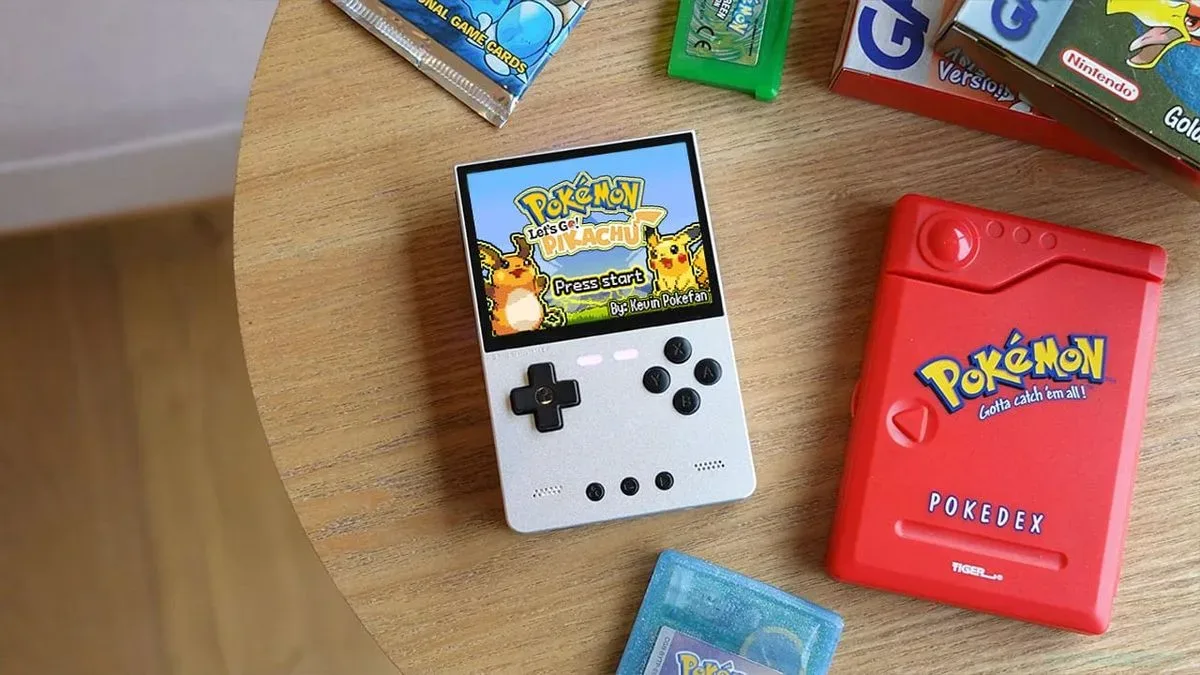
Pokémon FireRed is a Game Boy Advance title, and the project’s premise depends on preserving that game’s behavioral foundation while moving its presentation into a technically different environment. That makes it an unusual intersection of retro-game preservation instincts and modern 3D fan development: the older game is not only an inspiration or a map to be copied, but the stated source of the running systems beneath the new presentation.
The Game Boy Advance remains home to a wide range of games whose identities were strongly shaped by the hardware’s visual and technical limits. For a broader look at that library, Joking Joystick has also explored the best Game Boy Advance platformers and their mechanical identities. FireRed’s fan-project transformation illustrates a different question for games from the era: what happens when old code is used as the foundation for a contemporary-looking environment?
There are trade-offs in that question. Keeping original game logic can preserve particular rules and rhythms that fans recognize, but moving to a 3D world introduces fresh design demands. Camera placement, readable routes, collision, animation, traversal and the relationship between player movement and level geometry all need to work coherently. The creator’s stated Rust rewrite is therefore not just a route to higher-fidelity visuals; it is also the technical basis for modifying the world and its controls.
AI use has been acknowledged, but its role is unclear
LIME6622 has said the project uses AI. No further detail has been established here about which portion of the work involved AI, how it was used, or whether it affected code, assets, design or another part of the development process. That uncertainty matters, particularly because the project also draws on existing Pokémon code and assets.
It would be inaccurate to infer more than the creator has disclosed. The demonstrable claim is that AI use has been acknowledged; the scope and practical consequences of that use remain unspecified. Readers should therefore separate the confirmed technical description—FireRed logic, a Rust rewrite and Let’s Go assets—from any assumptions about AI’s place in the workflow.
No public release is available
The project is not ready to play, and no download or playable public release has been provided. At present, it should be viewed as an in-progress fan work rather than a replacement version of Pokémon FireRed or a finished mod players can install.
Its eventual availability is also uncertain. The project uses Pokémon FireRed code alongside assets and animations from Pokémon Let’s Go Pikachu and Eevee, all within a fan-made effort. There is no confirmed release plan in the available information, and there is no basis to promise that a public build will arrive.
Still, the work is notable for the specific technical claim at its center. Plenty of fan projects reinterpret beloved games visually. LIME6622’s stated aim is more narrowly ambitious: keep FireRed’s original interactions, battle AI and game systems functioning as the backend, then give players a different way to inhabit that adventure through 3D visuals, expanded spaces and camera control. Whether the unfinished project ultimately progresses further remains to be seen.