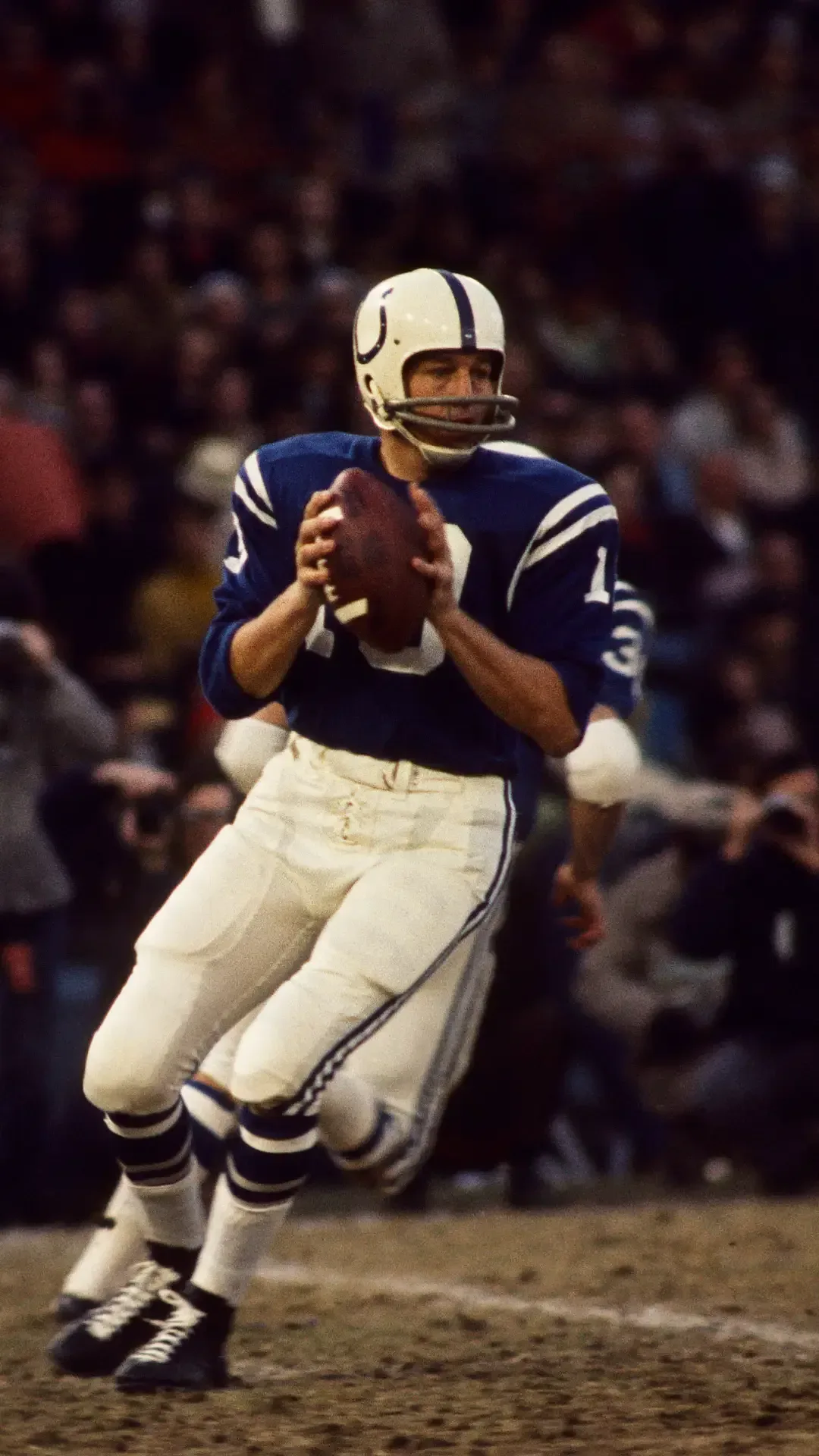
Vintage football card collecting has no universal formula for deciding which release is the greatest. A set can earn its reputation through art, an unusual format, a difficult build, a historically important manufacturer milestone, or the famous names on its checklist. In the 1950s, the strongest examples often combine several of those qualities. The recurring thread is the rookie card: a player’s first widely recognized card in a major issue, commonly abbreviated as RC in hobby listings.
That shorthand matters because the decade’s most compelling football sets are loaded with cards that collectors continue to treat as centerpiece pieces. Still, a rookie alone does not make a complete set memorable. The six releases below represent distinct collector propositions: color and compact dimensions, clean photography-like simplicity, collegiate legends, a landmark Topps football issue, and a three-card rookie chase that can shape an entire collection.
One important practical distinction: a set’s cultural importance and its price are not the same thing. Condition, scarcity, player demand and collector preference all affect individual-card values. The sale figures noted here are examples of reported sales for specified copies, not fixed values for every card in the set.
6. 1958 Topps Football: Jim Brown Leads a Strong Late-Decade Checklist
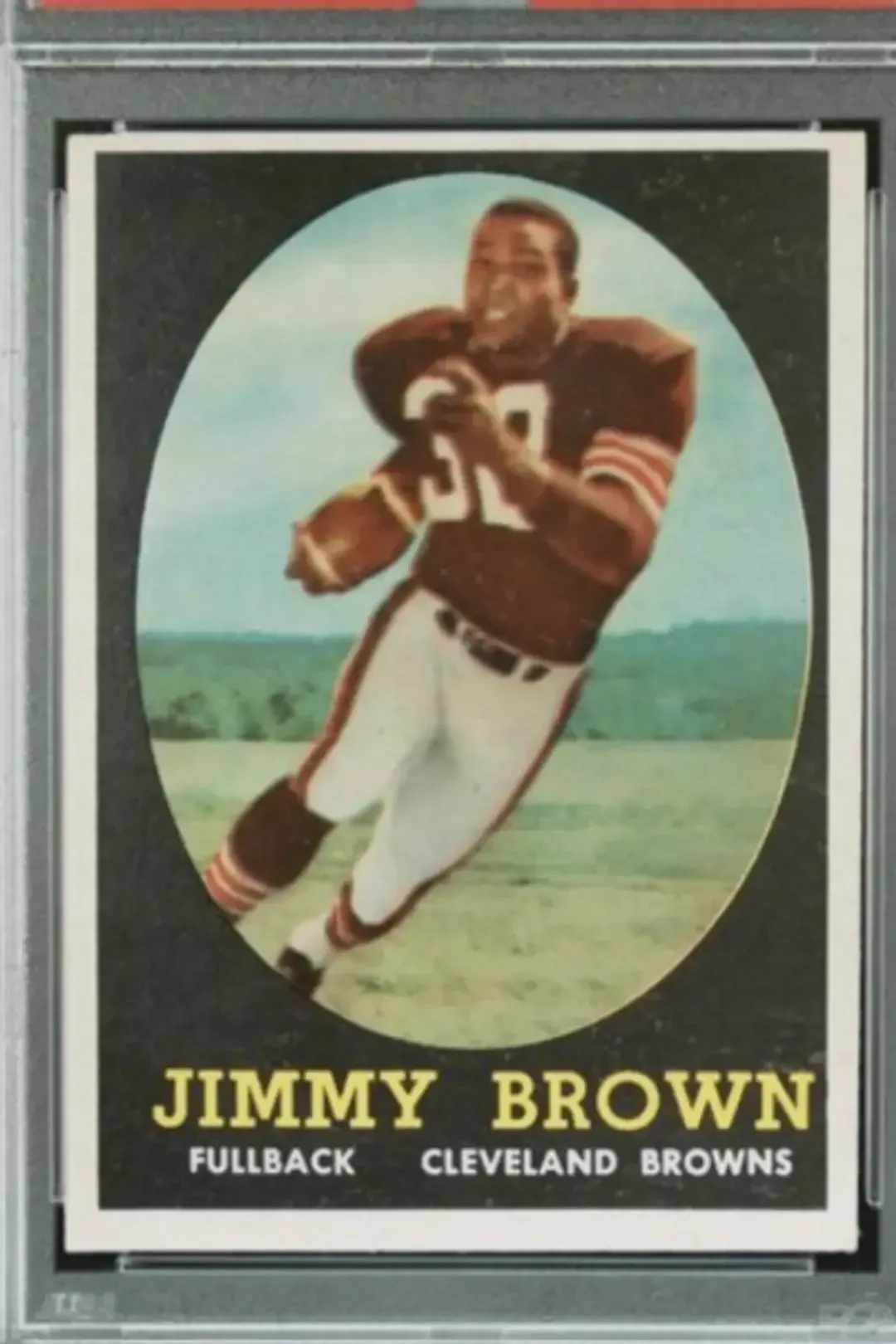
The 1958 Topps Football set earns attention principally through its player selection. Jim Brown’s rookie is card No. 62, making it the obvious focal point, while Sonny Jurgensen’s rookie appears at No. 90. Johnny Unitas is also part of the release at No. 22.
For more context, explore Paramount Games Layoffs Hit Skydance Developers After Warner Bros. Merger.
Brown’s card illustrates why condition language becomes crucial with vintage material. A high-grade example, meaning a copy that has survived with comparatively strong visual and structural condition, can command thousands of dollars and potentially far more. That does not mean every copy is valued in that range. It does mean that prospective buyers should resist using a headline result for a particularly strong example as a blanket estimate for any card bearing the same number.
The 1958 design may not be the decade’s consensus beauty contest winner, but the set has a clear purpose for a collector: it places Brown and Jurgensen rookies in the same issue, with Unitas adding another major name. Jurgensen may receive less hobby-wide attention than Brown, yet his legacy has special resonance in the Washington, D.C., area. That local connection is another reminder that demand can be personal and regional as well as national.
5. 1951 Bowman Football: Restrained Design and a Coach’s Rookie
Bowman was producing football cards before Topps entered the licensed football-card space, and the 1951 Bowman Football set stands as a compact lesson in why a simple visual approach can endure. Its appeal is tied to a clean, nostalgic presentation rather than visual excess. For collectors drawn to a quieter vintage aesthetic, that restraint is part of the point.
Related coverage includes 6 Iconic 1950s Football Card Sets That Still Define the Vintage Hobby.
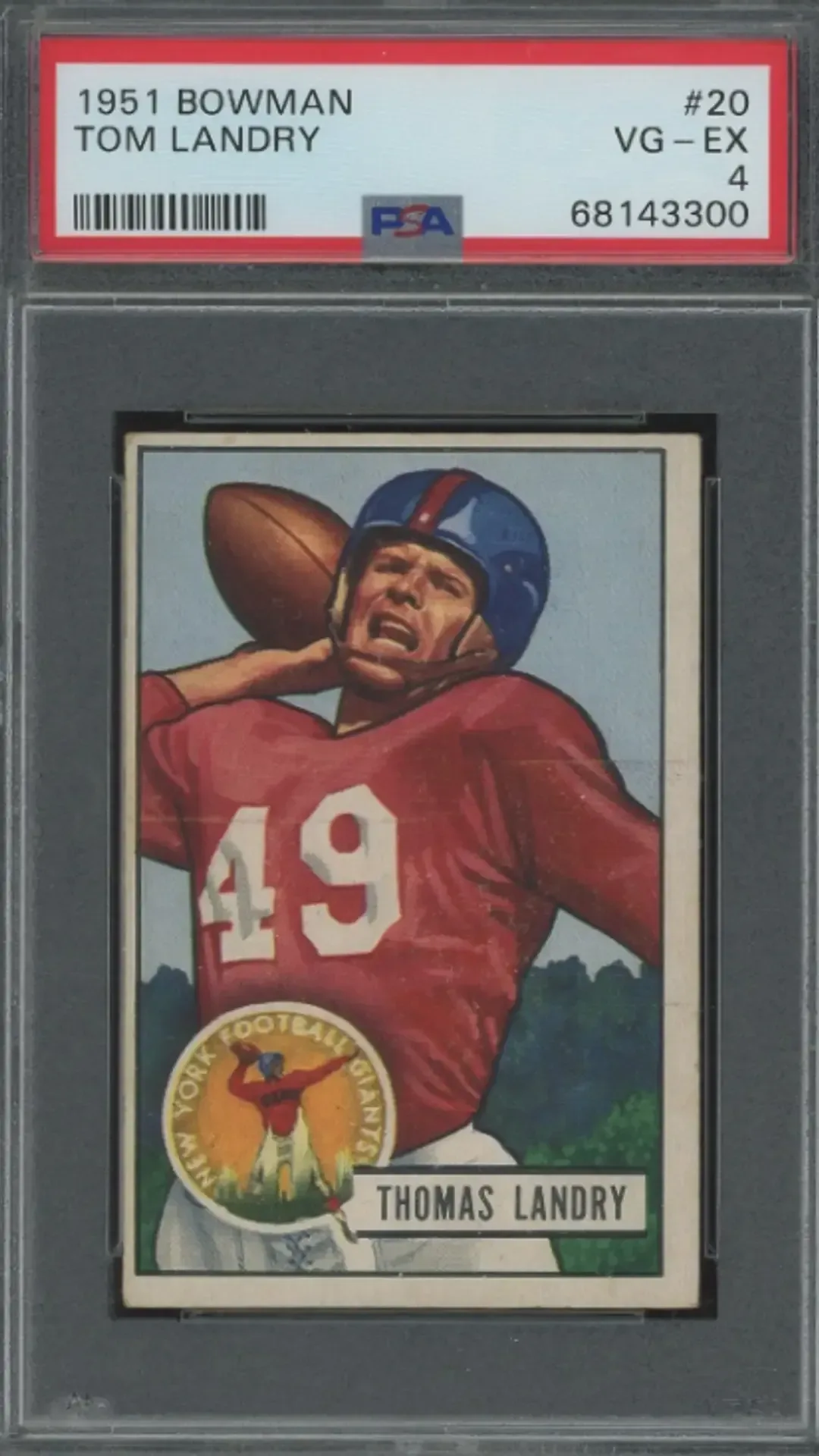
The checklist’s notable names include Otto Graham at No. 2, Norm Van Brocklin’s rookie at No. 4, and Tom Landry’s rookie at No. 20. Landry makes this set especially interesting because he is remembered as a legendary coach, while his card shows him as a player throwing a pass. It is a useful example of how a card can carry more than one layer of historical interest: the depicted moment and the career for which the subject later became best known.
A PSA 4 Landry rookie reportedly sold for $300. PSA is a third-party grading company; its numerical grade is used to describe condition after an evaluation of the card. Even when two cards have the same assigned grade, eye appeal can still influence a buyer’s enthusiasm, so graded examples should not be treated as perfectly interchangeable.
As a set-building project, 1951 Bowman is described as difficult to assemble in good shape. That makes condition a central part of its identity, not a side concern. A collector deciding between a focused player collection and a full set can use that fact to set expectations early: the goal may be acquiring a key rookie in an acceptable grade, rather than immediately pursuing every number on the checklist.
4. 1956 Topps Football: A Foundational Topps Football Release
The 1956 Topps Football set has lasting importance as Topps’ first football release featuring the football license. That manufacturer milestone gives the set significance beyond any one star card. It also links the release to modern design culture: its look is currently used for Topps’ NFL Living Set design.
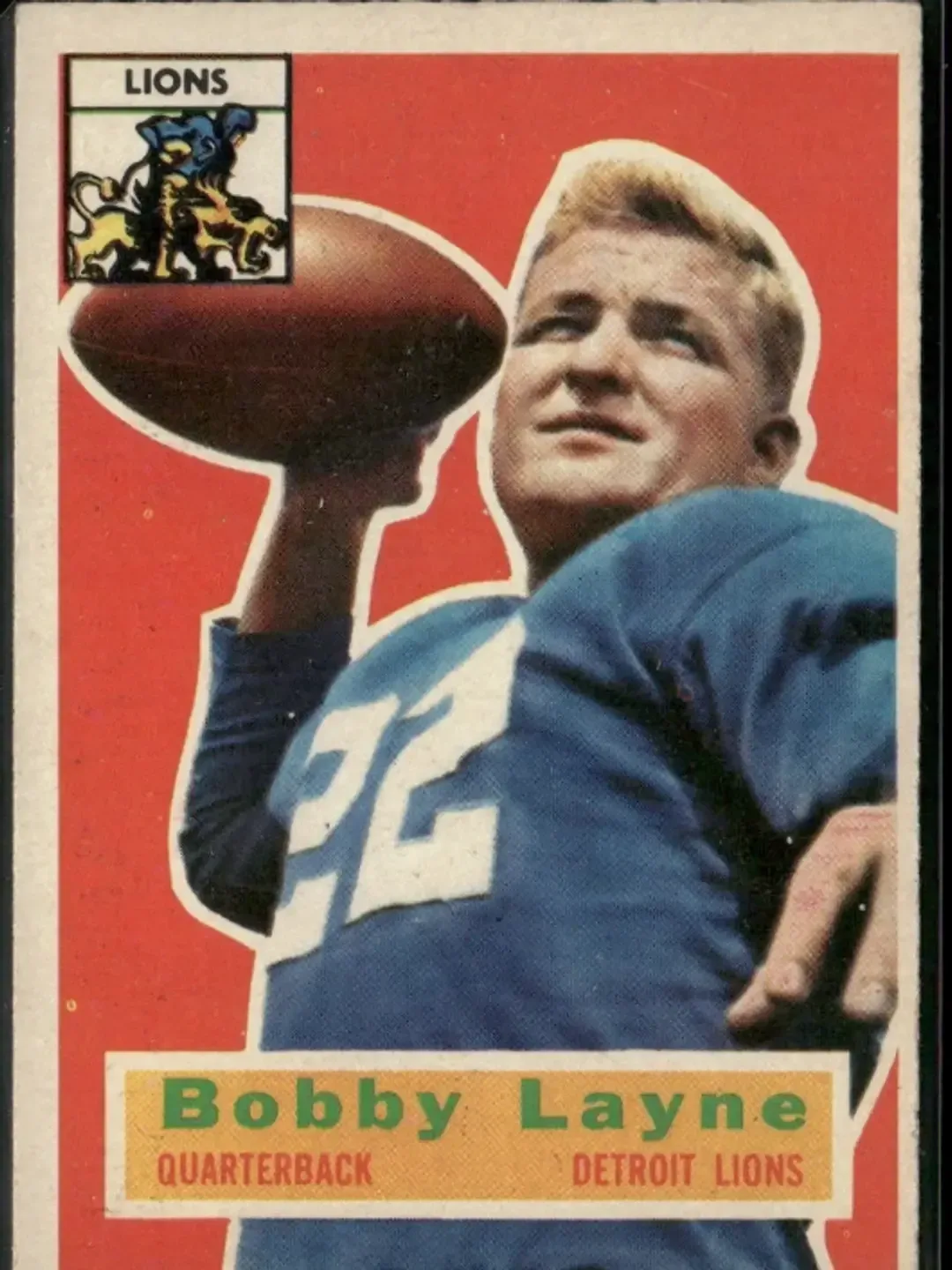
Its key rookie cards include Roosevelt Brown at No. 41 and Lenny Moore at No. 60. Bobby Layne, No. 116, gives the checklist another major name for collectors who favor established stars alongside rookies. The combination is a familiar vintage collecting pattern: a release can serve player collectors, team-era enthusiasts and set builders all at once, but each group may prioritize completely different cards.
High-grade copies are difficult to find, which heightens the need to distinguish a card’s condition from the set’s historical role. The 1956 issue can be meaningful in a collection even if the card being pursued is not the most expensive one. For some collectors, the appeal is owning an example from a pivotal Topps football set; for others, Brown or Moore provides the direct objective. Neither approach is less legitimate, but knowing which one applies helps prevent a purchase from being driven only by a label or a ranking.
3. 1955 Topps All-American Football: College Legends, Not a Standard Pro Rookie Chase
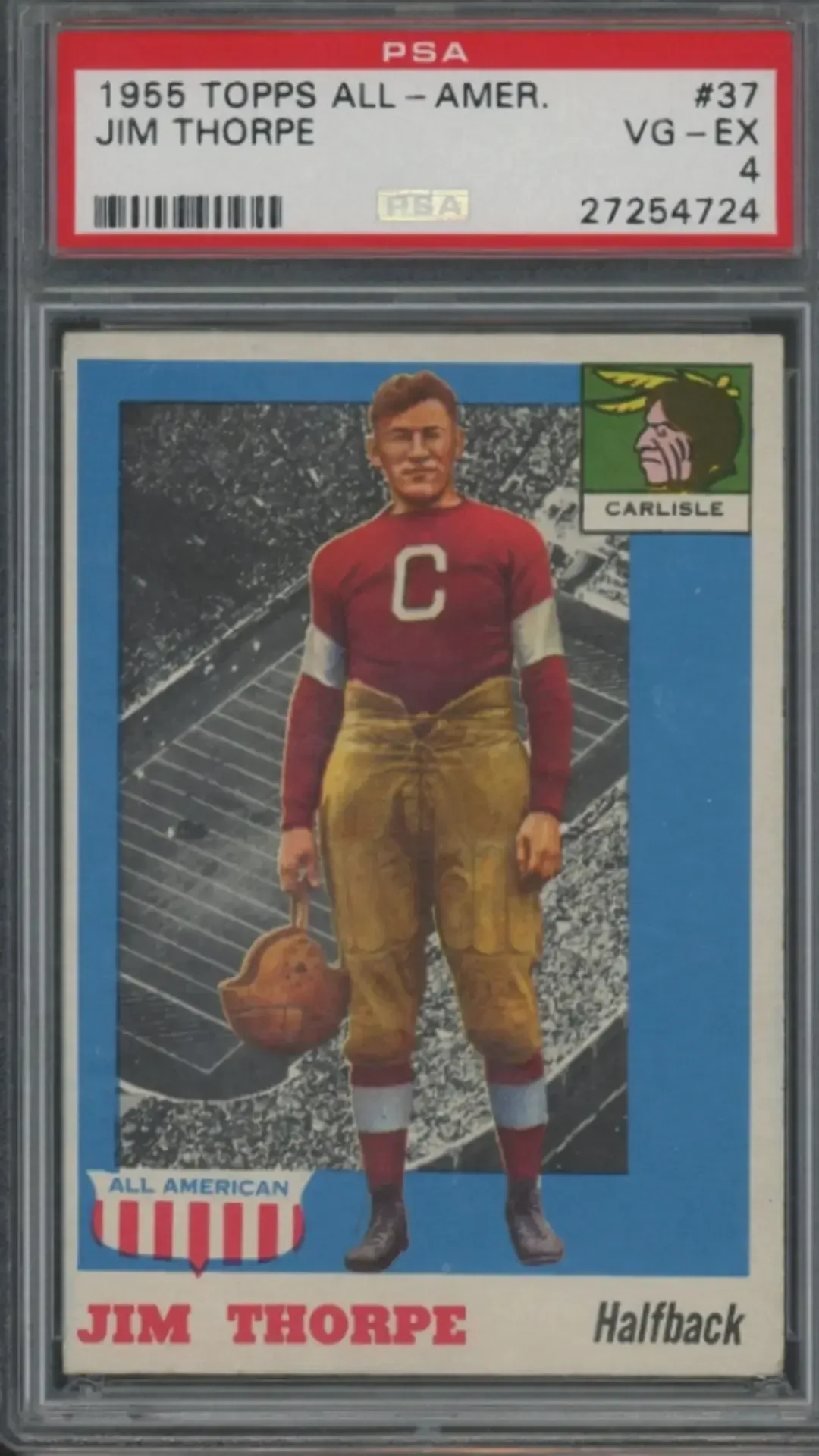
The 1955 Topps All-American Football set takes a different route from a conventional professional-football checklist. It contains 100 collegiate stars, drawing together players and coaches whose names carry substantial college-football historical weight. Jim Thorpe is No. 37, Knute Rockne is No. 16, and the Four Horsemen are represented at No. 68. Sammy Baugh is also among the set’s highlights.
That distinction is important for anyone browsing vintage football cards by name alone. A familiar player does not automatically mean a standard professional rookie-card framework applies. Here, the attraction is a themed collection of collegiate figures. It broadens the set’s audience to collectors who value the sport’s earlier figures and school-centered mythology as much as professional-career milestones.
The visual identity is equally direct: red, white and blue are prominent throughout the design. Rather than merely functioning as a background for names, that patriotic color treatment gives the release a clear personality in a decade filled with differing formats and approaches.
Thorpe and Rockne sit at the top of the reported value conversation. PSA 4 copies were reported selling for $500 and $250, respectively. Those figures demonstrate their place as the set’s prized cards, while also underlining the value of specificity. The grade, the exact card and the timing of a sale all matter. A collector assessing an ungraded copy or a copy in a different grade should not assume it will follow the same result.
2. 1950 Bowman Football: Small Squares, Color and Otto Graham
The 1950 Bowman Football set immediately separates itself from standard card issues through its format. The cards are small and square rather than standard-sized, a physical feature that gives the set instant recognition. Add color, and the result is a release with a visual character that is difficult to confuse with many of its contemporaries.
For preservation-minded collectors, unusual dimensions have a practical consequence: condition becomes especially consequential. Corners, edges and overall presentation can be a larger source of concern when the format itself highlights the card’s small square profile. That is not an invitation to treat every imperfect copy as undesirable; it is a reason to inspect a card with the format in mind and decide what compromises fit the collection’s purpose.
The checklist provides considerable depth. Doak Walker is the rookie on card No. 1, Marion Motley’s rookie is No. 43, and Otto Graham’s rookie is No. 45. Sammy Baugh appears on No. 100. Graham is the most desirable rookie of the group, giving the set a defining target while leaving several other meaningful cards for collectors who want more than a one-card chase.
An ungraded, off-condition Graham rookie reportedly sold for $364. “Off-condition” is collector language for a card with noticeable flaws relative to stronger examples, while “ungraded” means it did not carry a third-party grade in that sale. The result is a helpful reminder that demand does not disappear when a vintage card is imperfect. It does, however, reinforce why photographs, clear descriptions and grade status are essential context whenever collectors compare sales.
1. 1957 Topps Football: The Starr, Unitas and Hornung Rookie Trio
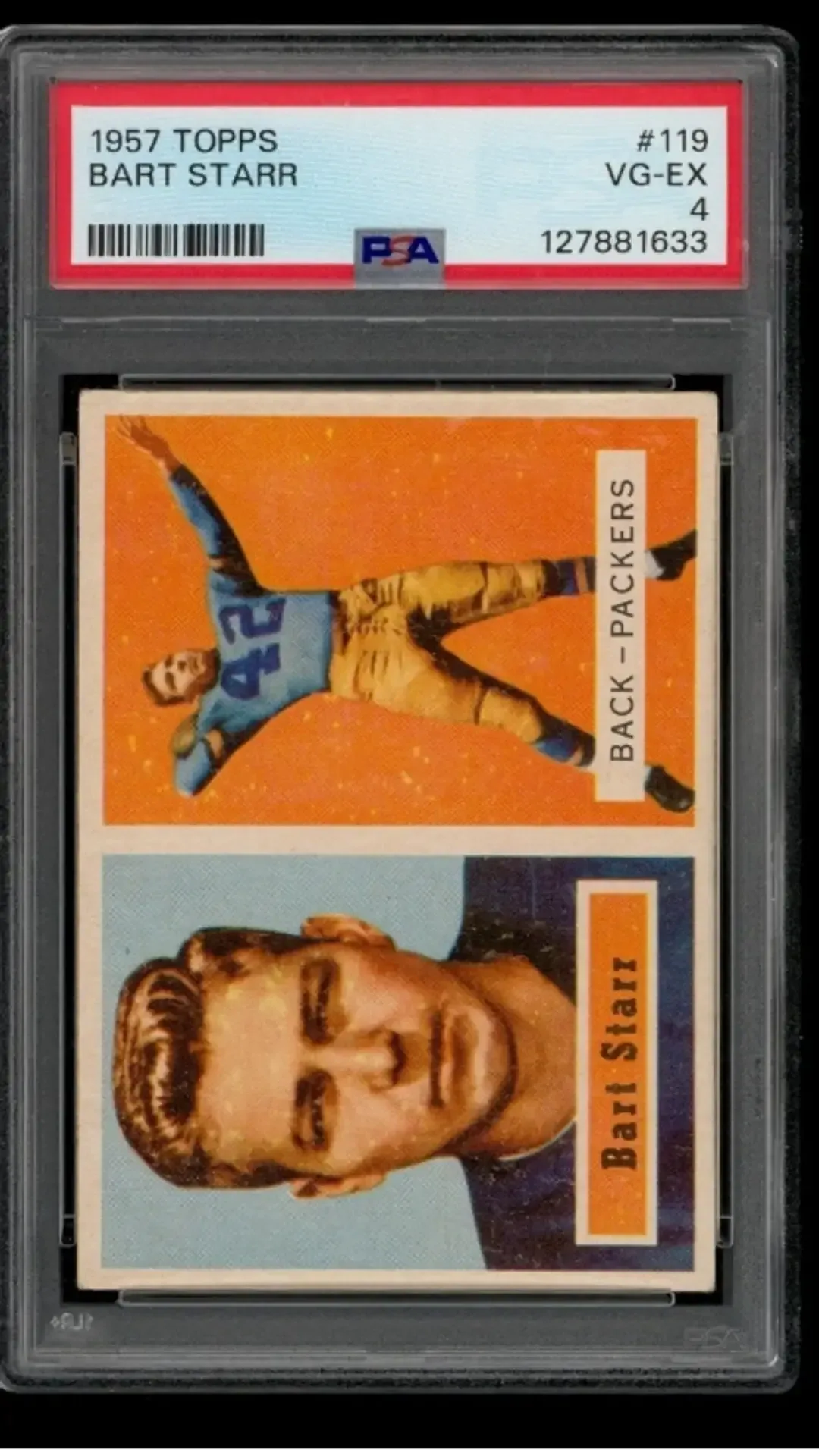
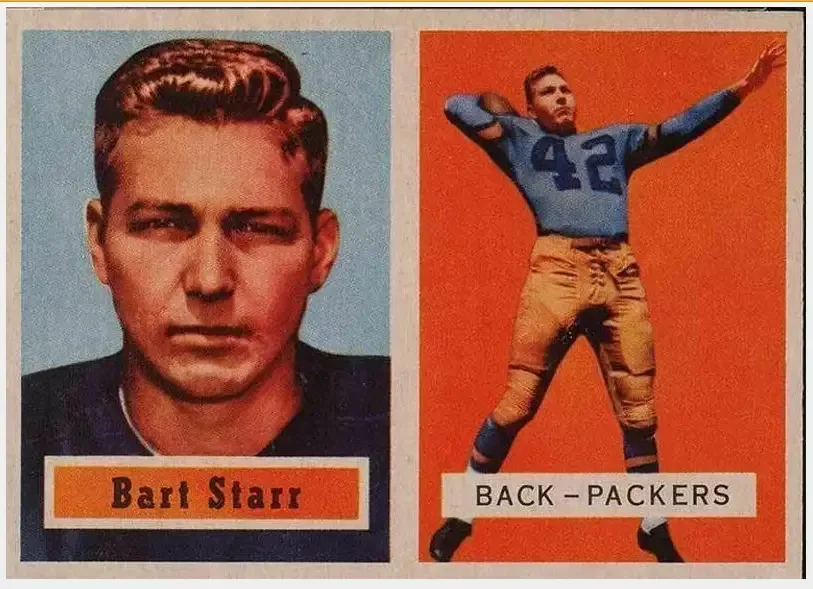
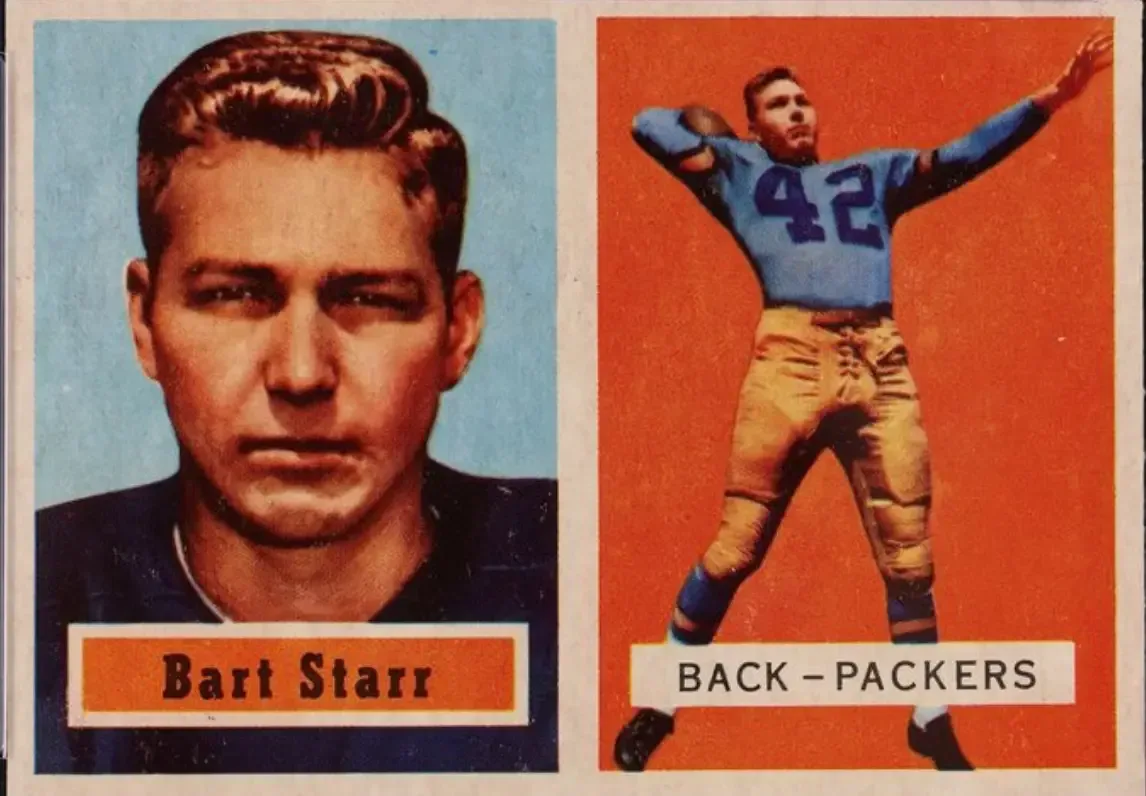
If one 1950s football set best captures the power of a checklist, it is 1957 Topps Football. Its leading trio consists of Bart Starr’s rookie, No. 119; Johnny Unitas’ rookie, No. 138; and Paul Hornung’s rookie, No. 151. Together, they create a central chase that can define the set-building experience.
The draw is not merely that these are three recognizable names. It is that all three are rookie cards within one release, creating a layered goal. A collector can seek a single favorite player, work toward the three-card group, or attempt the full set. Each step changes both the challenge and the expected commitment, particularly when the preferred target is high-grade material.
This is why the 1957 issue stands above the other five as the decade’s most iconic football-card set. It brings together a historically powerful rookie lineup and a collecting challenge that remains meaningful long after the cards’ original release. Starr, Unitas and Hornung can take years for set builders to acquire, especially when condition standards rise. The difficulty is part of the release’s legacy rather than a reason to overlook it.
What These Six Sets Teach a Vintage Collector
There is no need to treat this ranking as a shopping list. The better use for it is as a framework for identifying what matters most in a vintage football card purchase.
- Checklist first: Decide whether the appeal is a specific rookie, a group of stars, or the chance to build an entire release.
- Know the set’s identity: 1950 Bowman’s square format, 1951 Bowman’s uncomplicated look, 1955 All-American’s collegiate focus, 1956 Topps’ milestone status and 1957 Topps’ rookie trio each offer a different reason to collect.
- Read condition context carefully: A PSA 4, a high-grade copy and an ungraded off-condition card are not interchangeable descriptions. They frame the meaning of a reported sale.
- Separate reported prices from universal value: Individual results are useful reference points, but they do not establish a guaranteed price for other copies.
These releases also show why vintage collecting is broader than pursuing flawless cards. A collector may be captivated by 1950 Bowman’s unusual shape, the 1955 All-American design’s red-white-and-blue presence, or the unexpected player-era image on the Landry rookie. Another may focus exclusively on the major rookie cards. The unifying appeal is that each set offers a recognizable collecting story supported by names that still command attention.
For football-card collectors, the 1950s remain a period where a checklist can do the heavy lifting. These six sets endure because they pair that checklist strength with distinct visual or historical identities—and because the journey from one desired card to a complete set can be as compelling as the cards themselves.
Shop the products
Check current price, model and availability at the retailer.
- 1958 Topps Football Jim Brown Rookie Card PSA 5 | eBay on eBay
- 1951 Bowman Football Tom Landry Rookie Card PSA 4 | eBay on eBay
- 1956 Topps Football Bobby Layne | eBay on eBay
- 1955 Topps All American Football Jim Thorpe PSA 4 | eBay on eBay
- 1950 Bowman Football Otto Graham Rookie Card | eBay on eBay
- 1957 Topps Football Bart Starr Rookie Card PSA 4 | eBay on eBay